The Pope at War, page 52
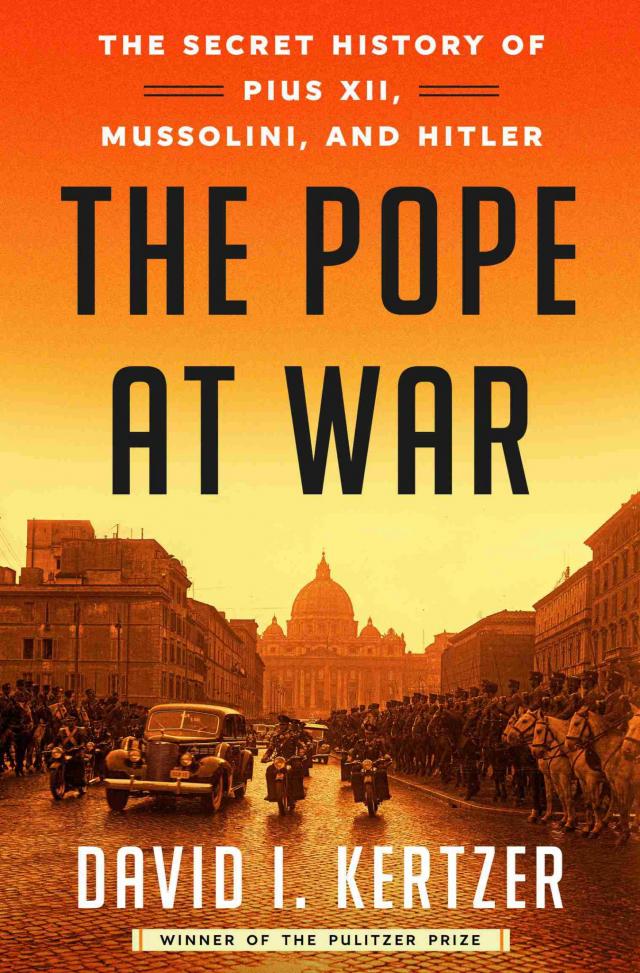


Pope Pius XII was certainly not “Hitler’s pope,” as John Cornwell’s intentionally provocative book title would have it. In many ways, the Nazi regime was anathema to the pope and to virtually all those around him in the Vatican. They were alarmed by the Reich’s efforts to weaken the church’s influence, diminish its hold on youth, and discredit key aspects of its theology. The pope’s relation with the Italian Fascist regime was very different, and indeed there is a good case for viewing the Italian state as what scholars refer to as “clerico-Fascist.”[9] The pope’s interest in maintaining friendly relations with Mussolini was motivated as well by what he saw as his value as intercessor for the Vatican with the German Führer. It was a role that Mussolini and the men around him did indeed occasionally perform. One of the Duce’s favorite boasts in speaking with Hitler and the Nazi leadership was of all the benefits he had enjoyed by keeping the pope happy.
If many Italians would prefer to remember Pius XII as a heroic figure, it is not due simply to their identities as Roman Catholics and to an understandable desire to view the leader of the church in a positive light. It is part of a much broader effort to recast Italy’s uncomfortable Fascist past that goes well beyond the church. Jews in Italy, and especially those in Rome, have reason to see this past differently. As two of the major historical researchers in Rome’s Jewish community recently noted, the pope remained silent while more than a thousand of the city’s Jews were rounded up on October 16, 1943, and spent the next two days near the Apostolic Palace waiting to be taken to their deaths at Auschwitz. He never spoke out against any of the atrocities committed by the Nazis, not the mass execution at the Fosse Ardeatine nor any of the Nazis’ other brutalities in Rome. The only time the pope made a public protest about events in Rome, one milked for all it was worth by the Fascists and Nazis, was when he condemned the bombing of the city by the Allies without making any mention of what the targets of that bombing were. As the major historian of the German occupation of Italy noted, despite claims by the pope’s defenders that a behind-the-scenes protest on his part led to an end to the roundup of Rome’s Jews following October 16, “the action of the capture of the Jews did not suffer any pause. On the contrary, it continued by the Germans in an undisturbed manner.”[10]
If Pius XII is to be judged for his action in protecting the institutional interests of the Roman Catholic Church at a time of war, there is a good case to made that his papacy was a success. Vatican City was never violated, and amid the ashes of Italy’s Fascist regime the church came out of the war with all the privileges it had won under Fascism intact. However, as a moral leader, Pius XII must be judged a failure. He had no love for Hitler, but he was intimidated by him, as he was by Italy’s dictator as well. At a time of great uncertainty, Pius XII clung firmly to his determination to do nothing to antagonize either man. In fulfilling this aim, the pope was remarkably successful.
To the memories of my father, Morris Kertzer, and my father-in-law, Jacob Dana, chaplain and physician respectively in the U.S. Army overseas in the Second World War, and to their great-granddaughter, little Sol
This book is based largely on documents found in archives scattered across five countries, six if one counts Vatican City. For their help in this archival work, I have many people to thank, but among them Roberto Benedetti falls into a category of his own. Roberto, a historian expert in both church history and modern Italian history, has collaborated with me in the larger research project of which this book is one product, and together we have coauthored a number of studies published in scholarly journals. His expert efforts played a crucial role in this research, all the more so as the Covid-19 pandemic greatly reduced the amount of time I could spend in Rome at a crucial point in the research for this book. I am deeply indebted to him, and this book benefits tremendously from his research skills, his expertise in the archives, and his dedication.
For his guidance as I confronted the task of plumbing the German diplomatic archives in Berlin, I thank my colleague Lutz Klinkhammer, the foremost scholar dealing with the German occupation of Italy during the Second World War. For his work in those archives, I thank historian Pierluigi Pironti. Similarly, I am indebted to Meeraal Shafaat-Bokharee, at the time a doctoral candidate in history at Cambridge University, for her skilled work for this project at Britain’s National Archives at Kew.
For their aid at the U.S. National Archives in College Park, Maryland, I thank Richard Peuser, then chief of the reading rooms there, for his expert advice and his friendship, and Sim Smiley, whose expertise in those archives proved so helpful to me.
For the German archival materials, I was additionally dependent on several Brown University students for their help in translation, including then undergraduates Talia Rueschemeyer-Bailey and Fabienne Tarrant. In addition, special mention is due to Gunnar Mokosch, who began to work on this project when still a graduate student at Brown. He provided crucial help in translating German-language documents and in other aspects of my work with German sources. It was a pleasure to be able to coauthor two scholarly journal articles with him comparing the Italian and German anti-Jewish campaigns, articles I could not have written on my own. I also owe thanks to Jonathan Petropoulos, author of an excellent book on the von Hessen brothers, for his help in fleshing out the story of Prince Philipp von Hessen’s role as go-between linking Hitler and Pius XII.
Many thanks to the heads of the various Vatican archives, and for the time they took to meet with me in advance of the opening of the files for the papacy of Pius XII: Monsignor Sergio Pagano, prefect of the Vatican Apostolic Archives; Monsignor Alejandro Cifres, director of the archive of the Congregation for the Doctrine of the Faith; and Johan Ickx, director of the Historical Archive of the Section for Relations with States of the Vatican Secretariat of State. Thanks as well to Daniel Ponziani at the archive of the Congregation for the Doctrine of the Faith and to Brian Mac Cuarta, S.J., academic director of the central Jesuit archives in Rome.
Others in Rome deserving of thanks include my colleague Mauro Canali, one of Italy’s foremost experts on the Fascist ventennio and intimate master of the Italian state archives for this period, and Tommaso Dell’Era, who shares my interest in the fraught history of the Holy See’s actions as the Jews of Europe were being persecuted and then massacred. Thanks as well to Silvia Haia Antonucci, director of the historical archives of Rome’s Jewish community, and to Gadi Luzzatto Voghera, director of the Fondazione Centro di Documentazione Ebraica Contemporanea in Milan, for their advice, and to the staff of Rome’s Archivio Centrale dello Stato for their assistance.
I would also like to thank various colleagues at Brown University who offered help along the way, including Massimo Riva, Michael Putnam, and John Bodel. Michael and John’s help in compensating for the deficiencies of my high school Latin was aided by Brown University classics doctoral student Erika Valdivieso. Thanks, too, to Kevin McLaughlin, dean of the faculty at Brown, and Ed Steinfeld, director of Brown’s Watson Institute for International and Public Affairs, for their support, as well as to Matilde Andrade of the department of anthropology. My final Brown thanks is due to the Paul Dupee, Jr., University Professorship, which has provided invaluable funding for my research.
Deep appreciation goes to my literary agent, Wendy Strothman, for all her expert efforts on my behalf, and to her associate, Lauren MacLeod. I also thank the talented Laura Hartman Maestro for the excellent maps she drew for this book.
I feel incredibly fortunate to have had David Ebershoff as my editor at Random House for this book. David had previously been my editor for The Pope and Mussolini. I know of no more talented editor in the United States, or anywhere else, for that matter. At Random House I would also like to thank Andy Ward and Tom Perry, publisher and deputy publisher at Random House for their support, along with Darryl Oliver, Barbara Fillon, and Michelle Jasmine. Special thanks to Christopher Brand for the book’s stunning jacket design.
I am deeply grateful to my colleagues, the historians Jonathan Petropoulos and Kevin Spicer, C.S.C., and to my friends Bob Bahr, Katherine Darrow, and Peter Darrow for taking the time to read an earlier draft of this book and provide their valuable suggestions (and in the case of Jonathan and Kevin, corrections). This marks the first time that my wife, Susan Kertzer, has read and offered her suggestions on a draft of a book of mine. Despite our earlier fears, our marriage survived the ordeal, and I am indebted to her both for her helpful suggestions and for her patience (and for much else!).
I can’t conclude these acknowledgments without bringing to mind my father, whose presence lingers over the pages of this book. As the Jewish chaplain with the Allied troops at Anzio beachhead in early 1944, Lieutenant Morris Kertzer, then thirty-three years old, officiated over Jewish services in a wine cellar while under German bombardment, comforted wounded GIs at the field hospital, and presided over the funerals of Jewish soldiers. He accompanied the troops when, after months of bloody stalemate, they broke through the German defenses and, in early June 1944, liberated Rome. A few days later, together with the chief rabbi of Rome, he conducted services at Rome’s Tempio Maggiore. It was the first service held in Rome’s majestic synagogue since German troops had occupied the city the previous September and begun their roundup of the city’s Jews for deportation to Auschwitz.
Strange, sometimes, are the paths our lives take, and so I find myself, surprisingly, almost eight decades after those events, returning to Rome, and to a story in which my own father played a part.
The following abbreviations are used in the endnotes.
ARCHIVAL SOURCES
British Archives
NAK National Archives, Kew, London
CAB War Cabinet
FO Foreign Office
WO War Office
French Archives
MAEC Ministère des Affaires Étrangères, La Courneuve
MAEN Ministère des Affaires Étrangères, Nantes
RSS Rome Saint Siège
German Archives
PAAA Politisches Archiv des Auswärtigen Amts, Berlin
GARV Auslandsvertretung Rom-Vatikan
GBS Büro des Staatsekretärs
GPA Politische Abteilung
GRk Reichskonkordat
Italian Archives
ACS Archivio Centrale dello Stato, Rome
CR Segreteria Particolare Duce, Carteggio Riservato
DAGR Direzione Generale Pubblica Sicurezza, Divisione Affari Generali e Riservati
DAGRA Direzione Generale Pubblica Sicurezza, Divisione Affari Generali e Riservati, Annuali
DGPS Direzione Generale Pubblica Sicurezza
MAT Fascicoli per Materia (1926–44)
MCPG Ministero della Cultura Popolare, Gabinetto
MI Ministero dell’Interno
MIFP Ministero dell’Interno, Fascicoli Personali
PCM Presidenza del Consiglio dei Ministri
SPD Segreteria Particolare del Duce
ASDMAE Archivio Storico Diplomatico, Ministero degli Affari Esteri, Rome
AISS Ambasciata Italiana presso la Santa Sede
APSS Affari Politici, 1931–1945, Santa Sede
Gab Gabinetto
SG Segreteria Generale
ASR Archivio di Stato, Roma, Galla Placidia, Rome
CAP Corte d’Assise Speciale
ATMR Archivio Tribunale Militare, Roma, Rome
AUSSME Archivio Ufficio Storico Stato Maggiore dell’Esercito, Rome
SIM Servizio Informazioni Militare
ISACEM Istituto per la Storia dell’Azione Cattolica e del Movimento Cattolico in Italia, Rome
PG Presidenza Generale, 1922–69
United States Archives
NARA U.S. National Archive and Records Administration, College Park, Maryland
CDF Central decimal file
RG Record Group
FDR Library Franklin Delano Roosevelt Presidential Library, Hyde Park, New York
md, mr, psfa, psfb, psfc, are all pdf document files available on the internet
Vatican and Ecclesiastical Archives
AAV Archivio Apostolico Vaticano, Vatican City
AESI Segreteria di Stato, Affari Ecclesiastici Straordinari, Italia
Segr. Stato Segreteria di Stato
ACDF Archivio della Congregazione per la Dottrina della Fede, Vatican City
ARSI Archivium Romanum Societatis Iesu, Rome
ASRS Archivio Storico della Segreteria di Stato—Sezione per i Rapporti con gli Stati, Vatican City
AA.EE.SS. Fondo Congregazione degli Affari Ecclesiastici Straordinari
OTHER ABBREVIATIONS
ADSS Actes et Documents du Saint Siège Relatifs à la Seconde Guerre Mondiale
AI L’Avvenire d’Italia
AR L’Avvenire, Rome
CC La Civiltà Cattolica
CS Corriere della Sera
DDF Documents Diplomatiques Français
DDI Documenti Diplomatici Italiani
DGFP Documents of German Foreign Policy
FDR Franklin Delano Roosevelt
FRUS Foreign Relations of the United States
OR L’Osservatore Romano
PI Il Popolo d’Italia
RF Il Regime Fascista
RSI Repubblica Sociale Italiano
b. busta
fasc. fascicolo
f. foglio
ff. fogli
posiz. posizione
prot. protocollo
Prologue: The Twisted Cross
John R. Putnam, consul general, Florence, to William Phillips, American ambassador, Rome, May 21, 1938, and Putnam’s “Memorandum of Visit of Their Excellencies Adolph Hitler and Benito Mussolini, May 9, 1938,” NARA, LM 192, reel 7; Milza 2000, pp. 759–61; Kershaw 2000, pp. 98–99; Corvaja 2008, pp. 60–68; Ciano 1980, p. 134, diary entry for May 9, 1938.
BACK TO NOTE REFERENCE 1
Pignatti to Ciano, May 5, 1938, DDI, series 8, vol. 9, n. 53.
BACK TO NOTE REFERENCE 2
On Hitler’s relations with Pius XI, see Wolf 2008 and Godman 2007.
BACK TO NOTE REFERENCE 3
Chapter 1: Death of a Pope
Monsignor Tardini’s diary describes the scene; see Pagano 2020, pp. 101–4.
BACK TO NOTE REFERENCE 1
https://it.cathopedia.org/wiki/Camerlengo. On the role of the Camerlengo also see Del Re 1970, pp. 297–99.
BACK TO NOTE REFERENCE 2
Charles-Roux to French Foreign Ministry, September 5, 1938, MAEC, Europe-Italie 267, ff. 131–32.
BACK TO NOTE REFERENCE 3
Gannon 1962, pp. 111–15; Gallagher 2008, pp. 87–88, 146n41; Baudrillart 1996, p. 536, diary entry for June 22, 1937; O’Shea 2011, pp. 130–32; Rivière, Rome, to French Foreign Ministry, July 21, 1937, MAEN, RSS 576, PO/1, 1040.
BACK TO NOTE REFERENCE 4
Orsenigo, Berlin, to Cardinal Pacelli, May 14, 1937, AAV, Arch. Nunz. Svizzera (1935–53), b. 82, fasc. 21, f. 49r. Monsignor Orsenigo was referring to his conversation with German state secretary Ernst von Weizsäcker. Pacelli notes, “L’Ambasciatore di Francia,” February 1, 1933, ASRS, AA.EE.SS., posiz. 430b, fasc. 359, f. 35; Charles-Roux to foreign minister, Paris, February 10, 1932, and May 20, 1933, MAEC, Europe-Saint Siège 37, ff. 62, 71–77; Blet 1996, p. 199; Wolf 2008, pp. 158–65; Chiron 2006, pp. 351–52; Kent 1982, pp. 154–55.
BACK TO NOTE REFERENCE 5
Kershaw 1999, p. 180; Report of Maggiore Renzetti, Berlin, June 19–20, 1934, DDI, series 7, vol. 15, n. 419; Mussolini to De Vecchi, June 22, 1934, DDI, series 7, vol. 15, n. 430.
BACK TO NOTE REFERENCE 6
“Colloquio fra il Capo del Governo…,” July 2, 1934, DDI, series 7, vol. 15, n. 469.
BACK TO NOTE REFERENCE 7
“Da fonte vaticana,” December 24, 1934, ACS, MCPG, b. 158.
BACK TO NOTE REFERENCE 8
“Chronologie des relations Franco-Italiennes,” MAEC, Papiers Chauvel, vol. 121, f. 24; Luza 1977, p. 542; Pacelli to Mussolini, March 16, 1938, DDI, series 8, vol. 8, n. 339. When, two weeks later, Austria’s bishops took advantage of Sunday Mass to read a statement praising all the good Hitler had done and calling on Catholics to vote in the upcoming plebiscite for Austria’s incorporation in the Third Reich, Pius XI was furious. He was especially outraged by the behavior of the Austrian cardinal primate, Vienna’s archbishop, Theodor Innitzer. “He signed everything they put in front of him,” the pope complained to a French cardinal, “and then he added, without any prompting, ‘Heil Hitler!’ ” Charles-Roux to Georges Bonnet, April 20, 1938, DDF, series 2, vol. 9, n. 209.
BACK TO NOTE REFERENCE 9
Hitler’s remark, to the visiting pro-Nazi Roberto Farinacci, came in late January 1939. Attolico, Berlin, to Ciano, January 25, 1939, DDI, series 8, vol. 11, n. 108.
BACK TO NOTE REFERENCE 10