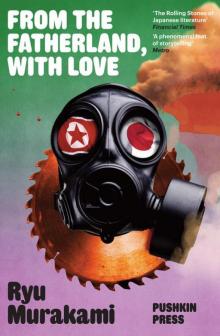
From the Fatherland, with Love, page 11


“You all know the folk tale about Hong Gil Dong, don’t you?” Here, thought Han, was a legend known to all Koreans, North and South, that he could use as just such a focus of interest. Hong Gil Dong, the son of a provincial nobleman and a servant girl, becomes a sort of Robin Hood. From an early age, he shows a talent for chukjippeop, a special form of the martial arts akin to Japanese ninja techniques. This enables him to fly, to disappear, to shape-shift, to leap over mountains, and to run faster than the wind, and he uses his powers to take various politicians, and finally even the king, to task. He forms an eight-man squad, breathing life into seven straw figures to turn them into animate replicas of himself. Once he has extracted a promise from the king to rule justly, he and his seven companions disappear, and there the first story ends. According to a sequel, however, he later returns and gathers the kingdom’s countless poor onto a fleet of ships and leads them across the sea to a hitherto unknown land, where they create a new nation in which everyone can live a life of dreamlike happiness.
“When explaining this operation to me, Comrade Kang said that I should think of the eight of you as the modern embodiment of Hong Gil Dong.”
Kang Deok Sang had indeed made a reference to the legendary hero. “The mission you’ll be leading is of enormous importance to the Republic,” he’d told Han. “Its conduct is left entirely to your discretion, but I’d like to discuss certain crucial aspects. Your team is to pose as a group of insurgents who have fled the Republic after a failed coup. The Party will denounce you as such to the world at large. Two hours after the nine of you have gained control of the target, four companies from the SOF’s Eighth Corps, with a troop strength of over five hundred, will arrive in Fukuoka by air. You will assume command of this combined force. They too will, of course, be named as insurgents. You will be described as an officer of a hardline faction who, stubbornly opposed to the peaceful reunification of the Fatherland, has been forced to leave the Republic at the head of fellow rebels. Nine days after the four companies have secured the city, one hundred and twenty thousand troops from the Eighth Corps will arrive by ship in Hakata Port—all of them supposedly as insurgents. But remember. Even when the Party denounces you as such, it will, in fact, be fully recognizing you as national heroes, as the modern equivalent of Hong Gil Dong. I’m not exaggerating when I say that you are leaving the Peninsula to transform Kyushu—where potters and other craftsmen and laborers were once forcibly taken from the Kingdom of Chosun—into an ideal state.”
Han asked whether, in the event of an attack from the Japanese police, the Self-Defense Force, or the American military stationed in Japan, a counterattack would be authorized.
“Yes, of course,” Kang had replied, but then added that none of that was likely. “Just two hours after you seize control of a vital urban sector, four companies land and immediately expand the area under control. This will take place on a Saturday when, according to our sources, their top Cabinet ministers will be at meetings in various parts of the country to explain government policies. The Prime Minister himself may not be in Tokyo on that day. It won’t be possible for them to put together an effective crisis-management team in a mere two hours. All you have to do once you’ve established control is to inform the Japanese government politely but repeatedly that you cannot guarantee the lives of the hostages you’ve taken. This should ensure that the four companies coming by plane—all elite troops under the age of thirty—are immune to attack. If the SDF threaten to take action, they can be dissuaded with a simple announcement that the hostages will be the first to die.
“Fukuoka is a large city, with a population of more than a million. Sacrificing civilian lives is simply not an acceptable option for the Japanese government, and unless it issues an appeal for help, the Americans will likewise be unable to act. According to Professor Pak Yong Su, Japan as a nation has never survived a crisis by strategically allowing for casualties and will therefore refrain from sacrificing the few for the benefit of the many. The Battle of Okinawa doesn’t contradict this; in that case the Japanese simply blundered their way into helpless slaughter. You will explain that you have left the Peninsula in order to establish a new, free state in Fukuoka and, by extension, Kyushu—much as Hong Gil Dong is said to have done. And that should be enough. You will be liberating the entire region from the oppression of Japanese imperialism, bringing it freedom and justice. It is the same claim made by Muhammad when conquering Mecca, the Crusaders marching on Jerusalem, Imperial Japan invading mainland Asia, Adolf Hitler launching his blitzkrieg, the Allies defeating the Nazis, and the United States invading Afghanistan and Iraq. Hong Gil Dong is still relevant today.”
To get control of all Fukuoka before the main body of troops from the Eighth Corps arrived, they would need to seal off the city themselves. That would be impossible, suggested Han, with only four companies of men. Kang had replied, “When those companies land, you must see to it that a rumor is spread to the effect that commandos from the Republic, speaking Japanese and dressed like Japanese, have already secretly left Fukuoka and are heading for Tokyo, where they intend to attack the Imperial Palace and the National Diet. The government is sure to respond by closing all airports, seaports, and roads around the city. The area will be sealed off without your using a single soldier. The main islands of Japan have never been invaded, so the Japanese have no practical experience of this sort of crisis. The government and news agencies will immediately start thinking of missiles being launched from the Republic or terror operations aimed at their nuclear facilities. Of course, it would be madness for us to do anything that risky. We may be forced for purely defensive purposes to occupy one of Japan’s many coastal islands, but that will be the extent of it. Merely by shooting a few policemen and taking some of the civilian population hostage, you’ll have the Japanese government on its knees. Is Japan the sort of country that’s prepared to resolve the issue by annihilating its citizens along with the enemy? No, it is not.”
Listening to these words, Han hadn’t been able to conceal a tremor of excitement. This operation would go down in history. The thought that they would be proclaiming themselves insurgents and that they would be branded by the Fatherland as rebels didn’t bother him. Kang had assured him that the families of all the SOF officers involved would be given special privileges, and in fact once the operation had been authorized and training had begun, Han’s family had been moved from Kumhwa in Kangwon Province to guest quarters in Pyongyang. In due course they would be given a high-class apartment on Kwangbok Avenue and his sons would be enrolled in one of the capital’s schools. It was likely that every soldier involved would be assured of similar treatment for their immediate families. Would the promises be kept? In any case, there was no alternative: they could remain at home disgraced, or leave the Peninsula as heroes.
Prior to the launch of the mission, a letter of encouragement had arrived from Kim Gweon Cheol, Deputy Director of the Fourth Section of the Organization and Guidance Department. Kang had read it aloud in ringing tones to the nine commandos.
“Greetings, comrade soldiers, loyal warriors. A warm glow of pride must rise in your breasts as you prepare to embark on your mission, sailing into the very jaws of death for the sake of a united Fatherland, that cause for which our Great Leader burned with zeal, and for which our Dear Leader now tirelessly devotes himself every hour of every day. For that same cause we know your own hearts too are beating, your wills like molten steel. You who go now to fulfill our people’s most cherished hopes, forsaking the joys and comforts of home for a distant land, will never be forgotten. Your orders come down from our glorious leader himself; failure is inconceivable. His august command ensures success and, holding us in its firm embrace, helps us to stand as steadfast protectors of socialism, the Fatherland, and our pioneering spirit.”
“What do you think? Can you see yourselves as Hong Gil Dong?”
Han sat down on the sofa. The very sound of the legendary name, with the image it conjured up of a healthy, energetic, rosy-cheeked youth, seemed to have a good effect on him. Choi Hyo Il and Cho Seong Rae got up from their seats and began slowly pacing the cabin.
“But Hong Gil Dong was just a boy,” muttered Cho, looking at the ceiling. “I think of myself as an adult, a soldier pure and simple.”
Cho was from Yongdan in North Hwanghae Province. Both he and Choi were exceptions in that neither was from the upper ranks of society. Ri Gwi Hui’s father was a prominent engineer; Jang Bong Su was the second son of a captain in the Capital Air Defense Corps; and Kim Hyang Mok’s father was a physician trained in Moscow, her mother the daughter of a revolutionary hero who was, in turn, a distant relative of Kang Pan Sok, mother of the Great Leader. Choi, by way of contrast, had been born into a poor farming family, and Cho was the son of the cook at a restaurant-and-sauna place. Their political pedigrees were impeccable, but they were certainly not from elite backgrounds. Tall, gentle-looking, thirty-year-old Cho was known as a gallant soldier—gallant in both senses of the word. On the one hand, he had achieved perfect scores in mountain-and-snow training; on the other, he had also landed in the brig a number of times for fooling around with women in the mountains outside Pyongyang.
“No one is saying you are Hong Gil Dong,” said Kim Hyang Mok. “The commander is speaking metaphorically.” She was sitting in a more relaxed position, hugging her knees.
“Right,” Choi grunted. “You never hear of Hong Gil Dong going off into the bushes with a girl.”
Cho’s face instantly flushed, and Han thought things might turn nasty. But then Cho just sighed and scratched his head like a kid caught in some kind of mischief, and the others burst out laughing.
“Well,” he said, “I can’t claim to be innocent of things like that. But it’s not my fault. It’s the ratio of women to men in the Republic. There are just a lot more women, right? And all the brightest and best-looking ones flock to the capital, so it’s even worse there. They say about eighty per cent of female workers in the Pyongyang Spinning Mill and the Pyongyang Textile Plant are single. They’re starving for love and sex. It’s not as if I took advantage of them. Sure, I invited them on a picnic sometimes—brought along some rice, kimchi, bean paste, meat, that sort of thing, and food was really scarce back then, so some of them were grateful and wanted to pay me back in the only way they could. I never forced myself on them.”
Cho’s grandfather was said to have fought in the liberation struggle as a common soldier and died throwing himself on a grenade to save his commanding officer. That placed the family solidly within the inner circle of patriots. His father, in turn, had been a soldier in the SOF, assigned to the 91st Battalion of the First Corps. The brigade was a clandestine unit, directly attached to the National Defense Committee that guarded the guesthouses used by their Comrade General, while also carrying out overseas sabotage and espionage operations. This gave him access to the Ministry of Culture’s special guesthouses on the outskirts of Pyongyang, where one could spend a month with beautiful young women gathered from all over the country. Outside of that time limit, however, it was strictly forbidden to associate with them on a private basis. For violating that prohibition, Cho’s father had been stripped of his rank and made a cook. In the Republic, adulterous relationships were outlawed, and only fools and those who couldn’t control their sexual impulses engaged in them. Cho, like the others, had received a top-notch education, and he was clearly no fool.
His lighthearted self-deprecation had a loosening effect on the group, and gradually they began to talk more freely. Kim Hyang Mok remarked that their mission made her think more of The Tale of the Fifteen Youths than of Hong Gil Dong, and the others agreed. The Great Leader himself had told this story to children during the Anti-Japanese Imperialist Movement, and later it had been turned into a novel. Fifteen boys and girls borrow a boat from some adults for a day of sailing. On their way back, they’re caught in a storm and driven far off course, finally running aground on an uninhabited island not far from the Arctic Circle. There they survive only by heroically overcoming many hardships and obstacles. They build a house, domesticate reindeer, and hunt seals, which provide them not only with food but with clothing and lamp oil. From time to time they trap a migrant bird, tie a message to its leg, and send it off in the hope of being rescued. They gather herbs to make medicine, learn to fashion pottery from red clay, and extract salt from seawater, which they use to preserve food. During their long exile, divisions arise, but their leader patiently reunites them. In the end, they manage to build a boat, sail out into the frozen sea, and head for home.
It was true, Han thought: the characters in Fifteen Youths, who struggled to survive on an uninhabited island, came closer to symbolizing this mission than did that other hero. The members of his team had now broken up into smaller groups, chatting about various things: the tale they’d just been reminded of, sexual misconduct, the South, Japan…
“You can soon start taking turns napping,” Han told them. They all answered him together, but no one saluted. At last, thought Han, they’re getting into character as South Koreans.
2
SEEDLESS PAPAYAS
April 2, 2011
JANG BONG SU awoke five minutes before the morning call. Outside the porthole it was still pitch black. In the immediate vicinity, there were several large fishing vessels the size of the Atago-Yamashiro Maru, and many more still in the distance. It was not yet four o’clock, with two hours to go to daybreak, but they had all slept, and everyone was now awake. An accurate internal clock was required of all those belonging to the Special Operations Forces. In the course of their training they’d learned, when ordered to sleep for exactly five hours, to do just that. While on the march, you had to be able to grab all the sleep you needed during infrequent thirty-minute rest stops, whether in sweltering heat or freezing cold or mosquito-ridden marsh dankness. They were even capable of sleeping in increments as short as ten seconds. During winter training in the mountains, taking a ten-second doze while tramping through the snow meant the difference between keeping up and falling behind. If you slept beyond ten seconds, however, you keeled over. Deprived of regular intervals of sleep, the body couldn’t continue to function. Mere physical exhaustion could be alleviated simply by lying down, but real sleep was essential to rest the brain; without it, mental fatigue accumulated, with a proportionate loss of concentration.
After splashing his face with fresh water from a basin in the head, Jang checked his operational clothing and equipment: a T-shirt with an American cartoon character printed on the front, a pink cotton shirt, a light green windbreaker, jeans—known as “American trousers” in the Republic, where they sold for unbelievable prices on the free market—a leather belt with a brass buckle, cotton socks with a strange little smoking-pipe logo at the top, Nike basketball shoes, and finally snug-fitting cotton briefs. There were also two extra changes of T-shirt, underwear, and socks. These went into a blue South Korean backpack, in a separate compartment from the Belgian pistol, the Czech light machine gun, and the four hand grenades. He and each of the others had been supplied with these, as well as a canteen, sunglasses, compact binoculars, a floral-patterned handkerchief, a Chinese counterfeit Seiko watch, a leather wallet containing both Japanese yen and US dollars, a forged South Korean passport, five packs of Japanese cigarettes, a disposable lighter, and a Japanese mobile phone. Female agents Kim Hyang Mok and Ri Gwi Hui were applying make-up with the aid of hand mirrors and sample photographs, but apparently imitating the way South Korean women used cosmetics was no easy task. Kim Hak Su, the second-in-command, came below to announce that they’d entered Japanese territorial waters and would be reaching their destination in a quarter of an hour.
Jang left the cabin and went up on deck, where several commandos, their preparations completed, were already waiting. Choi Hyo Il was among them, smoking a cigarette. He tried to say something to Jang, but it was drowned out by the engine noise, so he gestured for him to follow. The two of them walked around the bridge to the other side. The view quite took Jang’s breath away. There, stretching out before them at an oblique angle in the pre-dawn darkness, were the lights of Fukuoka, shrouded in what appeared to be a thin mist. He was reminded of the Milky Way as he had seen it as a boy in the countryside, when the sky seemed to descend to earth. Later he had often gone to Chinese border towns in pursuit of political criminals on the run, and there too he had been astonished at the illumination. This, however, outshone them all. He had never seen such an expanse of brightness. The array of buildings, nearly all of them glowing, stretched across his entire field of vision. From on top of the tallest of them came orange flashes; in fact, the entire row of high-rises along the coastline emitted a subdued, pulsating light. Jang’s heart was pounding, and his throat went dry; it was like being drawn into the embrace of a luminous giant.
“There it is.”
Kim Hyang Mok had materialized beside him, and was staring at the sight with defiance in her eyes. Next to her was Ri Gwi Hui. Their hair blew about in the breeze that came off the bow, and Jang caught the sweet smell of their perfume. It was a scent not encountered in the Republic, the sort of fragrance that softened strained nerves. Ri was gazing at the coastline dispassionately, but Kim stared with a smoldering hatred. Her grandfather had joined the anti-Japanese guerrillas in Manchuria as a young man; captured at the Battle of Pochonbo, he’d been tortured and killed. Her father had taught her to regard the Japanese as a race of monsters, and there, reflected in her eyes, was a great city that belonged to them. I too, thought Jang, must try to feel like her. This, after all, was the haunt of people who had brought about the division of the Fatherland and even now might be plotting to invade it. Was it because of the mild climate that those lights, glimmering in the haze, seemed unthreatening? They were intangible, ambiguous, illusory, and Jang couldn’t shake off the feeling that he was dreaming. Visible from the port side was an island that was linked to Fukuoka by a long bridge. Though it was still four in the morning, both lanes were filled with cars, the beams of their headlights colliding.