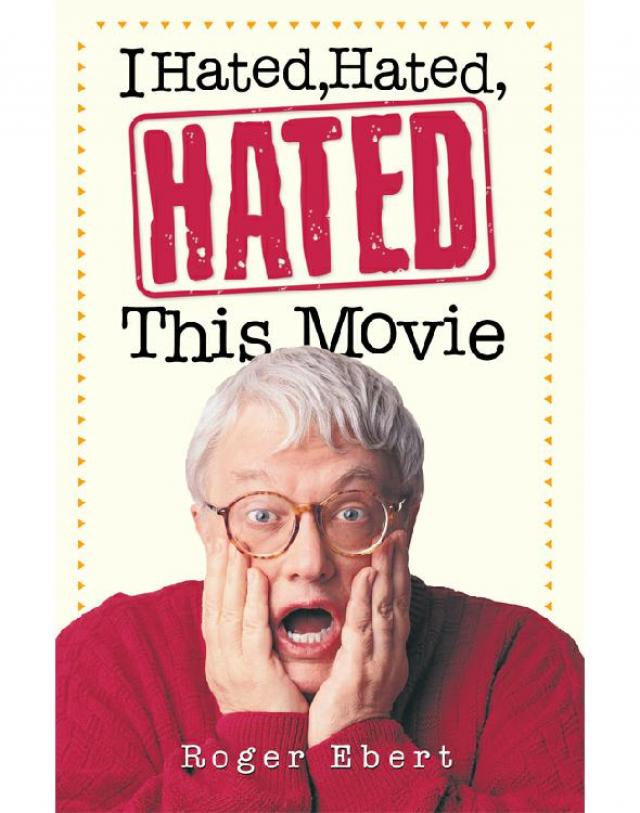
I Hated, Hated, Hated This Movie, page 33


Oh Heavenly Dog is not, alas, anywhere near as funny as the thoughts it inspires. It’s a total miscalculation from beginning to end, inspired by an idiotic decision to increase the average age of the Benji audience by starring him in a movie rated PG. Let’s face it. Movie audiences have a certain set of expectations for any movie starring a trained dog, and no mere PG rating is going to inspire hopes for greater wit, sophistication, and maturity. There is only so much you can do with a dog.
And Oh Heavenly Dog does most of it. In this movie, you’ll see Benji dial a telephone, open drawers, go through files, jump into cars, snuggle up to a beautiful girl, jump into her bubble bath and (oh, you PG!) bury his wet, black little nose in her cleavage. The possibilities for Benji in an R-rated movie are too depressing to consider.
The movie’s plot crossbreeds the original Benji formula with a whodunit murder mystery and several scenes inspired by Heaven Can Wait. The film begins with Chevy Chase in human form, as a London private eye who’s called in on a new case. He makes a house call, discovers a corpse, and is immediately stabbed in the back by a mysterious stranger.
The stabbing scene incorporates a movie device I detest: We only see the shoes, pants, coat, etc., of the killer, as he stabs our hero. Since the camera could obviously show us his identity but doesn’t, we’re being set up for a cheap, dumb revelation scene in the end. Since the thriller genre depends absolutely on the solution of mysteries set up early in the story, it’s infuriating to get shots suggesting that the camera knows who did it, but isn’t telling.
Anyway. Chevy Chase dies, goes to heaven, and is processed by a Mr. Higgins, who informs him that he can redeem his sinful record on Earth by going back and solving the original murder. The only catch is, he’ll have to go back as a dog. So the movie continues with Benji bouncing around while his thoughts are spoken on the sound track in Chevy Chase’s voice.
This premise could have been fun if the filmmakers had used imagination in exploring the fantasy of a man in a dog’s body: The whole problem of surviving in an out-scale environment has been shown entertainingly in movies such as The Incredible Shrinking Man. But no. Benji is such a cute little tyke that realities aren’t allowed to intrude, and Oh Heavenly Dog becomes another one of those insufferable movies in which the plot grinds to a dead halt while the trained dog does his tricks. You know: A-ha! The dead woman is connected in some way with the art gallery! Now let’s watch Benji pick up a pencil in his teeth and dial the telephone!
Every scene in the movie is directed at the same deadening crawl, most of the dialogue is delivered in a dispirited monotone, and the solution to the mystery, when it comes, is shatteringly uninteresting. Even the happy ending isn’t so happy. The human female that Benji falls in love with is reincarnated and sent back to Earth as a cat. The music swells on the sound track, and Benji and the cat rub sensuously against each other. My own cat, who knows a great deal about the sex lives of cats, says spending his nights in the sack with a dog is not his idea of a happy ending.
Old Dracula
(Directed by Clive Donner; starring David Niven, Teresa Graves; 1975)
In addition to the other, more distinguished, roles he was born to play, David Niven was all but made for Count Dracula. Who else could summon up quite the same combination of weary charm and seedy elegance? And who else, rising from the neck of his latest victim, his fangs dripping blood, could observe that it used to be a lot easier to get a decent meal in the old days—you just sent out for something from the neighborhood.
Such reflections lure us into Old Dracula with, well, fairly high expectations, anyway. The movie’s obviously intended as a rip-off of Young Frankenstein, right down to the artwork in the ads. But the presence of David Niven is encouraging, and so is the identity of the director: Clive Donner, who, back in the days of Swinging London, made such films as What’s New, Pussycat?
So nothing quite prepares us for the mess to follow. Niven does, indeed, keep his cool; he may be slumming but he never acts as if he knows it. But the rest of the cast—and Donner—don’t seem to have a clue as to why they’re making this movie, or how they want us to respond.
There are laughs, but they come either from isolated lines of dialogue or from the sheer incoherence of the plot. There are thrills—or, more accurately, there is one thrill, a fairly boring one as horror-film thrills go. (Will the heroine get trapped in the well with the rats and the rising water?) And there’s a great deal of fang-sinking. (The press booklet informs us that Niven’s fangs were supplied by a top London dentist: Were they covered by the National Health Service?)
But for the most part, this is a depressing exercise, because Donner and his colleagues don’t seem to have caught on to two of the most obvious developments in recent British cinema: (1) British horror films have gotten to be pretty good recently, especially the horror films from Hammer Films and the Max Rosenberg-Milton Subotsky assembly lines, so you can’t get away with schlock, and (2) Swinging London is long since gone and done with and you can no longer entertain an audience by showing lots of what used to be called birds and dollies doing the frug beneath psychedelic lights.
Just at the point where the film’s suspense, if any, is going to have to come to its climax, Donner stops everything for a party scene that could have been ripped off from Blow-Up or all of those, uh, mod, with-it 1960s British films starring girls who didn’t know how to spell Susie. Some attempt has been made to make things contemporary by supplying Count Dracula with a black girlfriend, under the following circumstances. His female companion of the last several centuries, Countess Vampira, fell into a coma some fifty years ago and has been put into a deep-freeze while the Count seeks a cure. “But—aren’t vampires supposed to be immortal?” someone asks him. Yes, he explains, but the poor countess had a run of bad luck—ate some poisoned peasant. The count finds the rare triple-O blood group necessary to make a vaccine, injects it into his sleeping vampiress, and sees her turn black as she comes back to life. Something about mixing up the vials of blood. . . .
Well, black is beautiful, and the resurrected countess immediately hits the West End of London, digging the discos and going to black exploitation films and saying “right on” a lot, and the count turns into a bat and flies around looking for an antidote for the vaccine, and the ending is so obvious that I won’t tell you, you tell me. But when you think what a truly great bad movie David Niven might have made of all of this, it’s a shame he merely made a terrible bad movie. There’s a difference.
$1,000,000 Duck
(Directed by Vince McEveety; starring Dean Jones, Sandy Duncan; 1971)
Walt Disney’s $1,000,000 Duck is one of the most profoundly stupid movies I’ve ever seen. It is a movie about a duck that gets an overdose of radiation and starts laying golden eggs. It is also about the people who won the duck, and about how greed and avarice appear in their lives, and about the lesson in love and understanding that the father gets when his son runs away with the duck and becomes trapped on a ladder between the ledges of two tall buildings, and about how the father gets a fair trial from the American judiciary system.
The people in this movie inhabit a universe of clean little 1940s bungalows with rose trellises, and there’s a mean neighbor next door and some teenagers down the street who are always souping up their hot rod. This universe looks vaguely familiar, and you wonder where you’ve seen it before. It certainly doesn’t exist in the current American space-time continuum, but maybe . . .
And then you recognize the universe. The reason you had trouble before was that you’d never seen the whole universe before, but only its laundry room. This is the universe of those sweet, simple folks who live in TV soap ads. They mean well, poor souls, and they dress neatly and keep a cheery smile, but they must have been shortchanged in the smarts department because all they care about in this life is how white their whites get. At night they have surrealistic dreams in which their towels come out whiter and whiter and whiter until the whole laundry room is filled with dazzling metaphysical sunlight, and (at last!) their towels are clean and their sins forgiven.
The woman in the family in the movie has apparently survived nine years of marriage since she has an eight-year-old son, but her survival must have been a matter of blind luck. She makes applesauce with garlic in it because she doesn’t know any better, and she takes a golden egg down to the bank when her checking account gets overdrawn. Being married to such a woman would be wearying to her husband, you imagine; he is a young scientist engaged in teaching rabbits and ducks to walk down the ramp and through the maze and push the right button and be rewarded with rabbit food or duck food.
There was a Stan Freberg record once about a rat that was put through this ordeal. Over drawbridges. Up ramps. Through doors. Past dead ends. Across the moat. Up the ladder. And finally, finally . . . when the exhausted rodent reached his objective and punched the right button, do you know what came out of the little door for him to eat? A chlorophyll gumball.
One Woman or Two
(Directed by Daniel Vigne; starring Gérard Depardieu; 1987)
See if you agree with me on this. It is not funny when people in a movie walk around being dumb and making stupid mistakes, unless the people are named Curly, Moe, and Larry. If the characters are allegedly people of normal intelligence, their stupidity isn’t funny, it’s exhausting—and One Woman or Two is the most exhausting movie in many a moon.
The movie is about a French anthropologist who hopes to get a large research grant from a rich American woman. He does not know what she looks like. He goes to meet her plane, and through a comedy of errors he ends up connecting with Sigourney Weaver instead of Dr. Ruth Westheimer. That could happen to anybody. What is amazing is that he persists in his misunderstanding for half of the movie.
There is, of course, a lamebrained plot to explain why Weaver wants to be mistaken for somebody else. There is also a reason why “Dr. Wooth” missed her plane. And a subplot about the controversy over the scientist’s belief that the first Frenchman actually was a black woman. Add it all up, and what you’ve got here is a waste of good electricity. I’m not talking about the electricity between the actors. I’m talking about the current to the projector.
The scientist is played by Gérard Depardieu, everybody’s favorite French slob, who shuffles through the movie looking more sheepish than usual. He is provided with one of the most hapless characters of his career—a scientist so lacking in perception that he ignores literally dozens of opportunities to discover that the woman he is looking for is not an American amazon but a little German choo-choo. Once Dr. Ruth arrives, she is equally lax in determining that Weaver has been mistaken for her. The light dawns so slowly that this is one of those movies you wish were on video, so you could watch it at fast-forward.
Is there any redeeming facet to this movie? Anything at all that makes it worth seeing? Maybe some nice scenery, or a small, funny moment, or a flash of charm? Let me think. I’m sitting here. I’m thinking. I’m looking at the list of cast members, to see if anything jogs my memory. Nothing. Tell you what. I’m going to turn off my portable computer and close my eyes and meditate, and if anything at all occurs to me, then this will not be the last sentence of the review.
The Opposite Sex
(Directed by Matthew Meshekoff; starring Courteney Cox; 1993)
The people who made The Opposite Sex believe it’s about a love affair between a stockbroker and an aide to the mayor of Boston. I believe it’s about the fact that two of the most idiotic people in recent movie history were able to find employment.
This is the kind of movie where nothing that is done, said, thought, or performed bears any relationship to anyone you have ever met. No one, not even the people who made this movie, believes people can be this dumb and still tie their shoes. Making The Opposite Sex is what can happen to you if you grow up thinking sitcoms are funny.
We could begin with the ungrammatical full title of the movie, which is: The Opposite Sex and How to Live with Them. Mrs. Seward, who drummed rhetoric into us at Urbana High School, would have cracked director Matthew Meshekoff over the knuckles for that one. She would have gone on to describe his script as “trite,” which was one of her favorite words, but which I have never used in a review, until now.
The movie stars Ayre Gross as David, a stockbroker who hangs out with his best buddy, Eli (Kevin Pollak). They’re regulars in the kind of lower-level singles bar that has a periscope sticking up out of the sidewalk so they can see the babes coming. Yes. They believe their days of happy bachelorhood can last forever, and they explain their theories in “comic” monologues that they deliver while looking straight at the camera, while I found myself looking at my watch. You know a movie is slow when you start looking to see what time it is. You know it’s awful when you start shaking your watch to see if it has stopped.
One day David meets Carrie (Courteney Cox), who works, as I have mentioned, in the mayor’s office. They come from different worlds, according to the press materials, which describe them as “a Jewish stockbroker and a WASPy mayoral aide.” I believe they come from exactly the same world, the twilight zone of sitcomland, where they learned that a conversation consists of straight lines, punch lines, one-liners, and asides to themselves, friends, and/or the audience. It would be madness trying to carry on a conversation with people like this. You’d be wondering why nobody wrote your lines.
David and Carrie meet, fall in love, get real serious, and then, according to the ancient laws of formulas that the shameless filmmakers borrow from countless other films, they get cold feet. After All, They Come From Different Worlds. I know I am repeating myself, but the movie offers me nothing new to say.
Then he tries dating around, and she goes out with a sensitive type, but gee, wouldn’t you know they miss one another, and so they get back together again, followed by one of those endings in which everything depends on one character being able to find another character at a time and place when no living person could have possibly found him there.
My requirements for movies are so simple. All I ask is that the characters be of reasonable intelligence—at least smart enough so that I could spend half an hour with them with slight interest. If not intelligent, then they should be kooky, or stupid in some original way, or even sexy will do. But if they bring nothing to the party, my response is obvious: Why make a movie about them?
Patch Adams
(Directed by Tom Shadyac; starring Robin Williams; 1998)
Patch Adams made me want to spray the screen with Lysol. This movie is shameless. It’s not merely a tearjerker. It extracts tears individually by liposuction, without anesthesia. It is allegedly based on the life of a real man named Patch Adams, who I have seen on television, where he looks like Salvador Dali’s seedy kid brother. If all of these things really happened to him, they should have abandoned Robin Williams and brought in Jerry Lewis for the telethon.
As the movie opens, a suicidal Patch has checked into a mental hospital. There he finds that the doctors don’t help him, but the patients do. On the outside, he determines to become a doctor in order to help people, and enrolls in a medical school. Soon he finds, not to our amazement, that medicine is an impersonal business. When a patient is referred to by bed number or disease, Patch reasonably asks, “What’s her name?”
Patch is a character. To himself, he’s an irrepressible bundle of joy, a zany live wire who brings laughter into the lives of the sick and dying. To me, he’s a pain in the wazoo. If this guy broke into my hospital room and started tap-dancing with bedpans on his feet, I’d call the cops.
The lesson of Patch Adams is that laughter is the best medicine. I know Norman Cousins cured himself by watching Marx Brothers movies, but to paraphrase Groucho, I enjoy a good cigar, but not when it explodes. I’ve been lucky enough to discover doctors who never once found it necessary to treat me while wearing a red rubber nose.
In the movie, Patch plays the clown to cheer up little tikes whose hair has fallen out from chemotherapy. Put in charge of the school welcoming committee for a gynecologist’s convention, he builds a papier màché prop: Enormous spread legs reaching an apex at the entrance to the lecture hall. What a card. He’s the nonconformist, humanist, warmhearted rebel who defies the cold and materialist establishment and stands up for clowns and free spirits everywhere. This is a role Robin Williams was born to play. In fact, he was born playing it.
We can see at the beginning where the movie is headed, but we think maybe we can jump free before the crash. No luck. (Spoiler warning!) Consider, for example, the character named Carin (Monica Potter), who is one of Patch’s fellow students. She appears too late in the movie to be a major love interest. Yet Patch does love her. Therefore, she’s obviously in the movie for one purpose only: to die. The only suspense involves her function in the movie’s structure, which is inspired by those outlines that Hollywood writing coaches flog to their students: Will her death provide the False Crisis, or the Real Crisis?
She’s only good for the False Crisis, which I will not reveal, except to say that it is cruel and arbitrary, stuck in merely to get a cheap effect. It inspires broodings of worthlessness in Patch, who ponders suicide, but sees a butterfly, and pulls himself together for the False Dawn. Life must go on, and he must continue his mission to save sad patients from their depression. They may die, but they’ll die laughing.
The False Dawn (the upbeat before the final downbeat) is a lulu. A dying woman refuses to eat. Patch convinces her to take nourishment by filling a plastic wading pool with spaghetti and jumping around in it. This is the perfect approach, and soon the wretched woman is gobbling her pasta. I hope she got some from the part he hadn’t stepped in.