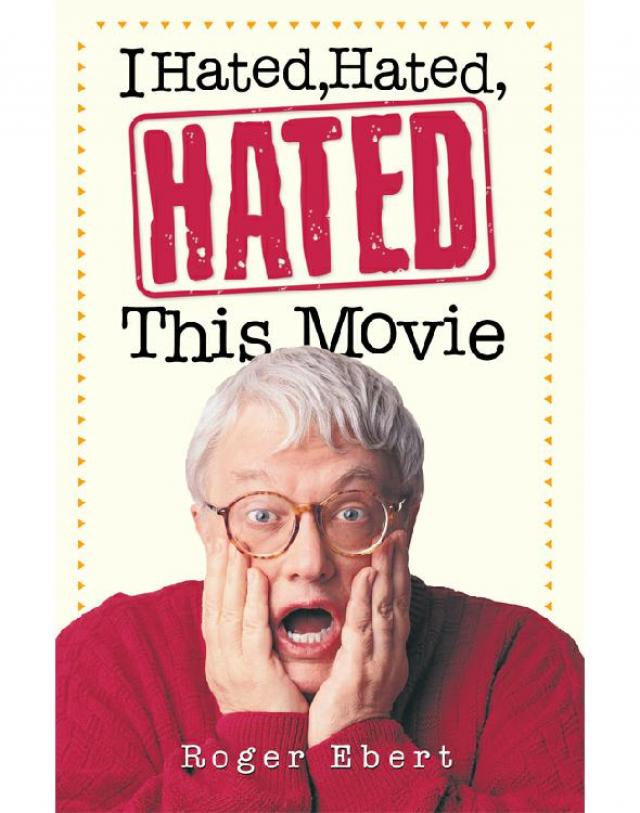
I Hated, Hated, Hated This Movie, page 12


The Dead Poets Society is not the worst of the countless recent movies about good kids and hidebound, authoritarian older people. It may, however, be the most shameless in its attempt to pander to an adolescent audience. The movie pays lip service to qualities and values that, on the evidence of the screenplay itself, it is cheerfully willing to abandon. If you are going to evoke Henry David Thoreau as the patron saint of your movie, then you had better make a movie he would have admired. Here is one of my favorite sentences from Thoreau’s Walden, which I recommend for serious study by the authors of this film: “. . . instead of studying how to make it worth men’s while to buy my baskets, I studied rather how to avoid the necessity of selling them.” Think about it.
Death Before Dishonor
(Directed by Tery J. Leonard; starring Fred Dryer, Brian Keith; 1987)
Death Before Dishonor is one of those Far-Off Rattle Movies. You know the kind I mean. The hero is stalking the killer through a large, abandoned warehouse or other interior space, and on the sound track you hear the sound of a Far-Off Rattle. It is usually followed by a series of echoing thumps. Sometimes you then get the sound of a stick on a snare drum, just sort of allowed to fall, so it trails off ominously.
Far-Off Rattle Movies are not necessarily bad. In fact, some of my favorite movies have Far-Off Rattles in them. But they are almost always bad when they are crossbred with Rum-Dum-a-Dum Movies. That’s the movie where you get the ersatz military march on the sound track—the canned patriotism with the snare drum keeping marching time, Rum-Dum-a-Dum.
As a general rule, if you get a Rum-Dum-a-Dum and a Far-Off Rattle within five minutes of each other, you’re dealing with a creatively bankrupt project. Any movie that has to link clichés that closely is unable to think of anything to go in between them. That’s especially true if the movie is a thriller about terrorists and it makes a link between the Myth of the Seemingly Ordinary Day and the Mistake of the Unmotivated Close-up.
For example, in Death Before Dishonor, a U.S. official is about to leave his home in a strife-torn Middle Eastern nation. It is a Perfectly Ordinary Day. There is small talk with his family. He makes plans for later in the day. Since these are trivial personal plans, not part of the plot, we know with absolute certainty that the official will be kidnapped or executed. This is not just a possibility but an absolute certainty, because immediately afterward we see the Mistake of the Unmotivated Close-up.
This is a close-up of the official’s house servant, a local native whose role in the movie up until now has been utterly insignificant. Suddenly he gets an Unmotivated Close-up, and, of course, his eyes narrow. We do not have time today to discuss the general topic of narrowing eyes, but never mind. We know that the house servant is in on the plot, the official will be kidnapped or killed, and that it will be safe for us to sneak down the aisle for more popcorn or a quick trip to the john and still be back before the next outbreak of Far-Off Rattles and Rum-Dum-a-Dums.
Death Before Dishonor is a fairly pure example of the Ordinary Day/Narrowed Eyes/Far-Off Rattle/Rum-Dum-a-Dum Movie. There isn’t a lick of original thinking in it. The plot: Americans are kidnapped and brave marines blast their way in and free them from their heathen Arab kidnappers. The movie’s dramatic high point is when Brian Keith takes an electric drill right through the back of his hand and still won’t sign the phony confession. Courage? Maybe. Or maybe it just didn’t hurt much. Seconds later, he’s barking out orders, and in later scenes he seems to have regained the use of the maimed hand.
Is there anything at all to recommend this movie? Yeah, sort of. For one thing, this is the only movie I have ever seen where an Arab leader is played by an actor named Rockne Tarkington. For another, it sets a modern-day record for the Fruit Cart Rule. That’s the rule that says that whenever there is a chase scene in a Third World nation, a speeding car will sooner or later overturn a fruit cart, leaving melons and oranges rolling in its wake. The chase scene in this movie takes out two fruit stands and one fruit cart in less than two minutes. Rum-a-Dum-Dum.
Death Race 2000
(Directed by Paul Bartel; starring David Carradine, Sylvester Stallone; 1975)
My colleague over on the city side, Bob Greene, ran a column not long ago consisting of essays by third- and fourth-graders about what they liked at the movies. To a child they agreed that violence, mayhem, and blood were their favorites. None of them mentioned cowboys, color cartoons, or comedies, which were my favorites when I was growing up in peaceful Downstate.
Greene’s column was inspired by my review of Mandingo, in which I noted that it was a gruesomely violent R-rated movie to which children, nevertheless, had been admitted. “If I’d been a kid in the audience,” I wrote, “I’m sure I would have been terrified and grief-stricken.” Greene’s point was that the urban kids of today are less easily shocked than I imagine.
To be sure, Greene printed only essays that praised violence (there must have been at least one kid with a high regard for horses, but we didn’t hear from him). But Greene’s point was provoking, as I was reminded last weekend during Death Race 2000. This is a film about a futuristic cross-country race in which the winner is determined, not merely by his speed, but also by the number of pedestrians he kills.
You get 100 points for someone in a wheelchair, 70 points for the aged, 50 points for kids, and so on. The killings are depicted in the most graphic way possible. Giant swords on the fronts of the cars skewer victims. Others are run over several times. In front of an old folks’ home, the nurses park the wheelchairs of several patients in the middle of the road and wait for the fun to start—but the driver has his own little joke by swerving off the road and killing the nurses.
Well, the theater was up for grabs. The audience was at least half small children, and they loved it. They’d never seen anything so funny, I guess, and I was torn between walking out immediately and staying to witness a spectacle more dismaying than anything on the screen: the way small children were digging gratuitous bloodshed.
Despite the fact that the movie had a “restricted rating,” the vast majority of the kids (and by kids I mean under ten years old) were without parents or guardians. That wasn’t a surprise. It’s been my observation in several Chicago theaters recently that little or no attempt is made to enforce the R rating. The ratings were intended in the first place to protect kids from violence. But last Saturday I began to wonder who was going to protect us from these kids.
Death Rides a Horse
(Directed by Giullo Petroni; starring Lee Van Cleef, John Phillip Law; 1969)
It’s hard to explain the fun to be found in seeing the right kind of bad movie. Pauline Kael had a go at it in an article titled “Trash, Art and the Movies,” but I think she set her sights too high. The bad movies she enjoyed (The Scalphunters, Wild in the Streets) weren’t within a hundred miles of the badness of Death Rides a Horse, which is a bad movie indeed.
And yet . . . there’s something about surrendering yourself to the dark, womblike security of a large Loop theater on a Saturday afternoon, and hunkering down in your seat, and simply abandoning yourself to a movie like this. From time to time you will laugh, or be thrilled, or distract yourself by noticing that some of the outdoor scenes are shot in a studio with backdrops (at one point, the hero casts a shadow across an entire mountain range).
Or you can try to unravel the puzzles of mistaken or double identity upon which the plots of spaghetti Westerns always seem to depend. The heroes of these films would save a lot of time if they’d accept one simple rule of thumb: Generally speaking, everyone they meet is either (a) the man who killed their families fifteen years ago, (b) a stranger who is after the same villains for mysterious reasons of his own, or (c) their father, brother, or son.
Alas, it generally takes two hours for these connections to be established. But in the meantime, sitting there in the dark, watching this bad Western on a Saturday afternoon, you get an autobiographical feedback. You reestablish contact with yourself at the age of ten, when you sat through dozens of exactly such bad Westerns (only not so violent, although they seemed violent enough). And contemplation of this sort, the mystics assure us, is necessary for psychic well-being.
You can also reflect upon the fates of Lee Van Cleef and John Phillip Law. It is one thing to hurtle into stardom as a result of spaghetti Westerns, as Clint Eastwood did. But it is another thing to remain stuck in them. Van Cleef’s face, in close-up, has the lean, hardened, embittered expression of a man who has either (a) been pursuing his lonely vengeance across the plains of the West for thirty years, or (b) realizes he will be making spaghetti Westerns the rest of his life. These two looks are nearly indiscernible.
But Law still retains a certain innocence. His eyes are blue, his face unlined, his cheekbones the sort we expect on a young and stubborn hero. He usually wears suspenders in these movies (just as Eastwood smokes cigars and Van Cleef a pipe), and they give him a naive earnestness. We feel that he will doggedly obtain revenge, wipe out the bad guys, and return to Hollywood some day. We are on his side. He needs us.
The Deathmaster
(Directed by Ray Danton; starring Robert Quarry; 1972)
In the good old days when Roger Corman was producing about two dozen exploitation movies a year for American-International, he had this interesting way of getting the most for his money. He’d go through all the current acting contracts to see who still owed the company a few days of work. And then if, say, Boris Karloff was still on the books for four days, Corman would commission a horror movie that could be about anything. There was only one requirement: The script had to include four shooting days with Karloff. No more.
The Deathmaster, a vampire movie that has moved into neighborhood theaters under cover of darkness (naturally) looks like two Corman specials that ran into one another. Judging by the internal evidence, I’d say the producers were into Robert Quarry for about two weeks of work. They also must have had a batch of unexpired contracts with a team of unemployed beach-party extras. How else to explain the most schizo horror movie since Schizo?
Quarry is an old hand at the vampire game by now. The two superstars of the horror genre are Christopher Lee and Peter Cushing, but Quarry has been moving up fast in the last year or two. He was the star of Count Yorga, Vampire, a fairly good movie, and of Return of Count Yorga, which was not bad as these things go.
Quarry knows all the tricks by now. He can even do this thing with his face so you can’t tell he’s wearing his false vampire fangs. That’s important, because it maintains the element of surprise. Vampire movies all have one thing in common: The people you think you can trust—your best friends—turn out to be vampires at the crucial moment. They’ve already been bitten.
The hero is always running down musty corridors and through rat-infested wine cellars, shouting “Susan! Thank God, you’re still alive!” And then they embrace, and Susan lets him have it in the neck. A moment’s thought will reveal that this kind of scene won’t work unless the actors involved can conceal their false vampire fangs. If they can’t, all the hero can shout is “Susan! Got the mumps?”
Anyway, in The Deathmaster, Quarry arrives at dawn in an old coffin that floats up on the beach at Santa Monica. If memory serves, it is the same beach used for the opening scene of Attack of the Crab Monsters. Crab monsters would be a relief, in fact, but what with the price of crabmeat these days they have all gone into different lines of work or simply dropped out of circulation. The next time you eat a crabmeat cocktail, reflect that it could be eating you.
Quarry is not, however, eaten by a crabmeat cocktail, which might easily have earned the picture an R rating if there is any decency left in this world. No, he appears mysteriously at a beach house that is inhabited by the beach-party dropouts and a motorcycle bum who looks like a refugee from She-Devils on Wheels.
These people are not very bright. They are so dumb, in fact, that they have had to learn to speak the English language by watching old AIP exploitation movies, and their dialogue is eight years out of date. They talk like Frankie Avalon trying to pass for hip, translated from the German. Count Khorda (for such is his name) makes them a proposition: “Would you like to trade a lifetime of petty passions for an eternity of ecstasy?” They would, I guess. Well, wouldn’t you?
What follows is pretty routine. I counted seven chases down the same length of subterranean cavern. It is not a very long length but what they do is photograph a guy running down it one way, and then cut to the other end of the same passage and have him run back. That way, it looks twice as long as it is, which is how the movie feels. Everybody gets turned into a vampire except the hero, who is stuck with his crummy lifetime of petty passions.
Deep Rising
(Directed by Stephen Sommers; starring Anthony Heald, Famke Janssen; 1998)
Deep Rising could also have been titled Eat the Titanic! It’s about a giant squid that attacks a luxurious cruise ship in the South China Sea. Like all movie monsters, it has perfect timing, and always bursts into the frame just when the characters are least expecting it. And it has an unsavory way of dining. “They eat you?” asks one of the survivors. “No—they drink you.”
The mechanics for a movie like this were well established in the Alien pictures, and Deep Rising clones the same formula. Survivors are trapped inside giant vessel. The creature finds its way around air ducts and sewer pipes, popping out of shaft openings to gobble up minor characters (the first victim is sucked down the toilet).
D’ya think they have meetings out in Hollywood to share the latest twists? I’ve been seeing the same gimmicks in a lot of different pictures. Evidence: No sooner does the snake in Anaconda release a slimy survivor from its innards than the squid in Deep Rising does the same thing. No sooner is there an indoor jet-ski chase in Hard Rain than there’s one in Deep Rising. No sooner does a horrible monster crawl out of the air ducts in Alien Resurrection than it does so in Deep Rising. And last week I saw Phantoms, which was sort of Deep Rising Meets Alien and Goes West. In that one, the creature emerged from the depths of the earth rather than the sea, but had the same nasty practice of living behind piles of undigested remains.
An effort has been made by Stephen Sommers, writer-director of Deep Rising, to add humor to his story, although not even the presence of Leslie Nielsen could help this picture. The hero, Treat Williams, is a freelance power cruiser skipper who hires his craft out to a gang of vile and reprehensible bad guys, led by Wes Studi. They want to hijack a new casino ship on its maiden voyage. The owner of the ship (Anthony Heald) makes several speeches boasting about how stable it is; it can stay level in the water even during a raging tempest. I wonder if those speeches were inserted after the filmmakers realized how phony their special effects look. Every time we see the ship, it’s absolutely immobile in the midst of churning waves.
No matter; the creature from the deep attacks the ship, and by the time Williams delivers the pirates, it seems to be deserted. All except for the evil owner, of course, and also a jewel thief (Famke Janssen) who was locked in the brig and survived the carnage.
A movie like this depends much upon the appearance of the monster, which has been designed by f/x wizard Rob Bottin. There is a vast evil squid head, and lots of tentacles (which seem to have minds of their own, and lots of mouths with many teeth). So vicious is the squid, indeed, that only the cynical will ask how it can survive for long periods out of water, or how and why it emits its piercing howl, which goes reverberating through the air shafts.
There’s comic relief from Williams’s engine room man, Pantucci (Kevin J. O’Connor), who plays the Donald O’Connor role and is always wisecracking in the face of adversity. And an effective supporting performance by Djimon Hounsou, as one of the more fanatic members of the pirate gang (he played Cinque in Amistad, and shows a powerful screen presence once again, although on the whole I’ll bet he wishes the giant squid movie had come out before the Spielberg film).
Bemusing, how much money and effort goes into the making of a movie like this, and how little thought. It’s months of hard work—for what? The movie is essentially an Alien clone with a fresh paint job. You know something’s wrong when a fearsome tentacle rears up out of the water and opens its mouth, and there are lots of little tentacles inside with their own ugly mouths, all filled with nasty teeth, and all you can think is, been there, seen that.
The Devils
(Directed by Ken Russell; starring Oliver Reed, Vanessa Redgrave; 1972)
A burning at the stake, an afternoon in the rack, headscrews, a douche with boiling water, nails into hands, induced vomiting, ripped tongues, dead babes, human target practice, possession by devils, rape, transvestism, nude orgies in the nunnery. Put them all together and they spell Committed Art—because these are modern times and I certainly hope none of us is opposed to truth.
Now truth, as I’ve explained before, is what’s real. If it isn’t real, it isn’t true, which is why a stone is better than a dream. If it isn’t reality, who needs it? Or could lay hands on it, anyway? And everything on the list above really happened, yes it did. All the events and persons depicted in The Devils are intended to be confused with actual events and persons. How do I know? Ken Russell tells me so.
And so I stood in line the other night, my shoulders hunched against a nasty wind off Lake Michigan, waiting to get into the Cinema Theater so that I, too, could ascertain that unspeakable atrocities had occurred in the seventeenth century. I didn’t want to be the only member of my generation unaware of the terrible events of 1634, a year that will live in infamy. Like everyone who’s committed, I found it my duty to bear witness against the moral outrages of, if not my time, then at least somebody’s time. I mean, you can’t just sit around.