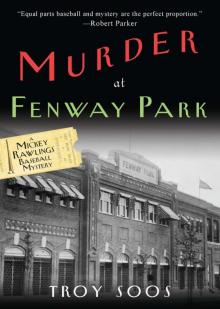
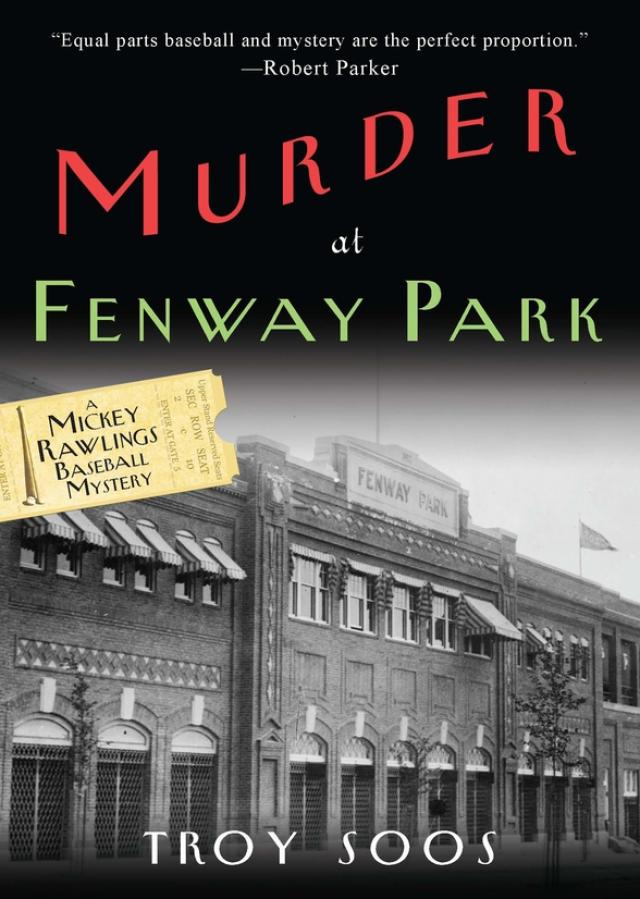
Murder at Fenway Park, page 18
part #1 of A Mickey Rawlings Baseball Mystery Series


“Suspicious timing.”
“That occurred to me. But there were injuries on the club, and Tyler did tell me he was going to get some more players besides me. Anyway, I’d just like to know for sure if I can rule them out, but I can’t ask around at the hotel—the whole team is staying there, and it’s too easy for me to get caught. Could you find out when Strickler and Neal checked in?”
“Sure, I’ll give it a shot. What’s the name of the hotel?”
“The Union Hotel on 125th Street. Also: how would somebody get a key to my room?”
“I’ll see if I can find out.”
“Oh. One last thing. It’s about Red Corriden. There could be one more person besides Ty Cobb who would have wanted to kill him: Jack O’Connor. Harry Howell told me O’Connor joined an outlaw league in California—it’s not part of organized baseball, so it’s not covered in the baseball papers or the guides. Can you check somehow where he was in April?”
“I could try. Let me get this down.” Landfors took a notebook and pencil from his jacket pocket. “I have a friend who works on a paper in Sacramento. He might be able to check if O’Connor is still in California. Do you know where in California O’Connor went?”
“Not the city. But it would have been the California State League. They probably don’t have more than a few teams.”
“Okay, I’ll do my best. It may take a couple of days ... how about if I give you a call when I got something?”
“That’d be great. Thanks.”
“Glad to. I have a feeling this could turn out to be interesting.”
Chapter Twenty-Two
On Monday, back in Boston with an off day, I stayed in my room at Mrs. O’Brien’s to await Landfors’s promised call. The regular season was down to the final three weeks, and soon we would be facing the National League’s champion in the World Series. This was a critical time for the Sox, and my play would be under greater scrutiny than ever. With the high stakes on my performance, I wanted to be as prepared as possible, so I used the time to make sure my equipment was in tip-top shape.
I first went over my glove, tugging and tightening the laces and checking them for tears. Then I gave the glove a light coat of oil to keep the leather soft and pliable.
The bats were next, and Mabel was the first one I pulled out of my bat bag. I’d decided she was the one I would use for the rest of the year. I sat on the edge of my bed and slowly rubbed her down with a ham bone from the kitchen.
With time still to kill, I decided to work on the rest of the bats—if Mabel cracked, I would need the backups. I reached into the bag and grabbed hold of another. The handle didn’t feel like one of mine. I slid it halfway out of the bag and saw that it wasn’t. The barrel was coated with something that had blackened but still contained traces of red.
I’d found the weapon that killed Red Corriden. In my bat bag. I let the bat drop back in the bag out of my sight.
Sliding to the middle of my bed, I pulled my knees up to my chin. I wrapped my arms around them and started to rock back and forth, trying to grasp what was happening here.
This was some kind of double reverse setup. It was the gun that killed Macullar that I was supposed to worry about. Now it’s Corriden’s murder weapon that turns up in my room. How soon would Captain O’Malley be coming to “find” it?
Well, I wasn’t going to make it easy for him. The thing to do was hide the bat. But where? My room didn’t have a lot of hiding places: a bed, a desk, and a bureau were the only furniture. I could destroy the bat—break it up, sneak the pieces downstairs, and toss them in the kitchen stove.
No, I couldn’t destroy it. The bat was my first real evidence. It might help me make the case against Corriden’s killer. I needed to keep the bat, but keep it hidden somewhere. Would it fit in back of a dresser drawer?
I rolled to the edge of the bed and picked up the bat bag again. Grabbing firm hold of the alien bat handle, I pulled it all the way out. I found I was able to look at it a bit more easily than I could when I’d first seen it in the Fenway Park tunnel—maybe because at that time I had also just seen the bat’s bloodied target.
One of the first things I saw on the bat was the model: Ty Cobb was stamped next to the Louisville Slugger logo. Of course, that didn’t necessarily mean the bat was owned by Cobb—probably a quarter of all bats in use were Ty Cobb models.
Looking closer, I saw some hairs matted on the dried blood. Some of them buckled up out of the crusty mess. They were orange in color—an orange I had seen before. It suddenly wasn’t easy to look at the bat anymore. I decided to hide it as quickly as possible.
My room was useless as a hiding place. Was there anywhere else in the house I could stash it? None that occurred to me—I was unfamiliar with most of the house and didn’t want Mrs. O’Brien to see me wandering around with a bloody baseball bat trying to find a place to stash it. How about outside?
I went to my bedroom window and opened it all the way. Poking my head out, I could see no helpful hiding place near the window—no convenient tree, no vine-covered trellis. The lack of access to my window told me that whoever planted the bat in my bag hadn’t used the window to sneak it into my room.
A flurry of beating wings directly above my head caused me to twist around and look up. A crow took off from the rain gutter on the roof. The gutter looked to be a fine container for a bat—as long as it didn’t rain. I pulled myself to a sitting position on the windowsill with my feet inside and my body out. With a slight jump and a long stretch, I was able to reach the gutter and feel inside: twigs, dirt, and something disgusting left by the crow—but no water. A bat should be safe there.
I slid back inside and took out the bat again. To use it for evidence, it had to be protected. I pulled a pair of old socks from my dresser and slid one sock over each end of the bat. They didn’t quite meet in the middle so I took a third sock, tore a hole in the toe and slid that one over the gap. Then I did the same with a fourth sock—partly for extra protection and partly because I didn’t want to be left with an unmatched sock.
The bat wrapped up, I went back to the window and quickly deposited it in the gutter.
I sat back down on the bed. Waiting for O’Malley to show up, I tried to figure how the bat got in my bag. I couldn’t see how anyone could have planted it in my room—no one could have come in through the window, and I couldn’t picture anyone coming in downstairs and getting past Mrs. O’Brien. It was more likely put into my bag before we left New York. The problem was, I didn’t know when. I just couldn’t be sure when the last time was that I had seen the bag with only my own bats in it.
Wait a minute ... Maybe it wasn’t a problem getting past Mrs. O’Brien. What if Bucky O’Brien was the one in cahoots with Bob Tyler? It was Bucky who suggested I room at his aunt’s house—maybe he even has her keeping an eye on me.
After a Tuesday afternoon game at Fenway, in which Bucky O’Brien lost to Cleveland but I prolonged my life by delivering two RBIs, I went home for the traditional stuffed cabbage feast.
No police had come to find the bat, and I couldn’t figure it out. If it was planted evidence, why didn’t O’Malley show up immediately? Why give me a chance to get rid of it?
Anyway, my own bats were now in the Fenway clubhouse, the one that killed Corriden was still in the gutter, and I was feeling a little safer. I’d even dropped the idea of Bucky and his aunt working for Tyler—other than that it would be convenient for them to spy on me, there was no reason to suspect them. And I was getting tired of suspecting everyone I met in the last few months.
Mrs. O’Brien was late getting supper on the table. Bucky and I sat in the parlor impatiently waiting to eat. Neither of us spoke. Bucky, I knew, was going over every pitch he made today and silently chewing himself out for every one he deemed a mistake. I was punishing myself with reviews of every mistake I made off the field this year. I wondered if I would get a chance to be washed up like Jimmy Macullar or if I’d get the early retirement Red Corriden had. Maybe I wouldn’t have to worry about what I’d do when my playing days were over.
My train of thought worked its way out of my mouth, and I broke the silence. “Hey, Bucky, what are you going to do when you’re through playing baseball?”
“So I lost the lousy game! Don’t go putting me out to pasture, for chrissake.”
“No, no ... I didn’t mean you. I meant—well, I was just wondering what guys do when they can’t play anymore. Guys like Fletcher and Strickler. You know, it’ll happen to all of us.”
“Yeah, well, I’m gonna be playing for a long time. I got years left in me yet.”
“I saw Harry Howell in St. Louis. Poor guy’s a barber now. I’d hate to be a barber ... How about Fletcher—what do you think he’s going to do?”
“Don’t know. Unless he can get paid for drinking. I don’t know what else he’s good at. Of course, that worked okay for Charlie Strickler—he’s tending bar at the Beacon Hotel.”
“I’d like to be a movie actor, I think ... But I’ll probably end up an ice farmer or something.”
“A what?”
“Nothing. Just thinking out loud.”
“Boys! Supper!”
An hour after dinner, Karl Landfors came through. I was back in my room when the phone rang, and halfway down the stairs by the time Mrs. O’Brien called my name, “Mickey! Telephone! It’s long distance—from New York! Ah, here you are.”
“Hello?”
“Hi, Mickey. It’s Karl.”
“I was hoping it’d be you. Come up with anything?”
“A couple things. First, the Union Hotel—that’s a real dump, by the way.”
“Yeah, I know. But it’s better than most places we stay at. The good hotels don’t take ball players.”
“Huh. Anyway, Billy Neal and Charlie Strickler registered on April 29 at four P.M. That’s about the time your first game at Hilltop was ending, right?”
“Yeah, I think so. So they could have gotten into my room, then.”
“Easily, in fact. I got a room key from the chambermaid. Told her I was with the Pirates—they’re in town against the Giants and they’re staying at the Union.”
The picture of scrawny Landfors being taken for a baseball player amused me. “Boy, if she believed you were a ball player, anybody could have gotten a key.”
“Actually, she seemed skeptical—until I told her I played second base.” Landfors paused to enjoy his little victory with that crack. Then he said, “You’re right, though. It could have been anybody. Their arrival at the hotel just means that Strickler and Neal had the same opportunity as everyone else. Although I’m still suspicious about the timing of Tyler getting them. What do you know about those two?”
“Well, they were both with Red Corriden on the Tigers. Charlie Strickler was Corriden’s roommate. They didn’t get along, but it was no big deal, I don’t think. And I don’t think Strickler could have been working for Tyler, either—if he was, Tyler wouldn’t have let him go.”
“What about Billy Neal?”
“I don’t think he’d be in on anything with Tyler, either. Neal isn’t all that happy about being on the team, and he isn’t quiet about it—I heard him giving Jake Stahl hell for not playing him enough. So Neal probably doesn’t even like Tyler.”
“You don’t have to like someone to work for him—on or off the field. But from what you said, Neal’s definitely in the clear.”
“How’s that?”
“If Tyler got him for purposes other than playing baseball, Neal would keep quiet. He wouldn’t bring attention to the fact that he’s not playing.”
“Oh. That makes sense, I guess.”
“Now: as to Bob Tyler. Nothing solid yet, but it might be good news. At least not bad news.”
“What is it?”
“As far as I can find out, Tyler doesn’t really seem to have any high-level political influence in Boston—”
“Then what’s all his talk about Honey Fitz? Tyler makes it sound like they’re tight as thieves.”
“Apparently Fitzgerald is just a rabid Red Sox fan. Always has been, no matter who was running the club. There might have been some expediting of the building permits to put up Fenway Park, but that’s about it—and I can’t even confirm that. Tyler probably wants people to think he’s close to the mayor just to enhance his own stature. That seems to be important to him—having people think he’s a big shot.
“I’ve been trying to find out what motivates Tyler. Since he took those payoffs from Rothstein, I assumed it was money. Doesn’t look like that’s the case anymore. Mostly he wants respectability—especially to spite Ban Johnson. They didn’t part amicably. Johnson didn’t officially fire him, but that’s what I’m told it amounted to. He forced Tyler to resign. So now Tyler is determined to show Johnson up.
“What this all boils down to is: I think you’re probably right about Tyler keeping you safe until the season’s over—how long is that now?”
“Twenty-one days.”
“Ouch. That’s not much. Anyway, Tyler seems obsessed with becoming World Champions—respectability comes with the title, and it will be the best way he can thumb his nose at Johnson. So he probably won’t let anything happen to anyone who can help him win.”
“Well, that’s encouraging. At least I have three more weeks then.”
“Yes, but don’t be too encouraged. Like I said, that’s not much time. Also, it’s tough to prove a negative.”
“What do you mean?”
“I couldn’t find where Tyler had influence outside O’Malley’s precinct, but that doesn’t mean it isn’t there—could be that I just couldn’t find it. I was thorough, but I don’t want to give you any false sense of security. Besides, if they want to frame you, they don’t necessarily need any further influence. If they can get evidence planted on you, that’s all they have to do to get you convicted.”
“So I better find out what really happened to Macullar.”
“We better. I’ll do whatever I can to help.”
“Thanks, Karl.”
“No problem. Let me know if there’s anything else you want me to do.”
As I hung up, I was already conjuring up a new scenario. Ban Johnson forced Tyler to resign. Does that mean Johnson knew about Tyler taking bribes from Arnold Rothstein? Makes sense. He can’t fire Tyler because he would have to give a reason. Johnson can’t let the public know that the American League secretary was in league with gamblers, so he quietly gets Tyler to resign, expecting he’d be rid of him for good. Now Tyler is running the team that’s sure to win the American League pennant. Johnson must be fuming. And maybe more than that.
Could Bob Tyler be the real target of the killings—with Ban Johnson behind them? Maybe Johnson figured that a murder at the new ballpark would hurt attendance, embarrass Tyler—even put him on the way to bankruptcy. But Tyler foiled the first attempt by moving Corriden’s body out of Fenway. So Johnson’s next target is even closer to Tyler: Jimmy Macullar. If this doesn’t work, will Johnson go after Tyler directly?
Ban Johnson wouldn’t commit murder himself, of course. He’d get someone else to do it. If I were Johnson, I know just who I’d get: Harry Howell and Jack O’Connor—promise to let them back in baseball. All they’d have to do is kill Corriden—somebody they already hated....
This is crazy. Now I’m pretending to be league president and I’m planning murders.
A piercing caw outside my window woke me early in the morning. After a few minutes of grumbling about the unwelcome wake-up call, I remembered the bat laying in the gutter. And that I’d forgotten to tell Landfors about it.
There wasn’t much light in the room; I thought it was because of the early hour. Then I rolled out of bed and saw that day had come, but the morning sky out the window was overcast with dark swirling clouds. My only hard evidence in the Red Corriden case was about to be soaked.
Still in my underclothes, I did my acrobatics on the window ledge and retrieved the bat from its hiding place. Since there no longer seemed to be an impending visit from Captain O’Malley, I now had the time to examine the bat more closely.
I carefully rolled back the socks that protected it. Other than the mess on its barrel, the bat was clean and fairly bright. It must have been nearly new when it was used to kill Corriden. I took a closer look at the blood and the hair, trying to ignore the fact that they were human remains and thinking of them only as “evidence.” I spotted a thin white hair sticking out of the dark crust. Would Red Corriden have white hair?
Grabbing my razor from the washstand, I went over the patch of dried blood, scraping carefully and surgically extracting each hair. There were nine of them: five orange, two white, one brown, and one black. Laying them out straight, I could see that three of them were long—maybe four or five inches, much longer than a ball player would wear his hair. Something was wrong with my evidence.
The bone fragments! When I saw the bat in the tunnel, there had been bone fragments imbedded in the wood. I gently ran my fingertips along the bat, rotating it as I went back and forth, like eating a cob of corn. I felt nothing sticking in the wood. Bringing the bat to the window where the light was better, I ran my eyes over the bat the same way. There were no indentations from where bone fragments might have fallen out. This wasn’t the bat that killed Red Corriden.
So why was it planted in my bat bag? And whose blood and hair had been left on it?
Another calling card, maybe. The bat left on my hotel bed in April, and now this one—one that had been used.
I carefully wrapped the hairs in a clean handkerchief and put them in a dresser drawer. Maybe they would still be evidence.
The Beacon Hotel wasn’t on Beacon Hill or even on Beacon Street. It was next to Freeman & Son Fish Co., between T and Long Wharfs. On the clapboard front of the hotel were two signs: one proclaimed TRANSIENTS WELCOME, the other—twice as large—advertised BEER. I answered the call of the latter sign, and went into the hotel’s bar room.