A Taxonomy of Barnacles, page 18
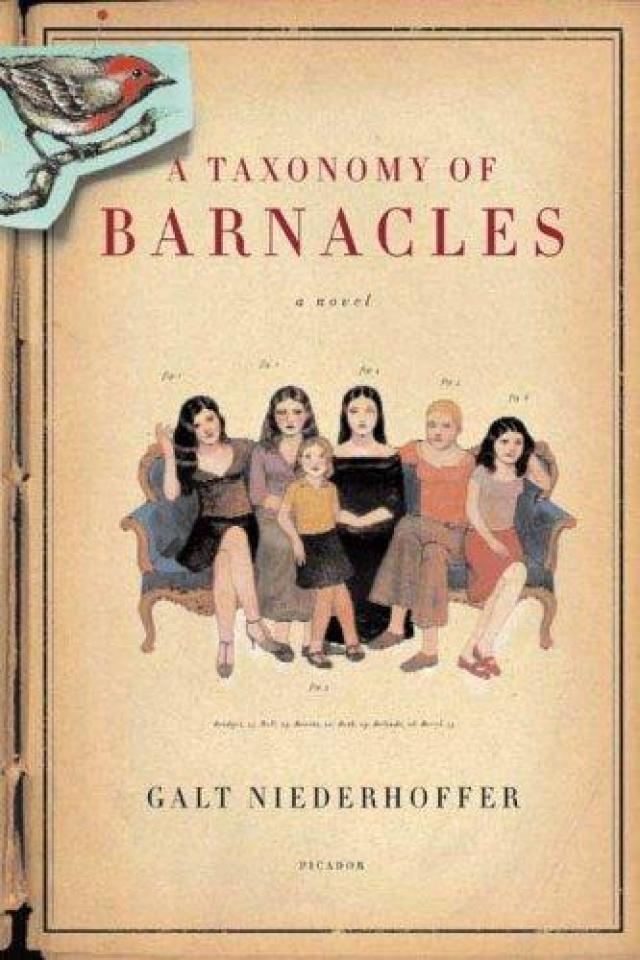


Belinda was the most vocal critic of Barry’s treatment of Latrell, perhaps because it mirrored her own relationship with her father. In Belinda’s opinion, her father had long since stopped considering her a viable competitor and she had done her best to confirm this theory by abstaining from aspiration. Still, Belinda felt this boycott had not produced its intended result, failing to anger her father in a noticeable way. She felt as she had when she had run away from home as a child, and then returned to find her parents had not yet noticed her absence. Barry’s disappointment in Latrell seemed a more active form than his disappointment in her. It betrayed his initial avid interest, whereas his obliviousness to her proved he had never cared in the first place. As a result, Belinda found herself in the odd and illogical position of being jealous of nothing.
She spent an inordinate amount of time engaged in an analysis of Barry’s relationship with Latrell. The obvious diagnosis was that Barry’s dispassion was displaced anger for never having had a son. But the more subtle interpretation, Belinda claimed, was that Barry was a racist. When pressed, Barry simply defended himself (and revealed that she might be correct) by acknowledging Latrell’s numerous talents as though listing the attributes of a racehorse. Latrell, Barry explained, was the most gifted pianist of all the musicians in the house, two years ahead of his class in math, very handsome by all accounts, and coordinated in sports. In keeping with the tactics of their ongoing war, Barry combated Belinda’s attack by ignoring it.
In fact, Barry’s greatest grievance with Latrell was that he never spoke. Of course, this was to Barry’s great advantage because Latrell knew about his affairs and objected to them vehemently. Fearing discovery Barry instituted a system of rewards by which he hoped to keep Latrell in check. He allowed Latrell to accompany him whenever he left the house for his trysts, provided Latrell kept mum about the nature of their forays. As it turned out, this was an ideal trade; Barry provided the perfect antidote to Bella’s overprotective mothering and Latrell provided the perfect alibi for Barry’s extracurricular activities. And, ironically, these trips improved Barry’s reputation, earning him points from his daughters and ex-wife, who felt this time marked a positive change in Barry’s treatment of Latrell. In exchange for his silence, Latrell was allowed to roam the city for the duration of Barry’s visits provided he arrived on time at the appointed meeting spot. Latrell accepted the privilege with the short-lived guilt of a thief, his conscience bothering him up to the point at which he cashed in.
The arrangement had been particularly beneficial to Barry of late. During the past winter, he had been through a generation of girlfriends, the number of which was only surpassed by their age range. He liked to think of himself as the kind of man who might one day entertain all these women in the same room while wearing a silk bathrobe and eating strawberries. “Girls,” he would say, “I’d like to thank you all for coming over. That is,” he would add, “I would like to thank you one at a time. These circumstances,” he would continue after laughter subsided, “are incredibly unusual so I do appreciate your congregating on such short notice.” At this point, he would allow the assembled women to emit a collective gasp. Some would rush to Barry’s side while others jumped to his lap. All would listen with rapt horror while Barry informed them of the news that even his astounding virility had failed to immunize him from a rare terminal disease.
There was, in fact, one shred of truth to Barry’s odd fantasy. His mistresses were so unified in one sentiment, they could have started a club; every one of them felt Barry was a bastard and that he should be strung up. Of course, none of these women had real grounds for this complaint since each was guilty of the same crime, not only the betrayal of other women but worse, the folly of thinking that she alone would be the exception to the rule. The only comfort to Barry’s jilted lovers was Barry’s ineptitude. Despite the frequency of his transgressions, his cover-ups were hopelessly clumsy, providing his lovers with an insurance policy of sorts. Without fail, every time Barry cheated his wife or mistress figured it out within twenty-four hours. Recently, however, the sheer number of these women had produced an interesting effect, rendering Barry’s mistresses so shrill and demanding as to seem more like wives.
The line between wife and paramour had blurred to such a great extent that Barry was forced to consider a whole new set of ethical questions. Was it technically adultery, for example, when one cheated on one’s mistress with one’s own wife? Was it normal to miss one’s wife during the act of intercourse with another woman? Was it paranoid to suspect one’s mistresses of secretly plotting to litigate? Would it be un-sexy, let alone legal, to ask a woman to sign a release before the naughty act? Was it dangerous, long term, to feel this guilty after having sex? Was guilt a disorder or a revelation brought on by old age? And finally, did it make one less of a man if sometimes, while in the company of even the most beautiful woman, one experienced a craving as intense as a pregnant woman for pickles to flee the lady in one’s company and retreat to a dark, quiet room.
If these questions were not enough to incite a nervous breakdown, Barry was also plagued by a slew of minor financial headaches. They included, in addition to the staggering cost of nine dependents (not counting houseguests and pets), the demands of a consortium of spurned female employees whose belligerence was surpassed only by their excellent lawyers. But the problem ran far deeper than mere financial strain. This was something more nebulous, something more cerebral What if this problem could not be solved? Barry now considered. What if he had finally met his match? Accosted by such overwhelming questions, Barry experienced true desperation. And he learned something new about life. There is nothing more humbling than getting through the better part of one’s life without ever having been humbled. Fear, as it turns out, is far scarier at the age of sixty than six.
Of course, this state of existential angst was the exact antithesis to the state of bliss one hopes to attain with adultery. These affairs had served to increase, instead of release, stress. At first, the problem manifested itself subtly, gradually robbing adultery of its previous pleasure. Soon, it became so consuming that Barry stopped seeing women altogether, preferring the solace of his room to the oppressive guilt. But even solitude failed to provide a respite anymore. Lately, he had suffered from such severe insomnia that the world had been drained of color, its contents jaundicing like aging newsprint as the day progressed. It had gotten so bad that the apartment had become a sea of menacing shadows; at times making his daughters indistinguishable from one another, nothing more than six strange blurs.
The affliction caused Barry, for the first time in his life, to feel deeply depressed, a state that was further compounded by the fact that he could not share it with anyone and that it seemed, unlike every other obstacle he had encountered, to be impervious to his will. Having been a stranger to his emotions for sixty years, he now found himself in uncharted territory. If only his ailment were more specific. He would have preferred to be diagnosed with any known disease, even to go bankrupt. But this, this amorphous psychic disorientation was nothing short of torture. And the insomnia, the cruel unceasing sleepless hours cursed Barry to relive his regrets for an additional twelve hours each day.
Finally, just before sunrise on Saturday, Barry gave up on sleep. Inspired by a hallucination or a dream, he couldn’t tell which was which anymore, he dressed quickly and crept down the hall, determined to leave the house. As he passed Bell and Bridget’s bedroom, he experienced the strangest urge to enter and surprised himself by acting on it without a second thought. Making no particular effort to muffle the sound, he opened the door to the girls’ bedroom, crossed the room while they slept, then launched himself out of their window onto their fire escape. Velocity gave Barry new hope, but it caused him to produce far more noise than he’d intended.
As a result, Bella, who was also awake, heard the commotion and stirred. She stopped where she stood in the pantry and held her glass extremely still, waiting for further sound. But, hearing nothing, she assumed the noise came from the usual source. Expectation and inebriation combined to double Bella’s surprise when she opened her window to find Barry huddled on the thirteenth-floor fire escape, staring at the city sky as though glimpsing it for the first time. For one brief, deluded moment, she concluded that Barry was en route to her bedroom, that he had finally realized his mistake and now clambered toward her window to beg her to take him back.
“Barry,” she whispered.
Barry looked up, shocked by the sound of his name. He stared at Bella as though unsure how he’d arrived at this place.
“Barry,” Bella whispered again. “Is everything all right?”
“Oh yes,” he mumbled. “Very much so. Just admiring the stars.”
Bella followed Barry’s gaze to an utterly starless sky.
Barry smiled with nonchalance, then searched for a better excuse. “If you must know, I’m feeling a little haunted.”
Bella leaned farther out her window. “Regret is a menacing ghost,” she said.
Barry gazed searchingly at Bella, considering her thesis then, dismissing the notion, forced a nervous laugh. “Just ignore me,” he announced. “I haven’t slept in days.”
Bella mistook this for a rejection and shrunk perceptibly. She imagined her face from Barry’s perspective and felt a rush of shame. In the five years since their divorce, she had aged at least ten years. Her eyes had frayed at the edges due to constant frowning. Her lips had flattened under the weight of so much disappointment. Even her hair had thinned to resemble dried corn’s lusterless silk. The skin on her face displayed her years like rings around a tree. Her pain was perfectly visible in her wide blue eyes. They were still as clear and guileless as a child’s.
But Bella’s assumption was wrong: Barry was not focused on her flaws. On the contrary, as Barry stared at Bella, he found himself wondering, with the confusion of an amnesiac, why he had ever strayed from her side.
Bella leaned farther out the window, anxious to decipher Barry’s look. “Barry,” she said. She leaned out farther. “Barry, are you sure you’re all right?”
Barry said nothing. He only stood, staring helplessly. “I’m fine,” he said. “I was just.” He trailed off. “I was just … leaving.”
“Oh,” sighed Bella.
Barry nodded and headed down the fire escape with new determination.
Bella watched Barry descend to the sidewalk, then turned and hurried back to bed, firm in her resolve to remember the exchange as part of a dream the next day.
Barry, too, forced the encounter from his mind as he hurried away from the building and toward Park Avenue. Perhaps, he decided, this mental anguish signaled a need for repentance. His purpose renewed, he continued east and ducked into the subway station on Fifty-ninth and Lexington. The D train was Barry’s favorite subway line, not only because it was the fastest route to Coney Island, but also because, in Barry’s opinion, the train circled the city with the intimacy of a lover. First, it clutched the Lower East Side with adoring thoroughness, next it traced the Manhattan Bridge as though grasping its form. Then, without warning, it swerved, twisting your body with the tremors of passion itself until suddenly you faced the great city, its sturdy skyline promising to keep watch no matter how far you strayed from home.
Barry’s senses were accosted even before he got off the train. Memory performed its usual calculus, subtracting the present from the past, illuminating details of the world as though to make a case for the impressive feats of time. The smell of hot dogs and salt air blended with a sweet, slightly acrid perfume, joining with the dampness of the ocean to refresh Barry after the train ride. Immediately, his eyes adjusted to the brighter light. Brooklyn’s sun seemed stronger somehow than the one that shone over Manhattan, its tinge more silvery than gold, its quality unimpeded by the shade of skyscrapers. Signs and storefronts had submitted to a general fading, red letters bleaching to pink, blacks to gray and blue. It was as though the area had been victim to a fire and was now covered by a thin film of soot. Every inch of Coney Island admitted this gradual decline. But Barry refused to be slowed by nostalgia and continued down Surf Avenue, hurrying past old memories as though he might outrun them if he moved fast enough.
In Coney Island, evolution proceeded at a faster rate. The island, like Galápagos, was galvanized by constant change, colonized by visitors, and propelled forward by adaptation. Sometimes Barry’s stories about Coney Island seemed like the stuff of myth, tales of a race of amphibious men who had risen out of the East River, leaping from gutters to gold in the span of one lifetime. These men were, of course, direct descendants of America’s first immigrants, vigorous Russians and Poles who settled in Coney Island, comforted by its resemblance to the coastlines at home.
Like most of the boys in Brighton Beach, Barry was raised a Jew, but his parents had a higher faith, worshipping devoutly at the altar of hard work. Temple, of course, had proven a blessing and a curse for these men, first forcing the flight from their homes, then helping them to build new ones. Their children were witnesses to the divine power of toil, had both heard the tales and seen the proof of relentless effort. Barry’s father, Boris Baranski, was high priest of this religion. A professor by training and policeman by necessity, he was a knight of the neighborhood, presiding over his family and the Boardwalk. Soon enough, a seventeen-year-old bride completed his court and a third generation joined the crowded pool. But even a fortified island is vulnerable to attack. Nature paid Boris that most outrageous of insults, cursing him with cancer at the age of sixty-three. Though his struggle lasted many years, Boris told his family about his disease only days before it took his life. Arguably, Barry’s hostility to nature hearkened back to this early grudge.
Barry unconsciously picked up his pace, sprinting through the backdrop of his childhood. He turned up Surf Avenue, heading past the amusement park then the Brighton Beach Baths. He hurried past the handball courts and the checker tables, slowing only to avoid collision with the occasional morning jogger. He finally began to slow as he passed Nathan’s, turning onto Mermaid Avenue at the old carousel. He stopped at the Mermaid Hotel, a once glamorous seaside resort, now a squatter’s haven and home to a population of criminals and vagrants.
Quickly, Barry crossed the lobby and entered the hotel bar, a dank little dive whose lack of light and patrons both contributed to the sense that it was still nighttime inside. He took a seat on a stool and positioned himself with his back to the bar then sat, scanning the bar’s patrons for familiar features, as though any one of them might be an old and dear acquaintance. Suddenly, he stood from his stool and ventured deeper into the bar, stopping at a small unoccupied piano. He stared at it for a moment, then seated himself on the bench and caressed the keys with the bemused wistfulness of a man paying last respects.
“Can I help you?” someone called from the bar.
“No,” Barry muttered. He remained still, staring at the piano keys. Then, changing his mind, he looked up at the bartender. “Actually, yes,” he said though it sounded less like a demand than a plea.
The bartender paused, cocking his head with a mixture of boredom and curiosity.
“Do you know the man who used to work here?” Barry asked.
The bartender waited on more information.
“He used to play the piano here.”
“Tuesday nights,” he answered.
Barry remained still for another moment, alternating his gaze from the piano to the bar. Then, he stood and rushed back onto the street like a plant desperate for light.
Back on Surf Avenue, Barry held his pace, fueled by the prospect of a new destination. He hurried past all the places that stood in his memories: the Steeplechase, Wonderland, the original Luna Park. Onward past the handball courts, their white cement already shaded by the midday sun, the checkerboard tables, the Brighton Beach Baths, and the aquarium. As he walked, the past and present blurred, reshaping his surroundings. Finally, Barry slowed to a stop at the steps of a small Lutheran church. He stood for a moment as though contemplating the awesome power of God, then pushed the door, crossed the vestibule, and, finding the church empty, took a seat in the last pew.
It was at this moment that something utterly bizarre occurred. Barry, an avid atheist, was overwhelmed with the urge to weep. All at once, his head was filled with a loud and buoyant melody. The opening notes of Beethoven’s Fifth symphony resounded with hymnlike grandeur, as though played on this very church organ. To make the experience yet more peculiar, Barry detected another sound just underneath the familiar melody, the notes of which were underscored by the faint sound of knocking. Unfortunately, Barry would never know the source of this beatific noise. Could it possibly be a sign from God or just his mind playing tricks? Either way, he could no longer be sure of anything and questioned, now with new urgency, whether the hand that knocked was that of man or destiny.
Part Two
Nurture
11
Killer Backhand
Just as there are good and bad marriages, there are good and bad proposals. Billy’s running contest with Bridget had taught him nothing if not this. But now he faced the ultimate challenge, scripting an authentic one of his own. And for the first time in his life, he was at a loss for words. Whereas before he had been overwhelmed by the sheer abundance of possibilities, he was now completely tongue-tied at the thought. Whereas before he had viewed men in this position as a bunch of leashed puppets, he now found respect, even awe, for those who made it down to one knee. If he was honest with himself, and Billy rarely was, he would have to admit that he did not so much loathe marriage proposals as he loathed the idea of his being rejected. And, lacking insight into Bridget’s heart, he mistook her stated antipathy to the proposal for antipathy to him. In thinking about the current task, he employed a process of elimination. If he could not pen the perfect proposal, at least he could decide which to avoid.