Ellery Queen's Double Dozen, page 37


At its ground level, the Teatro Marcello was a series of arch ways, the original entrances to the arena within. Noah walked slowly along them. Each archway was barred by a massive iron gate beyond which was a small cavern solidly bricked, impenetrable at any point. Behind each gate could be seen fragments of columns, broken statuary of heads and arms and robed bodies, a litter of filthy paper blown in by the winds of time. Only in one of those musty caverns could be seen signs of life going on. Piled on a slab of marble were schoolbooks, coats, and sweaters, evidently the property of the boys playing football, placed here for safety’s sake.
For safety’s sake. With a sense of mounting excitement, Noah studied the gate closely. It extended from the floor almost to the top of the archway. Its iron bars were too close together to allow even a boy to slip between them, its lock massive and solidly caked with rust, the chain holding it as heavy as a small anchor chain. Impossible to get under, over, or through it—yet the boys had. Magic. Could someone else have used that magic on a July night twenty years ago?
When Noah called to them, the boys took their time about stopping their game, and then came over to the gate warily. By dint of elaborate gestures, Noah managed to make his questions clear, but it took a package of cigarettes and a handful of coins to get the required demonstration.
One of the boys, grinning, locked his hands around a bar of the gate and with an effort raised it clear of its socket in the horizontal rod supporting it near the ground. Now it was held only by the cross rod overhead. The boy drew it aside at an angle and slipped through the space left. He returned, dropped the bar back into place, and held out a hand for another cigarette.
With the help of the Italian phrase book, Noah questioned the group around him. How long had these locked gates been here? The boys scratched their heads and looked at each other. A long time. Before they could remember. Before their fathers could remember. A very long time.
And how long had that one bar been loose, so that you could go in and out if you knew the secret? The same. All the ragazzi around here knew about it as their fathers had before them.
Could any other of these gates be entered this way? No, this was the only one. The good one.
When he had dismissed them by showing empty hands no more cigarettes, no more coins—Noah sat down on one of the sunken marble columns near the women and their baby carriages, and waited. It took a while for the boys to finish their game and depart, taking their gear with them, but finally they were gone. Then Noah entered the gate, using his newfound secret, and started a slow, methodical investigation of what lay in the shadowy reaches beyond it.
He gave no thought to the condition of his hands or clothes, but carefully pushed aside the litter of paper, probed under and between the chunks of marble, all the broken statuary around him. At the far end of the cavern he found that once he had swept the litter aside there was a clear space underfoot. Starting at the wall, he inched forward on his knees, sweeping his fingers lightly back and forth over the ground. Then his fingertips hit a slight depression in the flinty earth, an almost imperceptible concavity. Despite the chill in the air, he was sweating now, and had to pull out a handkerchief to mop his brow.
He traced the depression, his fingertips moving along it, following it to its length, turning where it turned, marking a rectangle the length and width of a man’s body. Once before, in the course of his official duties, Detective Noah Freeman had marked a rectangle like this in the weed-grown yard of a Bronx shanty, and had found beneath it what he had expected to find. He knew he would not be disappointed in what would be dug up from this hole beneath the Teatro Marcello. He was tempted to get a tool and do the digging himself, but that, of course, must be the job of the police. And before they would be notified, the pieces of the puzzle, all at hand now, must be placed together before a proper witness. . .
When Noah returned to the Pensione Alfiara, he brought with him as witness the rabbi, bewildered by the unexplained urgency of this mission, out of breath at the quick pace Noah had set through the streets. Rosanna was at her desk. She look ed with alarm at Noah’s grimy hands, at the streaks of dirt and sweat on his face. For the rabbi she had no greeting. This was the enemy, an unbeliever in the cause of Ezechiele Coen. She had eyes only for Noah.
“What happened?” she said. “What’s wrong? Are you hurt?”
“No. Listen, Rosanna, have you told Giorgio anything about von Grubbner? About my meeting with the police commissioner?”
“No.”
“Good. Where is he now?”
“Giorgio? In the kitchen, I think. But why? What—?”
“If you come along, you’ll see why. But you’re not to say anything. Not a word, do you understand. Let me do all the talking.”
Giorgio was in the kitchen listlessly moving a mop back and forth over the Boor. He stopped when he saw his visitors, and regarded them with bleary bewilderment. Now is the time, Noah thought. It must be done quickly and surely now, or it will never be done at all.
“Giorgio,” he said, “I have news for you. Good news. Your father did not betray anyone.”
Resentment flickered in the bleary eyes. “I have always known that, signore. But why is it your concern?”
“He never betrayed anyone, Giorgio. But you did.”
Rosanna gasped. Giorgio shook his head pityingly. “Listen to him! Basta, signore. Basta. I have work to do.”
“You did your work a long time ago,” Noah said relentlessly. “And when your father took away the money paid to you for it, you followed him and killed him to get it back.”
He was pleased to see that Giorgio did not reel under this wholly false accusation. Instead, he seemed to draw strength from it. This is the way, Noah thought, that the unsuspecting animal is lured closer and closer to the trap. What hurt was that Rosanna, looking back and forth from inquisitor to accused, seemed ready to collapse. The rabbi watched with the same numb horror.
Giorgio turned to them. “Do you hear this?” he demanded, and there was a distinct mockery in his voice. “Now I am a murderer. Now I killed my own father.”
“Before a witness,” Noah said softly.
“Oh, of course, before a witness. And who was that witness, signore?”
“Someone who has just told the police everything. They’ll bring him here very soon, so that he can point you out to them. A Major von Grubbner.”
“And that is the worst lie of all!” said Giorgio triumphantly. “He’s dead, that one! Dead and buried, do you hear? So all your talk—!”
There are animals which, when trapped, will fight to the death for their freedom, will gnaw away one of their own legs to release themselves. There are others which go to pieces the instant the jaws of the trap have snapped on them, become quivering lumps of flesh waiting only for the end. Giorgio, Noah saw, was one of the latter breed. His voice choked off, his jaw went slack, his face ashen. The mop, released from his nerveless grip, fell with a clatter. Rosanna took a step toward him, but Noah caught her wrist, holding her back.
“How do you know he’s dead, Giorgio?” he demanded. “Yes, he’s dead and buried—but how did you know that? No one else knew. How do you happen to be the only one?”
The man swayed, fell back against the wall.
“You killed van Grubbner and took that money,” Noah said. “When your father tried to get rid of it, the partisans held him guilty of informing and shot him while you stood by, refusing to tell them the truth. In a way, you did help kill him, didn’t you? That’s what you’ve been carrying around in you since the day he died, isn’t it?”
“Giorgio!” Rosanna cried out. “But why didn’t you tell them? Why? Why?”
“Because,” said Noah, “then they would have known the real informer. That money was a price paid to you for information, wasn’t it, Giorgio?”
The word emerged like a groan. “Yes.”
“You?” Rosanna said wonderingly, her eyes fixed on her brother. “It was you?”
“But what could I do? What could I do? He came to me, the German. He said he knew I was of the Resistance. He said if I did not tell him where the men were hidden I would be put to death. If I told, I would be saved. I would be rewarded.”
The broken hulk lurched toward Rosanna, arms held wide in appeal, but Noah barred the way. “Why did you kill von Grubbner?”
“Because he cheated me. After the men were taken, I went to him for the money, and he laughed at me. He said I must tell him about others, too. I must tell everything, and then he would pay. So I killed him. When he turned away, I picked up a stone and struck him on the head and then again and again until he was dead. And I buried him behind the gate there because only the ragazzi knew how to get through it, and no one would find him there.”
“But you took that case full of money with you.”
“Yes, but only to give to my father. And I told him every thing. Everything. I swear it. I wanted him to beat me. I wanted him to kill me if that would make it all right. But he would not. All he knew was that the money must be returned. He had too much honor! That was what he died for. He was mad with honor! Who else on this earth would try to return money to a dead man?”
Giorgio’s legs gave way. He fell to his knees and remained there, striking the floor blow after blow with his fist. “Who else?” he moaned. “Who else?”
The rabbi looked helplessly at Noah. “He was a boy then,” he said in a voice of anguish. “Only a boy. Can we hold children guilty of the crimes we inflict on them?” And then he said with bewilderment, “But what of the blood money? What did Ezechiele Coen do with it? What became of it?”
“I think we’ll soon find out,” said Noah.
They were all there at the gates of the Teatro Marcello when Commissioner Ponziani arrived with his men. All of them and more. The rabbi and Carlo Piperno, the post-card vender, and Vito Levi, the butcher, and a host of others whose names were inscribed on the rolls of the synagogue. And tenants of the Teatro Marcello, curious as to what was going on below them, and schoolboys and passersby with time to spare.
The Commissioner knew his job, Noah saw. Not only had he brought a couple of strong young carabinieri to perform the exhumation, but other men as well to hold back the excited crowd.
Only Giorgio was not there. Giorgio was in a bed of the hospital on Isola Tiberina, his face turned to the wall. He was willing himself to die, the doctor had said, but he would not die. He would live, and, with help, make use of the years ahead. It was possible that employment in the hospital itself, work which helped the unfortunate, might restore to him a sense of his own worth. The doctor would see to that when the time came.
Noah watched as the police shattered the lock on the gates and drew them apart, their hinges groaning rustily. He put an arm around Rosanna’s waist and drew her to him as the crowd pressed close behind them. This was all her doing, he thought. Her faith had moved mountains, and with someone like this at his side, someone whose faith in him would never waver, it would not be hard to return home and face down the cynics there. It didn’t take a majority vote of confidence to sustain you; it needed only one person’s granite faith.
The police strung up lights in the vaulted area behind the gate. They studied the ground, then carefully plied shovels as the Commissioner hovered around them.
“Faccia attenzione,” he said. “Adagio. Adagio.”
The mound of dirt against the wall grew larger. The men put aside their shovels. Kneeling, they carefully scooped earth from the hole, handful by handful. Then the form of a body showed, fleshless bones, a grinning shattered skull. A body clad in the moldering tatters of a military uniform.
And, as Noah saw under the glare of droplights, this was not the first time these remains had been uncovered. On the chest of the skeletal form rested a small leather case fallen to rot, marked by the blackened image of a doubleheaded eagle. The case had come apart at all its seams, the money in it seemed to have melted together in lumps, more like clay than money, yet it was clearly recognizable for what it was. Twenty years ago Ezechiele Coen had scraped aside the earth over the freshly buried Major Alois von Grubbner and returned his money to him. There it was and there he was, together as they had been since that time.
Noah became aware of the rabbi’s voice behind him. Then another voice and another, all merging into a litany recited in deep-toned chorus. A litany, Noah thought, older than the oldest ruins of Rome. It was the kaddish, the Hebrew prayer for the dead, raised to heaven for Ezechiele Coen, now at rest.
ABOUT THE EDITOR OF EQMM
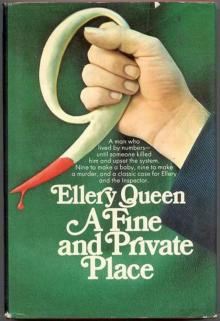
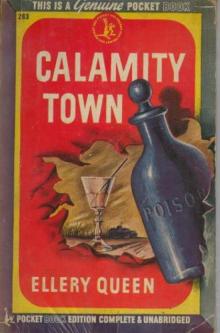
The team of FREDERIC DANNAY AND MANFRED B. LEE—who, as everyone knows, are Ellery Queen—has written fifty-three books, including those first published under the pseudonym of Barnaby Ross, and has edited fifty more. A conservative estimate has placed their total sales in various editions at more than 60,000,000 copies. And millions of listeners agreed when TV Guide awarded the Ellery Queen program its National Award as the best mystery show of 1950. Ellery Queen has won five annual “Edgars” (the national Mystery Writers of America awards similar to the “Oscars” of Hollywood), including the Grand Master award of 1960, and both the silver and gold “Gertrudes” awarded by Pocket Books.
Ellery Queen’s most recent successes are And on the Eighth Day and The Player on the Other Side. He is internationally known as an editor—Ellery Queen’s Mystery Magazine celebrated its 23rd Anniversary in 1964—and his library of first editions contained the finest collection of books of detective short stories in existence.
These facts about Queen may account for the remark by Anthony Boucher, in his profile of Manfred B. Lee and Frederic Dannay, that “Ellery Queen is the American detective story.”
Ellery Queen, Ellery Queen's Double Dozen