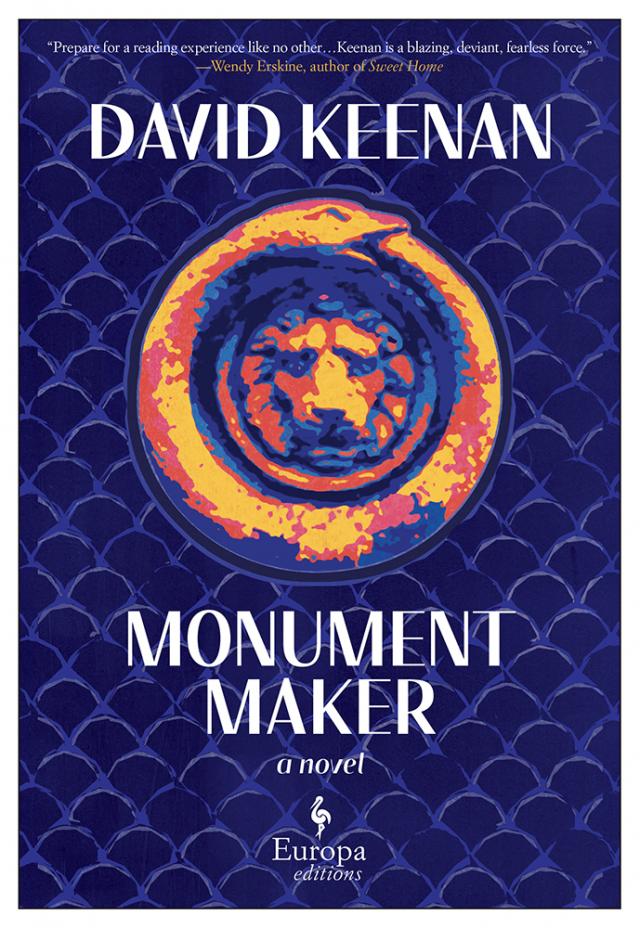
Monument Maker, page 6


This book, he said, and it was one of the few times he even acknowledged that I had translated this enigmatic lifework of his, is small beer, to me, he said.
Some group of headcases drove down into the quarry in a Land Rover and took potshots at the container while we were hidden out inside, one evening, we were gaining a reputation in the village and these nutcases were getting drunk and riding out here with an idea of terrifying us. It’s only slugs, Pierre said, when he inspected the bullet holes in the side of the container, it’s a glorified spud gun, he said, which was one of the best English phrases he ever said, and I said to him, slugs that can dent steel, better duck, but he ignored me completely and went back to his blissful ignorance of anything but the mission of his own life.
There was a whole rigmarole, about how we got bread, how we got eggs, how we bought wine from a farmer with a vine on a hill, this thick, ruddy red wine which tasted of wellington boots and of salt and of cough medicine, which was my kind of poison, and which we would drink, in the rain, under the canopy, in front of the container, the heavy rain falling into the lake like a zen poem trying to break your mind, and the time we dragged a pig carcass down into the quarry after a day-and-a-half bender spent with a farmer who tried to sell his wife and his daughter to us with the understanding that we present them to “the men they deserved,” which insinuation was that we, neither of us, were the deserved, or the deserving.
I fucked a foxglove, flower. This morning, I fucked a flower, flowers are lingerie for bees, I fucked a foxglove, this morning, took my penis out and slid it into the sheath, church, which burst, like thin air, adorned, like stonework is, a monument to thin air, a monastery and a church. And the stamen at the end, is that the word, stamen, tickled the head of my cock, and gave it a rash. I took pills, to fuck a flower, in the morning. I am lonely, and I am writing this book called Monument Maker. Bee inside you made the flesh ring like a bell, I tell my flower, my penis down her throat, my penis, now, only good for soft foxgloves, and lupins too. Bees make honey, I tell myself, in my dotage I tell myself that bees make honey, and me so much older than any bee. Lingerie, I allow myself, is our modern church, our grateful cathedral, and I thank you for that, the present, but I missed the boat, I’m afraid, and your waspie, is that the term, stamen, waspie, bee, is that the term, is my knave, my chancery, my vestibule, my vesica piscis (of course she is a Pisces), which is the term for two conjoined circles, and the beautiful oval they make, and the word is pedestal, heels, altar, pulpit, apex, meridian. Make of men Meridians, church and stocking, I demand, of the times.
These days there are charts to measure everything: poverty, standard of living, happiness. Once it was the great churches and monasteries that were the mark of how far we had come, of relative prosperity, of peace and tranquillity, and of a dedication, of the days, to worship. Today their place is lingerie, at the apex of civilisation, and now, if we had lived, if this were not our final testimony, we would be department store assistants and boutique suppliers, just as then, now, we were creepers through crypts and archivists of what you call cold and what you call lifeless, stone.
The Benedictine nunnery of Baume-les-Dames, whose church was designed by Jean-Pierre Galezot himself, looks like a curious collared dove fallen from heaven, Pierre says; he is talking to an audience of Flower and I, in the summer of 1993. It looks just like a collared dove, he exclaims, it has that same befuddled expression at its own perfect, unostentatious symmetry, its peeky little eyeholes are windows, blinking. If we could see it from the air, he exclaims, it would appear perpetually about to take flight, and the dome of the church, beautifully executed, it has to be said, though not entirely in a style I favour, by the great Jean-Pierre Galezot in 1738, is the perfect kind to host doves of all persuasions, he says, and the ascending dove, he says, as we all know, is the spirit animal of the architect on earth, and right then, in its cool blonde stone, in its blue skies, in its summer of 1993, Galezot’s nunnery has the appearance of having fallen from heaven, like a bird with no language to express its mute wonder at itself. Or is this just the season, the weight of it, on my shoulders? Imagine birds, rising up, when you stand inside a church or a monastery, Pierre would say, or better yet, an Egyptian burial mound, a great castle, a modern-day art gallery or museum; imagine birds rising up, he says, and take the feel of the place.
Harder.
The second time I saw Flower have sex with another man presents a fresco I would rather not forget. I would trade you three French monasteries and a Gislebertus, that is its worth, to me. Otherwise, forget it.
Harder.
How lascivious your tongue in the mouth of someone you have only just met.
Harder.
5. CATHEDRAL OF GHOST OF MY LOVE
We signed our names, in indelible marker, on the stones at the Cathedral of Saint Lazarus. We signed it as a painter signs a painting. Monument Maker.
Number the meridians around my heart and you will find many and you will think to yourself, incised, in his heart, there are many loves, but really, there is one love, twined, like thorns, around the heart forever. Meridians is the secret book of The Bible and why we put boundaries there, just as Numbers is why we put sums. But wood is new love and the tracks of its sap is what we call lachrymose and what we call tears, and tears are an eternal cycle, going on from the entrance into time, which is once more, now, that metal container, on the lip of this gulf of dirty water with pike rising up, is the entrance to time, rising up and gnawing on our legs should we be so foolhardy as to dive off our front porch, and we were, foolhardy, and we were, bitten, and upside down in the grey I would open my eyes, I would force open my eyes against the grey of the soup we were swimming in, with pike with teeth, newborn dinosaurs, reaching up, and Pierre’s legs, his terrible bruised legs, like jellyfish into water, and sand and stone dissolved in that light, in that murky, disgusting light, and I saw the making of monuments, and why that lack of light was sacred, down there, why formation was magic and—thank God—hidden from us. But stone were the marks on my heart, should you find it raised up, and, as Pierre insisted, rightly, filled with birds. Though night, too, that amphibious night that I swam in, had its part.
Wait, I’m thinking of that prick Davide again. What about this: the second time I saw my Flower make love to another man was a frieze, is a frieze, a stonework, that features Davide, the spurned lover, crouched behind some bushes and in his own centre of light—he holds a flashlight down, towards the ground, so that he is illuminated, eerily, from below—those same shadows, in stone, and I am carving it with my free hand, I am stoneworking as I am watching my Flower having sex with another man while being watched by another man, like in one of these amateur novels where everything is doubled and doubled for meaning, only here it is, in stone, in front of me, this frieze with, it has to be said, classical lineaments, this frieze which should really be—and would once, no doubt, have been—titled something like Mininnais & the Rape of Ad Astra, and there, in the distance, although victim to that rude foreshortening that is the bane of the amateur sculptor, that distorted perspective that would make of the background foreground, yet there, all the same, on too large a coffin, on too large a fallen headstone, my Flower lies spreadeagled and speared by some nameless hunk in the night.
Nameless hunk in the night, once, was to be my own name, I protest to no one but you, cold, silent stone. I am sorry for myself when I say that. Nameless hunk in the night, I confess, was not at all what I had in store. He may as well have been a swan, I tell myself, isn’t that how they told it back in the day? She was raped by a swan, assailed by a goat, held down and force-fucked by the Fates. Which is me, baby, no nameless hunk but fate, you and I. And fate, like stone, has all the inertia of the universe behind it.
We became caught up in it, like a game of perfect statues. We set up the scenes; at first we would pick up young French girls wandering free in the country lanes of that time, young girls who were only too happy to lie in the soft grass while my Flower ran a hand up their top and I froze the diptych in my head, now a triptych, with the contours of the young French girl’s top, the rumfles on it, just so, and the effect of hairs, the effect of single fibres on the top, standing up, in arousal, in the sun, how do you do that, that is a master at work, and the shadow that is cast, perfect, and the clouds, perfect, too, and that shape beneath the nose, between the lips, that deep meridian, perfectly incised, and the way that her young bra would cinch her skin, her thin arms folded back on herself, and we would return to the quarry, as the sun was going down, and I would strip down to my long johns and wrestle formless boulders from one side of the quarry to the other, and I would drop them, in a certain order, down into the grey depths of the water where I told myself I was adding to this secret monument that no one would see, this miraculous upside-down city that I believed to exist somewhere deep below the surface and whose towers, whose exquisite skyways, in a certain light, on certain days only, cast shadows in the deep, and felt mad but did it anyway, visioned this upside-down city, even though why is it upside down, is it growing down from the waves, is there a second surface, a second sun, I asked myself, black sun on the other side of the water, I asked myself, and these stones, like gold discs sent into space, on which I would incise a single mark, or maybe two marks, maybe three marks, three marks maximum, that is the gesture of a lifetime, it is also, and can be, the record of a lost summer’s day, and a seduction in a field, and a drowning of it, at the same time. That is a gentleman, near the end of his life.
God, how I hate the chateaux of France. Not because of their ostentatious celebration of power, no, but for their trumpeting of temporal power, their prancying, their poseying, when there are only two powers worth making monument for: God & Love. I hate them from a distance, these chateaux, I hate them on approach, and I loathe them on arrival, up close, where they look like ghastly gateaux, that word, perfect for the gaudy French, is cousin for a reason. These cakes left out in the rain. Permit me to laugh at them up close. Ha ha ha. To mock them, from a distance. Then to take leave of them, along their—it has to be said—often beautifully proportioned approaches, via their sometimes surrealist hedgerows, around their opulent fountains and gardens of secret statuary, let me take leave of them with a leer on my face, all the same.
All the while I am translating Full Length Mirror I am living in a small town in Scotland and collaborating with an old girlfriend on secret monuments in the fields dotted around the town. Here is a carved headstone at the bottom of a flooded quarry. Here is an uncanny circle of stone by the reservoir in Caldercruix. She started it first, this old girlfriend, this making of stone, in secret, though I came to believe that I had conjured her, perhaps, that I had written her into existence via the scrying of Pierre’s text, maybe, and now here she was, fully formed, before me, thanks to a friend who was into the music world and the new-wave world and who had mentioned her to me, this woman who time was to make my first true love, my secret collaborator, my inspiration, early on, this friend mentioned her, he said some musician in town was also a sculptor in secret and that one of her works still existed at the end of an old railway line in Clarkston, in Airdrie, just south of Plains, and I travelled there, I took the day out to find this secret memorial that this pure local artist had made, this pure artist, I remember thinking, the only reason for monument making is purity, I said to myself, as I crossed a metal bridge with huge rusting pipes beneath and with birds’ nests and with rope swings below and came to a sort of siding where there were abandoned train carriages with trees growing up through them and I saw her name, she had signed it there, and it was so beautiful that our love affair began right there, too, I believe, in a signature, on a Saturday afternoon, like a bee, inside a foxglove, is what I tell myself how the story began.
Let’s have another laugh at these ostentatious gateaux, shall we, let’s drive there, on a glorious summer’s day in June, why don’t we, just to stand there and guffaw. Let’s drive to the Château de Craon, in Haroué, that infamous bouncy castle with its preposterous moat and its bland central courtyard set in the beautiful rolling hills and the soft grass like a block of stupid Lego fell through a hole in a cloud, except that it is reproducible, perfectly, in a photograph, except that it was made for the photographing of, for the dust jackets of, for the postcards of, so unsure of its own ability to hold time at bay, so ready to entrust its legacy to architectural tourism, to seekers after wonder, by which they mean the real, perfectly mirrored, inside of the real, which is why stupid tourists and your philistine mother will always prefer paintings that seem to presage photography, so that they can say, wow, there is some real skill on display here, it’s marvellous what they can do, for to reach inside the world, they think, and to merely reset it, according to God’s own plan, they secretly think, is to set art at the apex, they believe, but if you have followed my argument this far you will realise that it is what is given, not the seed of the giver, that is infinitely repeatable by man, so that when we come across something that looks just the way we expect it to—a painting of a green field that best resembles a green field, an old, decadent rich man’s building that resembles exactly our idea of that—it should set alarm bells ringing, and raise questions of taste and of what is holy, in contrast with the Monastery of the Collared Dove Come Puzzled Down from Heaven, which is when you realise that everything that is fallen from the skies, even, is not equally holy. And that the legend of the fall of Lucifer is really to do with connoisseurship, which is kingship, of the self. Which is why, in the English translation, Pierre’s book is titled Full Length Mirror.
God, how I hate new-wave music. I shall list some of the words that spring to mind when I am assailed by it, when I was assaulted by it, in Mary’s car, once, on the way to some covert artistic assignation, long sunk, like a secret upside-down city, in the flesh of our brains, and the mud of the fields, and the waters of those quarries, and I shall use words like harpy, I shall make comparisons to a bin lorry reversing, I shall compare it to the spin cycle on a washing machine, indeed I shall go back to kitchen gadgets and disposal units, again and again, as ways of disparaging Mary’s music, even as I luxuriated in her company, even as I gave up a whole summer to her ideas on art and life and how it should be lived, which, when you come down to it, is what you believe to be holy, and I believe that summer to be holy, which is why I lift it, once more, onto my shoulders, in this telling of it, to you, like Atlas.
And you will no doubt say, what about Anjou? What about Tours? You will no doubt bang on about it and keep narrowing it down until your question is, really, what about Oiron? What about the Salle de Bal at Oiron? What about those exquisitely painted beams in the Salle des Fêtes? What about the stunning Renaissance entry to the seigneurial chapel? You may even presume I don’t know the meaning of the word seigneurial and you may even pick apart my prefixing it with “the.” You will no doubt bring up the Grand Escalier, make mention of the play of light in the Galerie des Gardes. I will give you stunning, and I will give you exquisite, and I will grant you, too, seigneurial; further, I will raise you.
We pulled up beside a dirt track that led across a field of grass that looked nothing like a field of grass in a painting, with tall telegraph poles stretching off and low cloud scudding by, and we made our way to this quarry—why is it that 1970s television made quarries famous as alien lands—and we each carried a bag of Blue Circle cement on our shoulders, and when we got to the lip of this quarry it looked like Mary was crying, there were tears on her cheeks, it seemed, or it might have been the wind, and I said to her, why are you crying, and she laughed, and she said, I have drowned so many of my babies in this quarry, and I looked at that Blue Circle on the bag of cement which right then was of a blue that no longer exists in today’s world, and before I could say anything else she said, the more intellectual amongst us also tend to be the most highly strung, and then again before I could say, that was a beautiful sentiment, or really, honestly, before I could say, ha ha, that is such a funny line I will remember it forever, she said to me, that’s a quote, by the way, that’s a quote, she said, from an artist, she said, from an artist at my high school, which is a self-created artist, she said, you had to be back then, she said, right, which is the only kind of artist worth giving a fuck about, she said, am I right, she said, the only artist worth believing in, she said, that’s a quote from an artist at my high school who had just taken a right fucking beating, she said, a savage doing, she said, a total fucking pasting, actually, she said, and when he had wept afterwards, she said, when he had broke down crying in the wake of this beating, he had explained it away, not as softness, but as being strung, higher, as being tuned to tears, by God, like an instrument. It was my boyfriend that gave him the savage beating in the first place, she said to me. That’s the kind of artist I am, she said, and then she marched off, with this bag of Blue Circle cement on her shoulder like all of my summers at once.
Their walls are hung with exquisite tapestries and their hallways echo to the sound of walking sticks and walking frames and plastic crutches and everywhere you look there are middle-aged men in buttoned-up pale-blue shirts talking about palatial this and wonderful, marvellous fucking that. How badly do we have to fail, you ask yourself, to retire to this kind of derelict homaging? Then you realise you are quoting Pierre, and that this is your own derelict homaging.