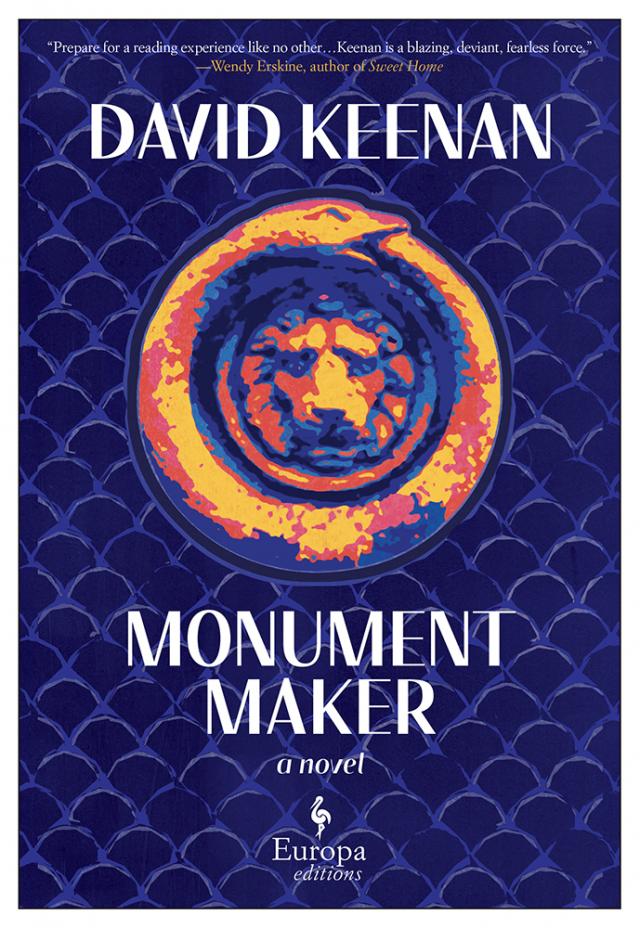
Monument Maker, page 14


29/3/1884
I arranged to meet Fonte at a street bazaar where families traded clothes and trinkets for food and relief. He was late, inevitably, so I took the opportunity to walk amongst the traders, their wares spread out on cloths in the sand or hung from the sides of dilapidated buildings. There were long-necked women and men so shrunken and sun-beaten they appeared as children. One trader sold small phalluses and marital toys fired in reflective green and Egyptian turquoise. When Fonte arrived he was limping and at first I thought it an affectation. I called him Peg Leg and Captain Cripple before he confessed to me that the crippled family he had threatened had exacted their revenge on him, holding him down in his own home and smashing his leg with stones. No need to breach the city walls, he cursed, and spat down into the dirt, at this rate we will be the overthrow of ourselves. I told him of my chance meeting with Gordon, of my impudence and of his startling reaction. At first Fonte didn’t believe me. It doesn’t sound like Gordon, he said, and he shook his head while picking food from between his teeth. A small boy ran between us and Fonte slapped him viciously on the head as he passed. Gordon is a singularity, he said, a one-off. Yet he offers his hand to strangers in the street? There are no more strangers in Khartoum, I ventured. He looked at me for a long time, so that at first I questioned the proportions of my own physiognomy. He spat on his shoe, by accident, then shook it off in a rage and disappeared into the crowd all around us.
3/4/1884
Fonte arrived at my door with a group of three drunks who seemed like mercenaries or guns for hire. What are you doing in their company? I hissed, as they filed past me towards the interior. The youngest one of the group was also the loudest and he insisted on a display of his swordsman skills, which involved the two older men hoisting him on their shoulders and him jumping the blade and landing on their backs again and again. Where does this get us? I asked Fonte. Someone else mentioned women for sale, young women, and a joke went around about it being a buyer’s market. There is a whorehouse over the way, the youngest said, where I hear you can buy a threesome for the price of the innards of a dead donkey. You may as well fuck the guts out of a dead donkey, I replied, at which point the young one turned on me, calling me a modernist, a radical. I noticed that he had a thin scar across his neck. I cut the hot kidneys from horses, he said, just to spear them with my dick. I tie storks’ bills and fuck their throats. What do you do? He took his sword and raised it between my legs. I see the future, I said. I make the future, the young one said, and made a fist of his balls. I retired to my room while they commandeered the rest of the house and fought and drank themselves to unconsciousness.
4/4/1884
In the morning the young man knocked on the door of my bedroom. I’m sorry I was discourteous to you by being sick on your floor, he said. I hear you have the ear of Mr. Gordon. Please, may we talk? I opened the door and surveyed the scene. Sure enough, there was vomit on the floor and, unbelievably, on the ceiling. The young man saw me looking at it. That wasn’t me, he said. I stepped over the bodies of the two older men who had passed out on top of each other, one of whom had his trousers around his ankles. I thought I saw something crawl between his legs. The young man gave them a kick. Wake up, he said, you vagrants. Show some respect. The men rose to their feet, as if they had simply been resting, the second one pulling up his trousers before sliding a hand down his trousers, smelling it, and wincing. Then they took a seat on the dirt floor, their backs to the wall. Where’s Fonte? I asked them. Fonte is lost in the desert, one of the men cackled, and they slapped each other on the back, much to their own amusement. You are vermin of the desert, the young one barked at them, be quiet! I apologise for these . . . marsupials, he said. If yourself would pleasure it, he said, we are looking for an introduction to Mr. Gordon. We came here to fight, one of the two older men burst, but this time the young man silenced him with a stare. My name is Ecco Omar, he said. These two are Randar and Fitchin. We came to make a stand against the Mahdi. You came to Khartoum, I asked him, when? We arrived yesterday, Omar answered. How did you get here? I quizzed him. We came from the Garden of Eden, Omar said. You left the Garden of Eden to come to Khartoum? You realise that the city is besieged on all sides? Relief is in sight, Omar said. Besides, we have come to claim the head of the Mahdi. We intend to fructify the Tree of Life with it. What does that involve? I asked him. Bathing the head in the waters of life and replanting it in the garden, he shrugged. Where is the Garden of Eden to be found? I enquired. It is in Anatolia, sir, he said. And where is the water of life to be found? It is said that the four rivers find their terminus in Africa, he replied.
5/4/1884
I arranged to meet Fonte in the shadow of the palace of Khartoum. He had become obsessed by the reappearance of Gordon and had taken to sleeping rough in its environs after his home had been ransacked by vengeful cripples.
They’re Yezidis, he explained. Omar is a Yezidi. They claim to have come from the Garden of Eden, I told him. That’s what they say, he said. But then they say that the tributaries of the River Eden meet in Africa, I said. So they’re apostates, he shrugged. But then they say they intend to water and plant the head of the Mahdi in order to revivify the Tree of Life! So, they’re madmen, he burst, what do you want me to do about it? Listen, he said, and he lowered his head and narrowed his eyes, you said there are no more strangers in Khartoum, right? Where would we be if that were really the case? Think about it. One big happy family. One fat turkey. One lame camel. One basket of rats. Okay, I said, okay, I understand the comparison, but what do you mean by it? What do I mean, he exploded, what do I mean? God save me from idiocy! I mean precisely what I say. Without new blood, without blood in our beliefs, I mean to say, without an element of madness in our bodies, in other words, we are doomed, Khartoum is doomed. We are no longer strangers, it is true, we have become soft, familiar, at home on this headland of the Nile. At best we fight amongst ourselves, he said, like a family. This is where the Mahdi and his armies have the advantage. I, on the other hand, in a moment of madness, if you like, though more properly I believe it to be a moment of divine inspiration, have decided to introduce a contagion. But to make it work, to get it to take, we must first infect Gordon with it. And you, my friend, for some reason that God, in his infinite wisdom, knows best, and that I confess eludes me still, have been chosen as the conduit, the means by which we can turn the end of the world around.
15/4/1884
Three in, three out. Over the past week Fonte has exchanged women and children for migrants from the Garden of Eden who make their way across the Nile by night. With the Mahdi’s forces encamped on the opposite bank, it is as large a convoy as he dares. Now Omar leads an army of twelve.
18/4/1884
Gordon had been spotted with a military entourage in Lower Khartoum. A small area around the catacombs, in the shadow of the parapet and outside the walls of the city, had reportedly been sealed off. I made my way in secret to the scene of the events, using covert routes, where I mingled with onlookers dressed for all the world like an Arab trader. Rumours were flying. I spoke with two old Bedouin who kept using the Arab word for gold, thahab. Thahab, they said, and they patted beneath their arms and pointed to the catacombs, now sealed by black guards with guns and long, curving scimitars. Thahab? I said. No, this is no treasure hunt. But they insisted. Gordon has discovered gold, they said. The ruckus attracted the usual gawkers and troublemakers, including the Man on Stilts, a feature of public gatherings in Khartoum for the past year or so. He wore the same sign around his neck, written in a curious Sudanese Arabic dialect, that had been variously translated as Ripe Pear, Fellow Conspirator and Peace Restored. He towered above the crowd, high on a pair of handcrafted stilts made from the oars of an old fishing boat, walking with a macabre motion and bearing down on bystanders, silent but for the low hissing of his tongue. No one had ever seen his feet touch the earth, it was said, though I suppose he slept, like all of us. I thought of the impossible proportions of his frame, his feet as huge paddles, floating at low tide, rolling in half-sleep across the shallows of the beach as if he had been washed up in some diluvial horror.
By the time of early evening Gordon had still not emerged. There were rumours of a tunnel from the catacombs, leading beneath the Blue Nile and running under the North Fort before connecting with the subterranean streams that fed the fourth cataract of the Nile, far in the north. Someone claimed to have seen long stately boats like royal sarcophagi being lowered into the tombs. Someone else claimed that the English relief had arrived, using the subterranean stream as a means of dark passage. Men passed around water and smoked kif and speculated. A vendor selling battered flower petals fried in oil passed through the crowd. The sky turned the colour of a new bruise and the stars came out. Every shooting star was an omen, every heavenly body a wish driven hard into the night. I looked out to the sea of faces all around me. One can just as surely drown on dry land, I thought to myself, as I looked to the Man on Stilts, parting the crowd.
19/4/1884
Gordon had made his escape from the tombs by cover of night, possibly by a secret exit, Fonte told me. There were rumours of the removal of some kind of artefact, carried on a stretcher and hidden beneath ornamental quilts. Some say it was three to four feet tall. A mummified child? I asked Fonte. No, he said, and he wiped his mouth with his sleeve. I believe it to be some kind of marker. Marking what? I asked him. The very centre of the world, he said.
20/4/1884
I spoke with Gordon, clearly, in my dreams. The whole earth is hollow, he told me, and we are clinging to its shell, like insects, scuttling around a great singularity. What of the mystery of death? I asked him. Life is for life, he said, death for death, but it is possible to confuse the two. Is there a death that is life? I asked him. That is what we cling to, he said. There is a mingling of the two, he said, and then he began to speak in numbers and in months. April, September, January, 25, 3, 25. I turned away from the vision so that I would not partake of prophecy.
21/4/1884
Gordon has communicated the possibility of life in death, I told Fonte. The man speaks in conundrums, he burst. Life and death are divided, I insisted, or why name them so? Death is not life’s concern, and life not death’s. Yet the scales are imbalanced, that is what Gordon implies. Death has its way over life while life’s dominion ends at the border with death. Bite me, Christ, Fonte cursed, have you no knowledge of the dead!? The paths by which they return, the empty places in our hearts that are reserved for them? I say there is traffic both ways!
22/4/1884
I took up watch with Fonte at the perimeter of the palace of Khartoum. We must engineer a meeting, Fonte said, we must force the hand of chance. What of the Yezidis? I asked him. Most of their worldly goods are already in hock in order to pay for the women they molest and manhandle, he told me. Their debasement has become some kind of anabasis, I fear, which will end in pointless sacrifice if we are not able to redirect it towards more profitably millenarian ends. Their disgust for the world and all that it requires is understandable, I said to him, any refugee from Eden would feel the same. Then tell me, Fonte asked me, what hell are you cast out from? My garden is Khartoum, I replied. My exile is yet to come.
23/4/1884
The sun beat down and the flies took their fill. My head is pockmarked and cratered with their bites. I sat in the shade outside The Mountains of the Moon and drank coffee. A man approached my table and introduced himself as a friend of Fonte. Is it possible for you to put a word in for me with Gordon? he asked me. I don’t know Gordon, I told him. You have his ear, my friend, he said, that is what I have heard. Do you have access to the palace? he asked me. Do you enjoy privilege? No, I said. Leave me alone. The man took a seat opposite and we sat in silence for a while. Then he resumed his questions. If you do not have access to the palace, how were you able to catch Gordon’s ear? he asked me. I met him in the street once, I replied. I shook his hand. That was all. Impossible, the man spat, and he leaned forward and began to rock, almost imperceptibly, back and forth. Gordon never leaves the palace unless surrounded by a military escort, he said. On clear days he appears as a distant shadow with an eyeglass on the roof of the palace of Khartoum. He does not walk the streets of this purgatory, glad-handing strangers. Listen, he said. I have a wife and three children, we are looking for passage, we can pay, he said. Pay with what? I taunted him. With silks and cloths, he said, with elephant tusks and shotguns. There are no elephant tusks in Khartoum, I mocked, and as for shotguns, well, now is not the time to start trading in arms. Very well, he said, rising from the table. I accept your story. You are more, let me say, a harmless fantasist. I bit my tongue and drank my coffee. But please, answer me this, if you can, he said. Do you think all of this will end well? He motioned around us, at the dusty streets and the flat rooftops and the small groups of men coming and going. Nothing ends well, I went to tell him, but something stopped me. Instead I sat in silence and thought some more. Finally, I told him that the end would be inconclusive. Will there be inroads? he asked me. Yes, I said, there will be inroads. How far and on what side? They will push forward, I said, and we will push back. From what direction will they come? It will be impossible to ascertain, I informed him, they will come from all around us. Is resistance academic? If by academic you mean is resistance necessary or futile or is resistance based on an idea, a concept of the corrective to a state of siege, then I would say, yes, you have imagined that it might be necessary. It is, as you rightly say, academic. If it is academic, the stranger said, then it is of the schools, am I correct? Yes, I said, that would be academic. But if it is of the schools, he insisted, then there is something there that if studied correctly and completely and with due diligence will reveal its core attributes. I give you that, I admitted. And to uncover the core means to be in possession of an understanding of the relationship between the place of the core and yourself. That makes sense, I said. So if our current situation is academic, and the field of our actions based upon ideas of what is necessary, then the founding of schools upon those ideas may result in the acquisition of a set of co-ordinates, let us say, which, if calculated correctly, if added to or subtracted from or displaced according to the laws of the stars and the planets, may be made to reveal, in all probability, the way forward. This is prophecy, I told him, and be damned for it. Prophecy, he said, no, I don’t think so. The gods would use prophecy to uplift and condemn and destroy. Prophecy, for men like you and I, is a means to make of the future the past. Only there, in the past, sir, where everything has already happened, is there safety in the present. I don’t ask you, my friend, he said, to smuggle me out with my wife and children. Rather, I ask you to take them from me, prophet, and deposit them in my past. You talk in signs, I told him, at which he held up his right hand, blinked his eyes and walked off into the distance.
24/4/1884
I met Fonte at the confectioner’s near the military barracks. Real food has become an impossible luxury. We ate small cakes with coloured leaves on top that were perfumed and that had no bite and that crumbled to dust in your mouth. Perpetual virgins, Fonte called them, and he laughed at his own joke. Soon they will be the only virgins left in the city, he mourned, if we don’t move on Gordon and give these Yezidis something to do. I asked him if he knew much of prophecy. I have studied it, he said. Do you believe in its art? I asked him. Here, he said, give me your hand. He took my palm in his. Do you know what they call this? he asked me, and he traced a curve that ran from the centre of my wrist and around the base of my thumb. This is the life line, they say. Look closer, he said. Look at where the lines cross, the tributary that flows north, the confluence near the base. Is Khartoum not written into your flesh? Does the Nile not plot your days? A hand, after all, is nothing more than the cards you are holding. What is this witchery? I demanded, snatching my hand away. Nothing but a parlour trick, he shrugged, think nothing of it. Let me see your hand, I demanded, and he opened his palm on the table. There it is, I cried, Khartoum, written in your skin as clearly as in mine! This is a trick, and a low one. Begging your pardon, my friend, he said, but how could it be otherwise? Are we not, the two of us, caught up in Khartoum here, at the end of days? How else would our bodies register our place in this vast game except to make us in their image? Think you to dodge your own fate? You asked me what I knew of prophecy. All that I learned is commensurate with the weight of flesh on these bones. I’m tired of all this double-talk, I said. What are we to do, here in Khartoum? You are the one who talks as if something were expected of you, he said. But ask yourself, who is the expecting, and what is the expected? More mirrors, I said, more spin. You expect nothing? Fonte asked me. I expect something of the future, of course, who could live in the present always? No one does. So you admit that part of you lives in the future? he quizzed me. Ask yourself what their expectations are. There you have your definition of prophecy.