On the Lee Shore, page 15


‘Is it the damned mutineers who are causing the trouble?’ demanded Clay. ‘Because they should regard themselves as very lucky I have not had them all clapped in irons for what they have done.’
‘Not for the most part, no’ explained Taylor. ‘To be sure there has been a little of that, with those who mutinied naming those that did not cowards and traitors. But chiefly it is the men that stayed loyal who are at fault. They look to pay back those who forced them at gun point to spend an uncomfortable night in the hold. Then some blame the Irish, who were very prominent in the mutiny, and yet ignore all those Irish hands who did not join their compatriots. Even the volunteers who followed you aboard when you first took command are not immune from some resentment. Adam Trevan took a great deal of persuasion that when Sean O’Malley joined the mutineers it was all a ruse, and that he was loyal the whole time.’
‘Can the petty officers not help to control such disorder?’ asked Clay.
‘They are some of the worst offenders,’ exclaimed the lieutenant. ‘None of them joined the mutiny I am pleased to say, but they would scarce be human if they did not seek to use their authority over the hands to pay back the many slights they have been made to endure.’
‘Then we must act to bring them back together,’ said Clay, his voice passionate. ‘How can we expect to defeat an enemy, when we are at war amongst ourselves?’ He pointed to the two dark patches on the deck behind him. Both were still wet from hours of scrubbing to remove the stains that had marked where Shane Kenny had been wounded and Lieutenant Morton had bled to death. ‘We need not look very far to see where such divisions can lead. I am quite resolved not to witness such a misfortune onboard this ship again.’
‘Amen to that,’ said Taylor. ‘I am not sure what council I can offer you, sir. Captain Sheridan would have met such uncivil behaviour with savage punishment for all, but I do not believe that will answer. If truth be told I hold that your approach when you first took over the ship was working well with all but the worst of the men. You were firm, but you also showed some delicacy towards the ills that the men had suffered in the past. I tried to show a similar approach yesterday when we committed poor Mr Morton’s body to the deep.’
‘Yes, I did notice your choice of crewmen to bear the body,’ said his captain. ‘I, too, thought that my way would answer, but let us face the world as it is, not as we would have it. The men still rose against us.’
‘By no means all did, sir,’ said Taylor. ‘Most stayed loyal. Had it not been for the encouragement of the news of the Channel Fleet mutiny, combined with Mr Haywood’s wretched pork, there might have been no mutiny at all.’
I shall deal with Mr Haywood in time,’ said Clay. ‘But a settled crew would not have risen purely over vittles. To be frank with you, George, I am still very angry at what happened. To be removed from my position in such an undeserved manner, and to be compelled to yield to their demands, it beggars belief! No, I have been altogether too lenient with the men.’ He rose from his chair and paced up and down the width of the cabin, his head bowed forward, partly in thought, and partly because he was a good two inches too tall to walk upright beneath the deck.
‘Sir, may I ask if you detected any change in the men’s demeanour yesterday evening during Lieutenant Morton’s funeral?’ asked Taylor. Clay stopped midstride.
‘You noticed it too?’ he said. ‘The want of the belligerence that was so evident back in Plymouth when I first joined the ship? I found them to be much more quiet and subdued. I sensed shame in their actions and a little obligation towards me. We must use that to our advantage.’
‘How might we do that, sir?’ asked the lieutenant.
‘I have gone lightly with them up till now,’ said Clay. ‘I do not mean as far as discipline is concerned, that must always be administered in the same manner, but in how hard I have pushed them in training. Principally I was reluctant to add fresh causes for resentment on an already troubled crew, but I believe that can change now. We shall drive them very hard, Mr Taylor, till they forget completely who it was that was a mutineer and who was loyal. By the time the squadron returns, whenever that will be, I want us to have them well in hand. Let us resolve to turn them into a crack crew together. Make them into a body of men who are all Titans first and proud to be named so.’
*****
‘Christ, I am bleeding knackered!’ exclaimed Evans, rolling his head around on his shoulders to try and ease the stiffness in them. ‘What the hell is Pipe about? Whoever heard of having races between the watches to see which one can sway down and set up the upper masts the quickest?’
‘It was a strange piece of work, I grant you, Sam,’ said Trevan from the other side of the mess table. ‘Mind you, we did beat them starboard watch buggers good an’ proper like. We was near as damn it five minutes faster, according to my mate Noah.’
‘I can’t see what you has to fecking moan about, Sam Evans,’ added O’Malley, leaning with his back against the ship’s side, his face still flushed red with the afternoon’s labour. ‘Weren’t you having it right soft, down on deck just hauling away with the other waisters, like? Spare a thought for top men like Adam and me, working a hundred fecking feet up having to rig the buggers.’
‘It’s been four bleeding weeks of this,’ moaned the big Londoner. ‘Every day he’s got us doing something different. I mean all that gun drill at the end of each day I get, but what about last week? When he had us pretending there’s was a battery on one of them little empty islands near Ushant and we had to man the boats and make like we was storming it. What was that all about, then?’
‘Or the week before that,’ added Trevan. ‘When we was after anchoring in that little bay down the coast. We had to make believe we was cutting out the barky every bloody night till we done it the way he wanted us to. That was a proper pain in the arse. I am all for Pipe in most things, but I don’t get it at all.’
‘Come on, lads, isn’t it obvious?’ said Rosso. ‘Have you really not smoked what he’s about yet? He’s decided he is going to sweat any trouble right out of this crew.’
‘How you figure that then, Rosie?’ asked Trevan.
‘Remember how many fights there was, right after the mutiny?’ he said. ‘We were scrapping like ferrets in a sack. When was the last time you saw a proper fight?’
‘Well that’s ‘cause we‘re all too bleeding knackered to mill!’ exclaimed Evans. ‘Any road, there were a scap during the afternoon watch day before yesterday. Duplain said Fatty Carr had spilt his grog, and Fatty took a swing at him.’
‘That’s right, Sam, two days ago,’ smiled Rosso. ‘And it wasn’t anything to do with the mutiny then, was it? In fact as I recall Duplain and Fatty both stayed loyal.’
‘That ain’t right, Rosie,’ said Evans. ‘I think they was both mutineers.’
‘No, you wrong there, Sam,’ said Trevan. ‘Leastways about Fatty Carr. He was definitely down in the hold near me that night. We both slept leant up against the same hogshead. I tell you, I am right happy I don’t have to swing my hammock near to his. His snores are a thing to behold. Louder than a pissed bishop after evening song, he was.’
‘You see?’ said Rosso, looking around the group. ‘Now do you follow? Four weeks of driving us hard, and even we are no longer sensible as to who rose or not. He’s a right deep one, that Pipe. All this training may be a pain in the arse, but have you noticed how much better we are? There’s a few less bellies around the place – even your Fatty Carr is hardly fat anymore. And we’re getting proper quick at doing stuff. We might be five minutes faster than the other watch at striking down the upper masts, but both watches will be a good twenty minutes faster than they used to be.’
‘Do you know, you have the truth of it there, Rosie,’ said Evans. ‘I hadn’t thought of it before, but it feels just like all the graft my Pa used to get me to do before a big mill. Hours of work that don’t seem to be about prize fighting at all, but served to make me quicker and stronger, and to give me more bottom so as I could stay longer than the other sod. What a crafty bugger!’
‘Well that’s all very fine an’ all, but I am still knackered,’ said O’Malley. ‘An’ don’t yous go a-thinking he’s about to ease up any. Hart was after telling me that Pipe has been locked in his cabin this past hour with the other Grunters, so you can be sure they’ll be plotting another load of fecking training for us for the morning.’
*****
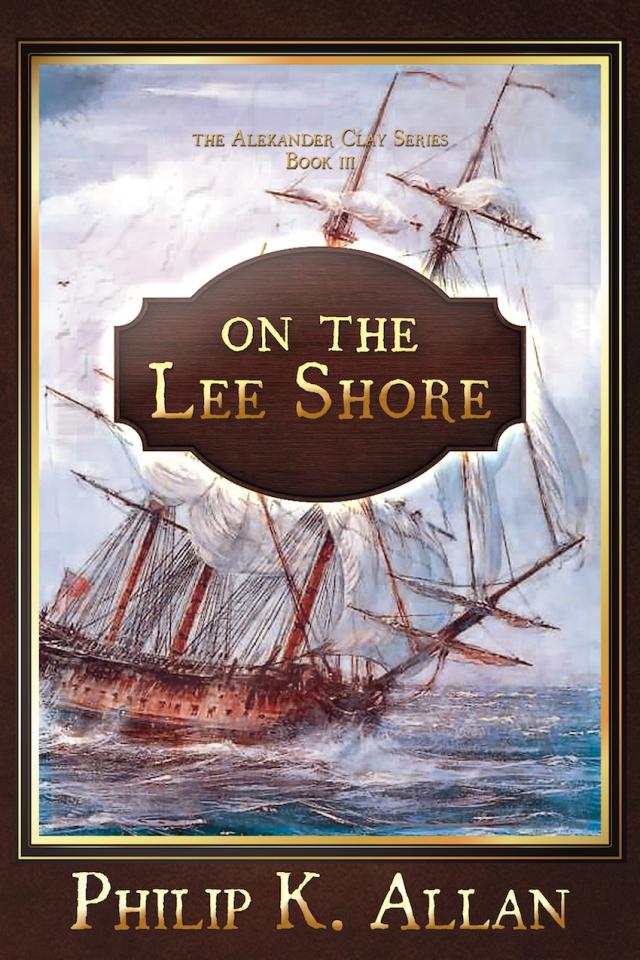
In addition to her captain’s punishing schedule of training, the Titan still had one further duty to perform. Each day, when wind and tide served, they would stand in up the Iroise Channel towards Brest to observe the French fleet. All aboard now understood that their mission here was a sham, a conjuring trick to deceive their enemy. The approach of the bold frigate was the obvious flourish of the magician’s hand that drew attention away from what he wanted to conceal. Watch the warship, not the wide empty sea beyond it. The crew on deck would gather, waiting to hear the news from the masthead, hoping that the French would still be at anchor in their neat lines with their masts struck down on deck. All of them feared that today might be the day on which the news of the Channel Fleet mutiny had reached Brest at last, and those long lines of warships would be sailing down the Goulet to brush them aside. Some days the frigate arrived just as a fresh spring shower had drawn itself like a veil across the harbour mouth, soaking the midshipman at the mastheads, and forcing them to squint into the curtain of water in a futile attempt to see through it. But on all days when they were able to make a sighting, the news had been the same. The French fleet was still in port, and their country was safe for another day. Then they turned their stern to the land and sailed back out to sea to share the happy news in lines of fluttering signal flags with the empty horizon, and to search the lonely sea for a sign that their solitary vigil on this lee shore might be over at last.
Five weeks had passed since the mutiny had ended, and another long hard day of training was coming to its conclusion with the usual two hours of gunnery drill. Spring had slipped almost unnoticed into summer on the Brittany coast. The afternoon sun had real heat in it now as it twinkled off the wave crests and made solid squares of light on the deck where it shone through the open gun ports.
‘That will do, Mr Blake, the crews have rested long enough,’ said Clay. He snapped closed his pocket watch and slid it back into his waistcoat. ‘Let us see what progress today’s training has made.’
‘Aye aye, sir,’ said Blake. ‘Gun crews, man your pieces!’
‘I want three aimed broadsides, Mr Blake, not the men just blazing away as quick as quick,’ added his captain. Clay ducked his head down to look out of the gun port next to him. The main spine of Les Pierres Noires was drifting past the ship a hundred yards away, the black rocks wet with kelp and marked with startling patches of brilliant white bird excrement. ‘There is your mark. Those rocks over there. Let every ball strike home.’
‘Aye aye, sir,’ said the lieutenant. ‘Gun captains, the reef is to be the target. Quoins in a quarter inch. Run up your guns. Mr Russell, are you ready?’
‘Yes sir,’ said the midshipman, the two-minute sand glass in his hand.
‘Open fire when you wish, Mr Blake,’ said Clay. He stepped back and admired the long line of big eighteen pounder cannon that stretched away in a gentle curve up to the bow. The crews crouched around their pieces like sprinters, most stripped to the waist, ready for the off.
‘Fire!’ ordered the lieutenant, and Russell flipped over the sand glass. All along the line the linstocks came down as one. There was a heartbeat of time when all Clay could hear was the splutter of burning powder, and then came the colossal fury of all the canons roaring out as one. A wall of smoke gushed up and the frigate heeled over with the force of the broadside. At each port a gun thundered back into the ship till halted by its gun tackles, and the crew threw themselves into the process of reloading. Stop the vent, sponge out, charge in, ram home, ball in, ram home, then wad, run up, prick the charge and then a pause. That’s good, thought Clay, the gun captains are making certain of their aim. As the captain of the slowest gun raised his hand to signal that he too was ready, Blake gave the order to fire again, and the guns blasted out once more. Clay ducked down to look through the nearest gun port. In the instant before his view was obscured by smoke, he saw the broadside tearing up the water all around the reef. Several balls had struck the rock, sending up puffs of shattered stone and dust. He glanced across at the sand running out of the two minute glass. It was going to be close. Here came the final broadside. The ship was engulfed in smoke once more and a distinct few seconds later the last grains of sand fell in the timer.
Blake spun around and looked first at the midshipman, then back at Clay.
‘That was it, sir!’ he shouted. ‘By Jove, we have done it at last! Three broadsides in two minutes!’
‘Was it, Mr Russell?’ asked Clay. He knew the answer, but wanted to draw the moment out. Up and down the gun deck he could see the panting gun crews as they listened to their officers, many with arms draped around each other.
‘Yes, sir, by a good couple of seconds too,’ replied the time keeper. The rest of what he said was lost in the storm of cheers that erupted as the men celebrated with each other. Clay smiled on, noticing the togetherness the achievement had produced, and at last some of the pride he had been waiting to see.
‘A very creditable exercise, Mr Blake,’ he said. He was about to add something further when a hail came from high above them.
‘Deck there! Sail ho!’ yelled the lookout.
‘A Frenchman, I hope, with the people firing so brisk,’ said Clay to general laughter from the nearest men. ‘Secure the guns, if you please, Mr Blake,’ and he hurried off towards the quarterdeck.
‘Where away?’ the first lieutenant yelled towards the foremast as Clay ran up the companion ladder from the main deck.
‘Just rounded Ushant and heading towards us, sir,’ came the hail from above. ‘Man of war by the look of her.’
‘Warship, eh!’ said Taylor, rubbing his hands. ‘She is certain to be one of ours on that course, sir.’
‘Let us hope so, Mr Taylor,’ replied Clay. He turned his head towards the masthead and bellowed ‘What do you make of her?’
‘Large frigate, sir,’ came the reply. ‘I can see another ship behind her now, and some mastheads beyond that.’ Clay turned towards the young midshipman of the watch.
‘Up you go with a glass, Mr Butler,’ he ordered. ‘Tell us what you make of them.’
‘Deck there,’ came Butler’s excited cry. ‘She looks like the old Indy! I can see the commodore’s broad pennant now, sir. Ship behind could be the Argos.’ All the gun crews were listening on the main deck as they secured their guns. They gave a collective cheer at this news, until reprimanded by their petty officers for such indiscipline. With a grin their captain shook his first lieutenant by the hand.
‘I declare we are about to be relieved at long last,’ he said. ‘Thank God for that, Mr Taylor, thank God for that.’
*****
Sir Edward Pellew’s barge was a beautiful craft. The hull was painted in primrose yellow which contrasted pleasantly with her glossy black gunwales. The oars that swung forward in a neat fan of motion were a perfect match with their pale yellow shafts and black tips to their blades. Inside the boat the crew all sported matching yellow shirts decorated with black ribbon, while on their heads they wore black tarpaulin hats with yellow ribbons around their crowns. Able Sedgwick looked on with covetous eyes as the boat swept alongside the Titan. He decided that once the ceremony of the commodore coming aboard was over, he would slip down into the barge to have a word with the coxswain and try and find out where he had obtained his batch of coloured shirts. It would be hard to outdo the commodore’s transport with the limited resources available to him here on the Brittany coast, but perhaps when they were back in Plymouth he might come by some bolts of green linen. As the boat came to a halt, Sir Edward rose from his place in the stern and ran up the side.
He was a magnificent sight in his full dress uniform, complete with the broad red ribbon and badge of the Order of the Bath. The sunlight glittered off his gold lace as he stood to attention in the entry port. Before him was a corridor of white-gloved ship’s boys backed by lines of more solid looking boatswain’s mates who twittered away with their calls, while off to one side Macpherson ordered his marines to present arms. As the last warbling note faded away, he strode forward and grasped the Titan’s captain by the hand.
‘Where are the French, Clay?’ he asked, his face grave.
‘Safely at anchor in the Rade de Brest, Sir Edward,’ he replied. ‘Or at least they were at three bells in the forenoon watch when we last observed them.’ The commodore closed his eyes for a moment, his face wreathed in smiles.
‘Bless my soul, but that is good news!’ he exclaimed. ‘How the Frogs have not smoked that something was up with the fleet, I shall never understand. God must be an Englishman. There can be no other explanation.’ Pellew laughed aloud for a moment in the sunshine, and Clay smiled with him.
‘Would you care to come below, Sir Edward?’ he asked, and the two men disappeared to the privacy of Clay’s quarters.
‘I can certainly see why it takes you so much less time to clear your cabin for action than it does mine in the Indefatigable,’ said the commodore. He settled himself down in the wooden chair that stood in front of the little desk and looked around him at the bare scrubbed deck and empty bulkheads. ‘Do you not find your furniture to be inconveniently small?’
‘My previous command was only a sloop of war, Sir Edward,’ explained Clay. ‘The Admiralty wanted me to take command of the Titan directly, which left me no time to order anything more extensive. Can I offer you a glass of sherry?’