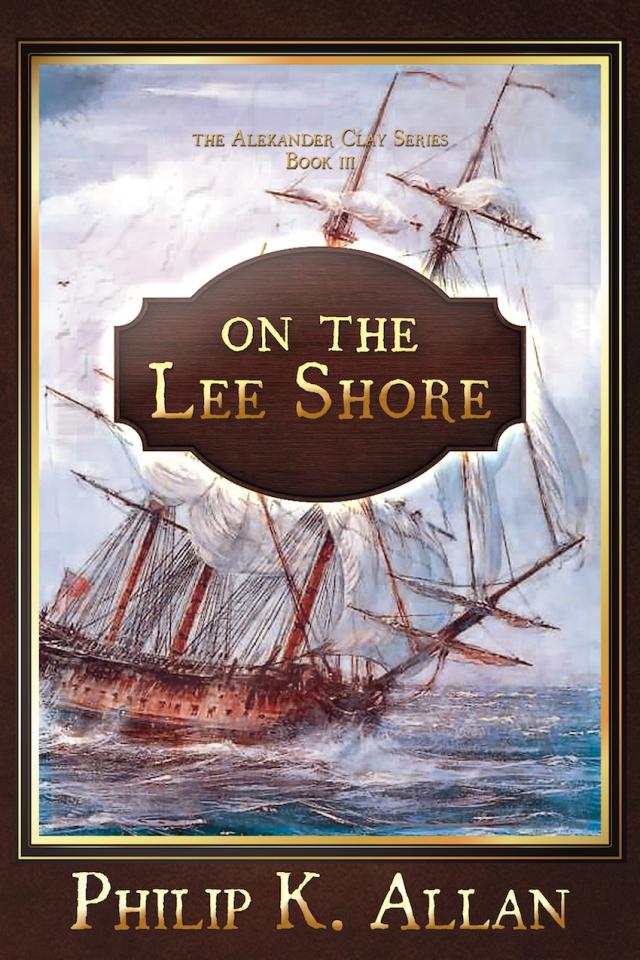
On the Lee Shore, page 10


‘Perhaps it shall,’ said Clay, ‘unless we can win over the majority of the people to our side of the divide. To the side of obedience and duty. In my experience a crew really have only two requirements of their officers to be truly content. They want to be led with competence and to be treated with fairness. If they perceive those virtues in their officers, it is quite remarkable what they can be persuaded to accomplish in the service of their country. Come in!’
‘Mr Morton’s compliments, and the ship is two miles west of the Goulet, sir,’ said the midshipman.
‘Thank you, Mr Butler,’ replied Clay. ‘Please tell Mr Morton that I will be up directly.’
‘Aye aye, sir,’ replied the departing teenager.
‘Thank you for a most interesting breakfast, Mr Blake,’ said his captain, standing up from the table. ‘I look forward to renewing our conversation. One last question, though. Do you enjoy being at sea, now you have experienced the reality, or do you regret not joining your father’s business?’
‘I like it above all things, sir,’ smiled the young man. ‘I would not trade this life for any other, in spite of its many privations.’
The morning was well advanced when Clay came on deck. The Titan’s upper masts rose up, massive once more, into the heavens. Looking up he could see Harrison, the Titan’s boatswain working high above his head as he and his mates checked that all was as it should be aloft. The ship was under steady way, sliding back up the Iroise channel once more towards Brest. Although it was calm overhead now, the effect of the gale could still be guessed at from the choppy waves that flowed in from the open ocean, striking the reefs on either side of her to send up the occasional spout of white water as if from surfacing whales.
‘Up you go with your glasses, gentlemen,’ said Clay to the two midshipmen as they reached the end of the channel. ‘Can you bring her into the wind please, Mr Morton.’
‘Aye aye, sir,’ replied the second lieutenant. He gave the string of orders that brought the frigate to a halt, and then joined his captain by the rail.
‘I see Bertheaume Bay is full once more, sir,’ he said, looking to the south at the scene of their cutting out expedition.
‘Yes,’ said Clay. He pointed to where a set of lofty masts towered over the shipping around it. ‘It also still contains a rather large French frigate at anchor to put a stop to any more attacks. I wonder how we might tempt her out into the channel here, away from all these cursed shore batteries. Mr Taylor has not quite got the gun crews up to my three broadsides every two minutes, but they are close.’
‘It would be good to lock horns with a worthy opponent, if you are sure that the hands will fight, sir?’ said Morton.
‘They fought tolerably enough to take that brig,’ said Clay.
‘They did, sir,’ conceded Morton. ‘But a single ship action against another frigate would be an altogether more brutal affair.’
‘All rather speculative, unless she should come out to fight us,’ said Clay. Morton thought about this for a moment.
‘She might come out if she thought we were an easy victim, sir,’ he said. Clay looked at him with surprise.
‘She might indeed. How would you endeavour to achieve that, Mr Morton?’ he asked.
‘I am not sure,’ he replied. ‘But would you like it if I might give it some thought? Your pardon, sir, but the midshipmen are back from aloft with their observations of the French fleet.’
Clay turned to receive the report from the two young men, and then ordered the Titan to sail back down the channel once again. After half an hour they drew level with the Pierres Noires reef where they had surprised the fishing boats and where the channel opened up to join the wide sea beyond. Clay exchanged glances with Morton. He had been expecting a hail from the masthead lookout as they cleared the land. The captain picked up a speaking trumpet and looked up towards the figure who sat on the foretop royal yard, holding on with a single hand that rested on the foretopgallant mast beside him.
‘Masthead there,’ he yelled. ‘Any sign of the Indefatigable?’ The lookout swept the horizon with his free hand shading his eyes. He cupped his hand and yelled down.
‘No sign of the Indy at all, sir,’ he replied.
‘How about the Concord, towards Ushant, or the Argos to the south?’ called Clay.
‘No sign of any of the squadron, begging your pardon, sir,’ he replied. ‘Just a few fishing boats and the usual Frog coasting trade.’
Clay thought for a moment, then turned to the signal midshipman. ‘Mr Butler, can you send this signal. “Titan to flag. Enemy fleet in Brest unchanged from last report.” Then I want you to count slowly to one hundred and replace the signal with an acknowledgement.’
‘Eh, I beg your pardon, sir?’ asked the midshipman.
‘I am quite sure you heard me, Mr Butler,’ said Clay. ‘Kindly carry out my orders.’
‘I believe Mr Butler is unclear to whom he is signalling, sir,’ explained Morton. ‘There being no ships in sight.’ In answer Clay pointed towards the sea cliffs behind them.
‘His signal is for the benefit of the many French observers who are all around us, Mr Morton,’ he replied. ‘Or would you have them deduce that we are all alone out here and that at present only a thirty-six gun frigate guards the entrance to Brest?’
Chapter 7
Portsmouth
‘Aunt Mary, you must come up on deck directly,’ urged Miss Lydia Browning. ‘We are within sight of England! Mr Jones says that we have now past the Isle of Wight, and that the ship will soon be approaching Portsmouth. We are almost home!’ Lady Mary Ashton looked up from her chair at her niece and ward. Her face creased into a frown of annoyance.
‘Lydia, please tell me that you have not been on deck again without your damask wrap,’ she said, in spite of the proof of her own eyes. ‘After the heat of Bengal, you must be more careful not to take a chill, especially in such a state of agitation. We have already lost your poor uncle.’
‘But he died of the cholera,’ she said. ‘I am not sure that wearing more clothes would have answered.’
‘No, we should never have gone to India in the first place,’ said Lady Ashton. ‘An Ashton as Collector of Bengal? Why, it is barely a step up from being a tradesman! I warned him this would happen, but could I make him see beyond all the wealth that would flow his way? Well, we have been made to pay a heavy price for his folly, and I have no intention of increasing my loss.’ Lydia rolled her eyes in despair.
‘Oh, Aunt, we left Bombay nearly four months ago,’ she exclaimed. ‘And it is not as if we passed any great time there. Look at my countenance. Do I seem unwell?’ Lady Ashton regarded her niece for a moment, and had to admit that she did look the picture of health. The wisps of her dark hair that had been worked free by the wind from beneath her hat were thick and glossy and her blue eyes sparkled with excitement. Her skin glowed from all the sea air and sunshine they had encountered on the voyage.
‘Your complexion is all together too ruddy for my liking,’ sniffed her aunt. ‘Not at all the pallor to be expected of a young lady of your position, but I will concede that you do appear to be in good health. Very well, if you will agree to wear your wrap, I will happily accompany you on deck. I must say that I do long to feel solid ground beneath my feet. I have not left the ship since the Cape, however many weeks ago that was.’
The Somerset was a large East Indiaman, almost the size of a small ship of the line, and from her high poop deck there were excellent views to be had. One of the male passengers gave up his place at the rail for the new arrivals with a polite touch of his hat.
‘Thank you, Mr Jones, you are too kind,’ smiled Lydia, and she and her aunt gazed across the water towards the approaching mainland. The turf of the South Downs rose up in a wall of green a little way inland, while nearer at hand they could see smoke rising from the iron foundries and mills of the Royal Dockyard at Portsmouth.
‘My goodness, what a huge armada of shipping has been gathered here,’ remarked Lydia, pointing towards the long lines of warships that swung at their moorings close to the shore.
‘This is Spithead, Miss Browning,’ said Mr Jones. ‘There is often a deal of Royal Navy vessels at anchor here, although I have seldom seen so many. One would think with the war with France still raging they might be deployed on station.’ Lydia stared towards the ships and felt her heart beat faster. Her beloved Alexander Clay now commanded such a ship. Could it be possible that it might be one of those gathered here? She remembered from his letters that his ship was called the Rush, and that it was a sloop of war, whatever that was.
‘Tell me, what manner of ships are these, Mr Jones?’ she asked.
‘Chiefly line of battle ships, Miss Browning,’ replied the man. ‘There are also some frigates, too. Those are the ones over there with but a single gun deck.’
‘Are there any of the ships that they call sloops of war?’ Lydia asked.
‘Really, Lydia,’ said her aunt. ‘You are engaging in such a curious discourse, what must Mr Jones think? Surely a lady can have no possible interest in such matters.’ Lydia said nothing, and after a pause Mr Jones continued.
‘A sloop has a single gun deck and three masts like a frigate, but is considerably smaller,’ he explained. ‘If you direct your gaze towards the other side of the harbour entrance I believe there are a few moored over there, Miss Browning.’
Lydia looked to where he pointed. The East Indiaman was tracking towards the row of little ships that lay stern on to their approach. She shaded her eyes with one gloved hand and tried to read the names painted in gold letters on the counters below their windows. She could not quite read them, but the distance was reducing all the time. They sailed a little closer, and she realised with disappointment that the nearest sloop had a name with far too many letters to be the Rush. She moved her attention on to the one beyond it. Now was that a four letter name, she wondered?
‘Tell me, Mr Jones,’ she heard her aunt ask. ‘Why do so many of the ships have red flags flying? Should they not have naval ensigns?’
‘Red flags, Lady Ashton?’ queried the passenger. ‘Upon my word, you’re right! I declare that is strange indeed. A red flag is certainly not normal. It generally denotes revolt and rejection of authority, but surely that cannot be the case here.’
Lydia only half listened to what they said as she watched the next sloop approach. It at least bore no red flag, and definitely had a four letter name, but was the first letter a P or an R?
‘I say, Lieutenant,’ she heard Mr Jones call. ‘Why do all of those men of war fly red flags?’
‘It is curious, sir,’ mussed the officer. ‘The anchor watch on that last ship we past did appear surly, and I could see no officer directing matters. I do wonder what can have happened.’
Lydia’s whole attention was focussed now on the stern of the second sloop. Her vision seemed to narrow into a corridor. The rest of the ships slipped from view and the conversation around her faded. She could feel her heart race, the blood banging in her ears as she read the name. The letters were large and obvious now. The sloop was indeed the Rush.
‘Lydia, my dear, are you quite well?’ asked her aunt. ‘Your face has a very ill look, and you are gripping the rail as if we were in a storm.’
She closed her eyes for a moment, breathed deeply, and turned towards her aunt. ‘Sorry if I alarmed you, Aunt,’ she replied. ‘I did feel a little odd, but I have regained my composure now.’
‘Would you like me to summon the surgeon, Miss Browning?’ asked Mr Jones.
‘Thank you but no,’ said Lydia, as calmly as she could. ‘I am quite myself again. What was it you were saying about the ships?’
‘Mr Jones believes that the fleet may have been convulsed by some form of revolt,’ said Lady Ashton, before he could answer. ‘The sooner we are safely ashore, my dear, the better, I say.’
*****
‘Are there always such a lot of soldiers in Portsmouth?’ asked Lydia. She was stood looking out of the bay window of her private parlour at the Dolphin Inn. The road below was filled with a column of redcoats marching in step, followed at a short distance by several local urchins and a stray dog.
‘No, miss,’ replied the maid, looking up from the trunk. ‘It is all on account of these wicked mutineers. Why, the whole of the town is in uproar. They have put all of the ships’ captains ashore, and many of the officers too. Even poor old Admiral Bridport has been turned off his flagship. I don’t know how it will all end. What shall we do if the base French should come to murder us in our beds?’
‘All the captains are ashore, you say?’ said Lydia. ‘What of the captain of the Rush, is he presently in the town? His name is Alexander Clay.’
‘I have not heard of that ship, miss,’ said the maid. ‘Shall I ask Tom, our pot man? He is an old tar who knows about the comings and goings of the ships.’
‘If you please,’ said Lydia, forcing herself to sound calm, in spite of the churn of emotions inside her. As soon as the maid left the room she began to pace up and down. Oh, he must be here, she thought, if only I can find where. After over a year apart, a year on opposite sides of the world, the thought that they might both be in the same town was almost too much for her to bear. She spun round at the end of the room once more and had taken a few steps back down the parlour when she stopped. A strange thumping sound was approaching up the corridor outside her room. It stopped at her door, and there was a polite knock. She forced herself to stand still, smoothed down the front of her dress and turned to face the door.
‘Come in,’ she said. The maid entered, followed by a heavy-built man in his fifties with the long grey pigtail of a sailor. As he advanced into the room the leather covered end of his wooden leg thumped down on the floor boards every other pace.
‘The battle of the Chesapeake Bay, back in eighty-one, miss,’ he said, following her look. ‘I was a quartermaster on the old Royal Oak.’
‘Oh, you poor man,’ said Lydia, ‘to have to endure such an injury. It must be a sore trial and inconvenience for you.’
‘Not really, miss,’ he replied. ‘I can’t say as it slows me up over much. I am not able to run, of course, but then I was never much inclined to do that before, and now when folk are all impatient and shouting for their drinks to be brought, they do tend to stow their noise once they catch a sight of it.’
‘Yes, I am sure they do,’ smiled Lydia. ‘I would never really have thought of such an injury as having any advantages.’
‘Oh, plenty, miss,’ enthused the pot man. ‘Only one foot to wash. Never more than five toe nails as need cutting. New shoes and stockings for half the price. I am that used to my jury leg now that I hardly recall what it was like to have two feet. The curious thing about it is how I still wants to scratch my toes even after all these years, if you will credit it. But look at me a jabbering on, and you all anxious to find this friend of yours. Tell me now, what was the name of that ship?’
‘The Rush,’ said Lydia. ‘Her captain is a particular acquaintance of mine.’
‘Rush, Rush,’ mussed Tom, stroking his chin. ‘She’ll be one of those little Swan class sloops of war, ain’t she? Deptford built and sixteen guns if I am not mistaken. Now let me consider. Ah, I think I have her. Might she have come in from Barbados a month back?’ Lydia nodded, unable to trust herself to speak. ‘Now she is one of the few ships in the fleet as has stayed loyal to the King, so her captain, like as not, will still be aboard her.’
‘Oh,’ said Lydia, struggling not to show her disappointment. ‘Not ashore, then? I suppose it is good that his people have not joined in the revolt.’ Tom saw the moisture that was welling up in Lydia’s eyes, and exchanged glances with the maid.
‘Begging your pardon, but is the captain someone special to you, miss?’ asked the maid, her expression kind.
‘Yes, very much so,’ whispered Lydia.
‘Well now, I shall be going off duty shortly,’ said Tom. ‘If you might want to take the air, miss, before your dinner, that would be a natural enough thing for you to do. Then perhaps I could step out along with you, it not being proper with all these soldiers about for you to go on your own. Our route would probably take us down by the hard where I know most of the boatmen. Be passing strange if we couldn’t find us a wherry as would take us out to the Rush, if that would serve, miss?’
‘Oh, you are so kind,’ exclaimed Lydia. Then she stopped as a thought came to her. ‘What of my aunt?’
‘She is resting in her room, miss,’ replied the maid. ‘Would you like her to come too, or would you rather she was left here?’
‘It might be better if she did not know,’ replied Lydia.
‘I see no obligation for her to be told,’ replied the pot man. ‘If she should ask after you, you’re taking the air with old Tom. And if we was to be away a little longer than we should, why, we can always blame it on me being a bit slow on my missing peg, or yarning away for too long, which is like enough to be the truth of it. We need say no more to her Ladyship than that.’
*****
‘A lady you say? To see me?’ asked Commander John Sutton of the Rush, looking up from his desk.
‘Yes, sir,’ replied Midshipman Croft. ‘She is in a boat alongside, with an older man. He is a disabled sailor, but she looks to be a lady of some quality. She says her name is Miss Lydia Browning.’
‘Miss Browning!’ exclaimed Sutton. ‘By Jove, what can she be doing here? She is meant to be in India. Let her come aboard and show her down here, Mr Croft, if you please.’
What on earth is Alex’s intended doing in Portsmouth? he thought to himself as he waited for Lydia. He stood and buttoned up his shirt. Then he retrieved his coat from where it hung behind the door and looked around for his neck cloth. Once he was properly dressed he ran a hand through his thick, dark hair and glanced around the tiny cabin for inspiration. After a moment’s thought he yelled for his steward.