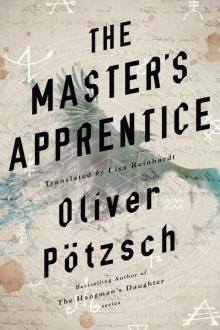
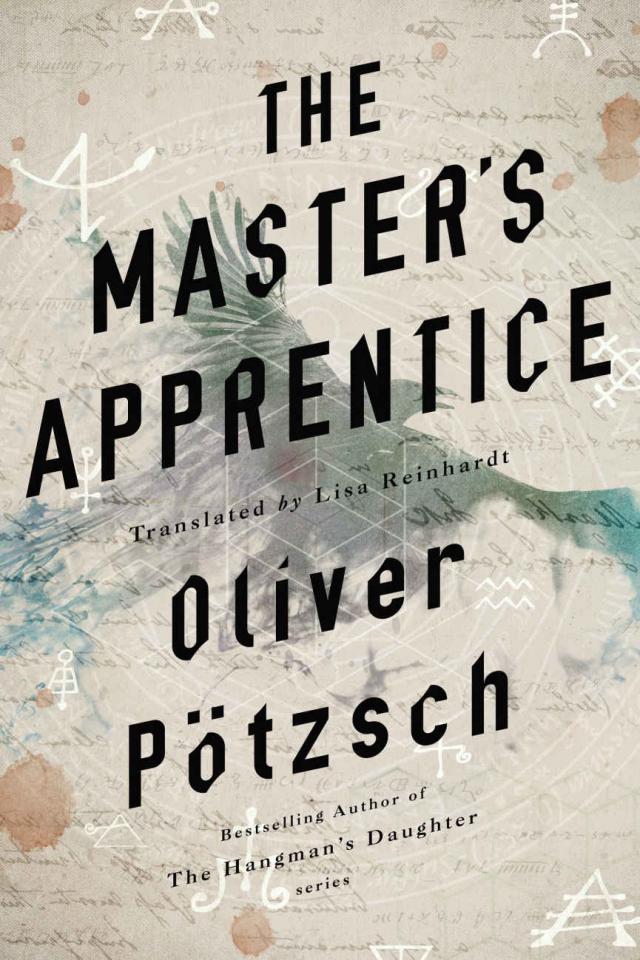
The Master's Apprentice, page 19
part #1 of Faust Series


The crimson waves grew higher and higher, and Johann sailed on their crests. More hands tugged at him, and suddenly everything around him was naked skin tasting of soil and blood. He grasped a handful of long, matted hair like that of an animal—black curls, and blonde, brown, and red. Countless naked arms, legs, full breasts, and soft buttocks rubbed against him. Tongues licked him everywhere, and he licked, too, tasting salt and also something fishy, like from the depths of the ocean. As the chorale rose and ebbed around him, Johann let himself flow in the wild whirlpool of bodies. Voices whispered in his ear, urged him on, cried and exulted and moaned, together pushing toward the imminent climax.
Then his semen spilled and the moaning stopped abruptly.
Johann fell into a deep black hole.
When he came to, he could see clearly again: the huge, dying fire, and surrounding it, wrapped in blankets, sleeping men and women, exhausted from their shared ritual. Above them, small, lifeless bodies hanging in the branches like burned-out lanterns. Everywhere around him was silence and death. The potion’s effect had let up, and reality hit Johann like a bucket of cold water. He scrambled to his feet and ran—stark naked—into the woods. Twigs and thorns tore at his skin, and a cold wind whistled through the trees, but he felt none of it. He ran away like prey running for its life.
Suddenly, an angry scream rang out behind him, followed by the familiar, demanding voice.
The voice of the master.
“Come back, Faustus!” he yelled. “Come back! I command you!”
Ignoring the voice, Johann ran on.
“Stop! Don’t do this to me! Don’t do this to you!”
Something in his voice made Johann slow down. It sounded like he was begging him, pleading with him.
“Come back, Faustus! I can teach you so much more. The world could lie at your feet—at our feet. You have the power to set the world on fire! Homo Deus est! Faustus, I’m begging you.”
Johann paused for a moment, but then he ran on. He leaped over bushes and fallen tree trunks, crossed streams and ditches, stumbling and falling but getting back up every time, pressing on without looking back. The voice behind him grew more and more plaintive and eventually began to scream furiously.
Johann was still running when the voice fell silent.
Tonio del Moravia, the magician, keeper of the seven times seven seals, had vanished from Johann’s life.
Act III
The Train of Jugglers
8
THE EFFECT OF the potion didn’t fully wear off until daylight broke. Until then, Johann ran through the forest like a restless wolf, naked and filthy. Whenever his strength failed him and he needed to rest, he’d find a dip in the ground or a rotten, fungi-covered tree trunk to hide behind. But his fear of Tonio and the horror he was running away from was greater than his exhaustion.
Johann kept running as if the devil was after him.
Every now and then he thought he was being pursued by a flock of black shadows attacking him like bats. He screamed and lashed out at them even though he knew they weren’t real. He could hear whispering voices; the roar of a great, angry animal; and the soft crying of children. The crying was the worst, because then he again saw the small, lifeless bodies hanging in the trees, and the blood dripping down from them.
Finally Johann’s steps slowed. He staggered and then fell flat on his face. He managed to cover himself with twigs and rotting leaves before sleep overpowered him.
When he woke, the sun was high in the sky.
Johann blinked a few times, then shot up as if waking from a long bad dream. He was cold—colder than he’d ever been. His toes and fingers were blue, and his limbs ached, shivering so badly that he struggled to gain control of his movements. Only now did he notice that he still wore the knife around his neck. It was all he had left.
While he slowly rose from his bed among the leaves, images of the previous night returned. He had a pounding headache and struggled to tell the difference between real and imagined memories. He hadn’t been able to think straight since Tonio and Poitou had given him the black potion. Father Antonius had told Johann about such drinks. They contained henbane, devil’s trumpet, deadly nightshade, and other intoxicants that gave the user the impression of soaring high in the air or brought on hallucinations like lewd, buxom women.
Drink too much of it, though, and you’d go straight to hell.
Father Antonius once told Johann that older boys and girls from remote villages sometimes used those plants to cook up a brew that helped them escape the prisons of their drab lives for a short while. And witches concocted similar potions to mate with the devil. They smeared their broomsticks with the potions for the so-called witches’ sabbath and soared up into the thunderclouds. Back then, those stories had seemed like old wives’ tales to Johann.
But now he wasn’t so sure.
If he wasn’t mistaken, Tonio and Poitou had invoked some kind of evil creature in the clearing—perhaps even the devil himself. Evidently they were Satanists, followers of Lucifer who practiced horrific rituals. Had all the women who had kissed, licked, and mounted him really existed? And the large, soft creature that had lowered herself on him?
Had it been a witch? Or something much worse?
Johann looked down at himself. His private parts were sticky, and there were leaves all through his pubic hair. Then he thought of the bloody, whimpering bundles in the trees, and a wave of nausea overcame him.
He broke down and vomited, gasping. He had nothing left but green bile. Nonetheless, he felt a little better afterward. He looked around, his teeth chattering. If he didn’t want to freeze to death, he needed to find clothes. Tall fir trees stood all around him, blocking out the sunlight almost completely. He had no idea where he was or what direction he ought to take. He decided to follow a narrow game path, so at least he didn’t have to battle the thorny undergrowth.
Trembling and keeping low like a frightened deer, Johann made his way through the forest. He was still terrified of Tonio finding him. The master wasn’t someone who gave up in a hurry. Johann started to notice dozens of small wounds on his body. At first he thought they were scratches from running through the trees, but when he looked more closely, he saw that the marks seemed to have been made by long fingernails. Some of the cuts formed symbols he couldn’t read.
What in God’s name happened last night?
A terrible suspicion sprouted in his mind. What if Tonio hadn’t invoked the devil, but if instead . . . The thought was so awful that Johann didn’t even want to think it through.
What if Tonio is the devil himself?
Johann remembered that he’d heard Margarethe’s laughter through his delirium. Margarethe had saved him—she had opened his eyes. If he hadn’t thrown up the potion in the last moment, he’d never have been able to run away from Tonio. Perhaps he’d be hanging in the branches of a dead oak by now, gutted like those poor little creatures; Johann still didn’t know whether they had been real or a figment of his imagination.
Johann hoped—prayed—that he’d only imagined them. But then he remembered all the missing children. He thought of Martin, his little brother.
Small, whimpering bundles . . .
He forced the thought aside and banished it to a deep, dark place.
After another hour of aimless wandering, he spotted a column of smoke rising up above the firs about an arrow’s shot away. Cautiously, he headed toward it and soon reached the edge of a clearing with a solid two-story log cabin. The clearing was covered in charred tree stumps, and the ground in between them had also been burned. A little way off, a charcoal pile smoldered steadily, filling the air with biting smoke.
Ducking behind a dew-covered blackberry bush, Johann watched the clearing for a while for any signs of life. He could hear the blows of an axe in the distance and guessed that the charcoal burner was out chopping wood somewhere in the forest. The relatively large house suggested he had a family.
Johann sneaked over to the house as quietly as he could. It was built of hefty logs, and the windows were as small as arrow slits. The door stood ajar. Johann nudged it open carefully and found a tidy room within. It was warm inside, and a large bowl of barley porridge stood in the middle of the table—probably breakfast leftovers. Johann devoured it like a famished wolf. Using both hands, he shoveled the sticky mass out of the bowl and into his mouth. When he had cleaned out the bowl, he licked his fingers. He stopped short when he heard creaking footsteps on the boards above him.
There was someone upstairs. He didn’t have much time.
He frantically looked around and spotted a chest next to the stove. His heart leaped with joy when he opened the lid. Inside the chest were clay bowls, wooden spoons, a tarnished copper candlestick holder, and—most importantly—clean linen shirts and leggings, like farmers wore in the fields. There was even a pair of wooden clogs. Johann quickly gathered up an armful of the clothes. He was about to run outside when he spotted a bowl of milk in the corner that someone must have left for the cat. He was still so hungry that he knelt down, held the bowl to his lips, and slurped up the milk like an animal.
In that very moment, the door to the next room opened and an older woman wearing an apron and a bonnet gaped at him. There were more people in the house than he’d thought. The woman turned pale and then pointed at the kneeling, naked Johann with a trembling finger, screaming loudly.
“A wolf-man!” she screamed. “God help us! There’s a wolf-man in our house!”
Johann dropped the bowl and it shattered on the floor. Holding on tightly to the clothes and the shoes, he ran out of the house while behind him the woman continued to shriek, calling upon all fourteen holy helpers to save them. Much to Johann’s horror, the charcoal burner emerged from the forest. His bearded face was black with soot, making his eyes gleam very white. He was holding his axe like a weapon and came running toward Johann between the charred stumps.
“Stop, whatever you are! Stop, beast!” shouted the man.
Swinging his axe, the man cut across the clearing and blocked Johann’s way. Johann managed to dodge the axe at the last moment, hearing it whooshing past his ear. He staggered and almost fell but caught himself and rushed toward the forest edge. He could hear the charcoal burner closing in on him.
“Martha, get the workers!” the man shouted. “We must catch the beast. I won’t let it get away! Hans, this way!”
From the corner of his eye, Johann saw a younger man with an axe run toward him from the right. The strong-looking lad was about to cut off his escape route. Johann desperately hurled himself shoulder-first at the worker. There was a loud crack, and a sharp pain shot down Johann’s arm. The young man cried out and fell to the ground. Johann still clung to the bundle of clothes as if it were a treasure. He got back on his feet and ran into the forest. Soon the fir trees swallowed him up.
“Go back to the hell you came from, you demon!” yelled the charcoal burner. “May God strike you down with a bolt of lightning!”
The shouting gradually eased and eventually stopped altogether, but Johann kept running until he came to a narrow track. After a little while, the trees opened up and Johann saw a larger road that led out of the forest and through fallow black fields.
Johann washed himself as well as he could in a ditch by the wayside before putting on the shirt, leggings, and wooden shoes. Then he stepped out into the road. The sun was high in the sky—Johann guessed it was around noon. He was gasping with exhaustion, and he was shivering—not just with a chill that seemed reluctant to leave his body, but also because he was terrified that the charcoal burner and his workers might appear from behind the next bend. His shoulder hurt like hell. He was too weak to run now, let alone defend himself. But at least he looked like a human again.
Which way should he turn? He had nothing left but the clothes he was wearing, and even those were stolen.
Quo vadis, Faustus?
The choice was made easier when a squeaking horse-drawn cart appeared from the right. At first Johann thought it was the master’s wagon, and he was about to jump into the ditch, but then he saw it was just a cart driven by a portly old man—a wealthy farmer or a merchant, he guessed. The man was wearing a fur vest and a warm, woolen coat that was clasped together at the front with a silver pin. Upon seeing the shivering boy in the thin shirt that was much too big for him, and whose face was covered with nasty scratches, the man gave him a look of pity.
“Where are you headed, lad?” he asked, pulling a stalk of straw from between his few remaining teeth. “You don’t look like you’ll get very far.”
Johann hesitated. Then he named the first city that came to his mind. It was the city he would have liked to visit a few days ago, but Tonio had steered clear of it—another reason that it seemed like a good choice. Hopefully, he’d be safe from Tonio and Poitou there. There was a good chance they were still searching for him.
“Augsburg,” he said.
The old man grinned. “You’re in luck, boy. That’s just where I’m taking my wine.” He gestured at the load of barrels behind himself. “Jump on up. But don’t you dare sample my wine—or I’ll drown you in it like a rat!”
And so Johann went to Augsburg—the biggest, loudest, and wealthiest city he’d ever seen.
They had reached the imperial city in two days, arriving around noon.
Like the last time, Johann couldn’t get enough of gazing at the countless rooftops and towers rising up behind the battlements of the city wall. Tallest of all was the grand cathedral tower. By comparison, Knittlingen’s Saint Leonhard’s Church looked like a dirty stable.
“Close your mouth before the flies crawl in, sleepyhead,” said the old man with a laugh. “This is golden Augsburg—the wealthiest city in the world. That’s what the late, great Pope Pius II called it, and, as God is my witness, it has only grown wealthier since.”
The corpulent old man turned out to be a stroke of luck for Johann. He was a wine merchant from Würzburg whose only grandson had been taken by fever a few months prior. Apparently, Johann reminded the man of his beloved boy, who’d died far too young. Therefore, the merchant had bought Johann a bowlful of steaming stew on both nights of their journey, helping to dispel the cold from Johann’s limbs. The rest of the time, Johann had slept between the barrels on the wagon like a log. His shoulder still hurt, and the many scratches on his skin were still healing, but he felt strong enough to continue his journey on his own now.
Only where this journey was supposed to lead, Johann didn’t know.
He had decided not to think about that terrible night near Nördlingen. God only knew what sort of heathen ritual Tonio and Poitou had been trying to achieve there. Ancient ceremonies that used to serve some nameless god and that the church hadn’t entirely managed to exterminate. Tonio called himself a magician, so what did Johann expect? The whole thing had been nothing but cheap hocus-pocus, just like the pentagrams, the black potion, and all the rest. Something unspeakably evil had happened that night. No magic tricks, nothing that had actually invoked the devil—and yet it had been something devilish for which Tonio would someday burn in the deepest depths of hell.
There was a great hustle and bustle outside the gates of Augsburg. Johann and the merchant circled around the city and eventually entered it through the Red Gate, a massive fortification on the Via Claudia Augusta, which led south toward the Alps. The wine merchant had told Johann that Augsburg had been founded by a Roman emperor—and not just any emperor, but the famous Emperor Augustus, who had lived at the time of the savior. Johann reverently gazed at the worn cobblestones in the streets, imagining Roman soldiers marching across them long ago.
From the Red Gate they came to a busy avenue that was so wide that there were even houses in its center. The street, which led all the way to the cathedral, was lined with huge patrician palaces several stories high and adorned with colorful frescoes. The two men passed wealthy patricians wearing velvet tunics and fur-lined coats, women clad in colorful scarves and the finest fustian, and one man who wore a cap laced with gold thread instead of a hat.
The wine merchant winked at Johann. “Did you see that vain peacock? That was young Jakob Fugger. They say his family will soon be the most powerful family of Augsburg. Since Maximilian is the new king, Fugger has been doing business with him and lending him money. Ha, to think that Jakob’s grandfather started life as a simple weaver from the country! That’s what it’s like nowadays—nothing is certain anymore, and anyone can become someone.” He gestured toward an ostentatious building in the middle of the street. “All the high-class ladies and gentlemen—the Fuggers, the Welsers, the Gossembrots, and the Rehlingers—are meeting for the Geschlechtertanz here tonight—a fancy dance. Apparently, the youngest Rehlinger girl is getting hitched. It’ll be a big night of politics. And that always goes best when the throat is well oiled.” He gave a merry laugh. “And that’s where I come in. Five barrels of the finest Franconian wine! There’s none better far and wide, believe me.”
They drove a little farther and reached a long square surrounded by barns and more patrician houses. A huge crowd of people pushed past market stalls and makeshift tables. Behind the stalls and tables, dozens of barrels of every size stood stacked in piles, chalk marks designating each barrel’s origin and owner. Merchants walked up and down in front of their stalls, hawking their wares and handing out small jugs for sampling. The cobblestones were red and slippery with spilled wine.
The stench reminded Johann of the Trottenkelter press at Knittlingen, and the image of Ludwig’s brutally disfigured body appeared in his mind’s eye. He chased away the thought as quickly as he could. Knittlingen, Margarethe, Ludwig, Martin, Tonio—all of that was in the past. The future lay in front of him, even if he didn’t yet know where it led.