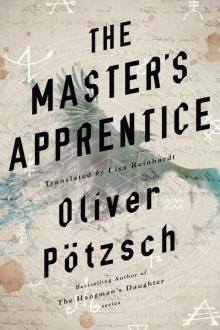
The Master's Apprentice, page 15
part #1 of Faust Series


Fascinated, Johann studied the drawing and several tables below it. He’d been waiting for this for weeks. How many times had his mother spoken of the stars on the day of his birth and how because of them, he was a lucky child, a Faustus. Now he’d finally learn what all that meant!
“My mother said I was born under the influence of Jupiter,” he said quietly. “On April twenty-three in the year of 1478. She always told me to remember the date well, but she never explained why. Can you tell me?”
“It’s a strange date indeed. On that day, at your place of birth, the sun and Jupiter stood in the same degree of the same sign. And some of the other celestial bodies formed a, well . . . a very interesting relationship. It’s a constellation that occurs only a handful of times in a century.”
“When I first met you, you spoke of a day of the prophet,” said Johann. “Do you remember?”
“Oh yes, I remember.”
Suddenly, the master’s eyes became as empty as glass marbles and he gazed into the distance. When he spoke again, his voice was hollow and so quiet that Johann struggled to understand.
“And I stood upon the sand of the sea, and saw a beast rise up out of the sea, having seven heads and ten horns, and upon his horns ten crowns, and upon his heads the name of blasphemy. Homo Deus est!”
Johann frowned with confusion. He’d never seen the master like this before. “What did you say?” he asked.
Tonio shook his head and smiled, his eyes normal again. “An old Bible quote, nothing more.” He turned the page, and there were more tables with numbers. “Listen, I have a task for you. A Palatinate abbot asked me to write up a simple nativity for him. I haven’t gotten around to it yet, and I’d like you to do it. You’ve got all winter.”
“All winter?” Johann looked at him with surprise. “It can’t possibly take that long!”
Tonio laughed. “My dear Faustus, you’ll soon learn that astrology, along with alchemy, makes up the crown of the arcane arts. The road to mastery is long, stony, and paved with mistakes. And now listen carefully to what I’m telling you about the time of birth and sidereal time. I’ll only explain everything once. Understood?”
Johann gradually came to realize that astrology was an extremely complicated field indeed, more difficult than anything he’d studied so far—yes, even more difficult than playing that accursed bagpipe.
In the following days, he studied the signs of the zodiac and their meanings. Each sign in the outermost sphere occupied a space of thirty degrees, of which ten formed a so-called decade. From a person’s time of birth and the sidereal time—time reckoned by the movement of the stars rather than the sun—the so-called twelve houses could be calculated. There were ascendants and descendants, and everything had to be determined with the help of complicated formulas. Many nights Johann sat up late working on the chart just to watch the master tear his work to pieces the next morning.
“You’re nothing but a jackass,” scolded Tonio. “You can’t even manage the simplest calculations. From the beginning! If you’re not finished by noon, you’re not getting any lunch.”
Johann thus studied day after day. He thought about his stepfather telling him that his real father, the juggler and traveling scholar, also used to read the stars. Most likely, it had been nothing but hocus-pocus, not true knowledge, although Johann couldn’t be certain. He didn’t know who his father was. And he’d never find out, since the only person who could tell him was his mother—and she lay dead and buried in the Knittlingen cemetery. Johann’s heart ached at the thought, and he decided to stop fretting about his parents. He might no longer have a father or a mother, but he had Tonio.
Sometimes, when the master was satisfied with Johann and the night was crisp and clear, Tonio would take him outside and show him the constellations. Ursa Minor and Major, Aquila, Andromeda with its milky fog. The great Ptolemy had gazed upon them. The stars were eternal. And yet they changed. Constellations traveled, coming and going like ancient companions of Mother Earth.
“Look there: Orion,” Tonio said, pointing to a particularly striking constellation. “Canis Minor and Canis Major rise with him in winter. Together with Taurus, Gemini, and Auriga, they form the winter hexagon. In February, the summer constellations begin to return.”
“There are so many stars,” replied Johann. “And you can’t seem to see the end. Is the universe infinite?”
“Remember the heavenly spheres,” Tonio said. “There are eight of them.”
“And what comes after the eighth sphere?”
Tonio laughed. “If I were a priest, I’d say, ‘God only knows.’ But I think we don’t know because we can’t see that far. Most stars can’t be seen with the naked eye. But there are . . .” Tonio hesitated. “Possibilities. Your birth constellation, too, is difficult to discern, especially because our narrow-minded way of thinking ends behind the eighth sphere.”
“Do you know when it appears next?” asked Johann.
The master smiled mysteriously. “You’ll find out soon enough, young Faustus.”
Johann was struck by the thought that the very same stars he was gazing at were also sparkling above Knittlingen, and homesickness flared up in him. He remembered how Father Bernhard also used to explain the constellations to him, and how Father Antonius showed him the printing press at Maulbronn and the book of the great Albertus Magnus—the Speculum Astronomiae, the mirror of astronomy.
But most of all, he thought of his little brother, Martin, and of Margarethe.
Some nights, when he couldn’t go to sleep, his thoughts of Margarethe became so strong that he had to seek relief with his hand. Afterward, he felt ashamed and prayed for Margarethe’s health. Perhaps she’d forgotten him by now. For him, too, it would be best to forget her.
But he couldn’t.
During the cold days of January, he was often alone in the tower. The master didn’t tell him where he was going, but more than once Tonio stayed out overnight. He always locked the trapdoor leading to the upstairs chamber carefully before leaving and reminded Johann what he’d do to his pupil should the young man ever ignore his order.
When the master would return the next morning, he always looked very pleased. A few times he came back with new books—mostly about astronomy and alchemy—and Johann wondered where he got them. Other times, the master carried sealed clay jugs or leather sacks filled with something bulky. The sacks were damp at the bottom, as if whatever was inside was wet. Johann didn’t dare ask about it, though, and focused on his books. He got the impression that Tonio always looked healthier after his nightly expeditions—less pale, somewhat rosier and fleshier in the face. He guessed the master went to the village tavern for a good meal and a few drinks while Johann was stuck in the tower with a grumbling stomach, working on the accursed horoscope of some priest. Sometimes, when he looked up from his work, he felt as though the birds in the cage were watching him so they could tell the master all about his doings.
“Goddamned beasts!” shouted Johann once, throwing a piece of firewood at the cage, causing it to swing back and forth wildly. The birds cawed as if they were mocking him, and the raven glared at him with evil eyes.
“Kraa!” croaked the raven. “Kraa, kraa!”
Johann held his hands over his ears to shut out the bird’s almost-human voice.
When Johann needed a break from the tables and numbers, he went into the forest to chop firewood. He baked delicious-smelling loaves of flatbread over the fire, practiced his magic tricks and throwing his knife, or leafed through books the master had lent him. Johann had always enjoyed reading, and his Latin was getting better all the time. He was a fast reader and remembered most of what he read. When Tonio quizzed him on a book, Johann was nearly always able to give detailed replies. Then the master would lower the book and gaze at Johann pensively.
“It seems to me you’re a better scholar than a juggler and musician,” he’d say eventually. “Johann Georg Faustus, you’re full of surprises.”
Indeed, Johann didn’t find much time to practice his tricks over the winter; the horoscope the master had entrusted him with kept him busy. After four more weeks, the birth chart of the Palatinate abbot was finally completed. Making one final stroke with his quill, Johann carried it downstairs. As usual, Tonio was sitting at the table with his books.
“Here you go,” Johann said defiantly and handed Tonio the scroll. He fully expected the master to tear it up again, but to his enormous surprise, Tonio didn’t seem to find a single mistake.
“What a boring fellow he is, this abbot. His stars are gray and insignificant.” Tonio laughed. “But the birth chart is all right. Tiny oversights here and there, but generally well done. I didn’t expect anything else of you. You’ve proven in the last few weeks that you’re talented—more talented than many other students I’ve had.”
The birds in the cage started to squawk wildly, shuffling back and forth on their shared perch.
“Hush, you beasts,” Tonio shouted, turning to them.
Johann breathed a sigh of relief, but the master wagged his finger in warning.
“This was just a simple task, boy. Nothing more than the horoscope of a pale abbot. Don’t let it go to your head. There’ll be much harder tests for you yet—especially once we turn to alchemy, the jewel in the crown of the arcane arts. But you’ve done enough for today.” He clapped his hands. “We should celebrate your first horoscope. Go down to the village and get us a small keg of wine, bread, and some juicy smoked sausages. What do you say?”
Johann nodded enthusiastically. Until then, the master had always forbidden him to go near the village so they wouldn’t arouse suspicion. This would be his first excursion since they’d moved into the tower almost three months ago.
“Wash your face before you go.” Tonio winked at him. “And don’t mess about with the village girls. You’ve grown a fair bit in the last few weeks, and you’re a handsome chap. Taller and a little stronger. If anyone asks, you’re just a traveling tinker’s journeyman, understood? We don’t want any trouble. And now off with you—I can tell you’re itching to go.” He handed Johann a few coins. “I don’t want the cheapest wine. Woe to you if you come back with swill!”
Johann took the coins with a grin and reached for the coat he had brought from home, which looked rather worse for wear by now and was becoming too short in the sleeves. Then he hurried outside.
The sun was shining and the first birds were singing, welcoming the nearing spring. As Johann ran through the snow, he could feel the stress of the last few weeks fall away from him like a lead weight.
The master waited until he could no longer hear Johann before going upstairs to prepare the ritual. The blood he kept in a small barrel was a little congealed, but it would do. Slowly, he stirred the sticky liquid, dipped his finger into it, and sucked it with relish. There was no taste like blood—warm and salty and full of life.
Especially when it was as young as this blood.
He dipped his hand into the barrel, and the liquid dripped onto the floor like paint. Using his fingers, he drew the ancient pattern that had served as a means of communication for thousands of years. He renewed the faded symbol on the floor, and a faint smell of decay spread through the chamber.
He was almost certain.
He hadn’t thought it possible at first; he’d studied the ancient maps and watched the skies with the apparatus he’d invented. But the stars didn’t lie. The day was close, very close, and it seemed he’d finally found the right one. The chosen one. They had to act now! Or the moment would pass, and no one knew when it would return.
He paced the circle with measured steps like he’d done countless times before, murmuring the ancient words.
“Remember then! Of one make ten, the two let be, make even three, there’s wealth for thee . . .”
When the master had finished, he sat down in the middle of the circle, closed his eyes, and waited for a reply.
The trees dripped with melting ice, and the path that had been covered with a thick layer of snow just a few days earlier was now sodden with puddles. Johann nimbly jumped across mud and puddles as he headed down the valley, breathing in the fresh air that smelled faintly of the first buds of spring. He felt as though he’d escaped from a prison.
Indeed, spring didn’t seem far off. Johann guessed they’d continue their travels soon. Until then, he hadn’t thought about where they might be heading. The master had never mentioned anything. Did they even have a destination? Distant Venice, perhaps—the city he’d heard so much about? Or Paris? Rome? During the first few weeks of their travels, Johann had simply been grateful for the roof over his head. Tonio had given him a home, shelter from the hardships of winter. He had promised to stay with the master for one year, and sometimes, when Tonio had worked him too hard, he’d thought about running away sooner. But now he was happy to be the student of a man like him. Tonio could teach him far more than Father Antonius and Father Bernhard together—the whole world stood open to Johann!
But today, he simply wanted to enjoy life. After weeks of loneliness and studying in the tower, Johann looked forward to seeing other people, even if they were just the slow-witted inhabitants of some mountain village.
After about an hour’s walk, he reached the road at the bottom of the valley, which ran along a fir-covered foothill of the Alps. In the distance, Johann could make out the snowcapped peaks surrounded by haze. The village lay about half a mile to the east. It was a small backwater with a tiny, decrepit church surrounded by a handful of houses. Next door to the church was the tavern, a low building made from black tree trunks, with dense gray smoke rising from the chimney. A larger trading route led past it.
It was late Sunday morning, and many farmers from the surrounding area had gone to the tavern for a drink or two following mass. Several oxcarts stood by the side of the road, and a group of young maids sat on the edge of a well outside the church. When they caught sight of Johann, they huddled together and whispered. He straightened up and took a playful bow as he walked past them. The girls giggled and squealed and scattered like a flock of hens. Only now did Johann realize how tattered and dirty he looked—with his torn trousers, too-small coat, and matted black hair that had grown long in the last few weeks. He walked over to the well to wash himself. He was surprised when he saw his reflection in the water. His face had become leaner and more angular since fall. Black fuzz had grown around his lips, and his eyes were almost as black and gleaming as those of the master. The weeks in the tower had turned Johann into a serious-looking young man—and, if he interpreted the girls’ giggles correctly, a not entirely unattractive young man.
Once he’d removed the worst of the dirt from his clothes and combed his hair with his fingers, he entered the tavern. It was busy, and the air was heavy with stale sweat and spilled beer. Instantly, several pairs of eyes turned to him, and he thought he heard some snide comments. With his head held high, he walked to one of the few empty tables in the corner and sat down while the villagers eyed him suspiciously. Soon the tavern keeper came over.
“What do you want?” asked the man, briskly wiping the dirty, scratched table with a cloth. “If you’re here to beg, sit in front of the church.”
“A mug of beer, if you please,” Johann replied with a smile. “And some provisions for the road. A keg of wine, a handful of sausages, and some bread, please. I’m an itinerant tinker on my way to Innsbruck.” He held up one of the coins the master had given him. “And I can pay—in case you’re worried.”
The tavern keeper tilted his head and stared greedily at the coin, which was made of pure silver. “You’ll get your supplies,” he said eventually, reaching for the coin. “But you can’t sit here. We don’t want strangers in the village.”
Johann’s smile froze. “But why . . . ,” he began.
The tavern keeper had already turned away without offering him as much as a beer. Frowning, Johann stayed put. What sort of a place was this? The Knittlingers weren’t particularly fond of strangers, either, but they didn’t chase them out of town. His good mood vanished.
“Dirty traveling scum,” muttered someone nearby. “They’re all in league with Beelzebub.”
“They should all be hanged before more terrible things happen round here,” someone else exclaimed. “There’s a foul wind blowing from the mountains.”
Intrigued, Johann turned toward the speakers. They were two elderly farmers, one of whom now spat noisily on the ground. “I’m telling you, the devil is on the loose,” he grumbled. “He takes our loved ones and burns down the roofs over the heads of those who give him shelter. Have you heard? A magician stayed at the Black Eagle near Kempten over the winter, and now the inn’s burned to the ground—and the heretic is over the hills and far away!”
“I don’t think the scoundrel lives far from here,” the other man whispered, making the sign of the cross. “I heard someone’s staying at the old Roman tower—a sorcerer, so help me God! The charcoal burner saw him dance in the forest the other night with his assistant.”
Johann winced. Had he heard right? Those farmers were talking about him and the master. Someone must have seen them near the tower and was spreading rumors. Worse, people seemed to have them mixed up with Freudenreich. Johann suddenly noticed that many of the guests were staring at him with hatred. Some even clutched the hilts of their knives; conversations gradually died down.
“Dirty traveling scum,” the old farmer hissed once more. “Spawn of the devil!”
Johann was relieved when the tavern keeper returned to his table. The man handed him a heavy burlap sack. “Here’s everything you asked for,” he growled. “Now get out of here before they cut your throat. I don’t want any blood spilled in my tavern!”