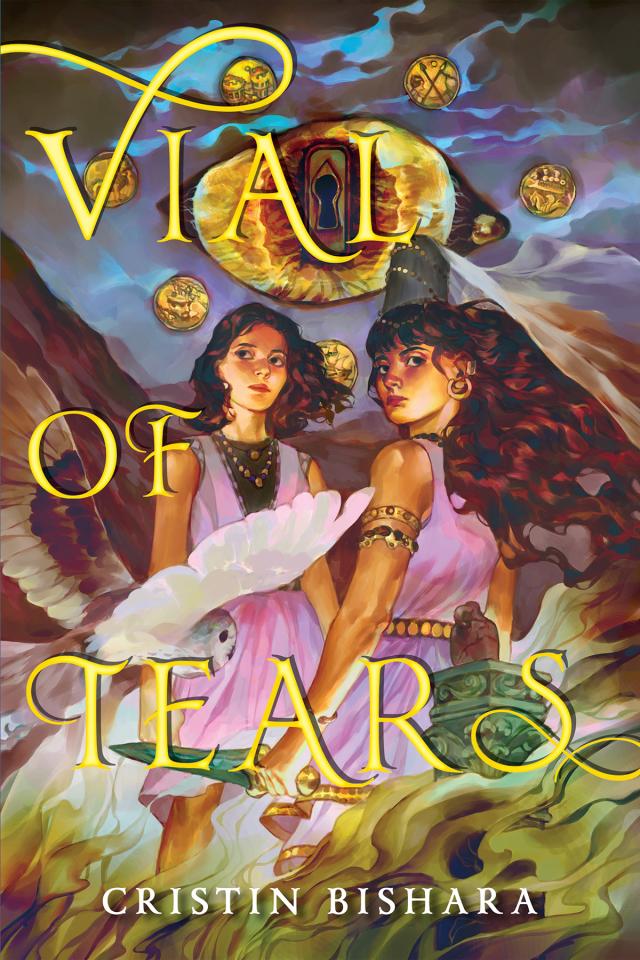
Vial of Tears, page 2


What could be inside?
The only person they knew from Lebanon was Mom’s grandfather, Jiddo Naameh. Packages from him came very rarely, and they were always for Mom, never Sam. She’d never even met her great-grandfather, had only seen him in a handful of yellowed pictures that hung on the walls of Mom’s bedroom. He looked old in those photos, and they were all taken before Sam was born.
It would only take a second to open the package. She took her hand off the doorknob, set her fishing gear down, and found a pair of scissors in the kitchen junk drawer.
Judging by the weight and size of the box, there might be a book or two inside. In the past, he’d sent calendars, tourist guides, poetry written in Arabic, and books with glossy photos of Roman and Phoenician ruins. Sometimes he’d include bars of olive oil soap, jars of pomegranate molasses, and cans of sesame seed paste.
Sam slit the tape along the edges of the box and pulled the cardboard flaps up. A white envelope sat on top of the packing material, addressed to her.
She ran her finger across the handwriting, then slid her thumb under the envelope’s flap and pulled it open. Inside was a piece of folded paper, so thin it was translucent. She unfolded it, eager to read, but the entire note was indecipherable to her: It was written in Arabic, in bright purple ink, the color of peacock feathers.
She dug into the box again, half convinced that only pillows of bubble wrap filled the rest of it, but her fingers hit something solid. The hairs on the back of her neck stood up as she pulled out a fat, pear-shaped object enshrouded in newspaper. Setting it on the table, she began unpeeling the sheets, layer after layer, her fingertips turning black from the newsprint.
Finally, the last square of paper fell to the floor. Sam stood staring at a piece of dull clay pottery.
Its narrow neck was flanked by two circular handles, hardly big enough to fit her fingers through. Simple, symmetrical lines crisscrossed its belly. It had a look of homemade imperfection; maybe Jiddo had made it himself.
The letter surely explained it. She refolded it and tucked it back inside the envelope, glancing at the clock on the microwave. She’d already wasted a solid ten minutes of fishing time. She had to hide everything and get out on the water.
“Go,” she told herself again, pushing away from the table. It wobbled, and the jug shuddered off the edge.
“No!” she cried.
For a moment, the jug seemed suspended in air, simply waiting to be caught—and then it hit the linoleum floor with a hollow, sickening sound.
Sam let out a groan as she knelt to examine the damage. It had split in half; she tried to fit it back together like two puzzle pieces, but there was a thin seam between them. Just like my life, she thought. Split apart and then precariously put back together. You only noticed the cracks when you got close enough.
And that was when she saw the coins.
There were seven, crusted to the dirty bottom of the jug. She tipped it upside down over the table, shook, and the coins spilled out.
Sam blinked.
Treasure.
Time and dirt had turned a few of them black. Others were only slightly tarnished, stamped with images of pine trees and ships, sea castles and owls, spears crossed to make an X. PIASTRES, one of them said; another had a perfect hole drilled through its middle, flanked by two small lions.
Sweat trickled down her temples. Her mind raced. What if Mom came home right this second? She had already pawned every last item of worth in their possession. She would take the coins without a second thought.
There was one more, she noticed: stuck to the bottom, caked with a mud-hardened residue, so camouflaged with the dark pottery she almost missed it. She tipped the jug piece again and shook, hard, but it wouldn’t come loose. When she tried with a fingernail, her nail bent and snapped, and the coin stayed put.
“Super,” she said, sucking on her finger to take the sting away.
Letter-like shapes arced along the top edge of the coin. They might have been words, but they were written in an alphabet she didn’t recognize. Even though she couldn’t read Arabic, she knew its familiar curves and dots. This was something altogether different.
Sam glanced at the clock again.
She needed to go—but instead she pulled Dad’s Swiss Army knife from one of her shirt pockets. His initials were engraved on its bright red side: B.C.C. She gave the knife a quick kiss like she always did before she used it, knowing her father’s fingerprints were still there underneath her own.
Carefully, she worked the tip of the smallest blade under the coin, until it finally sprang out onto the table.
For some reason, she hesitated to touch it. It seemed different than the other coins. Older, thicker. It made her heart beat faster. These coins could change everything for them. This one could really be worth something.
She picked the coin up, and the moment her fingers met the metal, her hand turned icy cold. She bit the inside of her mouth and winced, tasting blood.
A presence filled the room. She was suddenly sure she was being watched.
“Who’s there?” she asked, spinning to look.
Something pulled on her, pushed her. The room turned dark, as if the electricity had failed and a storm cloud had rolled right inside the house. There was the distant sound of a flute, and then a whispering voice. Raspy and urgent.
You have what is mine!
The language was foreign, but somehow she understood.
Give it to me!
The pull on her intensified, a fierce current sweeping her out into deep waters. It felt as though her feet were no longer on the floor, that the worn gray linoleum beneath her had become fluid. The storm cloud swirled and widened into a funnel in the floor, a pit of smoke. Her hand had frozen shut, fingers curled tightly around the coin. But with a determined shriek, she threw it down.
The strange storm stopped as suddenly as it had started.
The light returned to the room. The linoleum was as chipped and ordinary as always. She stood panting for air, staring at the coin where it had landed.
Sam rubbed her throbbing hand, her heart pounding with such ferocity she had to lie down. She made her way to the couch and collapsed, listening.
All was silent, other than her own frantic breathing. There was no hypnotic flute, no voice. Her stomach turned over with something that felt like motion sickness, as if she’d just stepped off a spinning carnival ride and still couldn’t find her footing.
Outside the window, a dog barked, and Mrs. Jarvis yelled. “Get over here! Peanut!” She called the dog’s name over and over again. “Peanut! Peanut! There you are!”
Sam counted to one hundred and then stood.
Warily, she went back to the kitchen and stared at the coin. She was afraid to touch it, but she couldn’t just leave it there.
After pacing the house, searching for an idea, she went to Rima’s collection of beauty supplies, a pink plastic cabinet with four drawers. She yanked open the drawer labeled EYES and dug through a rainbow of shadows, liners, and tubes of mascara until she found the tweezers.
Metal meeting metal made a dull ting as she tapped the coin. Carefully, she slid the tweezers around it and clamped down. All good. Nothing happened. As Dad would say, No holes in the boat.
She let out a little laugh of relief. She had almost expected it to spring to life like a coiled snake.
Back in the kitchen, she slipped the coin into a large Ziploc bag, along with the other seven coins and the two halves of the broken jug. The back door squeaked behind her as she headed outside, down the rotting stoop and into the yard. The gardening tools were already laid out, right next to the plants she’d bought last week. After setting down the bag, she thrust the big metal shovel into the ground, thinking how her mother accused her of burying everything—her emotions, herself—in school and work.
She would get some answers tomorrow. At the library or on the internet, there would be information about old coins. She would find someone—other than Mom—to translate Jiddo’s letter. In the meantime, this was the best hiding place for the things he had sent her.
An hour later, she had a decent-sized hole in the backyard, deep enough. After burying the bag, Sam looked back up at their sagging trailer.
Maybe it wasn’t lopsided after all. Maybe it was her.
2
A door slammed with a gunshot bang and Sam sat up.
She was surprised to find herself back on the couch; a rogue metal spring dug through the thin cushions and jabbed at her thigh. Across the room, their hazy TV was on mute, and a woman silently urged her to act now and buy an Immortal Youth skincare system in three easy payments.
Sam had a dim recollection of putting on her nightshirt, of trying to stay awake until Rima came home. She’d never made it to the lake. Morning sunlight streamed into the room, illuminating the dusty air.
“Rima?” she called, her voice hoarse.
She cleared her throat and stood, rolling her neck until it cracked. Her fingers ached where she’d touched the coin.
The coin.
She sucked in a breath as the whole thing came flooding back to her.
The remote shook in her hand as she clicked off the TV. She must have fallen asleep watching some crazy movie, that’s all it was. Her imagination on overload. She tossed the remote onto the couch and went to the kitchen for a drink, but with a start she remembered the smoky pit in the floor, exactly where she stood now. She skittered away from the spot and tried to laugh at herself.
There was no way that had happened.
And yet she was completely sure it did.
Heart thumping, she poured herself a glass of water from the sink and drank it in one long gulp. She grabbed Jiddo’s letter from the table and backed away from the kitchen, feeling like it was set with snares.
“Rima?” she called again.
She padded cautiously to their bedroom. Her sister’s clothes were flung across the floor, making a trail to the bed, where she snored quietly on the top bunk, murmuring in her sleep, her arm slung over the railing. Sam felt a surge of relief before catching a whiff of vape and beer. And barf.
“Soccer practice,” Sam mumbled under her breath. There were brambles in Rima’s hair. “Yeah, right.”
She slid Jiddo’s letter underneath her own pillow, and then crossed the tiny hallway to open her mother’s bedroom door.
She was back. Finally.
Her duffel bag was on the bed, its contents spilling out, and among the jumbled clothes was the picture she always took with her, no matter where she went. Her wedding photo, framed in silver. Dad in a suit and tie, so serious. Mom in her white gown.
“Mom?” Sam called, walking quickly through the small house, searching.
Her mother’s voice answered, muffled and distant. “Out here!”
Through the kitchen window, Sam could see her waving from the backyard. Sam waved back.
Still in her bare feet and nightshirt, she threw open the patio door and ran out across the weeds and dirt. Above her, the sky was a happy pastel blue, like some sort of candy drink. The cold air took her by surprise, though. Yesterday had been summer-like, but now her breath spilled out ahead of her as she rushed toward her mother.
“You’re home!” Sam said.
“Hey, gorgeous,” Mom said, smiling up at her.
Mom was the one who was gorgeous. Her black hair shone almost blue in the sunlight, and her skin glowed with olive undertones. She was on her knees with a rusty gardening spade and polka-dotted gloves; the potted vegetables Sam had bought the week before were beside her, an investment that would literally grow all summer. A five-dollar plant gave them vegetables for months.
“Stand up so I can hug you,” Sam said, her teeth chattering against the cold.
She nervously scanned the grass, looking for the rock that marked the place where she’d buried everything. Exactly where she’d put it was a blur; she’d been in such a state of shock and panic, and had worked until after dark.
“Yes. I could use a hug.” Mom pulled off her dirty gardening gloves and stood, dusting her knees. “And a week of sleep.”
Sam wrapped her arms around her mother’s waist and kissed her cheek. She seemed thinner than ever; Sam’s arms could practically go twice around her tiny waist. “Where’ve you been?” she asked, sneaking in one more peck on the other cheek before her mother pulled away.
“Getting stuff to plant your garden,” Mom said, dodging the real question.
Sam looked down at the dozen or so plants she had already bought, plus a few bags of black soil Mom must have just brought home. A fat bumblebee floated past, investigating the new plants.
“Thanks,” Sam said.
“Tomatoes need phosphorus.” Mom pointed her gardening spade at a bag of fertilizer. She read the planting instructions aloud. “‘Roma tomato. Pear- or plum-shaped. Plant in full sun in rows thirty-six inches apart.’”
“Yeah, I was kind of waiting for the weather to warm up,” Sam said. “For good.”
She’d covered the plants the previous week because it had dipped into the thirties overnight. The old sheet she’d used to protect them was strewn across the ground now, streaked with mud. Underneath a corner of the striped fabric, a rock—the rock she’d used to mark the spot—peeked out.
“I got some stakes and twine,” Mom said, “and a green pepper plant.” She bumped her hip against Sam’s. “You’re shivering. Go get dressed. You’ll catch a cold out here.”
“The entire garden is supposed to go over there,” Sam said, pointing to the opposite corner of the yard. “All these plants need sun.”
“You need sun,” Mom said. “Look how pale you are. Go inside and get a warm drink.”
“Come with me,” Sam said, but Mom put her gardening gloves back on and squinted at the tag from the green pepper plant. Sam studied the rim of bone under the collar of her mother’s shirt. So thin.
“Where were you?” Sam asked quietly. “I was going to call the police today.”
Mom dropped the tag she was holding. “Do not do that.” All the cheer that had been in her voice moments ago was gone. “Never ever do that.”
“I know, but…”
“You’re not eighteen yet. They’ll put you in a foster home. And Rima somewhere else, in a different one.” She cast a gloved finger in one direction and then in another. Opposite ends of the world.
“Why was Mr. Koplow here yesterday?” Sam pressed. “How many months behind are we? He said he was here about the stoop, but it’s more than that, right?”
Mom sighed and raked her fingers through her hair, sending a stripe of dirt through her bangs. “The credit card company won’t increase our limit.” She shook her head. “I had to get new brake pads for the car. Then your wisdom teeth came out, and that wasn’t completely covered. I bought soccer cleats for Rima, plus her summer registration fees. Things add up.”
“Why didn’t you tell me?” Sam looked over her shoulder toward the house, wondering if Rima was awake yet. She didn’t need to hear another argument. Especially not the same old argument. “I could have put in some extra hours at the jewelry store.”
She held back the rest: I don’t like how Mr. Koplow looks at you. I don’t want you owing him anything.
Mom considered the hole she’d just dug. “Do you think that’s deep enough?”
“How much did you spend on all this gardening stuff?” Sam asked. “Maybe we can return a couple things.”
“Well,” Mom said, a smile tugging at her lips. “I wanted to save the surprise, but since you’re asking…”
From the front pockets of her jeans, she pulled out two thick wads of cash. And then, while Sam stood frozen with disbelief, she sprinkled the bills all over the ground. Like she was planting seeds for money trees.
“What? What did you do?” Sam asked. Possibilities—all of them bad—swirled through her mind. “Where did you get all this? Is it real?”
There were tens and twenties… even fifties. The wind picked up and Sam dropped to her knees to gather the money before it blew away.
“I won at the casino.” Mom laughed. She sounded proud of herself. “I won big.”
“You were gambling all week?” Sam held the money tight in her fists, fighting back the torrent of angry words that swelled inside her. Mom had been playing slots at the casino again? That was where she was?
But the money. The money! It was more than Sam made in a month. Maybe even more than their check from the Marines.
“Karma, baby!” Mom said. “Mercury retrograde ended last week, so the timing was good.” She looked up at the sky. “I wonder if there’s a lunar eclipse in Pisces right now. I should check on that.”
“The stars were aligned,” Sam said.
“Yes,” Mom said, ignoring Sam’s sarcasm. “And today, we’re going to Lowe’s to buy a washer and dryer. No more trips to the laundromat.” She dipped her hand into her shirt pocket and found a pair of sunglasses, then slid them on and smiled, posing. “Like them?”
“Yeah. They’re great, Mom.” Sam sighed, reluctantly handing the money back. “Really great.”
“We’ll get Alan off our backs, buy some new clothes,” Mom continued, “and go out for steaks tonight. Let’s go see a movie, too.” She cleared her throat. “What? I see your wheels turning.”
“I just… We have a lot of bills to pay, obviously. Those should come first. And that other thing… remember?” But clearly Mom had forgotten. “The entrepreneurship certificate program. The small-business classes I’ve been saving for.”
Mom swatted her words away. “You haven’t even graduated high school yet. Enjoy the last few weeks of senior year. Enjoy the summer.”
“But—”
“Your dad took a few college classes, you know, before he enlisted. And what did they get him? Nothing.” Her eyes lit up. “We should spend the money on a prom dress for you!”
“No! That’s a total waste. I’m just going with my friends anyway,” Sam said. “I’ll wear Rima’s blue dress.”
“That dress won’t fit you. Come on, you could be the belle of the ball,” Mom said, fanning the bills. She twisted her mouth when Sam shook her head. “You are no fun.” She shoved the cash back into her pockets. “You’re so serious all the time, so practical. You weren’t always like this. I worry about you.”