Architect (Last Resistance Book 3), page 1
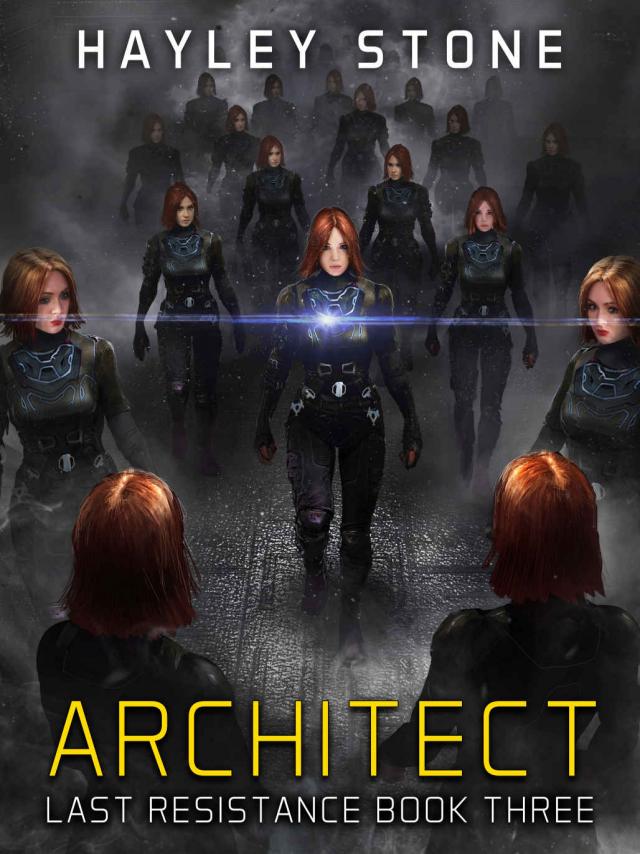


ARCHITECT
©2020 AETHON BOOKS
This book is protected under the copyright laws of the United States of America. No part of this publication may be reproduced, stored in a retrieval system, or transmitted, in any form or by any means, without the prior permission in writing of the publisher, nor be otherwise circulated in any form of binding or cover other than that in which it is published and without a similar condition including this condition being imposed on the subsequent purchaser. Any reproduction or unauthorized use of the material or artwork contained herein is prohibited without the express written permission of the authors.
Aethon Books supports the right to free expression and the value of copyright. The purpose of copyright is to encourage writers and artists to produce the creative works that enrich our culture.
The scanning, uploading, and distribution of this book without permission is a theft of the author’s intellectual property. If you would like to use material from the book (other than for review purposes), please contact editor@aethonbooks.com. Thank you for your support of the author’s rights.
Aethon Books
www.aethonbooks.com
Print and eBook formatting by Steve Beaulieu.
Published by Aethon Books LLC.
Aethon Books is not responsible for websites (or their content) that are not owned by the publisher.
This book is a work of fiction. Names, characters, places, and incidents are the product of the author’s imagination or are used fictitiously. Any resemblance to actual events, locales, or persons, living or dead is coincidental.
All rights reserved.
Contents
ALSO IN THE SERIES
Prologue
I. Force Quit
Chapter 1
Chapter 2
Chapter 3
Chapter 4
CAMUS
II. Crash
RASH
Chapter 5
Chapter 6
Chapter 7
ZELDA
Chapter 8
Chapter 9
SAMUEL
Chapter 10
Chapter 11
SAMUEL
Chapter 12
HANNA
Chapter 13
Chapter 14
Chapter 15
Chapter 16
PRIM
III. Backdoor
RHONA
Chapter 17
Chapter 18
CAMUS
Chapter 19
SNOW
IV. Plug and Pray
20. Rhona
Chapter 21
Chapter 22
EPILOGUE
Acknowledgments
FROM THE PUBLISHER
ALSO IN THE SERIES
About the Author
ALSO IN THE SERIES
Machinations
Counterpart
Architect
For Jace
Prologue
CAMUS
McKINLEY BASE, ALASKA
He dreams of Rhona every night after Calgary. Not the ruined corpse he left in the snows near Anchorage: the woman who showed up after, the one who pushed back into his life like a nail.
Except in his dreams Rhona Long still lives. He can see her, caught in a moment of victory, beautiful red hair snapping in the wind—a flare against the vanishing dawn. He can hold her again, confessing all the things he should have told her, every romantic thought that went unspoken. Her painted freckles print spots on his fingers, but it’s her smile that truly leaves a mark, so bright and open, the warmth of it burned into the insides of his eyelids.
And she’s loud.
God, he would swear by that voice, unmistakably hers, righteous and unafraid. She calls him out for his cowardice, for not doing more to fight the New Soviets’ takeover of McKinley, and he cannot argue, cannot find his voice at all. His throat is closed with so much guilt.
Other times they are alone in the places she loved before the Machinations—a café or a park, outdoors where the sun is shining—and there are no machines. No war. Death is a far-off shadow cast by a long, bright life, and they are together in a moment of perfect happiness. At some point she makes a terrible joke, and he wakes himself laughing, because it is so her.
His first thought upon waking is, I can’t wait to tell Rhona about this.
He reaches across the bed, seeking an end to the cold desert of sheets.
And this is how Camus Forsyth learns, day after day, the woman he loves is gone.
Camus meets Hanna most mornings for breakfast. He wishes he’d been the one to reach out first, but of course it was Hanna who showed up at his door after the dust settled and dragged him to the cafeteria to eat something.
She talks more than he does, forcing him to keep his head up to watch her sign. Though he picked up some ASL over the years, it’s not nearly enough to hold a conversation easily, and he deeply regrets not joining in when Hanna and Rhona were first teaching one another after Hanna’s accident. Rhona insisted on practicing with him, though in truth he hadn’t devoted nearly the same energy to learning as she had. Hanna was Rhona’s friend, after all—not his. Incredible how much has changed since then.
“You should talk to someone,” Hanna tells him. She’s been on him to try therapy from the beginning, perhaps remembering his self-imposed isolation the first time Rhona died. It’s a nice thought, but the situation is different this time. Machines didn’t kill her this time; people did. People within his reach. People who can still be held responsible.
“We’re talking,” Camus replies lightly, mustering a sliver of a smile.
Hanna gives him a look, signing, You know what I mean.
Camus sips his coffee to avoid answering. The roasted chicory is grainy and leaves an aftertaste like ash, but it’s better than nothing. So much of their diet is synthetic these days, concocted in one of the base’s labs when it can’t be grown on-site. It’s nice to have something real, however unpleasant.
“Camus.”
Hanna places a hand on his. She wants him to look at her. He’d rather not, knowing he will find an unanswerable plea in her eyes.
“Jillian said she’d make time if you change your mind.”
Of course. Who else would Hanna recommend but her own grief counselor? Jillian Wenakeneck’s skills were in high demand even before the Machinations started. Now he’d be surprised if a single day went by without someone imposing on her time.
Jillian had already approached him once following the news of Rhona’s second death. The New Soviets forced him to do the broadcast, performing his pain for public sympathy, and he strongly suspected they had sent Jillian to him too. He politely, yet firmly, declined her offer.
“I’m worried about you.” Hanna lays a hand over his. The warmth of her skin throws their cold, sterile surroundings into stark relief. No one else in McKinley has dared touch him, as if his grief is contagious, a disease they might catch. “I’m worried you’re going to do something stupid.”
Camus plays dumb, wrinkling his brows. “Such as?”
But he knows. He hears the fear under her worry, specific as a curse.
She’s not worried he’ll do something stupid. She’s worried he’ll do the same stupid thing. Again.
The day of the takeover is mostly a horrible blur now, interrupted by memories of Hanna checking on his injuries and later the press of her shoulder as they sat together under house arrest awaiting their fate under the new regime. Her quiet presence demanded nothing from him, not an excuse or an explanation of his actions. Hours before he’d tried to get them all out. Her and Zelda and Matt and others: everyone who knew Rhona’s secrets. It stood to reason that if the New Soviet high command was willing to murder an icon of the resistance and several of her allies to cover up Rhona’s cloning, they’d also be willing to silence anyone back at base who might ask questions about the whole affair.
His plan was stupid, reckless, and ill-conceived—where would they have even gone after leaving McKinley?—but in his view, it had one clear advantage.
It was what Rhona would have done. She would have tried, even if the plan wasn’t perfect.
Hanna frantically shakes her head, her short, platinum braid swinging from one shoulder to the other. No, she signs, followed by what he believes is, I’m not giving you any more ideas.
“Fair enough,” he says with another trim smile. “Rest assured, I’ve learned from my mistakes. I don’t intend to repeat them.”
They eat in the eerie silence of the early-morning cafeteria, and then Camus signs, to the best of his ability, you think she might still be alive?
Hanna’s forehead accordions in confusion before she realizes what he’s asked. She signs back the same question with a helpful correction, and he nods to confirm. Then she answers: I don’t think so.
No body, he points out.
Her expression is kind, like a parent trying to convince her child Santa Claus isn’t real. There wouldn’t be anything left.
She’s right. The missiles launched by the New Soviets, presumably targeting hidden machine strongholds, would have also taken out whole miles of cityscape around them, immolating anything within their deadly radius. Reducing buildings and people alike to ash. Such a death would have been quick at least. But that feels like small comfort.
“I know.” Camus lets out a sigh. “I’m grasping. I just thought…”
She’d come back to me. He finishes his thought silently.
Except it wasn’t. Because, unbeknownst to Camus, Rhona had cloned herself.
The Rhona who returned to him was different from her predecessor in some ways, but in many others also the same. She’d showed him a path back to himself, a way out of the endless labyrinth of his grief. Against all reason, part of him still believes that woman might show up again. That she isn’t dead, not really.
He can’t help it. That’s the problem with miracles. Once you get one, there’s always the secret hope you’ll get another.
“After she came back the first time, it seemed impossible that I could lose her again. Wrong, somehow,” he finishes lamely, knowing how foolish he sounds, but love isn’t always complicated. Sometimes it is as simple as believing, despite all evidence to the contrary, in the possibility of a happy ending.
But that isn’t how their story goes, apparently. She dies. He survives.
He always survives.
Camus starts to reach for the ring he used to wear, but that’s gone too. Confiscated. Melted down into a bullet, probably.
Hanna pokes him, causing him to look at her.
Maybe you’re right, she signs. Regardless of whether she sincerely believes Rhona could still be alive or not, her acknowledgement that it’s even possible gives his heart momentary lift. Either way—what are you going to do about it?
Part One
Force Quit
One
RHONA
Far North Bicentennial Park, Alaska –: One Month After Calgary
There was never going to be a memorial.
No epitaph lovingly enshrined in stone. No pilgrims to lay their hands on the spot where Commander Rhona Long gave her life. Nature has completely taken over the area around Anchorage, every trail and bridge crossing erupting with vegetation. It’s green everywhere. More green than I’ve ever seen in either of my two lives—rich, dark leaves interlaced with cursive scrolls of sunlight, like an illuminated text. Almost holy.
I place my hand against a tree, pushing my thumb into a bullet-sized hole in the trunk. I expected to feel something with this visit. Some connection to the woman who perished in the snows here. The one deserving of remembrance.
But I’m not her.
I was just the first to come after.
Life chitters around me, all the noise of a forest bouncing back. I bend down, laying a small bouquet of wildflowers at the base of the tree. The stems are held together by a ragged piece of duct tape I had on me. It feels like a paltry offering considering everything Rhona left me, but the war isn’t over yet. Maybe when it is I’ll come back here and give her the good news.
Stepping away from the tree, I let myself linger for a few moments more before climbing back through the brush to rejoin the others.
“Feeling better?” Charlene asks, leaning against a misshapen guard rail. She’s showing her pale biceps to the sun, having removed her jacket and tied it around her waist. I’m still getting used to her hair. When we’d first been introduced in Vancouver, it’d been long enough that she needed a ponytail to wrestle it out of her face. Now she looks like a bald dandelion, her blonde hair shorn to the scalp. But given my own bad dye job, I really shouldn’t be throwing stones.
“Remind me to avoid salmon before a long car trip,” I reply, making a show of grabbing my stomach. Nothing buys a few moments of privacy like the threat of projectile vomiting. Even though it was my idea to come here, I wasn’t sure how I’d react to the death site. I worried I might explode into tears, overcome by some long-buried memory, and then have to awkwardly explain why a bunch of conifers made me cry. I’m both pleased and a little disturbed by my calm. Weird as it sounds, part of me feels I should be more upset. “Any sign of our guests yet?”
Charlene shrugs. “What did I say? They’re not going to come. We should have gone south, met up with the Oregonians, saved the gas.”
“Now, now,” Liz says. “Don’t fall into the judger pit.”
It’s one of the Canadian commander’s favorite sayings, though she’s never once explained what it means. From context, I’d guess it has something to do with staying positive. Mentally, I’ve always pictured a covered pit full of spikes, waiting for some hapless victim to wander along.
To hear Liz tell it, Charlene is a frequent visitor to the pit. She would know. I get the feeling Liz and Charlene have worked together for years, long before I came calling for their help in rescuing some peculiar ‘assets’ from then machine-occupied Calgary.
“They’ll come,” I reassure her. “We have something they want. Something they need.”
Charlene lifts a brow. “Oh yeah. What’s that?”
“Legitimacy. The resistance was built on more than hope. It relies on trust. The New Soviets can’t afford to have rumors spreading that their integration into McKinley base wasn’t the happy, seamless affair they made it out to be.”
Liz nods in agreement. “Exactly right. In fact, it reminds me of a book about the War of the Roses I read back in graduate school…”
I let Liz ramble about English history for a few minutes, grateful for the distraction. Out here in the middle of nowhere there’s not much else to pass for entertainment, and if I’m not careful I could find myself mentally circling back to that small, solemn spot in the woods.
At least it’s a pretty day. Warm and bright, surprising for late October. I’m still getting used to clear skies. In Canada the weather had been strange since the missile strike: freak thunderstorms produced lightning that set off massive fires in the dense Canadian wilderness, coming near enough that we were forced to quickly evacuate the camp at Kamloops. We even experienced a few earthquakes near Whitehorse, also thought to be a side effect of the energy released from the bomb. It’s nice to see blue again, but the ground still doesn’t feel solid beneath my feet. Some days I worry it never will. That I’ll live out my remaining days in a state of twitchy anticipation.
I glance down at my timepiece, a small solar-powered watch one of my people—Armin—pieced together from scraps like some kind of female MacGyver. Almost time now.
Liz is still prattling on, undeterred by Charlene’s increasingly theatrical groans, while I take quiet stock of the team.
Liz and Charlene brought a whole gang of resistance fighters with them. In teasing I once asked Liz what a plural of Canadians was called and, without missing a beat, she answered a peace. Hopefully this peace of ten, armed to the gills, are enough to give the New Soviets pause before deciding to try anything.
Then there are my people, those McKinlians stuck in exile with me. Nearby, Armin and Dhruv are playing tic-tac-toe by drawing in the mud with a stick. She’s already won. Dhruv just doesn’t realize it yet. Lefevre has parked himself on a fallen log. He has his eyes closed almost like he might be meditating, breathing in and out with hypnotic regularity. The past month has been hard on him, being away from both his sister and, as I’ve since learned, Councilwoman Renee Hawking. Their relationship is romantic but not sexual. I’m still embarrassed that it was my unknowingly insensitive joke that forced Lefevre to explain Renee’s asexuality to me.