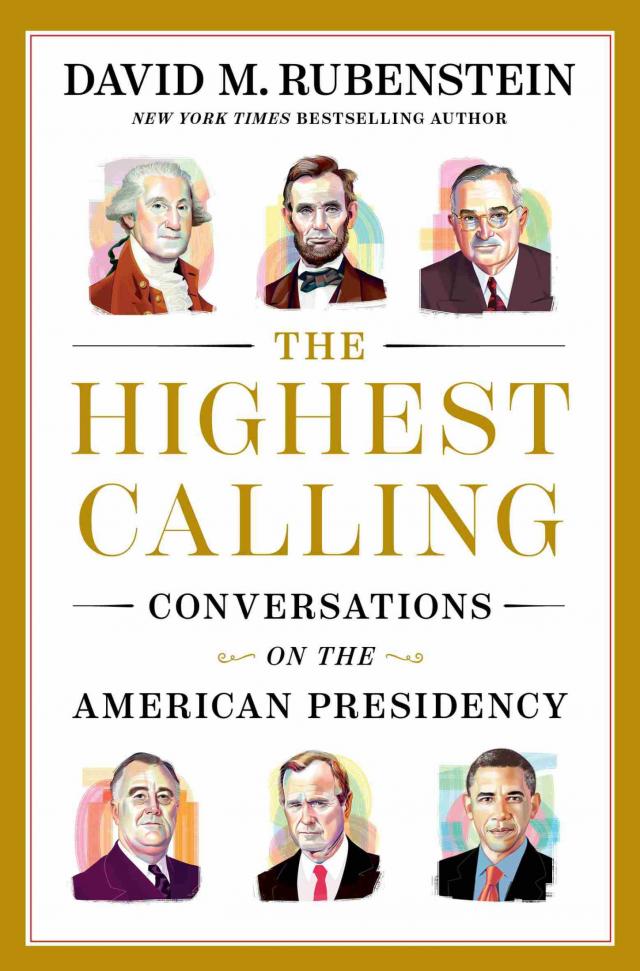
The Highest Calling, page 2


The Kennedy speech and Sorensen experiences focused my interest in pursuing a career in government, though not in politics as a candidate (I didn’t have enough charm, good looks, money, or self-confidence for that). After two years with Paul, Weiss, where I quickly concluded I was not going to be a great corporate lawyer, Ted Sorensen helped with a recommendation, and I got a position as chief counsel for a Senate subcommittee being chaired by Senator Birch Bayh of Indiana, who was about to launch his presidential campaign in 1976. Disappointingly, Bayh dropped out five months later, after poor showings in the Democratic primaries, having joined the campaign too late to attract the required field and fundraising talent. Yet this brief taste of being around a presidential candidate (even on his Senate staff) made me think about actually joining a presidential campaign.
Inside the White House
In a lucky twist of fate, Milton Gwirtzman, a friend of Senator Ted Kennedy and Ted Sorensen, asked if I would be interested in interviewing for a position on the general election policy staff of Governor Carter. Carter was seen as the likely Democratic nominee, defying almost everyone’s expectations, given his long-shot, shoestring campaign. As noted earlier, he was a one-term Southern governor, who had no national profile at his campaign’s beginning, when it was widely viewed that Southerners could not lead the Democratic Party ticket. It was generally believed they would not be able to sufficiently juggle their state political bases with the more progressive views of Northern Democrats.
I interviewed with Stu Eizenstat, a lawyer from Atlanta and former speechwriter in the Lyndon Johnson White House, who had been Carter’s principal (really only) policy advisor during the Democratic primaries. I got the job. The two of us and the other policy staff that Stu hired were all twenty- and thirty-year-olds with some Capitol Hill experience (almost all had more than I did), and we had a single-minded view—not really shared by Carter—that he could win the election by having well-reasoned policy positions and papers (written by us) to support his programs.
The outcome is now known: Carter won the election, but barely. Had just a few states (i.e., Texas and Hawaii) voted differently, Carter would have lost the Electoral College vote (he won the popular vote by just 50 percent to 48 percent). Had the election gone on another week—Ford was surging toward the end—it was widely thought by many independent observers that he could have won. A one-term Southern governor, not all that popular in his own state, had defeated an incumbent president and was going to the White House. It was actually harder for me to believe that I was going to the White House, the place that our presidents from John Adams onward had lived.
Normally, many of the winning presidential campaign staff members wind up drifting over to the White House staff, though it is typically supplemented by more experienced policy professionals or distinguished citizens. Carter had a novel idea: instead of waiting until he was in office to put together this team, he did so during the campaign (and used precious campaign funds to support the effort). Designed to enable him to govern from day one, his pre-election transition team would have thought through the various policy decisions he would have to make as president early in the term. But this transition team was not designed to include many campaign types like me.
In the end, Carter’s two closest campaign advisors—his chief of staff, Hamilton Jordan, and his communications advisor, Jody Powell—convinced Carter not to dismiss the campaign people so readily, because we were not just political types but also had credentials qualifying us for government service as well. For instance, my boss Stu Eizenstat had worked in the Johnson White House. Stu was my ticket to any White House position, and ultimately he was tasked to run domestic policy in the postelection transition effort. But Carter did not actually ask Stu to be his senior White House domestic policy advisor until about two weeks before the inauguration.
Stu then asked me to serve as his deputy, which I was of course thrilled to do—Deputy Assistant to the President for Domestic Policy, at age 27, three years out of law school. Life could not get much better, I thought. A slight problem arose quickly, when Walter Mondale, the incoming vice president, requested that Stu hire Mondale’s domestic policy advisor to be his deputy. Stu said he had already selected a deputy. Mondale suggested then that Stu have two deputies, and he did. Bert Carp, an experienced, Stanford-educated Hill veteran who knew the ins and outs of the Democratic policy world infinitely better than I did, essentially ran the staff day-to-day and focused on policy. I substituted for Stu when he could not do something (often including meetings with the president), helped review various staff papers for him, wrote papers that he would edit or rewrite before they would go to the president, and served as Stu’s eyes and ears in the West Wing, where my office was, next to his. I was probably more interested in the politics of the West Wing and the trappings (and history) of the presidency and the White House than Bert was, and he cared more about the intricacies of the Democratic interest group positions than I did. So it worked—though we did not get reelected, so maybe it did not.
Although I was not that experienced in domestic policy matters, had not known Carter, and was not part of the Georgia clan that was so prominent at the White House, I carved out a role for myself that led to a reasonable amount of impact for a junior White House aide. That was helped by the fact that (1) I was willing to work essentially around the clock (Newsweek ran a story about how I was in the White House so much that the cleaning ladies at night were complaining that they could never get access to my office); (2) I knew Carter’s positions as well as anyone (I had been tasked in the transition with compiling all the positions he had taken during the long campaign—pre-internet, it was not easy to gather all this information—and came to be known as someone who knew the president’s views as well as anyone but his most senior advisors); and (3) my boss, Stu Eizenstat, was also a wonkish workaholic, and he had enormous influence on matters in the domestic arena, and as his deputy, I benefited from his reputation. That said, everything was a team effort; I’m not sure I can cite one thing that I was solely responsible for that helped the country get better. No one at the White House has an idea that gets very far without others weighing in and modifying it somewhat.
The president’s popularity declined a fair bit while in office. We struggled with inflation, unclear presidential directives and policy statements, a fractious Congress (even though controlled by the Democrats, many of whom felt no particular loyalty to Carter), gas station lines, the Iranian hostage crisis (and a failed rescue mission), an intraparty nomination fight from Senator Kennedy, and ultimately the decisive loss to a person whom few in the White House thought the American people would want to lead the country. In our obviously myopic view, Ronald Reagan was an ex-actor who seemed uninterested in most policy matters, and we believed would be seen at the time as dangerously old. (He was 69, which I no longer see as quite so old.)
Early in 1981 within Democratic circles, Reagan was considered way beyond his depth, and it was assumed that he would inevitably falter and the throne would be reclaimed by the next Democratic presidential nominee, one without Carter’s flaws. To those who had worked in the Carter administration, that was going to be Walter Mondale, someone thought to be so different from Carter in approach and personality that the association with Carter would not prevent his election. That, of course, proved to be unrealistic. Mondale struggled to get the nomination, and then lost 49 states (all but his home state) in the general election.
Before all that unfolded, I considered going back into the political world with Mondale, and then going back to the White House in a more senior position when he inevitably won. But I ultimately came to my senses—luck had already struck once. I would have to spend a few years working for Mondale, while also practicing law to pay the rent, before joining his campaign full time; I might not actually get offered a better job than I had already had in the Carter White House; and I was really not likely to become part of Mondale’s inner circle, which was already set with many who had worked a decade or more for him. So I stayed in the private sector, and ultimately left the practice of law to start a private equity firm, The Carlyle Group, that grew to be one of the largest in the world.
Since then, I have still done my best to keep up with what was going on with my great interest, the presidency. I knew reasonably well a great many people who served in the Clinton, Obama, and Biden administrations, and actually came to know those presidents a bit, though I have never been a close advisor to any of them. I also have not made any political contributions to presidential candidates or presidents, trying to be reasonably apolitical in that regard (and to avoid the buying-access criticisms often leveled at wealthy campaign donors). Too, when I later chaired the boards of organizations like the Kennedy Center, the Smithsonian Institution, the National Gallery of Art, and the Library of Congress, I felt it was better to not be seen as political in order to ensure bipartisan support for these organizations, and campaign donations might have foiled that goal.
Through my post-Carter activities, I also came to know a number of Republican presidents. At one point after he left the presidency, George Herbert Walker Bush was an advisor to Carlyle, which primarily meant he made some speeches to investors for us. I found him to be a friendly and gracious individual, and probably knew him better than I knew any of the Democratic presidents. Through him, I met his son, who had briefly served on a Carlyle portfolio company board. And I came to know Donald Trump a bit before he was elected and saw him from time to time while he was president, typically in connection with the Kennedy Center or White House Historical Association matters.
My hope is that my interest in the presidency will be infectious to readers. Since leaving the White House about four decades ago, I have devoted time and effort to honoring the special leadership role that presidents play in our country and the world. For instance, in addition to the Kennedy-related donations, I helped with the funds needed to repair the Washington Monument after earthquake damage, led the efforts to rehabilitate the Lincoln and Jefferson Memorials, supported building the Presidential Library building at Mount Vernon (George Washington’s home), and led the renovation efforts at Monticello (Thomas Jefferson’s home) and Montpelier (James Madison’s home). I have thought that by writing this book, I might help educate readers about the presidency, and thereby incent them to vote in presidential elections. As with my previous books, the interviews that I conducted—with leading presidential scholars and journalists and with presidents—have been edited for length and clarity and updated in consultation with the interviewees.
Finally, to some extent, I suppose my lifelong interest in the presidency is due to my pride in being an American. The presidency is perhaps the most visible, regular symbol of the country. Like many others from modest circumstances who have lived the “American Dream,” I feel that achieving what I have been able to do would not have readily happened in other countries—because this country encourages upward mobility as part of its ethos, and because my last name would probably be a bit of a barrier in some other countries (particularly in the countries from which my forebears came, Ukraine and Russia). We still have work to do to make this country more equitable and a beacon to freedom for all. But the progress toward that goal is more realistic in this country than almost any other.
David M. Rubenstein
June 2024
1 DOUGLAS BRADBURN
on George Washington
(1732–1799; president from 1789 to 1797)
When the Constitution was being drafted in Philadelphia in 1787, perhaps the greatest debate involved representation in Congress. Should it be by population or by state? Should enslaved people be represented in some way, and how? Should there be two legislative bodies (as in England) or just one? These issues were resolved with equal representation in the Senate and representation by population in the House, with enslaved people being counted only as three-fifths of a white person for representation purposes.
That the shape and nature of the legislature was foremost in the mind of the delegates is perhaps best illustrated by the fact that the legislative branch of government is in Article One. The discussion over how the chief executive position would operate and function—contained in Article Two—received a fair bit of discussion. The delegates did not want a king, queen, or an aristocratic figure, but instead someone who was elected, and whose powers could be checked, if necessary, by the other two branches of the federal government.
During the Convention, there were more than a few heated discussions about the powers and authority of the chief executive, to be called a president. But there probably would have been much more debate had it not been widely accepted that the first president would be none other than the man who presided over the Convention, the hero of the Revolutionary War—George Washington.
After the Convention and the ratification process, Washington was really the only person considered for the presidency. He was not universally admired during the Revolutionary War, when he lost more battles than he won, in part because he had insufficient troops and ammunition. By the war’s successful conclusion, Washington became godlike, and was the one person whom all thirteen states seemed to feel comfortable supporting for president.
But Washington was reluctant to serve. He had left Mount Vernon for eight years to fight the war, and he allowed himself to be persuaded to attend the Constitutional Convention—and to help with the ratification process—yet he wanted to stay out of further public service. Neither his father nor grandfather had lived past 50, and he was already 55.
Washington was ultimately persuaded to be a candidate, and he was elected twice unanimously, a record that will surely never be matched again. As president, he established many of the traditions that we still use today. He left office extremely popular as well—a bit of a rare occurrence now.
Had he wanted to, Washington could have been elected to a third term or more. However, he decided eight years was enough. That became the unofficial limit on presidential service until Roosevelt broke it during World War II. (Now a constitutional amendment, the Twenty-Second Amendment, enshrines the two-term limit. Upset that Roosevelt broke the unwritten two-term limit, Republicans worked hard to get that amendment approved by Congress and ratified by the states. Ironically, many Republicans did not like the amendment as much when they realized that Eisenhower could have easily won a third term but was prohibited from seeking it.)
There are a large number of outstanding books on Washington, and it is hard to narrow it to one definitive book that everyone should read. In recent years, one won the Pulitzer Prize—the biography written by Ron Chernow, who has become better known for writing a book on Washington’s Revolutionary War aide and later secretary of the Treasury, Alexander Hamilton. (His book on Hamilton inspired Lin-Manuel Miranda to write his award-winning musical Hamilton.) For this book, though, I decided to interview Doug Bradburn, the director at Mount Vernon, the historic home of George Washington that was purchased by the Mount Vernon Ladies’ Association in 1858 and restored to its current, excellent condition. He is an American history scholar who previously ran the George Washington Presidential Library. I interviewed him on July 5, 2023.
* * *
DAVID M. RUBENSTEIN (DR): What is your responsibility as president and CEO of George Washington’s Mount Vernon?
DOUGLAS BRADBURN (DB): I am charged with maintaining the mission of the Mount Vernon Ladies’ Association, which is our corporate name, and the mission is to preserve this estate to the highest standards and educate people around the world about the life, leadership, and legacy of George Washington. I oversee a staff of about 600 employees and 300 volunteers. Our annual budget is around $60 million.
DR: When was Mount Vernon originally built?
DB: The original estate house, the Mansion House, was built in 1734. It was about a story and a half tall, and George Washington expanded it over his time running Mount Vernon in the 1750s, and then into the 1770s. The final mansion was completed by 1789.
DR: For whom is Mount Vernon actually named?
DB: It’s named for an English admiral named Edward Vernon. George Washington’s half brother Lawrence Washington served on the same ship with Admiral Vernon while he was the commander of British forces attempting to conquer the Spanish Main. Lawrence Washington came to greatly admire him, and changed the name of the estate from Little Hunting Creek to Mount Vernon in honor of Admiral Vernon.
DR: How did George Washington come into ownership of it?
DB: Lawrence Washington died, and George Washington started renting it from his widow in 1754. Essentially, he came into full ownership in 1761, when Lawrence Washington’s widow and daughter died.
DR: What was Mount Vernon during Washington’s lifetime? Was it a plantation, a farm?
DB: George Washington’s Mount Vernon was a plantation. It was a combined agricultural business, which had outlying farms producing crops for market as well as mills, distillery, ultimately fisheries. It had multiple economic purposes, all of which were agricultural.
DR: How big was it?
DB: By the time he died in 1799, it was 8,000 acres. When he inherited it, it was 2,200 acres. He expanded it over the course of his lifetime.
DR: Was it a place where the work was essentially done by enslaved people, and if so, how many slaves were there?
DB: Yes, in line with every other eighteenth-century Virginia agricultural plantation, the labor was enslaved. Over the course of his lifetime, over 540 people were enslaved there. When he died, there were 317 at Mount Vernon. When he started at Mount Vernon, there were probably about 70.
DR: What happened to Mount Vernon when Washington died in 1799?