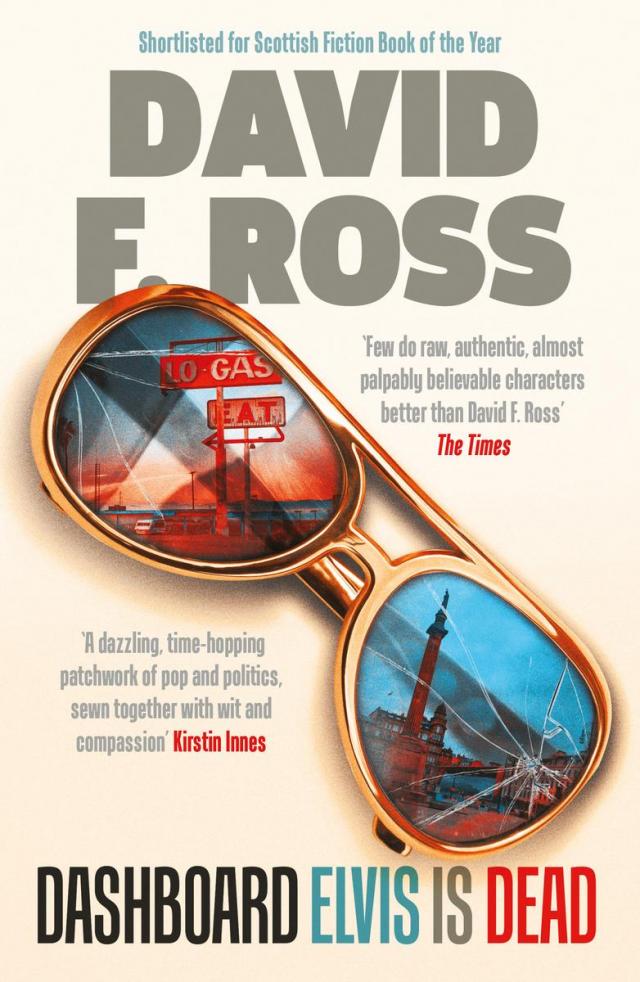
Dashboard Elvis is Dead, page 26


She puts her hand to her face. Not in a shocked way; more pondering.
I was part of the team that selected ‘Independent State of Mind’ for the Apple campaign. We spoke about it once; you probably don’t remember, I tell her.
And for the briefest of moments, it looks like she’ll relax. That she’ll associate me with the surprising call that changed the band’s fortunes. I don’t want her praise. And I’m not after her gratitude. I just want to ensure the campaign’s money made a difference to them. Had given them a better future than The Face article prophesied. But instead, she looks like she’s been caught in a lie. She takes my arm and gently pulls me to one side.
Look, Ms Montgomery, that was a million years ago. The band represented a very difficult period in my life. My brother was dead, my father was being investigated, and the band was an emotional wrench, not to mention a financial disaster. I wasn’t just their photographer, I was Jamie Hewitt’s girlfriend; I was the one left to sort out the mess for decades afterwards.
Oh, I understand, I do. This isn’t a hack piece, Ms Mason, I’m genuinely interested in what became of them.
I see her looking around.
This is not on the record, she warns, a finger raised but not pointing. If you print it, we’ll sue.
I find myself nodding, shocked at the determined aggression of her words.
Jamie isn’t in a good place. He hasn’t been for years. He’s too fragile to go through it all again.
But you do know where he is.
Jesus Christ, are you not listening? I’m trying to protect him; don’t you understand that?
Well, uh, protect him from what? I stammer.
It seems I’ve stumbled on something. Her pleading eyes aren’t drawing the support of her minions, who seem too preoccupied by the haggis canapes and the whisky miniatures to come to her aid.
Jamie Hewitt is an addict. He owed tens of thousands of pounds in gambling debts. He had to disappear. AFB Management supported him through rehab in London and helped him get his life back on track. He now just wants to be left in peace.
She is quietly raging. A consummate, polished, professional politician pressurized; losing her composure, as many politicians do, because of an inability to escape or outrun their past.
I’m leaving, she says.
Thank you, Ms Mason. I’ll call about the appointment in Scotland.
She shoots me a glacial backwards glance that withdraws the invitation.
Later that day, I am at home in the Village. It’s a sublimely beautiful evening. One where I really notice the lengthening daylight hinting at the promise of brighter days to come. The parade has infused me with its optimism and positivity. And it has offered an unlikely focus. Anna Mason was like a tiny Boadicea, next to the rotund grinning Grand Marshal. She wasn’t smiling. She didn’t wave. Our conversation prior to it would’ve been the reason. The majority of those watching her from sidewalks would see a serious female politician on the cusp of a monumental period for her country. A female who knew that while frivolity displayed by a male counterpart might be described as charisma, in the world as it stands, unguarded outbursts of emotion from a woman wouldn’t be considered a display of empathy, but evidence she is too physiologically unpredictable for the high-pressure world of powerful men.
Yes, Anna Mason is a fascinating subject. My conversation with her was intriguing – I replay it in my mind as I examine the downloaded shots. The sense of something being held back would be difficult for any photographer to ignore. I’m drawn to her. It’s the eyes. Always the eyes. Every tiny crease in the corners of them. Every slow, subtle closing of the lid to buy time. To allow composure to be regained. Whatever these tells conceal, she is practiced at them. A veteran. Whatever pain she is hiding, she’s been hiding it for a long time.
In the weeks that follow my meeting with Anna Mason, I regularly reflect on the idealistic, teenage dreams that drove me from Humble to here – thoughts that had begun in the rarefied atmosphere of Los Angeles during my cancer recuperation. I think on how those dreams had been blunted by my social inadequacies. Slowly erased by a growing awkwardness around people. As the years passed, I’d all but buried those hopes of an exciting, vibrant, bohemian life, dismissing them as youthful naivete. But this was simply a defence against the reality that I was squandering the opportunity I had taken so many risks as a sixteen-year-old to create. The rigid, predictable routine of my life that my current employment sustains is gradually losing its appeal. I think back to the colder, poorer times with Hennessey in Queens, or with Andi and Monique in Brooklyn, and of how much happier I was then. When I had nothing. When I took chances. When I trusted my instincts about people, about sex. Risky decisions that the staid, middle-aged me would otherwise consider insane. I’m experiencing a curious mix of despondency and motivation, and it’s this that seems to prompt me to rediscover the fearless young woman that I used to be.
Life is for the living: a cliched, bumper-sticker phrase Larry bade me goodbye with as I prepared to leave Houston for the last time. Having given it no thought previously, I now recall him saying it like it happened yesterday. Larry’s big, furrowed brow as he uttered the words. Imploring me to act. To draw joy from life before something unexpected derails it. Suddenly, it’s all I can think about.
I scrabble around in an inch of the undisturbed dust of my least-used closet. They’re hidden here, out of sight, out of mind. Those scribbled notebooks full of hope and spunky attitudes.
I wipe clean the white board in my small office. Blue hand-written notes for lecture prompts that have been there for years disappear, leaving a blank canvas. Soon, it is covered by so many names and places and Post-its, and the collected totems of my past, that it resembles the beginnings of a bounty-hunter’s mission. I sit back and stare at it, this story of a life. This curious jigsaw-puzzle collage challenging me. There is The Face magazine article. The blurred photograph of Jamie Hewitt. Photocopies of Hennessey’s ‘most wanted’ mugshot from the Bowery Bums piece. My AAA ‘Obama For President’ event press pass. The address given to me by the Scottish sculptor. Anna Mason’s Scottish parliamentary office phone number. A ‘get well soon’ card from Andi, urging me to visit her and Ash in Malibu for Thanksgiving. Jimmy Montgomery’s faded, folded Life cover picture. A postcard of Rabbit’s ‘Self Portrait #9’ bought from the MoMA Gallery giftshop.
Above the rest, dashboard Elvis hangs from a hook. A breeze from an open window swivels the figure, and its dancing pelvis makes me laugh. My (almost) constant companion. Maybe it’s time to pass him on for good.
The brief interaction with Anna Mason has lit a fire inside of me I considered long extinguished. She has connected my past with my future. It could be the unresolved desire to discover more about Jimmy Montgomery; to identify any attributes inherited from him that might help me understand who I am and what shapes my attitudes. Or maybe it’s the more basic need to apologize to Rabbit and atone for the hurt I’ve caused her. Whichever it is, I’m consumed by the notion that these fragments will somehow piece together across the Atlantic, in Glasgow, where my father was born and where Rabbit now works, painting and teaching fine art in the city’s art school.
I am still saying YES, but this time, I mean it. And it’s on my terms. I draft spirited emails to my press and media contacts, pitching a detailed feature on Anna Mason, the face of Scottish Independence. I tease extra interest by outlining a potential parallel thread: an investigation into why she is so intent on concealing an aspect of her past. I have money saved and a sudden determination to leave this far-too-comfortable zone. To travel outside of my continent for the first time. To go to the small country that holds the secrets to my origins; a place that might answer that ‘what?’ question that has plagued me my entire life. And all this in a city currently home to Rabbit. Which cannot be a coincidence.
The take-up has been slow. These things happen. It appears that my former editors have either changed job, retired, or died. I haven’t had a written piece published in years. My name has dropped out of journalistic circles, the assumption perhaps being that I too have gravitated toward the less stressful academic life. In addition, the Scottish Independence vote is still four months away and foreign politics rarely registers here in America, unless it involves Russia or China, or our troops invading somewhere. My initial enthusiasm remains undimmed though. It’s just a matter of time. And then, in May, there is a news item that does take hold.
The television is on in the corner of my room. CNN, as is, for me, normal:
‘A major fire has torn through a famous school of art in Glasgow, Scotland. The world-renowned building is a landmark in the city and is considered one of the nation’s most beautiful architectural creations. The extent of the damage remains unclear, but according to eyewitnesses, the entire west wing has been lost, including Charles Rennie Mackintosh’s famous library.’
My God! Rabbit’s School of Art. I immediately panic. The report doesn’t confirm if there were casualties, but instead shifts to the Glaswegian architect’s influence on Frank Lloyd Wright in the early twentieth century. I look at the clock, still early evening in San Francisco.
The phone rings and rings and rings. With only the two of them in the house now, I give it time.
Hello?
Momma Em?
Yes … who is this?
It’s Jude.
Her sigh is audible. The passage of time has not mellowed her.
Ben! she shouts away from the phone. It’s for you.
She doesn’t tell him even though I hear him ask who’s calling.
Hullo?
Hi, Ben … it’s Jude.
Hey, sweetheart. Is everything okay with you?
Yeah, Ben. I’m fine. Have you spoken to Rabbit? Did you see the reports of the fire in Glasgow?
Yes, Jude. She just called. An hour or so ago. She’s fine. A little bit in shock but no-one was hurt.
Oh, thank God.
I feel myself exhaling. Poor Rabbit. All that therapy and then to be faced with the trauma of yet another fire.
She’s shook up, but you know Rabbit… he says.
But I don’t. Not anymore. I have no idea how she’ll cope. I haven’t seen or spoken to Rabbit in over five years.
Her only concern was for her team, he says. They’re all worried about the students and the work they’ll have lost.
Should I call her, Ben?
It’s his turn to sigh now.
Jude, sweetheart, I’d leave it for a while.
I’m certain he just means leave it, full stop. But those five years have gnawed away. My younger self was determined to move forwards, no regrets, no looking back, despite the collateral damage. This is the one instance where I can’t.
I take Ben’s advice and make him a promise that I won’t call her unannounced. I tell him about my intentions to travel to Scotland, though. Reluctantly, he gives me Rabbit’s new contact details, but administers a warning for me to tread very carefully.
If she won’t see you, don’t force it, Jude. She doesn’t deserve that, he says.
I won’t, I tell him. Thank you, Ben.
Jude … you take care of yourself, he says, and there’s a finality to it that saddens me.
He’s an old man. He’s stood by me all these years, even though it must have caused strained relations with his wife. Even the most doggedly independent of people need someone they can turn to in times of self-doubt. For all the time I’ve known him, Ben has been mine. He won’t be there forever.
Goodbye, Jude, he says.
And that’s all there is.
My flight departs early tomorrow morning. Six hours, give or take, to London and then a shuttle to Glasgow. I’m packed and prepared. Have been for weeks. Passport and visa all in order. I reached out to Andi to ask if she would be my designated ‘next of kin’. My initial reservations over Ash have, I’m happy to say, been unfounded. He has taken good care of her, and their three young children. With all that sorted, there’s only one thing left for me to do.
I’ll miss this year’s memorial service, the first I haven’t attended. I’ve decided to wait until my return in October before visiting the new 9/11 Memorial Museum. It opened a few weeks ago in May. I watched on TV as President Obama gave an address during the dedication ceremony. I couldn’t sit still. I paced the room during the broadcast as if his words might contain new information. As if they might somehow change history. My heart rate increased as the names of the dead scrolled alphabetically towards the Hs. And then he was there. Briefly. So painfully brief. On my television screen. In my room. Breaking my heart again.
The yellow B-52s T-shirt I gave to Hennessey is one of the museum artifacts, and I’m afraid of how badly it will affect me when I finally see it. He wore it under his uniform that day. Used it as a mask. Then untied it from his face to stem the blood from an injured woman. She was subsequently pulled from the rubble with it still wrapped around her head.
As I walk downtown, I think about the times we spent together. The ways we entertained ourselves in his old apartment in Queens. The corny jokes he told, the Irish music he played. The time he twisted an ankle dancing on a table too rickety even for his modest weight. Me pushing him around Flushing Meadow in a shopping cart so he could deal his weed until the ankle could sustain him. Us walking for miles and miles one hot Saturday to find a soccer match where the Glasgow Celtic were playing, on a tour of the States. We couldn’t afford a ticket, so we just sat outside and listened to the noise. Him lying back ecstatic, eyes closed, scarf around his neck, imagining he was in the crowd. I think of the mix of sheer joy and abject despair I felt when I discovered him again in the Bowery, but saw the state he was in. The feeling that he’d kept himself alive simply for the purpose of returning that dashboard Elvis I’d given him. I think of the variety of methods I employed to get him to accept part of my salary. Telling him he was my muse and I couldn’t work creatively if I felt the muse wasn’t recompensed, and him saying ‘Jude, if you’re prepared to go to the lengths of making up that bullshit then, yeah … wire the money to my accountant’s office and my PA will handle the transactions’ as he wrapped countless elastic bands around the toe of his sneaker to limit the snow getting in through its flapping sole. And I remember his pride at becoming a janitor at ‘the greatest building in the world … well, one of ’em, at least’. That uniform. He never took it off.
I stroll around the new gardens. Despite the numbers, it is noticeably quiet. Even the birds are respectful. It’s an astonishingly affecting place. Two enormous sunken pools of reflection, exactly where the towers stood, the absence of structure, the inverse of traditional memorial devices, surrounded by swamp white oak trees. A field of serenity in the busiest city in the world. The faintest sound of falling water. There is affirmation of life all around.
I kiss my fingers and touch each of the letters on the bronze parapet. Rather than leave the dashboard Elvis to an uncertain fate – I have other plans for him – I place the stem of a white rose in the ‘O’ of his first name:
MILO HENNESSEY
I click on my iPod and his favorite song plays, blocking out all distractions:
There’s no pain, there’s no more sorrow. They’re all gone, gone in the years, babe.
Cheeks sodden, I decide to leave the memorial to the tourists. I won’t ever visit again. I don’t want to be reminded of what I’ve lost, I want to remember what I had, and what I’ll always have. Life is for the living.
PART FOUR:
Mother Glasgow
25th July 2014:
I push the trolley awkwardly through the door marked ARRIVALS. The progress of passengers resembles a pedestrian demolition derby, there are so many wonky wheels. Once through the swishing doors, I maneuver left, out of the slipstream of the front runners. I glance briefly at the excited reunions and then press on, heading for the airport’s cab stand. The queue stretches full along the front of the terminal. It reduces slowly, a ratio of one occupant per cab. As I near the front, several impatient people behind request that I share mine with them. I politely decline.
The black cab snails its way eastward along a congested freeway towards the city center. It’s very hot, sunny; not what I’d anticipated at all. There’s a big PEOPLE MAKE GLASGOW sign on the gable of an old Victorian block. I smile. A similar banner fronted the Tartan Day Parade back in Manhattan. My cab crosses the River Clyde. I read, ‘Glasgow’s current symbiotic relationship with the river is represented by high-tech, metal-and-glass buildings facing the water, and old industrial tower cranes punctuating the spaces in between’, from an architectural guidebook purchased while delayed in London. The quayside is vibrant and full of people moving, singing, dancing, like there’s a carnival on.
Here for the Games, hen? asks my driver.
Oh … oh, no. No, I’m here on some personal business, I reply.
Yer here at the right time, then. S’been meltin’ here for weeks noo, he says.
I don’t respond this time. He catches my eye from his rear-view.
Roastin’ hot, like, ye know? he says.
I’m used to the heat. I’m from Texas.
Taps aff aw the time ower there, ah’ll bet?
Hmm, I say, unsure what I have just affirmed. The remainder of the journey is conducted in silence.
I will be in Glasgow for a few months. This small, self-catering aparthotel in Miller Street – one of the few with availability during the Commonwealth Games – will be my base for the duration. There are now several reasons for my journey. There’s the hope of an in-depth feature on Anna Mason, in the run-up to the referendum on the eighteenth of September. This vote has been a very long time coming for the Scottish people. It has been framed by those leading the pro-independence campaign as a once-in-a-generation opportunity. But I see trepidation in the eyes of those making such proclamations: their chance has finally arrived, and they might well be destined to blow it. All indications are that it will be a close-run thing.