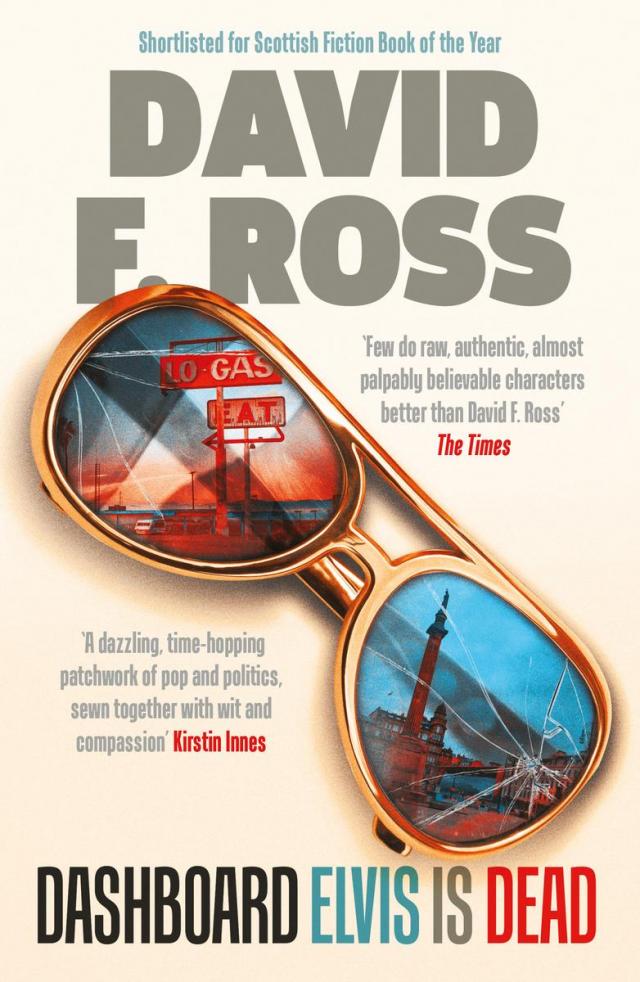
Dashboard Elvis is Dead, page 16


But it’s a lonely calling, the bookies, when the gambler’s luck turns. A losing streak is like leprosy. You may as well be wearing a bell around your neck. The only person who’ll speak to you is your man. Your dealer. Cards, drugs … no difference in that losers always need a facilitator. Someone who won’t ever say: quit, you’re ahead. Unlike the drugs or the booze, I didn’t have to ingest or inject anything. But then neither did I find the oblivion the junkie or alcoholic seeks. Win? Bet again and win more. Lose? Bet again and recover the losses. Keep going. The gambling demon couldn’t be avoided. When it was hungry, it needed to be fed. Its ravenous appetite grew out of control in London. Win or lose? Fuck it, I don’t care. Feed me!
A lot of the time I spent in London up to 1997 is an impenetrable blur. The last five years, particularly, were so redacted as to be indecipherable as my depression mounted. Dislocated and alone, I found no diversion in other things, like going for a walk in the sunshine, the weekly five-a-side football that my new work colleagues invited me to, or the occasional work night out. I found nothing attractive in the new rave music scene, although, paradoxically, I strummed the twelve-string to distract from my irritable restlessness and the interminable boredom. I only found pleasure in satisfying the compulsion to gamble. Keep on until there’s nothing left. And then keep going anyway you can.
The final straw came in the first week of September 1997. An entire country – or at least that’s how it seemed at the time – wrapped up in a communal state of self-induced grief for a divorced car-crash victim once destined for the throne. This surreal, all-consuming distraction was the perfect opportunity to go back across town. Between a Parisian tunnel and a televised funeral, there were seven days of public semi-consciousness. I stole a car from the Bermondsey lot. I was convinced no-one would care. I was wrong. If only the garage CCTV system had taken the night off to mourn along with the rest of a distracted, dumbfounded population.
At the end, I had nothing. No job, no means of feeding my habit, or myself. Only a permanent limp resulting from the broken legs administered by the Bermondsey boys. Selling the twelve-string gave me four weeks’ grace on the rent for my latest digs and then I was on the street. Support-group meetings followed the same script every time: I cried. Everybody else cried. Then we all went back to gambling. All of us pushing our massive personal boulders around an Escher staircase for all eternity, knowing that if we stopped, the boulders would roll backwards and crush us. Only two options remained: find a way back to Glasgow to plead for widespread forgiveness during the season of goodwill; or a step off a shoogly stool and the eternal release of the noose. Which meant there was only one option.
8
For ten years, I had a permanent reminder pinned to a wall in every place I laid my head. A list of names. Those most harmed:
Reef
He was always going to land on his feet, disposition undimmed. We hadn’t seen each other after my court case. During it, his hair was long and lank. A scruffy, gingerish beard had sprouted half-heartedly.
Bingo
The Hyptones was a phase she was simply passing through. Good luck to her.
Chic
I acknowledge I treated him badly in America and beforehand because he was an easy target. I regret it now. On tour, Chic was the truest to himself. Straightforward. Uncomplicated. A cunt, though. Undoubtedly still is. But this is a cleansing, isn’t it? So he went on the list with the rest of them.
Kenny McFadden
He got to see America. Its arsehole, primarily. But still, undoubtedly a lifetime’s achievement for him.
Inky
Harmed physically, yes. But amazingly, his spirit remained unharmed. His unconditional forgiveness hurt me more. It still does. Suzy hates me, no doubt, but I can hardly hold that against her. They are happy. Stronger in their relationship than they might’ve been otherwise. Who knows?
Anna
Let’s come back to her. She deserves more than a footnote.
Brian
He took his own life. I didn’t cause it nor prompt it. But I do feel responsible for pushing him out of his band. And – the real reason my nagging conscience has never let go – I stole his song and claimed it as my own. ‘Independent State of Mind’ was written, complete and with sketchy chord structures included, on paper scribbled by Brian Mason in my room. After his death, I presented it to the band, and Reef particularly, as my own work. I knew it was a great song. That it would be hailed as such by fans and critics alike. And that it would eat away at Reef that he couldn’t claim any credit for it. Stealing something so personal to Brian after he was dead is the source of my pain. We might not have appreciated the significance at the time, but its impact and legacy should’ve been his alone. But I took it and it all but destroyed me.
David F. Ross
The harm he suffered was self-inflicted. But that doesn’t mean I’m not entirely without sympathy for what happened. A few years after our conversation on the flight from San Francisco back to the UK, he wrote his account of our US tour. Following Inky’s accident, he expanded and updated it to include the trial. The piece was picked up by The Face magazine, by which time Madonna was a globetrotting superstar. Inferences in Ross’s writing that she’d been involved in drug-taking or supply, and of her Sire recording contract resulting from sexual favours, were promptly seized on by her legal team. Ross and the magazine lost the court action, largely because I failed to substantiate his defence that I’d been willingly interviewed for the initial piece. As I mentioned before, he’s a cunt, but stones and glass houses, eh? The temporary joy of knowing that Madonna takes ninety per cent of all royalties from that horrendous Christmas song Ross lives off has long passed. He deserves a break. And I’m doing this at his behest – first and foremost.
I’m glad I kept this list. Life – or what’s left of it – is too short to continue such grudges, and, in any case, reparation was always going to be my only route to any kind of internal peace.
9
Everything had become a struggle. Food, drink, health, sanity. It took losing everything to even consider stopping. You can only beat addiction if you do it for yourself. Not for others. But if you hate yourself, if you’re ashamed of yourself, then what’s the point of stopping at all?
But in mid-December 1997, when I was poised – literally – at the end of my rope, something unexpected happened. Annafuckingbelle reappeared.
10
She stood on the other side of Croydon Road. Holding a plastic cup. Not begging, obviously. No, statue-like, in the softly falling snowflakes. She was so still, at first I thought she was an apparition. That my tenuous grasp on reality had finally deserted me. A bus halted in the congestion in front of her. But moments later, when the lights changed to green, she was still there. As pleasing to the eye – if not the heart – as ever. Smiling across at me.
How have you been? she asked, as if a sentence or a shrug in response would cover it. She may have tried hard to conceal her shock at my gaunt, haunted shell. But she wasn’t that good an actress.
How did ye find me, Annabelle? I asked.
A stupid question since I already knew the answer. Every step of the last ten years was being tracked and logged by her father through his associates in the south. I had disappeared from Glaswegian life, but not from Ronnie Mason’s. All my steps out of line. All the baseball-bat beatings. All noted and documented up north, like I was on a life-long probation programme. Still, I wanted to hear her say it.
It’s just Anna now, she chided. It wasn’t too difficult, obviously, she said.
Obviously. I said it with as much sarcasm as I could muster. My creaking, twisted bones might not be helping prop up one of the new bridges over the M74, but they still belonged to Ronnie Mason. And they always would.
Her natural beauty hadn’t diminished with the passing years. Even in the early-winter chill her skin glowed like it might on a Caribbean beach. There had been times in the last decade that I’d expected this porcelain face to show. An envoy from the north – whenever I fucked up too seriously for it to go unnoticed back home. The car theft had made it inevitable.
Why are ye here, Anna?
Leaving this unanswered, we walked in silence towards the Victorian bandstand in the park. I saw her noticing the limp, but she said nothing about it.
Innes reached out, she said. I met him and Suzy. He was in hospital for joint rehabilitation, and I bumped into him. First time in years, obviously. He asked if I’d seen you.
I didn’t believe her. She wasn’t here for him. There was something else.
An’ what did ye tell him? I asked her.
I said you were fine. Doing well down in London.
Well, that was a fucken lie, then, eh?
Your brother wanted to know you were okay, that’s all.
An’ what if ah wasn’t? What if he knew that ah was in a worse state than him?
Who would that benefit, Jamie? You? Certainly not him, she said.
We sat in silence. Me, close to self-pitying tears. Her – the sister of my one-time best friend, whom I’d selfishly screwed over, just to wipe the permanent smugness from the face of another friend – edging her hand towards mine. Some old feelings might still be in there, buried but rising slowly to the surface.
He and Suzy, they have a baby now, she said. Quietly, but with such impeccable timing that I started to assume that this was a new form of torture Ronnie Mason had contracted out. Getting his daughter to suffocate me slowly with information about the only person I cared about.
I couldn’t speak. She would’ve noticed my breathing becoming erratic. The exhalations working their way up to a coughing fit. And then the tears did flow, and her hand lifted away from mine; her arm wrapping its way around my back. I shook my head. I breathed in deeply. I wiped the moisture from my eyes.
When ah first came down here, ah used tae bring the guitar here. Play the auld tunes. Made a few quid tae, I said.
Busking? Wow! Did anybody know it was you? she asked.
I laughed, like someone had suddenly tickled me.
Fuck, naebody knows me here. That’s one ae the few plusses.
Just thought someone might’ve recognised you, that’s all.
Jeez, Anna, ah don’t even recognise me these days.
She sipped from the coffee she’d bought at a stand on the edge of the park. I’d said no to the offer of one from her, but it was colder than I imagined it would be and the smell of hers was intoxicating. If it hadn’t been for the pains in my legs, I’d have asked her for the money and gone back.
Hey! See where you’re sittin’? I said. Pointing and with a serious tone. Right there on they steps…
She stiffened.
What … where? Leaning around and looking back, as if she’d sat on dogshit.
Naw. The steps, I said. That’s where Bowie wrote ‘Life on Mars’. Right there, on that exact spot where you’re sat.
Christ, Jamie.
I laughed. She did too, eventually.
There should be a plaque up somewhere. Greatest fucken song in the English language, an’ nothin’ around anywhere tae even acknowledge it, I said.
Her hand was back holding mine.
Ye married, then? I asked.
She saw me looking at her left hand.
You don’t recognise this?
I didn’t.
It’s the ring you bought me, remember? At Fisherman’s Wharf … before we went to that little wedding chapel.
Aw Jeez. Aye. Ah do now, I said.
But I still didn’t. 1983 seemed a lifetime away. I anticipated her informing me that we were still married. I’d just taken Ronnie’s word for granted, after all. I jumped in first.
Christ, are we still…?
Married? she said, laughing a little too much. You think I’d want to spend the rest of my life with one person? Being married alive? To you?
Aye, aw’right. Ye dinnae need tae labour the point. Fuck sake.
I often wonder what would’ve happened if we’d all just flown direct to San Francisco, she said. Avoided that ridiculous trek across all those different states.
We both smiled ruefully at the memory.
Aye, fucken Kenny McFadden, eh? Ye seen him kickin’ about?
No … thankfully.
Anna, why are ye really here?
It was her turn to breathe in deeply.
I have something to ask you. ‘Independent State of Mind’ has been selected for an advertising campaign by an American agency, she said.
She sat forwards. Her tone changed. Her vulnerability evaporating like the falling snowflakes landing on a hot car bonnet.
But they need our permission to use it, she added.
I missed the significance of ‘our’. Of all the things she might’ve said, this would have taken me the longest to guess. I suddenly had so many questions. The one that surfaced first was:
What’s it advertisin’?
That’s your initial response? she said, before stifling a laugh. It’s being considered for a major strategy for Apple Computers. A campaign called ‘Think Different’.
I ran my fingers across my stubble. Bright lights flashed in my eyes; a migraine arriving suddenly out of nowhere like an unexpected Tube train bursting from the tunnel and screeching alongside the platform. Mind the gap!
Why us? I stuttered, trying to delay its impact.
I’m still not entirely sure, she said. I received a call out of the blue from the agency in New York, asking about rights. Their strategy features well-known creative geniuses. People whose thinking has changed their respective fields for the better.
Like who?
Em, Muhammad Ali, Amelia Earhart, Picasso, Hendrix…
An’ Jamie Hewitt? I said sarcastically.
No. Not you, obviously.
Again, the ‘obviously’.
They want a piece of music that isn’t widely known, she said.
Thanks.
You know what I mean. Something that won’t compete with the thinkers. But ‘Independent State of Mind’ – it fits perfectly with the message of thinking differently.
It was hard to take her seriously. Yet I knew she wouldn’t be here otherwise. My head was spinning. I couldn’t see the positives.
That’ll no’ be cheap, then, eh? I stuttered.
What do you mean?
How much’ll it cost?
I must admit I was so attuned to bad news where money was concerned that I was momentarily blinded to the windfall financial opportunity Anna was laying out. I remember my da justifying a skelp by saying: Some folk need a good fucken slap. Like an auld telly. It’s the only way they get the full picture.
Maybe he was right.
Cost? she said. Irritated, not amused. They pay us, you idiot. They pay to license the music and to secure the rights, whether they use it or not. Twenty-five grand is the initial offer. It could grow depending on whether they use it worldwide.
The palpitations began. I gasped and had to ask her to repeat the figure, which she did. Slower.
Us? I said eventually, but only to establish how wide that reference was, not to challenge it.
She took a deep breath.
Who do you think paid out on all the bills after the eighty-three UK tour was cancelled? Who do you think chased up the revenue on the single? Who do you think cleared the tax, the accountants, the hangers-on?
The most pregnant of pauses. Then she continued.
Who do you think swept up all the fucking shit after you drove your brother into the fucking Clyde? Us, she said. Your creditors.
This hadn’t previously occurred to me. Probably because I was too self-absorbed to see it. Meek, mild-mannered Annabelle Mason, my doormat girlfriend – and one-time wife – from fifteen years earlier, was the one controlling me, not her father. It was a startling revelation. I reasoned that if she’d known it was her brother who had written the song that had laid the golden egg, I’d be dead already.
She didn’t complete her nursing studies. She foresaw a different type of future; one where controlling music licensing and publishing contracts would be more lucrative. All those amateur Scottish bands drawing widespread attention from the music industry in the early eighties and getting contractually ripped off. They were Annabelle’s target market. She went to law school. She specialised in copyright law. She made influential contacts in useful government departments. She learned how to secure, manage and market rights for works of music. And now that opportunity had smiled kindly on her, she had a plan for us. All of us.
11
Contact had been established, and I discovered a higher power’s plan for my life. I’m not religious in any way, but I can accept that there’s something in the notion of a higher power. I’d hit rock bottom, the point where it was either suicide or survive until the next low. I think, despite everything, I was receptive to the idea of something greater than myself, a line shooting around my brain: there must be more to life than this.
Annabelle was gone. Consigned to history. The meekness now merely part of the long game; a manufactured cover story. Anna was the puppet master. Her offer was a one-time deal. Take it or leave it. Leave it, and she’d cut the strings completely, and I’d be a lifeless heap. Nowhere to go but the final checkout. I was in no position to bargain. The meagre royalties from the record, and the previous two, had been accumulating slowly in an account controlled by Anna – the band’s registered financial manager. But now, and for the first time since The Hyptones were on Top of the Pops in the early eighties, that account was about to be seriously boosted.
In explaining the circumstances of the deal, Anna doled out acronyms like she was narrating the index of the Lancet. My brain hurt.