The Coming of the Third Reich, page 54
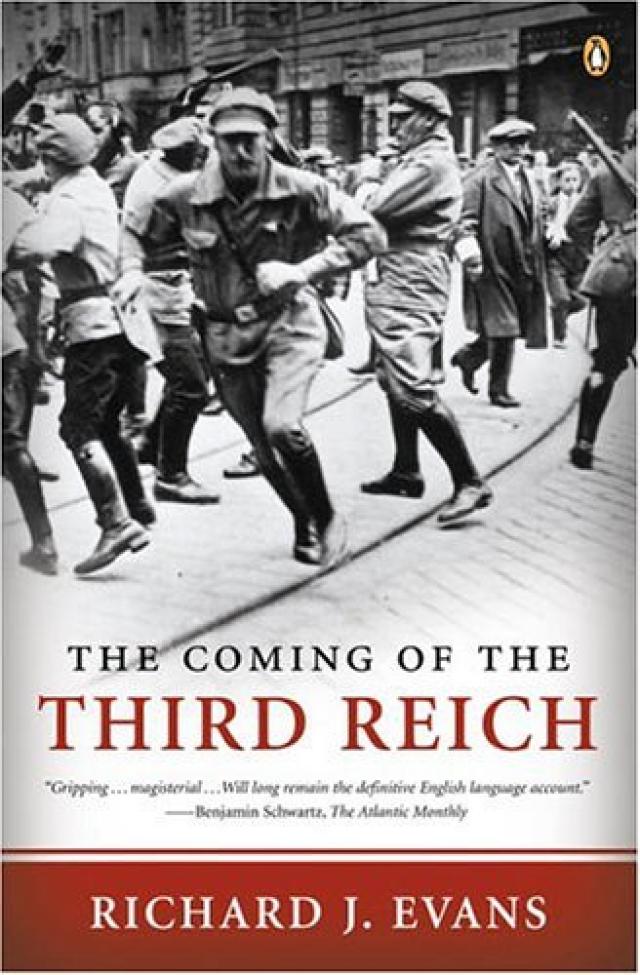


As Hitler’s intervention suggested, these incidents were not part of any preconceived plan. Rather, they expressed the antisemitic hatred, fury and violence that lay at the heart of Nazism at every level. The stormtroopers’ brutality had hitherto been directed mainly against the Reichsbanner and the Red Front-Fighters’ League, but it was now released in all directions by the Nazi election victory. Unchecked by the intervention of the police or by any serious threat of legal prosecution, it vented itself particularly in attacks on Jews. Despite their desire to control the violence, the Nazi leaders in practice continually fuelled it with their rhetoric, and with the constant antisemitic diatribes in the Nazi press, led by Julius Streicher’s The Stormer.100 According to one doubtless incomplete estimate, Nazi stormtroopers had murdered 43 Jews by the end of June 1933.101
These incidents did not go unnoticed abroad. Foreign newspaper correspondents in Berlin reported seeing Jews with blood streaming down their faces lying in the streets of Berlin after having been beaten senseless. Critical reports began to appear in the British, French and American press.102 On 26 March the conservative Foreign Minister von Neurath told the American journalist Louis P. Lochner that this ‘atrocity propaganda’, which he described as reminiscent of Belgian myths about atrocities committed by German troops in 1914, was most likely part of a concerted campaign of misinformation against the German government; revolutions were bound to be accompanied by ‘certain excesses’. Unlike Neurath, Hitler himself described the stories openly as ‘Jewish atrocity smears’. At a meeting with Goebbels, Himmler and Streicher in Berchtesgaden the same day, Hitler decided to take action, in order to channel the antisemitic energies of the rank-and-file into a concerted action. On 28 March he ordered the Party at every level to prepare a boycott of Jewish shops and businesses to be carried out on 1 April. The action was approved by the cabinet the following day.103 Far from being a rapid, spur-of-the-moment response to ‘atrocity propaganda’ abroad, however, the boycott had long been contemplated in Nazi circles, particularly those most hostile to ‘Jewish’ big businesses such as department stores and finance houses. Neither for the first nor the last time, the leading Nazis assumed an identity of interest, a conspiratorial connection even, between Jews in Europe and Jews in America, that simply was not there. It was necessary to show the Jews, wrote Goebbels in the published version of his diary, ‘that one is determined to stop at nothing’.104
The unreality of such beliefs was illustrated when the Central Association of German Citizens of Jewish Faith cabled the American Jewish Committee in New York to ask it to call off ‘demonstrations hostile to Germany’, only to be sharply rebuffed despite divided views in the American Jewish community. Protest meetings in a number of American cities on 27 March were followed by a campaign to boycott German goods that met with an increasing amount of success in the months after 1 April.105 This only served to confirm Goebbels in his view that the boycott should be carried out ‘with the greatest toughness’. ‘If the foreign smears come to an end, then it will be stopped,’ he added, ‘otherwise a fight to the death will begin. Now the German Jews must influence their racial comrades in the world so that they’re not in for it over here.’ As Goebbels drove through Berlin on 1 April to check the progress of the boycott, he declared himself more than satisfied: ‘All Jewish shops are shut. SA sentries are standing in front of the entrances. The public has declared its solidarity. An exemplary discipline obtains. An imposing spectacle!’ The spectacle was made more dramatic by a mass demonstration of ‘150,000 Berlin workers’ against ‘foreign smears’ in the afternoon, and a march-past of 100,000 members of the Hitler Youth in the evening. ‘There is’, reported Goebbels with satisfaction, ‘an indescribable mood of boiling rage ... The boycott is a great moral victory for Germany.’ So great was it, indeed, that already the next day he could report triumphantly: ‘Foreign countries are gradually coming to their senses.’106
Germans reading Goebbels’s account when it was published a few months later knew, however, that it put an optimistic construction on the events of 1 April from the Nazi point of view. Certainly there was plenty of activity by the stormtroopers, who posted up garish placards everywhere telling people: ‘Don’t buy anything in Jewish shops and department stores!’, ordering them not to use Jewish lawyers and doctors, and informing them of the supposed reason for all this: ‘The Jew is smearing us abroad.’ Trucks bedecked with similar posters and full of stormtroopers raced through the streets, and SA and Steel Helmet units stood threateningly outside the doors of Jewish retailers, demanding the identity papers of any shoppers going in. Many non-Jewish shops put up posters advertising the fact that they were ‘recognized German-Christian businesses’, just to avoid misunderstandings. And as far as the stormtroopers were concerned, the Nazi leadership had made an important point: this action against the Jews was to be centrally co-ordinated, and they were not to commit individual acts of violence. The stormtroopers who enforced the boycott on 1 April did indeed mostly avoid serious breaches of the peace, and kept their behaviour at the level of threats and intimidation. Little actual physical damage seems to have been done to the shops themselves on the day, although in many places the brownshirts daubed slogans on the shop windows, and in a few localities they were unable to resist breaking the glass, looting the contents, arresting objectors, or taking the Jewish shop-owners out, driving them through the streets and beating them up when they dropped through exhaustion.107
Crowds gathered to see what was going on and stood outside the boycotted shops. Yet, contrary to reports in the Nazi press, they did not demonstrate their anger against the Jews, but remained for the most part passive and silent. In some places, including two department stores in Munich, there were even small counter-demonstrations by citizens, some of them wearing the Party badge, who tried to get past the brownshirt sentries on the door. In Hanover, determined shoppers tried to enter the Jewish shops by force. In most places, however, few went in. To this extent, at least, the boycott was a success. On the other hand, some smaller towns failed to implement the boycott altogether. Everywhere, numerous Jewish shopkeepers shut up shop anyway, to avoid unpleasantness. Warned of the boycott in advance, many people rushed to purchase their goods in the Jewish shops the day before, much to the annoyance of the Nazi press. A young soldier and his girlfriend were overheard in a cinema the evening before the boycott arguing about what they should do. ‘Actually one’s not supposed to buy anything from the Jews,’ he said; ‘but it’s so terribly cheap,’ she replied. ‘Then it’s poor and doesn’t last,’ was his answer. ‘No, really,’ she riposted, ‘it’s just as good and keeps just as well, really just the same as in Christian shops - and it’s so much cheaper.’108
Only small shops and businesses were affected by the boycott; the largest Jewish firms, who had borne the brunt of the Nazis’ verbal attacks over the years, were exempted because of their importance to the national economy, and because they were major employers who would be forced to lay off workers if the boycott really had a serious impact on their economic position. The Tietz department store chain alone had 14,000 employees. The Nazi employees’ organization in the huge Ullstein publishing firm noted that while the company was exempted from the boycott, the banning of many of its publications was leading to the dismissal of many ‘good national comrades’, thus illustrating the economic dangers of the regime’s policies.109 All this made the boycott a good. deal less impressive than Goebbels claimed. The general lack of public opposition to the action was striking, but so too was the general lack of public enthusiasm for it; a combination that was to be repeated more than once in subsequent years when the government launched antisemitic measures of one sort or another. Realizing the problems which the boycott caused, both for the economy and for the regime’s reputation abroad, and conceding privately that it had not met with a great deal of success, Hitler and the Party silently dropped the idea of continuing it on a national basis, despite the fact that American newspapers carried on printing ‘atrocity stories’ about Nazi violence against the Jews in the following weeks and months. But the idea of a boycott took root in the Nazi movement. In the following months, many local newspapers repeatedly called upon their readers not to patronize Jewish shops, while Party activists in a wide variety of localities often placed ‘sentries’ outside Jewish premises, and organized letter-writing campaigns to rebuke and admonish those customers who dared to enter them.110
V
A major purpose of the boycott had been to advertise to the Nazi rank-and-file that antisemitic policy had to be centrally co-ordinated and pursued, as Hitler had written many years before, in a ‘rational’ manner rather than through spontaneous pogroms and acts of violence. The boycott thus prepared the way for Nazi policy towards the Jews to take on a legal, or quasi-legal, course, in pursuit of the Party Programme’s statement that Jews could not be full German citizens and therefore, clearly, could not enjoy full civil rights. A week after the boycott, on 7 April 1933, the Law for the Restoration of a Professional Civil Service added Jews to Communists and other politically unreliable individuals in state employment as targets for dismissal. ’Non-Aryan’ civil servants, defined in a supplementary law on 11 April as people with one or more ‘non-Aryan, particularly Jewish’ grandparent, were to be retired, unless (on Hindenburg’s explicit insistence) they were war veterans or had lost a father or son in combat, or had been in the forces before the First World War. Pushed through by Wilhelm Frick, the Nazi Reich Interior Minister, who had already proposed a similar law as a humble Reichstag deputy in 1925, the legislation, in characteristic Nazi style, co-ordinated measures already in progress at the regional and local level, where dismissals of Jewish state employees had been going on for some weeks. Similar provisions were applied to Jewish lawyers, worked out in the Ministry of Justice at the same time and incorporated into a separate law passed on the same day. A decree of 25 April ‘Against the Overcrowding of German Schools and Universities’ drastically reduced the flow of qualified Jewish Germans into the professions by imposing a quota of 5 per cent Jewish pupils on all schools and universities and 1.5 per cent of new entries each year. The exemptions meant that many Jews were able to continue working - 336 out of a total of 717 Jewish judges and state prosecutors, for example, and 3,167 out of a total of 4,585 Jewish lawyers.111 Eastern European Jews who had migrated to Germany under the Weimar Republic lost their citizenship by a law of 14 July 1933, in a measure already contemplated by the government of Franz von Papen in 1932. This bundle of different measures meant the end of the civil equality of the Jews that had existed in Germany since 1871.112
Those Jews who carried on with their jobs did so in an atmosphere of continuous and steadily mounting suspicion and hostility. The decrees set off a wave of denunciations, personally as well as politically motivated, and many lawyers, civil servants and state employees were obliged to start checking their ancestry, or even to submit themselves to medical examination in an effort to determine their supposed racial character. Ministers and heads of civil service departments were overwhelmingly hostile to any continued Jewish presence, in the institutions they ran. Conservatives such as Herbert von Bismarck, State Secretary in the Prussian Interior Ministry, were as enthusiastic supporters of anti-Jewish measures as were their Nazi colleagues. Measures to restrict the civil rights of the Jews had, after all, been part of the Conservative, later Nationalist, Party programme since the early 1890s. Hitler took due account of the feeling of such men that antisemitic policies should not go too far, vetoing a proposal to ban Jewish doctors on 7 April, for example, and trying to ensure that the purge did not have adverse effects on business and the economy. Yet the fact remained that in the basic thrust of his policy of exclusion at this time, his Nationalist colleagues were right behind him.113
And where the state led, other institutions followed. A central part of the whole process of co-ordination at every level was the exclusion of Jews from the newly Nazified institutions which resulted from it, from the German Boxing Association, which excluded Jewish boxers on 4 April 1933, to the German Gymnastics League, which ‘Aryanized’ itself on 24 May. Municipalities began banning Jews from public facilities such as sports fields.114 In the small north German town of Northeim, where there were only 120 practising Jews in 1932, the boycott of 1 April 1933 seemed half-hearted, only lasting a few hours, and not applying at all to some businesses. Here, as in many other communities, the local Jewish population had been generally accepted, and Nazi antisemitism was regarded as abstract rhetoric without concrete applicability to the Jews everyone knew. Now the boycott suddenly brought home the reality of the situation to all sectors of society. The income of the local Jewish physician in Northeim began to drop as patients left him, while local voluntary associations, including not only the shooting club but even the Veterans’ Club, dropped their Jewish members, often for ‘non-attendance’, since local Jews soon became reluctant to continue participating in the town’s associational life; many resigned before being asked to leave. For every old Social Democrat who ostentatiously continued patronizing Jewish shops, there were several local stormtroopers who bought goods there on credit and refused to pay their bills. By the late summer of 1933, amidst a continuous barrage of antisemitic propaganda from the political leaders of the Reich at every level, from newspapers and the media, the Jews of Northeim had effectively been excluded from the town’s social life. And what happened in Northeim, happened all over the rest of Germany, too.115
Some Jews thought the antisemitic wave would soon pass, rationalized it, or did their best to ignore it. Many, however, were in a state of shock and despair. As widespread as political violence had been before 30 January 1933, the fact that it was now officially sanctioned by the government, and directed so openly against Germany’s Jewish population, created a situation that seemed to many to be entirely new. The result was that Jews began to emigrate from Germany, as the Nazis indeed intended. Thirty-seven thousand left in 1933 alone. The Jewish population of Germany fell from 525,000 in January to just under 500,000 by the end of June; and that was merely the fall amongst those who were registered as belonging to the Jewish faith. Many more would follow in subsequent years. But many also decided to stay, particularly if they were elderly.116 For the older generation, finding a job abroad was difficult if not impossible, especially since most countries were still deep in the throes of the Depression. They preferred to take their chance in the country that had always been their home. Others harboured the illusion that things would get better once the Nazi regime had settled down. The youthful energy of the stormtroopers would surely be tamed, the excesses of the National Socialist Revolution soon be over.
One Jewish citizen who did not have any illusions was Victor Klemperer. He was already complaining in his diary about the ‘right-wing terror’ before the election of 5 March, when it was relatively limited compared to what was to come. He found himself unable to agree with his friends who spoke up for the Nationalists and supported the banning of the Communist Party. Klemperer was depressed at their failure to recognize the ‘true distribution of power’ in the Hitler cabinet. The pre-election terror, he wrote on 10 March, was nothing but a ‘mild prelude’. The violence and propaganda reminded him of the 1918 Revolution, only this time under the sign of the swastika. He was already wondering how long he would be left in his post at the university. A week later he was writing: ‘The defeat of 1918 did not depress me as deeply as the present situation. It’s really shocking how day after day naked force, violations of legality, the most terrible hypocrisy, a barbaric frame of mind, express themselves as decrees completely without any concealment.’ The atmosphere, he noted despairingly on 30 March, two days before the boycott, was
like the run-up to a pogrom in the depths of the Middle Ages or in innermost Tsarist Russia ... We are hostages ... ‘We’—the threatened community of Jews. Actually I feel more ashamed than afraid. Ashamed of Germany. I truly have always felt myself to be a German. And I have always imagined that the 20th century and Central Europe are something other than the 14th century and Romania. Wrong!
Like many conservative Jewish Germans, Klemperer, who sympathized with most of what the Nationalists believed in apart from their antisemitism, insisted first and foremost on his German identity. His allegiance was to be severely tested in the months and years to come.
Germany, wrote Klemperer on 20 March 1933, was not going to be rescued by the Hitler government, which seemed to be driving rapidly towards a catastrophe. ‘Apart from that,’ he added, ‘I believe that it will never be able to wash away the ignominy of having fallen prey to it.’ One after another he noted the dismissal of Jewish friends and acquaintances from their jobs. He felt guilty when the law of 7 April allowed him to stay in post because he had fought on the front in 1914-18. The egoism, helplessness and cowardice of people dismayed him, still more the open antisemitism and abusive anti-Jewish placards of the students in his university. His wife was ill and suffering from nerves, he was worried about his heart. What kept him going was the business of buying and preparing a plot at Döltzschen, on the outskirts of Dresden, on which to build a new house for himself and his wife, as well as his academic writing; that, and his unquenchable human sympathy and intellectual curiosity. In June he was already beginning to compile a private dictionary of Nazi terminology. His first recorded entry, on 30 June 1933, was protective custody.117
A ‘REVOLUTION OF DESTRUCTION’?
I
The Nazi assault on the Jews in the first months of 1933 was the first step in a longer-term process of removing them from German society. By the summer of 1933 this process was well under way. It was the core of Hitler’s cultural revolution, the key, in the Nazi mind, to the wider cultural transformation of Germany that was to purge the German spirit of ‘alien’ influences such as communism, Marxism, socialism, liberalism, pacifism, conservatism, artistic experimentation, sexual freedom and much more besides. All of these influences were ascribed by the Nazis to the malign influence of the Jews, despite massive evidence to the contrary. Excluding the Jews from the economy, from the media, from state employment and from the professions was thus an essential part of the process of redeeming and purifying the German race, and preparing it to wreak its revenge on those who had humiliated it in 1918. When Hitler and Goebbels talked that summer of the ‘National Socialist Revolution’, this was in the first place what they meant: a cultural and spiritual revolution in which all things ‘un-German’ had been ruthlessly suppressed.