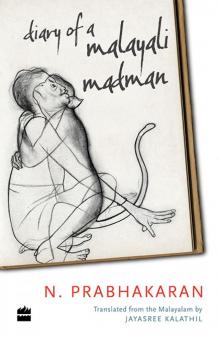
Diary of a Malayali Madman, page 7


Greatway has pledged to make the country self-sufficient in meat production. The employees are expected to work hard to ensure that the shareholders’ interests are safe with the company. The company will entertain no compromise in this matter.
22 July 1994, Friday
Greatway’s head office is housed in a beautiful building shaped like a Tibetan temple. It stands in the middle of the ninety-acre farm, attracting the attention of everyone who sees it. The path leading up to it is made of fine sand and, on either side of the path, potted plants have been used to create a veritable magical land of many scents and colours. Three months ago, when I came here for my interview, I had goosebumps thinking about working in this environment.
It has only been a few days, and how my attitude has changed!
This strange world I am now part of is creeping me out. To the extent that, sometimes, I find myself questioning the reality of what I do here and what is happening around me.
My current responsibility is to keep an accurate record of the numbers and weights of the pigs being sent to the market every day. The trucks arrive to fetch the pigs usually around 3 p.m. It goes on until 5 p.m. and sometimes even after that.
Until this work starts, I am expected to spend time in the farm. We have to learn all aspects of pig farming by observing and interacting with the farm workers. We are expected to demonstrate personal initiative and be proactive in this for the first three months.
I’ve already learned a lot about the sows. A perfect sow is one that has a voluptuous and fleshy body, and a calm temperament. Sows begin to show signs of the desire to mate when they are about five or six months old. When a female starts mounting other females in the group with a peculiar grunting noise, it is an indication that she is in heat. But it is better to wait for another couple of months before allowing her to mate, so that she produces healthy, hearty babies.
The male pigs are to be allowed to mate only twenty times a month. A male pig is, under no circumstance, to be allowed to mate as and when he pleases. If you do, he will overexert himself to a premature death.
I have already learned a lot of such things. Still, there are many things in the farm that I don’t understand, and when I am in the office, this thought makes me anxious. I want to share my feeling of anxiety with someone, but I haven’t found anyone suitable to confide in.
My interactions with my colleagues are limited to the few pleasantries we exchange. Everyone is busy with their work, and when they do have some free time, they tend to withdraw into their private worlds. People seem scared of developing anything other than a passing acquaintance with one another. Or perhaps they don’t wish for anything more than that.
The office is shrouded in an insipid silence which is interrupted intermittently by the clatter of typewriters and, every time I listen to it, an inchoate fear sinks its teeth into my chest. I look up yearning for some kind of human connection, only to be met with heavy, brooding faces staring at the open files in front of them.
I have moved into a rented house which I share with three other employees from Greatway – a small bungalow on the hillside around three kilometres away from the farm. Apart from sharing a living space, we are alone here too. Jose, who is the storekeeper at the farm, immerses himself in his books – career guides, self-help books, quiz magazines. He is a disciplined young man, with big dreams and a great enthusiasm for life. The other two are Ashokan and Mukesh. As soon as he leaves the office, Ashokan takes off for the city, returning only in time for dinner and going to bed immediately after. Mukesh is still a mystery. He seems downcast most of the time, barely speaking and reluctant to even smile.
I am caught in an unbearable sense of loneliness, both at the office and at home. The only relief I have from this miserable existence is the time I spend with the farmhands. Thimma is the oldest among them – a tall, lean, middle-aged man. He was a servant at the managing director’s house before he came to work at the farm. The MD had a small pig farm in those days, and Thimma was in charge of running it. Although he is much lower in the hierarchy here, Thimma is the kind of person who isn’t submissive and speaks his mind to everyone, always with a pleasant and open face.
I think Thimma knows everything there is to know about the farm, the good and the bad, but he does not talk about any of it. The only subject that interests him is the pigs. Ask him anything about them and he will answer gladly and patiently, his face bright with enthusiasm. Facts about a pig’s life from birth to death are at the tip of his tongue, each detail carefully preserved as though it were divine wisdom which he is ready to impart to anyone who asks.
Thimma does not have a home of his own, or any relatives or friends outside the farm. He spends all his time here, loving and nurturing the pigs, male and female, young and old. As they are dragged by ropes around their necks and loaded on to trucks, Thimma tries to soothe them, stroking their bodies one last time. The pigs scream; they know that they are being taken away to their death. Their piercing cries echo around the farm.
And when the last of the trucks departs, Thimma looks at me, his eyes red and puffy. I look away.
I am not knowingly committing any sin. I am just doing my job. Besides, the person responsible for the sins we commit as human beings is God. He is the one who gives life, nurtures it or destroys it.
26 July 1994, Tuesday
I received a letter from my mother today. This is the third letter Amma has written since I started this job. As usual, the letter is full of random news; the real reason for the letter is revealed only at the end.
‘Your father’s behaviour has deteriorated since you left. He is always angry. The amount of money he spends in the toddy shop is unbelievable. I don’t dare say anything. I am scared of what he might do.
‘Suma has a marriage proposal. The boy is working in the Gulf. You might know him – Kuniyankunnil Shankaran Maistry’s son, Divakaran. He won’t get leave to come home for another three months. He sent his brother, brother-in-law and another person to come and see Suma. I simply have no idea what to do about the expenses. How can we get her married off to a man working in the Gulf without giving at least fifteen pavan of gold? Your father doesn’t care. Only you can make this happen. I don’t have anyone else except you.’
Normally, such a letter would have worried me. But today, I feel nothing. Achchan, Amma, Suma, they are all so far away. I feel as if I am in an entirely different world that they cannot even comprehend.
Something significant has happened to my mind, but I cannot muster up the energy or interest to understand what it is.
27 July 1994, Wednesday
‘Pigman’ – this construction is possible. There must be such a word in some dialect of the English language. At the very least, someone must have used it in a story or a poem.
29 July 1994, Friday
The pigs were not let out of the sheds today. It has been raining heavily since morning. The piercing wind cuts through the bones, freeze-drying the body. In the sheds, in their hay beds, perhaps the pigs don’t feel this intense cold.
15 August 1994, Monday
At 8.30 this morning, all the farm employees assembled in front of the office. After hoisting the national flag, the MD gave a short speech praising the great souls who had dedicated their lives to the Independence struggle, and expressing his hope that their bravery and sacrifice would be an example for us. He highlighted the contributions Greatway was continuing to make towards the good of the country. The current value of our stock was thirty-nine rupees, he said, and asked us to work harder than ever to increase the public’s confidence in the company. He told us that Greatway was poised to make its entry into the publishing world, and ended his speech by assuring us that the company was well-placed to meet its goals through disciplined hard work.
19 August 1994, Friday
The farm has acquired around 200 Yorkshire Large Whites. Impressive beasts, with broad bodies and without the sunken faces of the Berkshires. They have a kind of majesty in their bearing.
20 August 1994, Saturday
The MD is at the farm only for five or six days a month. He spends the rest of the time at farms in other states, or travelling on company business. The administrative officer, Veeraswami, who is in charge when the MD is not around, revels in sending ripples of fear around the farm. He seems to think that his main job is to abuse and bully people.
The sense of self-importance he tries to convey through his bearing and general demeanour does not fool anyone. Everyone knows that he is a lecherous womanizer. Every so often, he summons the women staff into his cabin. There are those who are eager to be summoned and go in with a smile, others who get up from their seats with a resigned look on their faces, and yet others who clearly show their disgust when they hear their names being called. Their faces are suffused with these different expressions when they return to their seats after ten or twenty minutes. The male staff don’t seem to pay much attention and seem to have accepted this as a routine part of affairs.
Today, after lunch at around 2 p.m., the AO summoned me to his office. I usually meet with him at ten past ten in the morning and submit the previous day’s transactions, details about the weights and numbers of pigs, give brief answers to his queries and sign the daily accounts register. I felt uneasy as soon as I heard him call me at this unusual hour. I had so far managed to avoid his abuse, and my heart raced as I walked into his cabin.
Veeraswami stared at me for a couple of minutes, and asked, ‘Have you never seen women before?’
‘Yes, sir.’
‘So what is this that I hear?’ He raised his voice. ‘Why have you been ogling at her?’
Completely lost for words, I just stood there perspiring.
‘Get out, you dirty pig,’ he thundered.
As I staggered out of his office in shock, I saw all my colleagues hide their laughter behind their hands.
23 August 1994, Tuesday
There have been some changes to my duties.
From now on, my job is to keep track of pig feed – maize, barley, wheat chaff, etc. – and the remains from the abattoir. I am not quite sure if this change is meant to be a punishment.
Thimma told me, ‘Look on the bright side. At least now you are saved from accounting for the animals as they go to their deaths.’
24 August 1994, Wednesday
I had a terrible nightmare last night. An enormous pig, as big as an elephant, was eating me. I woke up screaming, ‘Who’s done this? Who is it that fed me to the pig?’
25 August 1994, Thursday
A sense of anxiety has enveloped Greatway. A new farm, Whiteway, has started its operations in Assam and is said to have considerable investment and backing. Their head office is in Guwahati, and they have already bought 300 acres of land in Uttar Pradesh and Bihar. Word is that they have financial investment from the famous Canadian farm, Greenland.
The pigs at Whiteway are Yorkshire Whites, but of the medium type. Since they reach maturity faster, they are less expensive to farm and their meat is of a better quality than the Large Whites.
Hotcake, a magazine that mixes news about the meat industry with pornographic content, has published a write-up about Whiteway, alongside an advertisement announcing job openings across the company. They are offering a better salary scale and additional benefits, and the ad says that preference will be given to people with previous experience in the industry.
I don’t know who brought that copy of Hotcake into the office. People grabbed it off each other’s hands, trying to get a look at it and, by the afternoon, the atmosphere in the office had changed. The air felt lighter and people more congenial. In the canteen, there were loud discussions about the possibilities opened up by Whiteway, each person finding something favourable to say: how the Medium Yorkshire Whites were more suited to the Indian environment, their high productivity, the significance of the company’s financial collaboration with Greenland, and so on.
26 August 1994, Friday
When I went into the AO’s cabin this morning, he seemed anxious. After the excitement yesterday, my colleagues also seemed subdued and tense.
I am not worried about what might happen to Greatway. I will continue working here and be part of the company until they fire me. What happens after that? I am not quite ready to think about that yet.
31 August 1994, Wednesday
Ever since I came here, I have not read a single book. The couple of books I had brought with me lie on the table, covered in dust. I just can’t bring myself to open them. I wouldn’t mind getting my hands on some porn, but I don’t seem to be able to muster up the energy to read anything serious.
I wish I could begin an entry like this: ‘There was a girl in my life. Her name was…’ It would be true, but it would also be a joke. The peaks and waves of romantic love – they seem otherworldly.
Last night, I became a wild tree of lust. A tree that grew as tall as the sky. All night, dew fell on it, drenching its leaves and branches, and even its taproot.
9 September 1994, Friday
The farm’s supervisor Thankayya and senior accountant Shashankan have gone to Guwahati. They got an interview call from Whiteway.
But that was not the news that shocked the farm today. Six of our pigs have died. Each of them developed a high fever, throat pain, blood in the urine, redness of ears and shivering, and died within six hours of exhibiting these symptoms. I will never forget the image of Thimma and the vet, Doctor Daniel, sitting numb beside their dead bodies.
In the evening, there was an emergency meeting of the entire staff, which everyone except Thimma attended. Veeraswami told us that it was part of normal farm affairs that some pigs would become ill and die. He implored us not to give it undue significance, and warned us not to talk about the incident to anyone outside. After his speech was over, a couple of people took him up on his offer to ask questions. What exactly had caused the pigs’ death – that’s what they wanted to know. They had died of anthrax, said Veeraswami, adding that the company had already sent for anti-anthrax serum.
It was 6 p.m. by the time the meeting adjourned. I waited until everyone left and, deciding that it was better to walk rather than wait for the bus, I set out down the road that ran along the farm’s boundary. I looked around, as if seeing the sparsely populated valley and the surrounding hills for the first time. It was an extraordinary landscape, where eternity kissed the tips of my fingers. In the fading light, unsettling thoughts sprouted and an ancient sadness welled up deep in my mind. I turned the corner and began descending the hill. Darkness descended with me.
In the dimly lit yard of the arrack shop by the road, a small crowd had assembled, the men almost naked, the women in tattered dark saris and the shrivelled children with frizzy hair. The crowd weaved back and forth, laughing uproariously. I thrust myself into the crowd and strained to see whatever was unfolding.
In the middle of the yard, surrounded by the crowd, was Thimma. He was on all fours, his face down, nose rooting in the dust. Wearing only a pair of sweat-stained black underpants, he wobbled his body and moved around, grunting. That body covered in black dust, that wobbly movement – that was not the Thimma I knew. That was a filthy country swine.
I strained forward, wanting to stop him, but I couldn’t move. My legs were rooted in the mud, shins heavy and swollen.
10 September 1994, Saturday
Thimma is dead. He started exhibiting the exact symptoms that the pigs had. Several people begged Veeraswami to take him to the hospital, but he paid no heed to their appeals.
Thimma died lying on a bed in front of the shed used to house castrated piglets.
Speaking to each one of us individually, Veeraswami warned us not to talk about the incident to anyone outside the farm.
At dusk, we dug a hole under a big tree in the northern corner of the farm and buried Thimma. Apart from the farmhands, it was just me and Veeraswami. I tried not to cry but failed.
11 September 1994, Sunday
Thoughts churn. Without words to moor them, they circle like leaves and twigs caught in a whirlpool. I have become a throbbing ache.
14 September 1994, Wednesday
Thousands of pigs at the farm have died. Our main job now is burying their carcasses in deep pits lined with lime. The sheds are washed with disinfectant in the morning and evening, and yet the smell of rotting pig meat seems to permeate the atmosphere.
The city newspaper’s evening edition had a long report about the illness that has afflicted Greatway’s pigs. It was not anthrax or swine plague, it said, but a new type of viral infection. The insinuation was that this virus was developed in Whiteway’s labs for the specific purpose of annihilating Greatway farms. Another North Indian newspaper had already published a report along these lines.
Pigs have started dying in Greatway’s farm in Bihar since yesterday. There is no hope for a quick cure for this new virus, a fact that is upsetting the employees and everyone else associated with Greatway. The shareholders who had invested tens of thousands of rupees in Greatway are beside themselves. ‘The disaster that has befallen this company after three consecutive years of financial progress is something that hurts everyone,’ said the report in conclusion.
19 September 1994, Monday
Another letter from Amma…
‘Why didn’t you come home for Onam, my son? Please write soon, I will worry until I hear from you.
‘Divakaran will be coming home next month. His brother says he has two months’ leave but we’ll have to hurry up with the wedding. Chandrettan said he’ll give Suma two bangles, and Damodaran has offered to take care of the wedding ring. Now if we can retrieve the pawned ornaments from the bank, the jewellery issue will be solved. The sooner the better, so we’ll have enough time to get them remade according to Suma’s wishes. You must try to help and get this done.’