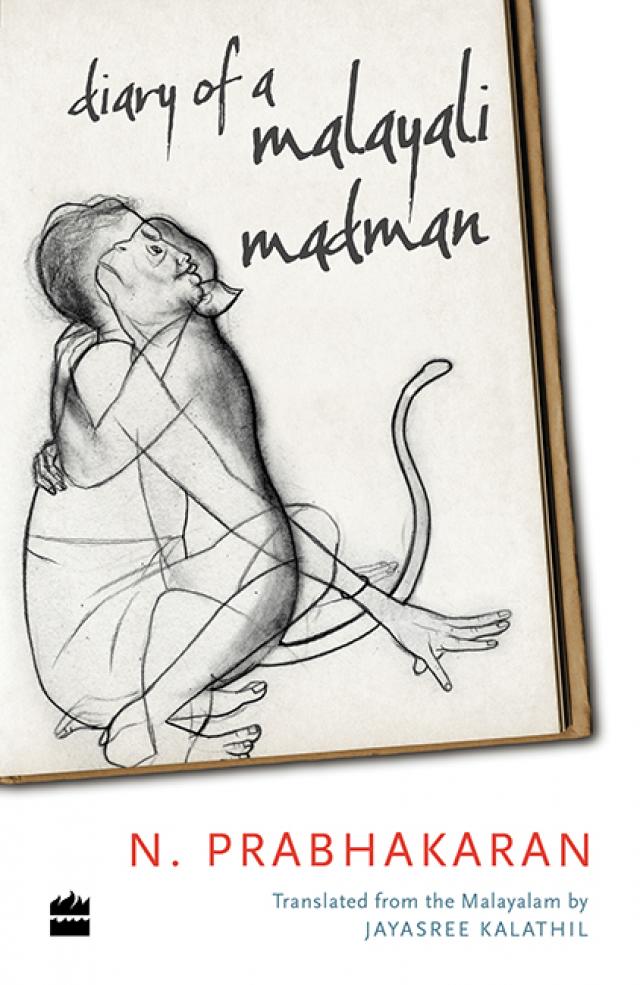
Diary of a Malayali Madman, page 15


As my reading progressed, I began to feel that I should get acquainted with writers and theatre people. I met some in person and had telephone conversations with some others. Compared to the people at the places where I used to work, these literary people have several good qualities. For one thing, they seem to grasp quickly things that many others would never be able to understand. But commonalities aside, they are as varied as any other group of human beings. Among them are the good, the malevolent, the conceited, the clever, the extremely vulnerable, the crooks, the helpers, the cultured, and the rogues. At the mere hint of any situation that may cause personal harm or threat to them, they tend to withdraw rather quickly – some make strange arguments, while others slink away quietly. This tendency for self-preservation seems to be the other commonality among them. You must forgive me for saying these things about our highly respected literary figures.
23 August, Thursday
I’m not writing in my diary today. I’ve not signed a contract that I’ll write every day without fail, have I? Come to think of it, what is the point of this writing?
26 August, Sunday
I didn’t venture out today. In the morning, I read Kumaranasan’s poem Chintaavishtayaaya Sita and found myself disagreeing with several sections. In the evening, I read the book How to Get Rich in 30 Days and found that I had no disagreements with anything.
1 September, Saturday
Today, I had a discussion about the future of communism with Gokulan. He was adamant that the Indian bourgeoisie was comprador-bourgeoisie. I was not keen to get into an argument with him, but also didn’t want him to think that I was an ignoramus. So I said that Indian communists were all kulaks.
3 September, Monday
I met a lad named Avinash today. He’s completed BTech but has no job yet. He told me all about his future plans. He wanted to join a ‘quotation gang’, go to Mumbai and get acquainted with some underworld heroes and, after working with them and making a name for himself, come back home and explore his options with the leaders of local factions.
As we were talking, a crow came and sat on a branch of the mango tree. ‘A goonda by the name of Mushugopi will strangle this lad to death in about three years’ time,’ the crow said to me.
I didn’t tell Avinash what the crow said. You can never be certain about human destiny. Things may not pan out as the crow said. This lad might actually get involved with quotation gangs for a while and then stand for elections representing some political party and reach the parliament. He might become a member of a peace committee sent to soothe some local conflict and make a name for himself. He might eventually win some awards for peace. For all you know, he might even receive the Nobel Peace Prize.
4 September, Tuesday
This evening, as I walked through the town, I saw a beautiful young woman. Not fat, not too skinny either. I fancied her and wanted to see her up close. But as I was crossing the road, a bus arrived, and she got in and left. The bus was going towards Manthodi. I felt certain that she lived in Manthodi and that her house would be in the vicinity of the Sree Krishna temple. It was another half hour before the next bus to Manthodi. I got on the bus and got off at Upper Manthodi stop and walked straight to the temple. I was absolutely certain that she would have gone home, had a bath and gone into the temple. Soon it was dark, but there was no sign of her. Several other women went in and out of the temple.
I was standing there feeling dejected, when a middle-aged man came towards me. Kunkumam on the forehead, saffron mundu, no shirt – undoubtedly a protector of the Hindu religion. I felt very scared.
The man asked me in a grave voice, ‘Where are you from?’ I told him the name of my village.
He looked at me as if he didn’t believe me. ‘Name?’ he asked.
‘Aagney,’ I answered, also with proper gravity. That seemed to pique his interest in me.
‘Would you like some paayasam?’ he asked.
Before I could reply, he said, ‘I’m forty-eight years old. My wife is forty-two. We’ve been married for twenty years, but it was only last week that she gave birth to our first child. It is the result of all the prayers and offerings we made at this temple in the last year and a half. This temple has great divine power. We might think that all trees are the same, but some, as you may know, are special – the peepal, the sacred wood apple, the eranhi, the venga. In the same way, temples may all seem the same, but some are special. You must have seen temples in some places that are like colicky children. Why do you think that is? They lack divine power, that’s why. Well, you mustn’t leave without having some paayasam.’
Saying this, he went back inside the temple, and I ran away from there like lightning.
7 September, Friday
It must have been around 11 a.m. I was in town, doing nothing in particular. I only had six rupees in my possession. If I had six more, I could have had some tea and plantain fritters. This thought made me sad. I’d borrowed five thousand rupees from my mother as soon as she received her pension. I felt strongly that it wasn’t right to spend more than that in a month, especially since I was getting free food at home. But five thousand rupees would stretch only until about the twentieth of the month. I have no idea where the money disappears. I don’t smoke, drink or have relations with women. I take the bus a lot, have tea in various chai shops and watch an occasional film – that’s pretty much it. Oh, and I call people on my mobile phone, but that comes to only about a thousand rupees a month. Yet, five thousand rupees disappear like steam within twenty days. The mystery behind this was explained to me by a palm-reader I met at the kaavu festival. Apparently, my hands leak! It is true; I have hands like a sieve. No matter how many thousands I have, they’ll just flow out of my hands. She said I had a good heart. She also said that I was still burdened with the sorrow of being jilted by a woman. She even recited a verse beginning with, ‘Of women born…’ This palm-reader was very pretty. I considered running away with her after the festival fireworks. What a lovely life that would be, nomadic, spending time at one festival ground after another! But what can you say other than hard luck – she already had a husband, one with a big, spiky moustache. An ugly man, with teeth stained red from paan. His lips were a horrible dirty red too. He was not a suitable match for her at all, but what to do – he was her husband.
I was going to write about something else … Ah, yes, I remember. So, as I was standing there, feeling dejected that I didn’t have enough money for plantain fritters, a young chap carrying a heavy-looking bag came and stood before me.
‘Sir, do you like to read?’ he asked in a respectful tone. No one had called me ‘sir’ in a very long time. I was so happy that I almost entered a state of bliss.
He pulled me back from that state. As if in a dream, I saw him take out a book from his bag.
‘This is my first collection of poetry, sir. You must buy a copy and help me.’
I feigned interest and accepted the proffered book.
The title of the book was The Crocodiles of Lake Mava. I knew from the first glance that it wasn’t for me, but I didn’t let him see my disinterest.
‘Sorry, I forgot to pick up my purse when I left home this morning. And I don’t like to borrow money. I only have enough for the bus fare home.’
‘Oh, that doesn’t matter, sir. I’ll get bus tickets for both of us, and let’s go to your house. That way, we can sit there and have an undisturbed discussion about poetry for a while.’
I couldn’t wriggle out of it, and so he came home with me. My poet friend will never understand the pain I felt in having to borrow one hundred rupees from my mother.
‘The book costs eighty-five rupees, but I’m only taking sixty-five from you, sir,’ he said, giving thirty-five rupees back to me.
I think it was quickly apparent to him that my house didn’t have an environment conducive to reciting poetry or discussing literature. In any case, he left pretty soon. He asked me if I liked to drink alcohol and I said no, which may also have encouraged him to leave promptly.
I didn’t have the courage to ask my mother to offer this young poet some tea. In this world, the only experience that someone with no personal income or means has in abundance is self-loathing.
11 September, Tuesday
Saturday the 8th was a horrible day. I received a terrible beating on that day, the pain and soreness of which have only just started abating. That is why I have not written in this diary for the last few days.
Saturday morning was actually quite peaceful. After having tea in the morning, I tried reading The Crocodiles of Lake Mava but couldn’t make head or tail of it. To be honest, I didn’t understand a single one of the thirty-seven poems in that book. Why, I didn’t even understand where or what Lake Mava was! Of course, no one can understand everything in this world. Even this diary of mine will be incomprehensible to many people. This world – this universe – is structured that way. Why does the gooseberry tree have such small leaves? Why does the lapwing have yellow wattles on both sides of its beak? What purpose does the unwieldy body of the hippopotamus serve? Would it have been wrong for it to have a simpler, more elegant body? Is there a rule to all this? Who decides what one animal should look like and what the other shouldn’t? Is it nature? Is nature capable of making such independent decisions? There must be someone beyond nature who controls it – someone who could be thought of as God. I have no faith in God’s justice. My reckoning is that good people – people who are by nature incapable of doing bad things – don’t succeed in life.
As a rule, I don’t trust people who are successful. I feel that there’d be lot of tactics, trickery and treachery behind every successful life. Maybe there are a handful of people who are not so – the lucky few, perhaps two to three per cent of those who are successful. Be that as it may.
I sat at home immersed in such thoughts until about four in the afternoon, and then took the bus into town. Leaving the noisy crowded streets behind, I walked along the quieter backstreets. The interior of the town is almost a village – our town is just the outer shell of the village. A few ramshackle houses and shops, two or three kaavu, some mosques, big and small, an old church, an ancient cemetery … I’ve seen these sights several times, but they never lose their appeal. As I walked along, taking all this in, I saw a goat with a profoundly sorrowful expression tethered to the side of the road. A few leafy twigs of the jackfruit tree were strewn in front of him. He was munching away, but I could see that he was in some distress.
‘What’s the matter, friend?’ I asked.
‘I’ve been brought to a wedding house nearby,’ the goat told me. ‘They will slaughter me for the feast tomorrow.’
It was quite possible that he was telling the truth, but what could I do? Broadly speaking, people like to have some meat on special occasions. Forget about the vegetarians who are anyway only a minority. What is a meat-eating human to do? Meat doesn’t grow on trees. You have to kill living things to get it. Killing is a sin. Once upon a time, school children used to practise handwriting with the sentence: Konnal paapam thinnal theerum (The sin of slaughtering an animal is assuaged by the eating of its meat). Killing is allowed if it is for food. Snake kills frog; lion kills deer; tiger kills boar – you can observe a whole series of such killings in nature. Oh … I don’t understand the logic in any of this. If the lion has the right to live, doesn’t the deer have it too? Of course, I have also heard the rationalizations: if animals didn’t kill each other, there’d be no more space on this earth; there’d be no more natural resources; no one would have enough to eat. These rationalizations are at once logical and illogical. Anyway … Suffice it to say that it was my bad luck that I stopped to talk to that goat, and stood there perplexed.
A small crowd of about eight to ten people surrounded me, saying that I was standing there with the intention of stealing that goat. Apparently, goat-poaching had been going on in that area for some time. I really was not expecting such a turn of events. They said I gave inconsistent answers to their questions about my whereabouts. I’m not sure if that is true, but if it is, there could be two reasons for it: one, I may have been extremely scared, or, two, I may have decided to pull their legs. Either way, the outcome was the same: I got beaten senseless. Then they pushed and prodded and dragged me off to the police station. There were only two policemen at the station. I guessed that one of them must be the station-writer; the other was a young lad who looked as if he’d joined the police force only yesterday. I know nothing about police ranks and designations and all that stuff. There was no sub-inspector or other senior officers at the station.
The policemen talked to the people who brought me there and asked them to write down in detail all that had happened. They said that the statement should be addressed to the sub-inspector and signed by all present.
Then the policeman who may have been the station-writer said, ‘You people have seriously worked this guy over. You do know that the public have no right to beat up the accused. That’s the job of the police.’
As soon as he said this, more than half the people who brought me there slunk away. The rest started shouting and arguing with the writer-policeman. And that’s when the sub-inspector and two other policemen came in. Suddenly, everyone quieted down.
‘What’s the problem?’ The SI’s voice resonated like that of an actor on stage. I had goosebumps. No one spoke. Then the writer-policeman spoke up:
‘Theft, sir.’ He pointed at me and said, ‘He tried to steal a goat.’
‘Is that true?’ the SI asked me.
‘No, sir.’
‘What then?’
I described everything that had happened in great detail. I’m not quite sure why, but everyone at the station, including the SI, burst out laughing.
‘This guy is your goat-thief?’ the SI asked the people who had brought me there. Then he pointed to his forehead and said, ‘There should be some life up here. Otherwise you’ll continue accusing random people of goat-theft and dragging them to the police station. Do you get what I’m saying? Now get out of my face. Go!’ With a flick of his hand, he sent everyone away.
I felt very happy. What a nice SI! I didn’t know that such good policemen existed. As I was thinking this, he beckoned to me. I’d just reached his table when he grabbed me by my neck.
‘Go on, get lost,’ he said, shoving me hard. ‘Go home and stay put. Who do you think you are? God? Going around taking care of grief-stricken goats and chicken…’
I heard that much as I got up from where I had fallen and walked away.
Even now, as I am writing this, I am struggling to understand why he pushed me like that and said such things. So many things happen in this world that we’ll never be able to comprehend.
12 September, Wednesday
I met a famous multilingual scholar today. He’d taught in many Indian and international universities. He was over eighty years of age, but still seemed as energetic as a young man. Elegant body, lustrous eyes, fulsome lips flushed red as if from the passion of a thousand interests. (Hey, look how lyrical my language has become from reading all those literary works.)
In response to my question about the origins of the Malayalam language, he started talking about several difficult issues in the ancient history of Kerala: The hundred-year war, the feudal system, the matrilineal tradition of inheritance … As he went on talking, the professor disappeared and, in his place, I saw an enormous rooster. This was no ordinary local rooster. I remembered having seen a similar rooster before, early one morning in Belgaum, standing with his head held high on top of a nomadic group’s piled-up bags and bundles.
‘Well, Rooster, what are you doing here?’ I asked.
‘Eh? What’s that?’ asked the professor, alarmed.
‘Oh, it’s nothing, sir. As I was looking at you, I saw a big rooster. I was just saying hello.’
Before I could finish, the rooster began crowing loudly, as if possessed. He scratched up some dirt with his nails, flicked it into my eyes and, spreading his wings, ran swiftly away. I was disappointed that my conversation with the professor was disrupted, but felt happy to have met the rooster.
15 September, Saturday
When I woke up from my afternoon nap, I felt like writing a few lines of poetry. Even the title came to me promptly: ‘The Insane’. So then I had no option but to write. Here is the poem I wrote. Read carefully.
The insane is unfortunate
The moonlight and the worm that crawls in it
Are all the same to him
He can reach into the Sun
But swiftly withdraws his hand
Grabs a piece of darkness and chews on it
Like sugarcane, drinking in its juice
He breaks fast with God
And dines with the Devil
Oh, tough is the fate of the insane.
Utter crap, isn’t it? I thought so too.
16 September, Sunday
I reread the book How to Get Rich in 30 Days.
I felt I must, somehow or the other, become a rich man. Why, exactly, are the poor and the hapless even alive? To be honest, they don’t deserve to live. A human being must somehow make some money, and there are plenty of ways to do this: real estate, social service with international funding, benami deals for the leaders of top political parties, organizing sectarian activities disguised as cultural events for communal factions, transforming oneself into a guru to help foreigners in spiritual crises, and so on and so forth. Just become an expert in any one of these – problem solved. It’s quite easy actually.
17 September, Monday
There’s a big peepal tree on the south end of the bus stop in town. If it weren’t for the local environmentalists, it would have been chopped down years ago.
Every Monday evening, a man around seventy years old appears under the tree. His normal attire is a pair of dirty pyjamas and a kurta. In the three years I have seen him here, I’ve never seen these clothes in a clean condition. He doesn’t speak to anyone. He only opens his mouth once every fifteen minutes, and when he does, he points the forefinger of his right hand up, down, left and right, and says, ‘There I am. There I am.’ He repeats this three times and then goes silent for another fifteen minutes. Meanwhile, the assembled onlookers murmur, ‘Om, Om,’ sounding like an enormous swarm of hornets. I asked a few people what all this meant, but got a reply only from two people. I understood nothing of the first guy’s response except for a few familiar words such as God, Brahmam, cosmos and so on. The rest was gobbledygook.