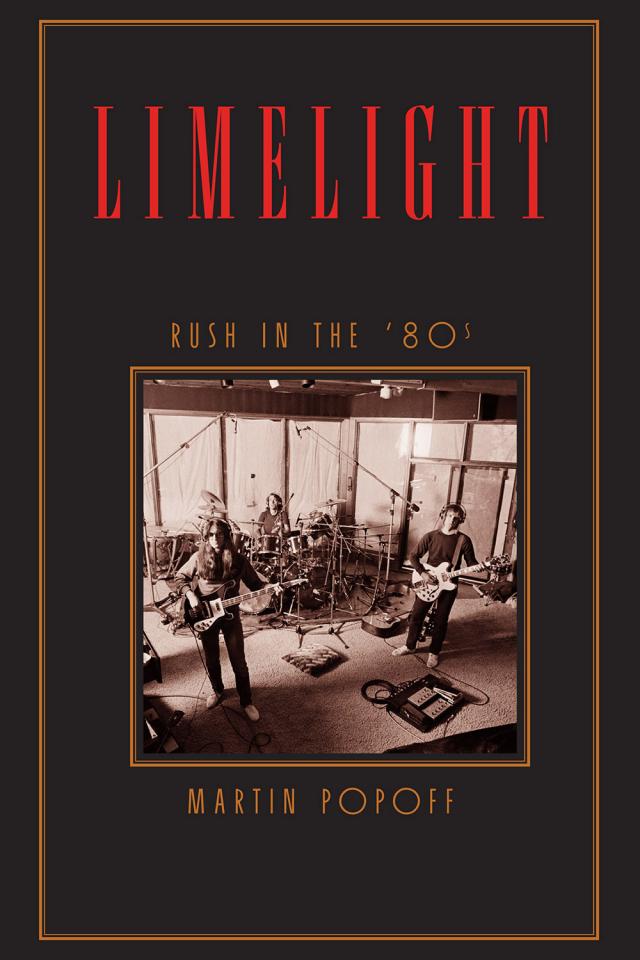
Limelight: Rush in the '80s, page 29


Explained Neil, to Nick Krewen at Canadian Musician: “The song ‘Presto’ reflects me and life as a theme, although I invented the scenario.” Peart adds that “irony is also a tool I used on this album. Most times I was careful not to dramatize the situation. When you step into true fiction, you use the fiction to explain the truth and reality. I’m still learning how to say personal things in an effective way — and I see this vast ocean in front of me. Initially, lyrics were never that important to me, internally or externally. But dealing with words changed the way I read and introduced me to some new worlds. It’s also important that you see different points of view. I’ve read a lot of American literature from the ’20s and ’30s, and what was interesting was that all the authors of the time — Hemingway, Steinbeck, Fitzgerald and Faulkner — saw it all so differently. Yet they manage to strike at some universal theme. It’s important to be conversant with other people’s views, even if you don’t agree with them.”
There was no attempt to push this song as a single, despite its title track status. In fact, the song was not played live until the Time Machine tour of 2010.
Opening side two of the original record was “Superconductor,” a song warning about the emptiness of superficial entertainment. It’s a quick rocker, as rocky as possible, that is, given this tooling and schooling. But yes, this was about as power-trio-like the band would get on the record, with only almost inconsequential keyboards, most prominent at the reggae-like break.
“We certainly did not want to go the full Andy Richards route,” says Geddy, reiterating the clear mandate for Presto. “We didn’t want to have the big show of keyboards. I think there was still a role for keyboards there, but they were being pulled back. The question was being asked: Do we need them here? What do they contribute here? They weren’t disappearing. They were still a big part of it, but I think we were looking for different ways of using them, not so much of the upfront dynamic, tour de force that the Andy Richards show produced on Power Windows. By virtue of not taking the approach we took with Andy Richards, giving keyboard so much latitude, filling so much space before we even put guitars on, by that token, yeah, it was a more traditional approach. But the keyboards were still there, present but not as ostentatious.”
Whether this helped his relationship with the band’s guitar picker, Geddy says, “I’m trying to put myself back to that time. My relationship with Al is fairly indescribable. It’s very brotherly, in the sense there is a certain amount of abuse that goes on between us, but we don’t really regard it as abuse, the same way you would to your brother or sister. It’s just kind of like elbow room. I don’t remember any overt attention, but Alex keeps things in sometimes. So maybe he was more uptight about the guitar role, after the experience of the past two records. I only recently realized how frustrated he was during that period. But maybe that’s just me not wanting to think about that. I’d forgotten that maybe there was more tension than I cared to recall.”
And again, from Rupert’s way of thinking, something like “Superconductor” is indeed a type of hard rock, but it’s likely most fans would disagree.
“I was all the time trying to concentrate Rush on making the maximum Rush album,” says Hine, “which meant the least interference from outside. I really wanted to push them into the most intensely Rush combination, what would have been the more hard rock tracks. Those are on those records. Not the classic kind of very heavy, thick guitar sounds, but rather these sharper, edgier sounds that I’d had a liking for and developed in a big way with the Fixx, which I know they also liked.”
“Anagram (for Mongo)” is another mid-tempo pop rocker with guitars, although there are a few more keys and even a few spare classical piano chords. As for the title, Geddy explained to a caller on Rockline that it’s a reference from Mel Brooks’s comedy Blazing Saddles. “There’s a scene, if you recall the film, where — I can’t remember the name of the actor who plays the lead — he dressed up as a candygram delivery man and knocks on the door of the saloon and goes, ‘candygram for Mongo, candygram for Mongo.’ And Mongo takes the candygram, and of course it explodes in his face. That’s where it comes from.”
Framing Neil’s lyrics on the record more generally, he adds: “I think it’s hard to describe all the things that make you want to write about the things you write about. I know for Neil, he’s a person who’s driven by what’s going on around him and what’s going on in the world. He’s constantly traveling and thinking and examining, and he goes through many different things, as we all do; and it’s hard to say where these things come from. And yes, there are some songs that are angry, and some subjects that, I think, require anger from time to time — and I always think that makes for good rock music anyway. So it’s hard to say where the inspiration comes from in any of those songs.”
Neil’s lyric is indeed rife with partial and full anagrams. There are key words in each line that use letters from larger, other key words or, roughly speaking, each line uses the same set of letters twice. The most instructional bit to lead the reader to what they are suspecting is “There is tic toc in atomic.” Most clever is “Image is just an eyeless game” because image less the i leaves you the letters for game. Geddy excuses Neil’s less than coherent messaging across the aggregate of the song, amused that this type of word game results in very singable lyrics. After all, along with the narrative of less keyboards, the ear of Rush with Rupert Hine, figures Geddy, is about singing, an increased sophistication of vocal phrasings — this song is almost about phrasing, where despite the little fortune cookies delivered to each place setting, the game itself shouts any other meaning down.
“Red Tide” is a straightforward 4/4 rocker with dark, sophisticated chord changes, distinguished by a crazy guitar solo from Alex, who deliberately wanted to match the anger of Neil’s lyrics. Of note, it was never played live. Although most of the song is about various forms of ecological degradation, the first verse is about AIDS. By the end of the song, Neil is approximating the famous words of Dylan Thomas, “Do not go gentle into that good night,” his point being it’s time to turn the tide on the likes of red tide before it’s too late. Indeed, pollution has been a concern ever since the dawn of the industrial revolution — nothing surprising there — but by 1989, there had already been scientific warnings about global warming, so decades later, Peart’s words take on new weight. Even if taken literally, his final missive seems to reference then-popular theories about a coming ice age.Also somewhat dark is “Hand Over Fist,” at least for the verses, against a hooky, happy resolve come chorus time. Alex tries out a few additional tones — light funk and pretty distorted — over a spare beat and generally quiet arrangement.
As Neil told Keith Sharp from Music Express, “If there is an identifiable lyrical trait here, it’s my use of irony, which is injected by acting a character out through the lyrics. For example, in ‘Hand Over Fist’ there are two people walking down the street arguing, and the lead character is saying things which are supposed to be ironic. I was conscious that maybe a couple of the last albums were a little on the heavy side, lyrically speaking. With Presto I took a little looser approach to things. These songs have their own stories and messages without necessarily being linked by some overall theme.”
Peart makes an amusing and salient point, speaking with Keith, about manufacturing Rush material at this juncture. “We can’t be more creative than locking ourselves away in a farmhouse. I know there is such a thing as inspiration, but I know how to take advantage of it. When we’re not rehearsing or writing, I collect ideas and prepare myself for when we do start writing. By the time we’re ready to work on a new album, I’m fully prepared. I’ve got pages and pages of notes to work from. Call us efficient, call us mechanical. The point is, when we have to get something done, it’s done. That’s the only way we know how to work. Maybe we’re exceptional in that way. To our mind this is simply being professional.”
Noted Geddy, speaking with Bob Coburn on the link to the simple game to which the lyric alludes: “It’s kind of an abstraction. The kid’s game or what you want to call it, that you play with making your fist and making your two fingers into scissors and paper . . . paper covers a rock, that whole little game. It turned into a nursery rhyme that we put together as a chant. I guess there’s lots of different analogies you can make with that kind of a thing. What represents a stone in your life, what is paper and all these different things. But basically it was — for me anyway — just a rhythmic thing that the whole sound of that chant, to me, was a very strong rhythmic thing to write music to.”
In essence, here’s Geddy again, working with Neil to get to a lyric that rolls off the tongue effortlessly and with logical rhythm, although, in fact, “Hand Over Fist” had initially been crafted to appear as an instrumental.
Presto finishes strong with the enigmatic “Available Light,” another song that begs for re-recording, a fattening. Even though this is somewhat a ballad, it grooves nicely. In fact, Geddy applies proper, deep bass tones while the song accentuates the piano part, played by Jason Sniderman, Blue Peter keyboardist and son of Sam Sniderman, the Sam in Canadian record store chain Sam the Record Man. Lyrically, Neil presents an odd mix of weather — sun and sea imagery — against some of the preoccupations a photographer has to ponder and solve. Both are tied together by the concept of “available light,” which then also serves as a life credo, the desire to live in available light.
And that was it for Presto. The record went gold in the States almost immediately, but then never got its platinum designation. In truth, Rush were continuing to operate well at odds with any sensible direction that might have them aligned with any kind of musical movement.
But the goals with this band were inscrutable. Reflects Geddy, “I think that phase, those two records we did with Rupert and Stephen [Tayler, the engineer], were very much songwriting experiments — learning how to be better songwriters in a more concise period of time. Presto was the first one, but I found that when we finished Presto, I was a little unsatisfied, somehow. I like the sound of the record a lot. I thought it was a good production, but I didn’t feel we really nailed the songwriting on that album, aside from a couple of tracks that stand out, and have, I think, endured. I don’t think it’s our strongest work as writers, and I think the next record we did with Rupert was almost the exact opposite. I think it’s one of our strongest pieces of writing, and maybe not our strongest sounding record. So you can’t always have it all.
“But yeah, I think the songwriting, in retrospect, on the whole of Presto, was weaker than I thought it was when we were working on it. In retrospect, Roll the Bones is much, much stronger. In fact, I think you can make an argument that it’s our strongest album from a songwriting point of view, but not from a sonic point of view. ‘The Pass’ stands out on Presto, and I can’t think of any other titles off the top of my head. ‘Red Tide’ is an interesting song. They were interesting songs, but I don’t think they were profound in terms of writing.”
“I think the other guys have gone on record as saying it’s one they really wished they could redo,” adds Neil. “Of course, there are so many elements that come together in a record — the composition, the instrumentation, the sound, orchestration, producer, all of that. And Presto’s one that strikes me too; it didn’t live up to its own potential even, never mind our potential. Or the potential that was in the material there, for whatever reason. That’s what we feel. But it’s pointless to say that because someone who likes that record would go, ‘What are you saying?! What do you mean?!’ That’s a lesson we learned long ago. Don’t dare to criticize even your own work because somebody’s going to take you to task for it. Okay, you know best!”
“I thought it was a very exciting direction,” says Alex. “And I was happy with the results. I just think it’s a lighter record than what perhaps we intended it to be. But there’s some really good playing on it, and there are some good arrangements, I think, good songs. But I don’t know, for me, the record was a good catalyst for feeling fresh and excited again. We’d come from a very difficult phase in touring. We were on the road for a long time the previous tour, and we decided to take our longest break — about seven months, I think. And we were recharged and came back into the project feeling very positive and excited, and that carried through with the tour. I think when we were in our rehearsal mode and getting ready for the tour, we were quite excited about getting on the road and playing again. That was important, because we finished the ’80s feeling pretty exhausted and not that interested in really touring anymore.
“And I think Presto was maybe the starting point of that. As I said, there was never friction, but there was pulling and pushing. And I think coming to the ’90s, that was a transition, that we had our nice break, to close off the whole chapter and move into something new. All those records have their own particular mood. Generally they are pretty positive. I think we talked about Grace Under Pressure as a very stressful record to make, as it was. And Moving Pictures was just a real great experience, lots of fun. But my recollection of Presto was very positive. Rupert was a wonderful energy to be around. He was very positive all the time, quite humorous, and we really worked well together. Very gentlemanly.”
“At the end of Presto,” ponders Rupert, “probably at the very end of the last mix, I said to them, ‘I’m not really sure I’ve been great value for money for you guys. I’ve had a whale of a time — don’t get me wrong — but what do you think I really did?’ And once again it was Neil who voiced it clearly: ‘You were there to answer questions.’ I sort of jokingly said, ‘What, oh yeah, the six questions,’ and, ‘Yeah, and the six right answers,’ he said.
“People have asked me since, ‘Well, what were those six questions?’ And I said, ‘Well, there weren’t really six.’ They were things like a conversation I had with Geddy, very early on, a difficult one to have with a singer, which was, ‘Why didn’t you produce us before, when we asked?’ And I said, ‘Well, mainly lack of availability, and I didn’t think I was really the guy for rock records,’ and mumbled a bit like that. And then I said, ‘And I also had a problem with your voice. But I’m doing the album. This is not a reason why I’m not doing the album. But when you’re up on the fucking ceiling the whole time, I want to pull you back down so we can hear your personality, so we can get to grip with what Geddy is like’ — because now I’m understanding him as a human being — ‘I think there’s a lot that never comes out of your voice because we don’t hear it when you’re stuck on the ceiling the whole time. Why can’t we do something where we drop you, not a couple of keys, but a whole octave? Let’s just take the song exactly as it stands now, for instance, and drop a whole octave.’ And Geddy said, ‘Well, that would just sound like me humming probably.’ ‘Well, let’s try it, and then we can soar up the octave when we want impact.’ So, in the end, that conversation affected a lot of that album, and even more so Roll the Bones.”
Rupert has a different attitude than Peter Collins about whether the producer should be concerned with how many units the record goes on to shift after being put in the stores. “No, it’s all about being in the studio,” he says. “The second you’ve made the best record you can possibly make with your artist, it’s unfortunate, but the record producer then has to hand it over to the next in line, the promotion and marketing people. When I tried to go with the tapes, and I have on a couple of occasions stayed with the finished album and tried to become part of its promotion and marketing in an effort to really make sure it’s pushed all the way through, normally it only happened with an unknown artist. You are kind of elbowed out of the way. You’re very unpopular if as a record producer you get out of the studio and start sticking your nose into other departments, which is in the end why a lot of producers do try their own record label.
“I think we pulled it off,” figures Hine. “I do remember feeling very happy at the end of it, that it was a really great balance of all these ideas we’d talked about on the way. Not that we started out with this clear plan — we just wanted to experiment. And within that experimentation and focus we got a great balance over those songs between all the different aspects of the band. And I do think it was very cohesive, like a capsule of where the band were at that time in every way, right from Neil’s text through to Geddy’s greater range in his vocals and the nature of the flow of the songs, through the whole record. I remember being very happy with it, and thankfully so were the guys.
“When three guys have already made as many records as they had, it’s tough,” continues Hine, on this constant search he saw in the guys, which included the use of different producers. “We’ve seen how few bands can make it, you know. And three people is not many, which is both a strength and a weakness. Its strength is that three people is the most open, flexible format for a band. I mean, classically, all the great, madly improvisational bands have been three-pieces — Cream, Hendrix Experience. Where all three can play as madly as they like and no one’s going to tread on anyone else’s foot; it’s just a basic design truth, the three-man group.
“As soon as there is a fourth, you’ve always got an argument between the guitar and keyboards. You’ve got to have some agreement as to who does what, and right there the improvisational idea is gone out the window. So this is the essence of a trio; this is why the word power so easily fits in there, because all three members can create a very powerful, entirely improvisational force without it being a mess. And that I think is something they wanted to really sustain, even though they’d just been through this departure by having a fourth shadow member, keyboard player, who didn’t actually exist. They’d been through that sort of romance and they had come out of it with, ‘Well, that was a bit of a holiday.’ And now they were back to the day job of being a power trio and wanting to keep it fresh.