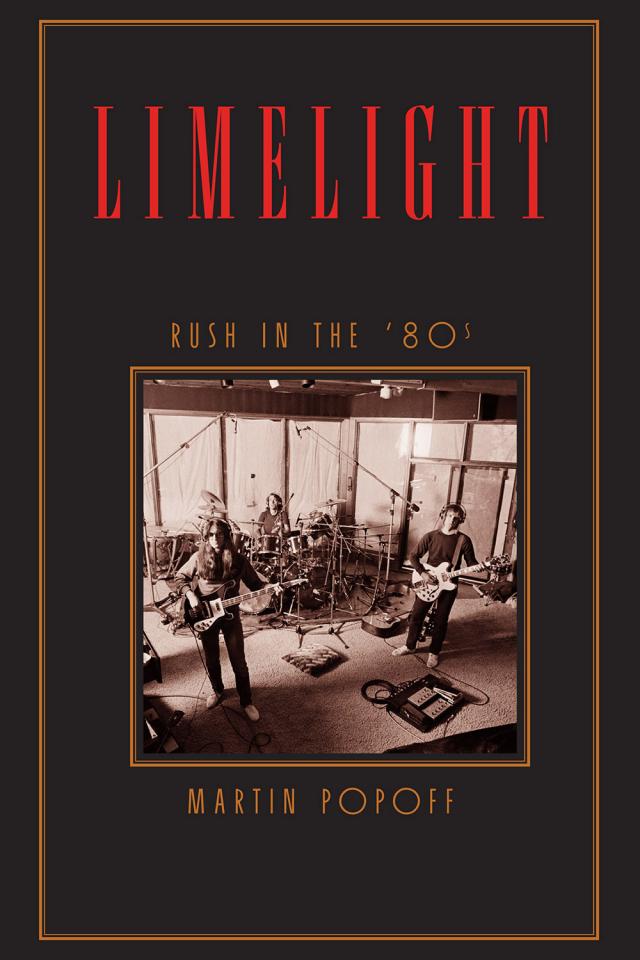
Limelight: Rush in the '80s, page 25


The Atlantic Canada shows were the result of a petition campaign much publicized at the time to get Rush to play there. It’s always been notoriously hard for bands to make the economics work for shows in Nova Scotia, Prince Edward Island, New Brunswick and Newfoundland. But Ray made it happen, with Rush playing Moncton, New Brunswick, two shows in Nova Scotia and two dates at Memorial Stadium in Newfoundland and Labrador’s capital, St. John’s, October 29 through November 4 of 1987, all dates supported by Chalk Circle.
Into December, Rush again toured with a former heavy hitter now onto a career as a solo artist: Tommy Shaw from Styx supported the band through to March of 1988. After this, it was back to Canada with Chalk Circle. Three shows in January and February of 1988 would be recorded for use on the new live album. Three additional shows would be recorded in April, all in Birmingham, U.K., as the band conducted a short European campaign, wrapping up May 5 in Germany, Wishbone Ash as support. Birmingham would be captured on film for the platinum-selling video release of the album.
Rush’s stage presentation was both massive and classy by this point, but very much reflective of ’80s style.
“Howard had really developed his skills as a lighting director,” recalls Lifeson of Mr. Ungerleider, now in his fourteenth year with the band. “And I gotta say, the way he sees things, it’s just unbelievable. He has such a creative ability. The colors are liquid; the application of the lighting is so dramatic and so unique and exciting. I’ve been to some other shows that have looked amazing, but there is something about his style and the way he sees things that are so deserving of the awards he’s gotten.
“We spend a lot of time talking about aspects of the production. I mean obviously, the lighting is something he brings to the table, and he makes suggestions, and he’s always got a fixed idea of how he wants to change one tour to the next to the next to the next. We try to reel him in a little bit budget-wise, or at least, our road manager, Liam Birt, does. He’s got this idea, and then we talk about some of the other signature things we want based on what we’re promoting on that tour, which album it is, or what point in the tour it is. And then we work together on these concepts. And he often brings things from a technical standpoint. He always brings in really great visual moments.
“He’s been there since 1974,” continues Lifeson. “He knows the music as well as we do. He’s heard those songs as many times as we’ve heard them. So he knows them inside out. And if you’ve ever been out in the house to watch him work, you see that he’s very dramatic in how he plays the lighting board as an instrument. It’s very, very effective. And as a technician he’s amazing; he directs that show. I don’t know how he does it, because you’re working with different people every night, different spot operators, different countries. Some of them don’t speak the same language. It’s a real challenge at times, and he always pulls it off.”
As for how in the world it turned out that Howard ended up with the band from 1974 through to this point (and actually to the end), Alex says, “Well, we love each other, for one thing. We’re great friends. It’s always been a part of the way Rush operates. We get close with our crews, and we become friends. And it has an impact on how the whole show comes up and comes down and how it works, and how obligated everybody feels to put on a good show, whether it’s their station or someone else’s. You know, something happens across the production, everybody is there to help. And it’s an amazing thing to witness on our shows. And Howard’s just been there from the very beginning. We’re like brothers. So I couldn’t imagine it any other way, really. And he’s such a character. He is absolutely the greatest storyteller I’ve ever heard. He can tell a story in such a way that you’re crying, in tears. And quite often he’ll tell stories of things, situations that I’ve been at, and it’s completely different from what happened. But who cares? They’re just awesome stories.
“In the world of lighting, things change so quickly. There are big tours that go out with unlimited budgets. They get the latest equipment, they get the great people working these shows, and they’re such a visual extravaganza. You have to find your way in that sort of stuff. And I think Howard has a real good sense of not competing with those big shows, but to do something on another scale that’s very emotive, or, you know, powerful and profound. Some of his movements are just astonishing. When you see them up front. I mean, I don’t really get to see too many Rush shows, but during rehearsals, when he’s doing a full production, he’ll show us some of the stuff he’s doing. Or if we videotape it, we get a chance to see the kind of action that’s going on.”
“I love multimedia,” says Howard, who was obviously so much a part of the live presentation by this point. “To me when I sat in an audience watching Pink Floyd when I was young and I saw all this eye candy happening, you know, it’s really great that you can deliver something like that. It helps to tell a story. The first thing I ever did with Rush is use these Kodak S-AV projectors and put together the owl from Fly by Night. We made it flap its wings. To me back then, I was like, wow! Look at that — we can flap its wings, and the audience went crazy when it would do that. But looking back it was such a simple effect. I sort of developed it from there.”
Howard offers a glimpse of what was involved as the show evolved. He says, “Video walls weren’t out yet, so we used a lot of projectors. And then we used thirty-five-millimeter projectors, and then to get bigger I created a monster because we got together with a friend of ours in Toronto named Norm Stangl, who worked for a company called Nelvana Films at the time. And we’d do prints from New York to develop some content, and I came up with this wacky idea: let’s take three projectors and take three rolls of film, and let’s feather them together and do it like pseudo IMAX, but not IMAX.
“And I didn’t realize what a nightmare I was creating for myself at the time, but three rolls of film all have to be in sync. All the edges were soft, all the sprockets must be counted on the film, and they need to have a starting point so that when the projection edits the film, we don’t lose track of where we are. But more important than that, we never even realized we needed encoders — a piece of equipment that goes on a projector to make sure each individual projector runs at the same speed. We found out that everything was running out of whack, and this projector guru from New York said, ‘You need to put encoders on your machines.’ And then we finally tightened that up and were able to do some really nice widescreen projections.”
The band felt it was necessary to get this grand with their shows for a few reasons. First off, as any trio will tell you, an audience requires distractions, at the base level, because you are looking at only three guys. As a trio, you often have your hands full, so it’s hard for the band members to put on a show. In Rush’s case, two of the three also have to play bass pedals.
“I just think it’s an entertainment thing,” adds Howard. “Very few people were doing it, and it’s something that adds another dimension. You have some great music happening, so why not tell the story through visuals? It delivers a message. I can always remember the visuals that I saw when Pink Floyd did “One of These Days” from Meddle. They had that quiet part, the ethereal part, then they exploded a concussion prior to the voice saying ‘One of these days I’m going to cut you into a million pieces,’ and then the police car lights come on and these towers lifted. Every time I heard that song on the radio, that’s what I saw in my mind. So I think visuals help recreate the experience of a live show. When you hear the song on the radio when you’re not at the show, in your mind you might actually see the picture of what you remember — that’s what I think is important.”
And by A Show of Hands, Howard says, “It was like when you put on a high school performance and then you take it to Broadway. We had the ability and the money and the crew to pull it off. It’s not easy putting together a show that is multimedia. You are dealing with animators, actors, amazing editors and conceptual people, and with Rush it’s a brain trust. Geddy is really into the visuals, his brother Allan spearheads our productions, and Geddy and myself and Alex sit down and we brainstorm ideas. Geddy has a lot of amazing ideas and then they take it to the film houses that we hire, and they have on-staff people who will add to those ideas. It becomes a collaboration.”
Just as we’ve heard with the production of the records, Geddy was heavily involved in the production of the show. “They all care about the show, but Geddy in particular,” says Ungerleider. “He’s playing the music, but now he has a handle on what’s going on behind the music as well. It’s sort of interesting and fun. We look at this as a fun project. Although it’s a lot of work, it’s a lot of fun, because who gets the chance to dream of something and your dreams come true? A couple tours ago, I was up on a patio at a cottage in Northern Ontario looking at wind chimes, and I said, ‘Wow! It’d be great if those wind chimes were LED video pixels.’ And I designed my next video rig to be hanging like wind chimes. So it’s all these ideas you get. I’m driving in the middle of the night and I’m going through the forest and there’s the moonlight coming through the mist, and it just looks like something from a science fiction movie. I would want to try to recreate that onstage, get that same look.
“But Geddy, yeah, the beauty about him is, he’s a hands-on guy, but he gives you the respect and the freedom to do what you want to do. He’ll never come and say, ‘You know, I hate that.’ But we discuss everything. He’s not even a micromanager; he just knows specifically what he wants, but always asks your opinion. You can’t expect that everyone knows everything. I had a fan come up to me once, ‘You should be putting those lights in the back in blue, because I think it would look better in blue, and you’re using them now in red — I don’t think it’s working.’ So I listened to what he said and I’m thinking, all right, I’ll do them blue. Next day I put them into blue, checked it out and said, ‘Yeah, I like them in blue — I’ll leave it there.’ So I’d take people’s advice, just so long as it’s not stupid. And I think when you give somebody creative freedom, there’s a trust there. The band has always given me the creative freedom to design lights. They’ve never told me, ‘No, you can’t do this, you can’t do that.’ Well, they’ve told me, ‘No, you can’t spend that much money,’ but they never said we hate what you’re doing or we don’t believe it works — they trust you.”
Though his job is dealing with all this technology on the road, Howard of course also deals with the guys themselves. Taking a run at their personalities, he figures, “Alex is one of the most generous, friendly guys you ever want to know. There’s no way you are going to have a boring time hanging out with Alex; he’s a party waiting to happen, basically. And he’s a great guy, and he’s involved and into a lot of things. Al is Al — he’s outgoing and out to have a good time. I mean, they all are. When Neil gets going he’s classic, he’s a fun guy to be around. But he’s very serious too. And Geddy is very serious only because he feels the responsibility of keeping everybody focused. But once in a while, we have fun. Ged gets loose too; everyone in the world gets loose — it’s just when. People think you get out on the road and get out of your mind and every day is a party. It’s not true, because we’d all be dead if that was the case.
“The secret with Rush is consistency,” affirms Howard. “Great songwriting, putting together great productions, keeping a team of people you trust around you to support you. And the machine rolls — the machine rolls smooth. You know, you buck the odds for so many years, you’ve never had a bona fide hit single . . . Rush have never been a Top 40 act, but they’ve succeeded despite everything. Everyone used to say this band will never succeed. You don’t have a hit single, you don’t appeal to commercial audiences. Instead they developed an underground following that is staggering. By bucking the odds for all these years and going against the grain, this is what you have. You have a solid three generations of fans, which I’m seeing at the shows every night. It’s pretty amazing.
“How many bands out there are still doing this? There’s not a lot. There’s a handful of true artists. When you go see a David Bowie or an Elton John, you realize there’s talent. You see Rush, you realize there’s talent. When you get your fans to come see it, and word of mouth spreads, that’s why they’re still able to write spectacular music and move ahead. It really upsets me when I hear fans say, ‘Oh, I just want to hear the old stuff.’ Yeah, you do want to hear the old stuff, but they should be thankful the band is writing new material and pushing forward and giving them more than the old stuff. I mean, I can always say to someone, ‘Why don’t you go and act the way you did when you were eighteen even though I know you are thirty-five now. Act the way you were when you were eighteen — I liked you better then.’ You know, that’s what it’s like.”
Thinking more about the band’s unique appeal, Howard comments, “Maybe you can call them a cult band, because they do have an underground following. Is it a commercial following? Maybe it turned into that. But I think it’s more of a hard-core cult following. A lot of people don’t go around humming Rush tunes in their head. They know them.”
For his part, Geddy agrees with Howard’s statements about how the two work together. “Yeah, I’m pretty involved in the visual presentation as far as the films go. But the lights are Howard’s, ninety-nine percent. I might give him an opinion at the end, but I trust Howard implicitly with the lights, and I only get involved when there’s a budget that has to be crunched. Because what he always wants is the moon. And I like to give him the moon, but I have other people who don’t want him to have the moon. So I have to put myself between the bean counters and Howard and figure out the creative alternative so it works for Howard and it works for them.
“But the fun part of it for me — and it’s always been the fun part of it for me — is the film stuff and the animation. I’ve always been fascinated with film; I’ve always been a huge film buff. One of my private lives was dreaming of being a movie director at one point. I gave that up a long time ago, but this satisfies a lot of that because I get to work with some great creative people, put a great team together. My brother is very helpful in that regard. He’s a talented producer and finder of real talented people. And there’s a number of people I’ve worked with for years, and we just keep finding these new artists, these young animators that are interesting, and we give them a song to work on. We try to find different, fresh approaches to making films for the rear screen, and that’s great fun. You learn a lot and you get to meet some really fabulous animators and talented people.”
And live, of course, is the where and when for Rush in terms of really getting to interact with their fans.
“I bless their hearts every single day,” says Geddy. “But they’re hard to analyze as a group because they’re so different. We have these hard-core fans, the old fans who have been there from the beginning, and they’re usually male, and they are really intense about the band. And then you get this new wave of female fans we keep seeing, and they’re driven a lot by the lyrics, I think. Then you get these fans who are so young, all young players, and they’re just air drumming. So you’ve got musicians in there, and then you’ve got people who’ve been really touched by the sentiment of a song that has some profound effect on their everyday life, their optimism. If anything is a connector between a lot of them it’s that something Rush has done musically or lyrically has had a connection with them that has impacted their life in an optimistic way, and that has made them indebted in some crazy way.
“I’m always amazed when a fan holds up a sign that says thank you. I think that’s all wrong. I’m the guy who says thank you, you came to see me, you’ve invested your life in something I’ve done. Yet they’re saying thank you to me. That is the most common thing fans say to me. It always takes me aback. It blows my mind that they’re thanking me for what we’ve done. It means I’ve given them something they’ve really needed or really wanted in some way. That it has offered them some comfort, maybe escape, but something that’s been interpreted as a positive thing to their lives.
“And so I am so appreciative of our fans, and I’m not just saying this in a pandering way. Every night I’m out there I cannot believe they’re there for us in those numbers. It really does touch me every night. It makes me want to play the best show I can possibly play. I can’t think about it past that because it distorts your sense of yourself. In a way, it’s not my business. Their relationship with me is their business. My relationship with them is my business. And to ponder it . . . like I know there’s some guys in our organization who go on these chat lines and blogs, and I can’t do that. I feel like it’s not meant for me. I feel like I’m eavesdropping on a conversation that I shouldn’t really be a party to.
“I still have the most beautiful miniature pair of basses that a fan made,” continues Ged on his relationship with his fans. “An exact replica of two of my basses. It was done with such care, in a little glass. I’ve kept it ever since, and it’s always on my desk. It’s one of the most touching gifts a fan has ever given me.
“I was given a ring, which I wore for over twenty years. A fan came up to me at the Edgewater Hotel in Seattle. This was on maybe the second tour, and it was a female fan, and no I didn’t sleep with her. A female fan just came up to me out of the blue and said, ‘I want you to have this ring.’ And it was a little ring that had a lyre on it, you know, a little medieval musical instrument. I thought it was such a sweet little thing. Anyway I put it on my finger, and I don’t know whether I thought of it as a good luck thing or some sort of icon or totem of some kind, but it stayed with me until just last year when finally because of the fatness of my baby finger I had to remove it. I keep meaning to wear it around my neck. I have no idea what the person’s name was.”