Limelight: Rush in the '80s, page 20
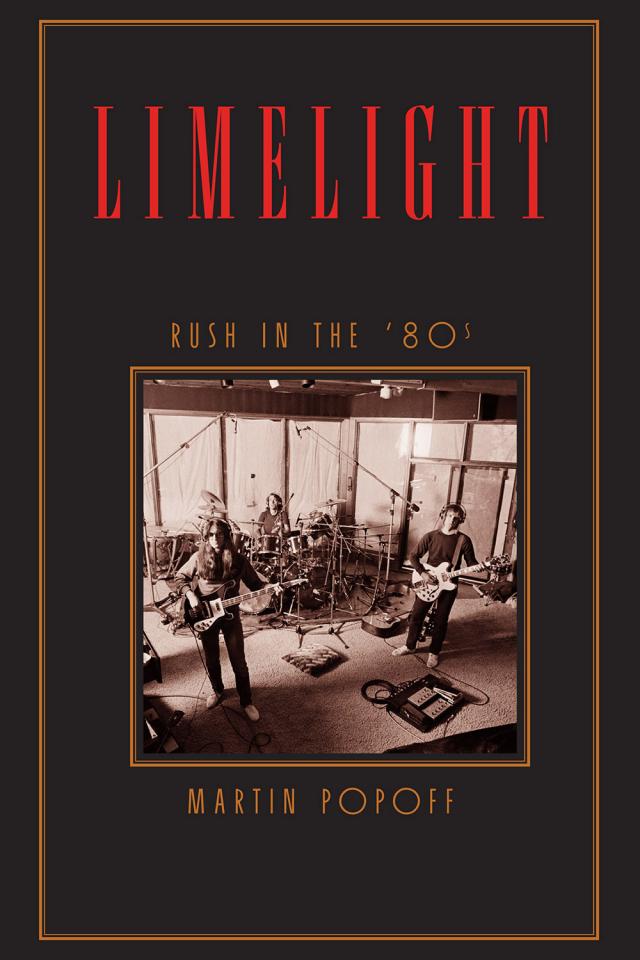


Notes Peter, “I seem to remember Alex saying, ‘Well there’s not much space for me with all those keyboards.’ But, you know, there’s fantastic guitar parts on there, which were present in the rehearsals, so they were always going to be there. At times it might have got a little bit too much, but I like to think we tapered it back. The intro on ‘Big Money’ was heavily keyboard orchestrated, and I think it’s quite spectacular even today. And Alex, I can’t really remember whether he dug that or not. To be honest with you, it was something of a democracy, and if two out of the three liked it, it usually went down.”
On the evolution of “The Big Money” during the Florida concerts, Geddy says, “I remember ‘Big Money’ really improved after that. We got the right kind of rock-out attitude in certain parts of the song — when we played it, certain parts of the song got an instant cheer. And that kind of thing is a great confidence builder.”
For the title of the song, Neil took inspiration from the 1936 Dos Passos novel of the same name. This was the second time Neil has referenced Dos Passos’s U.S.A. trilogy, first time being “The Camera Eye.” The song makes smart, rapid-fire observations about “big money,” but there are some particularly amusing lines, most notably, “Sometimes building you a stairway — lock you underground” and “It’s the fool on television getting paid to play the fool.”
The profusion of keyboards made it necessary for much of the sound to be triggered by pedals when played live. In terms of the genesis of the parts, Geddy would take a first shot at programming, after which Andy Richards would take over and embellish, either through additional programming or performance.
The song was the subject of a full-on production video that uses live footage — Alex resplendent in a powder-blue suit, Neil with his rat-tail hairdo — and then-state-of-the-art computer animation. The band play on a lit-up Monopoly board with the words “Big Money” replacing “Monopoly”; behind is a pricey-looking cityscape. A car flies by with a “Mr Big” license plate, which is a reference to producer Peter Collins. Speaking of producers, the producer of this video is Geddy’s brother, Allan, who has had a distinguished career in film and video through the years, with Rush and outside of the band. The model for Hugh’s front cover painting, aforementioned Toronto youth Neill Cunningham, makes an appearance at the beginning peering through binoculars as he is painted on the back cover of the album, and then in later frames and sequences floating by.
“Grand Designs” (also a Dos Passos reference) finds Neil framing various aspects of nonconformity, championing substance over style, precious metal over “a ton of rock” and “swimming against the stream.” Musically, this one’s another example of the band’s progressive reggae writing, near brisk enough to be called ska, with Alex doing the chordal stabs but little else.
Notes Peter, “With young bands in England, the guitar players didn’t like keyboards, so I was used to that. It was to be expected from the guitar players. I didn’t pay that much attention to it. Geddy and Neil for the most part liked what was going down, and if it was universally not liked, it was cut. I don’t remember him being that upset about it, to be honest with you; I really don’t.”
Adds Neil, defending the keyboards, or at least acknowledging that they couldn’t be ignored in 1985: “Yeah, those two records, those two tours, I think represent the apogee of that particular involvement in music and arranging. We were very ambitious as arrangers then. I was describing before how the course of study becomes your learning. You begin to play first, and then you learn how to write songs, then you’re trying to learn how to arrange them and produce them. And the course of study almost goes that linear — for our band anyway. We started off concentrating on playing and then it became that progress of wanting to refine skills. Technology became more reliable; that’s the thing. God, when we first started with sequencers in the early ’80s, they were so unreliable. Signals, and even Moving Pictures had ‘Vital Signs’ on it, which was sequencer-based. That was something I had to hear onstage every night to be able to play to. And then into Signals and Grace Under Pressure, it was experimenting with all the early synthesizer advances and all the attendant frustrations and unreliability.”
The end of this one is quite amusing. Neil found himself inspired to keep jamming along with the repeating sequencer line, so they kept a longer chunk of these endings upon endings. Then the band had to learn how to play these slight variants in sequence, so to speak, to pull off the song live. The achieved effect is similar to that of “The Big Money” and “Mystic Rhythms”; it’s as if the band has chanced upon an outro that is rewarding enough to let linger.
The next track, “Manhattan Project,” opens, appropriately, with military snare from Neil before becoming a bit of a ballad, Geddy singing softly over spare drums and synths. By the second verse, Alex creeps in with Police-style guitar, all deft build toward a powerful chorus where the nuclear bombs are detonated over Japan. At this point we hear what sounds like fretless bass licks. These were played by Andy Richards on a Roland JP-8000 and were sampled for live use, despite the challenge of getting them to sound right as samples.
There’s a geometric organizing principle to Neil’s lyric, which was crafted after Peart did a pile of research on the invention and detonation of the bombs over Hiroshima and Nagasaki that ended Word War II in terms of the Pacific, days before the end of the war globally. Neil recalls working on the song on a child-sized desk in the farmhouse up at Elora, during the writing and rehearsal sessions. The first verse begins with “Imagine a time,” the second with “Imagine a man” (J. Robert Oppenheimer), the third with “Imagine a place” and the fourth once again with “Imagine a man,” this time referring to Paul Tibbets, the pilot of the B-29 Superfortress Enola Gay, which dropped the first bomb, Little Boy, on Hiroshima.
As the band explained on the interview trail, thematically the songs on the window cluster around the concept of power. This one is about the power of science, while “The Big Money” is about the power of big business, “Emotion Detector” is about the power of relationships and “Grand Designs” is about the power of ideas.
“Creating the bomb was a very human event,” noted Peart, speaking with eminent Canuck journo Keith Sharp. “It wasn’t just a bunch of faceless potentates in the Pentagon ordering the destruction of millions of people; it was a bit more complicated than that. We’re talking about America’s top scientific brains getting this patriotic job to help the cause of freedom, democracy and the American way by building the bomb. They couldn’t say no. If they did, they’d be branded as neo-Nazi and would have been ostracized, if not executed. Once they had the power, they had to use it for fear that if we chickened out, the enemy wouldn’t. Where there’s power, there’s always the danger of misusing that power. Each song addresses both sides of the argument, but overall, I think this is a lot more positive than the message in Grace Under Pressure.”
“Marathon,” perhaps a metaphor for ambition and life but really, pretty directly about running a marathon, finds Rush again sort of redefining reggae, with bass, guitars and drums hinting at reggae tropes, while vocals and keys are just nu-Rush. At over six minutes, there are perhaps extraneous parts, a few extra sonic collages that could have been dropped. Though to be charitable, maybe they serve as apportioned soundtrack bits to various physiological stages experienced by the marathon runner.
As Alex explained to Kerrang!’s Mark Putterford, “We thought it was going to be a marathon at first because it’s made up of so many parts and each part is so different. But oddly enough, we just went bang, bang, bang and flew through recordings. All the parts locked together like a big jigsaw puzzle and it was great. Whereas ‘Emotion Detector’ was the opposite — we thought it would be easy to do and we ended up having real problems. Again, this song deals with power — the power we have within us to push and drive ourselves towards the goals that we aim for. It’s not an easy road; in fact it’s always an uphill climb, but it depends on how much of our inner power we want to use to get us to the end of the road.”
“I think this song is real close to Neil,” continued Lifeson. “He took up cycling during the last tour. The biggest enemy you have on the road is boredom, and even though we love what we do, the routine of it all is tiring. And his goal was to hit a hundred miles on his bike every time we had a day off. He would take his bike out at six or seven in the morning and just disappear until six or seven at night. He has this drive within him which pushes him forward all the time, and ‘Marathon’ really concerns this aspect of his character.”
The Chinese proverb “The journey of a thousand miles begins with one step” influenced Neil’s thinking on this one as well; Peart also intimates that the song is about achieving goals through the process of sensible pacing.
There’s both orchestra and choir on “Marathon.” Likely an unintended spot of messaging, but one can imagine this runner succumbing to a heart attack and getting called up to heaven, endorphins cushioning the ride.
“Parts of that record we recorded at Abbey Road Studios, which was a huge thrill for us,” says Geddy. “A lot of the orchestra were London Symphony players, and it was the big room in Abbey Road where so many big records had been recorded — that was the first time we used an orchestra in any of our songs, I believe, so that was a real treat. We all arrived at Abbey Road and we were like kids again, going through this famous place and sitting in that magnificent room. Of course, it was terribly disconcerting to see all these symphonic musicians, and in between takes they’re fucking around, cutting things up. We’re overhearing all these disparaging, typical comments. You know, you have this impression of symphonic musicians, and then you realize they’re just musicians like us.
“But it was really a lot of fun. I was walking around taking photos. It was a pretty cool moment. We recorded a choir for ‘Marathon,’ and then we went to this church in another part of London where this really marvelous choir was singing, and it was a really great-sounding room. Peter wanted to record them in that room. Having been in a three-piece band who worked only with each other for so many years, it was gratifying to work with Peter, to suddenly start going to these really interesting nooks and crannies of London and working with these other musicians and arrangers. We worked with Anne Dudley on that record, a wonderful arranger. She used to be in Art of Noise and had worked a lot with Trevor Horn. It was a great experience to suddenly realize there’s all these other talented people out there who can contribute to your music, not take away from it, just enhance it. It was a real awakening, in terms of production and arrangement, and as musicians.”
“Territories,” with its oriental musical overtones, today might have Rush accused of cultural appropriation. As the song progresses, this one has Alex hitting some big power chords, or at least as big as they get on this record — as elsewhere, with his pings and squalls, his guitar sounds strangled, gasping for air.
Having recently completed a bicycling trip in China, Neil told Keith Sharp that “Territories” was in fact inspired by an earlier trip. “The lifestyle in China is too different for us to comprehend. There was little I could parallel with our style of life. So I took a small image and translated it into a larger one. China calls itself the Middle Kingdom and sets itself apart from everyone else. That mentality translates across the world. For example, every country we’ve ever visited always claims to have the world’s best beer. It’s become an in-joke with us — we laugh every time somebody says it because we know everyone else says the same thing.”
Elsewhere, Neil has explained, he found it amusing that the Chinese call themselves the Middle Kingdom: they are placing themselves above the rest of the people on Earth but not quite as high as those in heaven, an amusing twist on the concept of modesty. Peart’s more recent trip to China, a little reward for having finished the album, found Neil joining about a dozen strangers — Canadians, Americans, Australians — to take his new hobby up a notch.
“We certainly got to see the negative side of China,” Neil told Keith. “The overpopulation is a real problem, and the sanitation left a lot to be desired. Our leader came down with dysentery and had to be hospitalized in Peking. We all came down with varying degrees of dysentery, chest colds and head colds — there were so many germs floating around. The physical part of cycling was tough too. We cycled eighty miles one day, seventy miles the next, then we’d stay at small village hotels with no bathrooms. You’d arrive at the place all hot and dusty and you couldn’t even take a shower. We were quite a novelty to the Chinese. They don’t see us on TV. To them, Western culture consists of Richard Nixon, Coca-Cola, Wham! and Rambo. It’s quite sad to think that those things represent us to the majority of Chinese people.”
The amusing “better beer” in-joke, voiced with a bit of a raised eyebrow, serves as a metaphor for what the whole song is about — as does China. Using China as a stepping-off point, Peart is talking about the drawbacks of thinking in terms of territory. As for the drums, Neil put his snare aside and went tribal — rigidly. The title of the track was inspired by the New Territories area near Hong Kong, with Peart seeing the larger theme in that name as well as liking the sound of the word territory itself.
“Middletown Dreams” is another atmospheric and chimey near-ballad, with Neil using rim shot instead of whacked snare across the intro verse. Activity levels pick up and the song becomes yet another one of these origami-crafted high-tech reggaes where Geddy gets to cook a groove with his articulating Wal.
“I used the exact thing ‘Territories’ warns against as a device in ‘Middletown,’” Neil told Nick Krewen of Canadian Composer. “I chose ‘Middletown’ because there is a Middletown in almost every state in the U.S. It comes from people identifying with a strong sense of neighborhood. It’s a way of looking at the world with the eyeglass in reverse. I spent my days off cycling around the countryside in the U.S., looking at these little towns and getting a new appreciation of them. When you pass through them at fifteen miles per hour, you see them a little differently. So I was looking at these places and looking at the people in them — fantasizing, perhaps romanticizing, a little about their lives. I guess I was even getting a little literary in imagining the present, past and future of these men, women and children. There was that romantic way of looking at each small town.
“But also each of the characters in that song is drawn from real life or specific literary examples,” continues Neil. “The first character was based on a writer called Sherwood Anderson. Late in his life, Anderson literally walked down the railroad tracks out of a small town and went to Chicago in the early 1900s to become a very important writer of his generation. That’s an example of a middle-aged man who may have been perceived by his neighbors, and by an objective onlooker, to have sort of finished his life. He could have stagnated in his little town, but he wasn’t finished in his own mind. He had this big dream, and it was never too late for him, so he walked off and he did it.
“The painter Paul Gauguin is another example of a person who, late in life, just walked out of his environment and went away. He too became important and influential. He is the influence for the woman character of the song. The second verse about the young boy wanting to run away and become a musician is a bit autobiographical. But it also reflects most of the successful musicians I know, many of whom came from very unlikely backgrounds. Most of them had this dream that other people secretly smiled at — or openly laughed at — and they just went out and made it happen.”
Alex emphasized to Mark Putterford the fit of the song to the theme of power. “Yeah, the power of dreams and desires; wanting to get somewhere which isn’t easy to get to. This was not an easy song to record. In a way, it was our dream to get the thing finished! For me personally, I was never happy with the guitar parts, and it took a number of rewrites before we actually got it together. But in the end, the number was very satisfying for me and it was well worth all the trouble.”
Neil indulges his penchant for juvenile wordplay for the titling of “Emotion Detector,” a straight personal relations/psychology-type song, very direct, with Peart nicely embedding the word power. This one, “Territories” and “Mystic Rhythms” all have a trace of that Chinese music tonality; however, come chorus time, the guys hit a home run, with the most emotional music on a record that is almost oppressively austere, hard and shiny, not to mention painfully faddish.
“There’s always one song that you’re terrified of doing,” Alex opined, in a wide-ranging look at the album with Guitar Player’s Jas Obrecht back in 1986. “You think it’s going to be really tough, and ‘Marathon’ was the one. We wrote it and thought, ‘This song is going to be like pulling teeth once we get in the studio.’ Of course, we get into the studio and it’s a breeze. And a song like ‘Emotion Detector,’ which we thought would be a breeze, was the killer. It was very, very difficult to get the mood right.
“I’m still not really sold on that song. It never ended up sounding the way I had hoped it would. Half of ‘Emotion Detector’ was done in one pass. Actually, that song had a whole different solo that took quite a bit of work. We left it, went ahead with some other parts, lived with it for four or five days and Neil didn’t feel quite right about it. He didn’t think that it made the proper kind of statement to the song, so we reexamined it and I gave it another whirl. That was tough. It’s one thing to rewrite a rhythm guitar part — you’ve got stuff to lock onto. But it was so hard to divorce what had been in my head as a solo for three months and come up with something that was a totally different feel. But I am satisfied with the results.”
With respect to his approach to solos at the time in general, Alex explained, “I like to play about eight or ten tracks of solos, and then I get kicked out of the control room. Everybody sort of dives in. Geddy likes to really get into doing that. He and the engineer sit down, and Neil makes some suggestions. Of course the producer is there too, and they piece together a solo. I come back in after a couple of hours when they have something assembled, and if I like it, then we either stick with it or we keep that as a starting point and go for another whirl over some of the older tracks.”