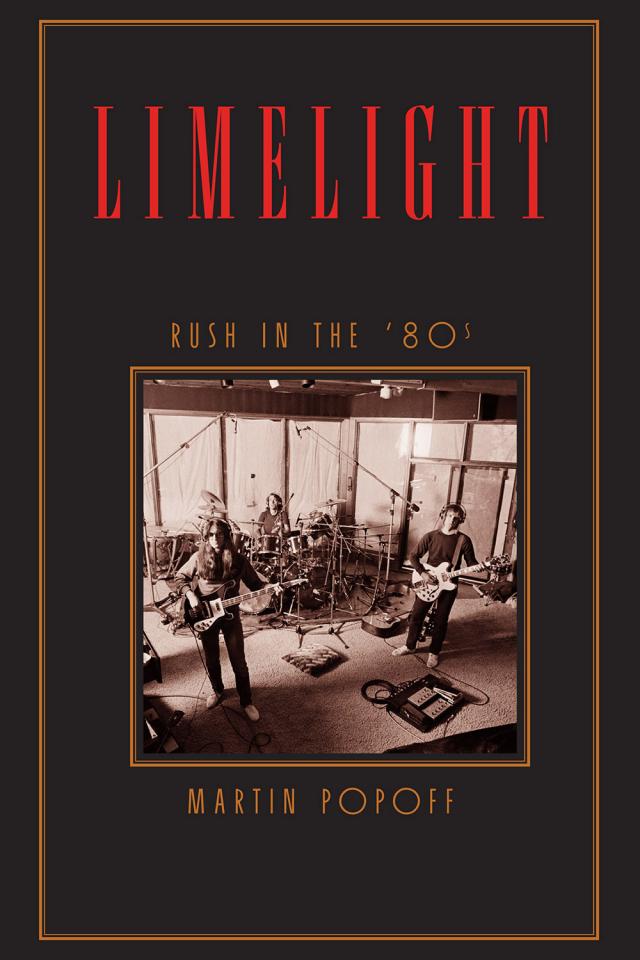
Limelight: Rush in the '80s, page 13


Next comes “The Analog Kid,” which represents a joyous expression of not only guitars but also guitar riff, perhaps an example of the kind of correction Alex talks about, with respect to the album needing more Lifeson. It’s only come chorus time that Geddy performs a synth wash of the listener’s brain. Otherwise it’s a wall of guitars, as applied to a fast-paced yet very melodic rocker. Through the first two tracks on Signals, it becomes apparent the band had found a plush blend of all their sounds, from sympathetic guitars through simple synths, down into gnarly enough yet not off-putting bass on top of smooth drums . . . there’s something creamy about Signals that makes even Moving Pictures — much vaunted and digital — sound like a demo. This might be the first and the last time every texture and frequency on a Rush album meshed with sonorous tranquility.
Neil’s lyric for “The Analog Kid” feels like a seamless continuation of the story laid out for us in “Subdivisions,” with a boy lying in the grass and dreaming about possibility. There’s even a love interest, with “The fawn-eyed girl with sun-browned legs” written as a tribute to a girl Neil met at fifteen while on family vacation in Ohio and subsequently wrote letters to the rest of the summer.
“It’s kind of that postadolescent period you go through,” explained Neil, during the album’s radio premiere group interview, “where everything but where you are seems to be larger than life. Whether you’re in the suburbs or a city or a small town, whatever, it all seems to be so gray, whereas when you talk about faraway places or think about London, England, or Los Angeles or New York, these places seem to be totally removed from your experience and they seem to be literally larger than life, such romantic things. And it’s basically a picture of that vision, you know, of being in what you’re used to and dreaming about what you’re not used to.”
Neil admits the nice turn of phrase in this one, “too many hands on my time,” was inspired by the Styx song “Too Much Time on My Hands,” inescapable on the radio in 1981.
Musically, “The Analog Kid” is comfortable terrain for Rush, and Neil gets that. “Certainly, our fans get impatient when we’re doing anything other than just ‘rock.’ I even understand all of them as a music fan, because you tend to grow and develop yourself that way in your appreciation. I never listened to lyrics when I was a kid — until I started writing them and took an interest in the craft and became sensitive. But it was guitars and drums, you know? That’s what I responded to as a teenager. I’m generous about this deliberately because I understand all the viewpoints and appreciate them all — and of course welcome them all. Anyone who likes our music, it’s wonderful, and for those who don’t, it’s wonderful too. We made it as good as we could, and that’s a work ethic I ascribe to.”
Asked by Greg Quill from Music Express about how his lyrics match up to the music, Neil says, “Many of the rhythm shifts and style changes the songs go through are actually built into the lyrics in some way. Other times we’re deliberately perverse. In ‘The Analog Kid,’ for example, Geddy and I were talking about possible musical treatments. When you read the lyrics, you’re right, it would have made a lovely ballad or a medium tempo soft rock piece. We said, all right, that’s what the lyrics suggest — let’s not do it that way. Let’s take an entirely different point of view, using two diametrically opposed dynamic approaches — hard rock for the verses and something really watery, almost angelic for the choruses, cut off the thrust of the song and back-pedal.”
Next up is “Chemistry,” which could have been called “Signals.” In any event, it serves as the album’s title track conceptually. Alex has called this one a true collaboration both musically and lyrically. In terms of the music, the band cooked this up during sound checks as a bit of an experiment where each member threw in a musical signature. Neil came up with the rhythms heard in the choruses, Geddy the synth washes in the bridge and Alex the jagged chords heard in the verse. Lyrically, Geddy and Alex had some phrases they sent Neil’s way, with Peart arranging them and adding to them, creating a song about actual chemistry and less knowable forms of chemistry like personal relationships, music and the paranormal.
Closing side one of the original vinyl is “Digital Man,” which might serve as Rush’s best expression of their love for what the Police were doing. Not only are the verses and choruses conceivable as Police-style reggae, but even the driving 4/4 rock parts, with Alex’s jazzy, rainy guitar, sound like the Police in heavy rock mode. Plus there’s a jammy instrumental break that evokes images of “Walking on the Moon.” If we didn’t get that this was progressive reggae but reggae all the same, Geddy sings of Zion, Babylon and tropical isles.
This track was worked on at both the Exit . . . Stage Left repair sessions and at the Grange in Muskoka, where Neil penned lyrics by the fire (this was March in Canada — still winter) and Geddy and Alex configured the music in the barn, which had been set up for jamming. Terry needed convincing about this one because of its obvious reggae influence.
Notes Paul, “The band always — and Geddy particularly — was happy to be influenced by people they liked. And for the fans, that’s something they appreciated and sometimes they didn’t. But from day one, where they used to be heavily influenced by Zeppelin, and then later, everything from the Police to Frankie Goes to Hollywood — they were quite happy to try to integrate it into what they did. At the time when the Police were really big, the guys loved them, and it’s obviously in there on Signals, on ‘Digital Man’ and ‘New World Man,’ where they sound not that much like normal Rush at all. But when they liked something, they would allow it to influence them and see where it took them. At the same time, you have to be objective to get the best stuff. You want to introduce ideas from other people, but then you have to make them your own and arrive at a place where you go, ‘Yes, this is good not just because it’s different and I’m bored, but good because it actually is a powerful statement, meaningful.’”
“That was the mishmash approach to trying to take diverse influences and make them work together,” noted Neil at the radio premiere. “It starts out basically as a hard rock trio, then goes into a ska or reggae style of rhythmic approach, then it has sort of a modern European contemporary approach to the sequencer chorus and then goes right back down to a basic trio again for the instrumental section, and then builds up through the changes again. It’s all very confused [laughs].”
“It’s all very confusing to me too,” seconds Ged. “We spent so much time on that, trying to get it to feel right. And for the longest time we had no faith in the song, and then suddenly it just blossomed. And now for me it’s one of my favorite songs on the album. It just works great. It was a battle to get all these influences to feel natural somehow, to feel like they worked. It was like fighting the machines around you for days, and then eventually it just came together.”
“Digital Man” features one of Neil’s most obscure early lyrics — perhaps he’s even writing a little new wavy, a little flippant. He’s explained that it’s essentially addressing what you’d think if you were a futuristic guy, or a “now” guy, on the cutting edge of current technology. It’s a stretch though to say there’s any thematic link to “Subdivisions” or “The Analog Kid,” as the band has suggested. This one’s closer to the oblique character portrait in “Tom Sawyer” than anything else on Signals. In any event, Neil says his lyrics on Signals are about reality, real people, even going so far as to say they are nonfiction — it has been suggested the inspiration for this one is Peter Jensen, who engineered the digital mastering of the Moving Pictures album.
Geddy put a finer point on the Jensen connection, telling Jim Ladd, “The song came out of a little bit of personal comedy. We had the title way before we had a concept. There was a guy we hired, I think it was on Moving Pictures, to bring all this digital equipment so that we could master the album digitally, and he was sort of a ‘strange’ example of modern man, without going into too much detail. We were sitting around talking, and Le Studio had gotten their own digital equipment, so there was really no need to hire our digital man this time.
“And we were trying to figure out beds, you know, bed assignments, how many guys in the crew we could take to the house near Le Studio, because the situation is you live right on the premises. So somebody came out with the phrase, ‘Well, I guess we won’t need a bed for the digital man’ and everybody went [snaps his fingers] ‘Fantastic!’ So we wrote it down and Neil developed a whole concept about the transience of modern man in the society we’re living in. That spurred the tune and the feel for the tune, but it represents technology getting to a certain point, the ease that one can float from one part of society to another, and one part of the world to another, the communications race and the whole situation.”
As for the reference to Zion, Geddy explains to Jim that “Zion is two states of mind really. There’s the Zion of the Rastafarians, which is really the one I guess we’re talking about; it’s supposed to be the homeland and the ideal. The Rastafarians are always trying to get back to Zion; they try to mold their lifestyle where they originally feel they come from. In that particular chorus, I think it’s sort of a perplexing situation with our digital man. Because here’s a guy working with modern technology and being as modern as you can possibly be, and yet he’s thinking about these simple soulful places like Zion. ‘Lover’s wings to fly on:’ it’s, don’t carry me away too much on these computer bits; leave something for my soul. There’s these digital men and women running around the world totally being trained and they’re like, ‘Yeah, I am the digital guy; I’m hip to this thing and I know the whole rap, and I have to inform everybody else.’”
The angular and electric reggae continues onto side two of Signals with “The Weapon,” designated Part II of “Fear.” The song stems from a drum machine pattern cooked up by Geddy and his friend Oscar, which Neil then had to learn on regular drums.
As Neil told Greg Quill of Music Express at the time, “Nowadays, lyrics seem to come first, simply because they establish a framework or a mood. Sometimes the other guys come in with lots of musical ideas that don’t have a place ’til the song is written. An interesting exercise in juxtaposition is ‘The Weapon.’ I had these really doomy, black images in there and Geddy had written a lot of the musical sections for it at home, as a sort of electro-beat, modern dance exercise. We weren’t sure that we’d ever use it.
“Now, because Geddy has to sing the words, a lot comes down to decisions he and I make. He persisted with his idea that we should approach the treatment again from a really abstract point of view, juxtaposing his electronic dance music with the dark, doom-laden lyric of mine, and making it work somehow. And I think we did. I’m really glad it took the brooding, heavy quality away from the lyrics. ‘The Weapon’ is part of a three-piece I’ve been working on, called ‘Fear.’ It has to do with the way fear is used as a psychological weapon against us all. To bring it down to mere words, I’m dealing here with religion and religiously controlled government, not necessarily with war or the nuclear arms race.”
Next is “New World Man,” which as an advance single had fans up in arms more so than “Subdivisions.” The jarring clash with past Rush values was not so much the reggae lilt or Alex’s benign Andy Summers guitar lines, but rather the sequenced synth part, which is almost comical in its nerdy new waveness. The song was designated Project 3:57 because that was the amount of time deemed necessary in order for the band to have a full album’s worth of material. It was written and recorded nearly spontaneously, in two days to be precise, which Neil figures might be a Rush record.
Explains Geddy: “That was something that started to happen early on. We always felt there was one more song we could put on a record. It started way back with 2112. ‘Twilight Zone’ we threw on at the last minute. We wrote it in the studio, recorded it, all over a matter of two days. And that became a tradition for us that we kind of looked forward to. What’s going to be the last-minute song on this record? Because so much of our stuff is rehearsed, planned out, it was nice to have something on each record that was off the cuff. ‘Vital Signs’ was like that too, as was ‘New World Man.’”
“‘New World Man’ would be the one I was thinking, hey, this sounds a lot like the Police,” figures Terry. “Deep down inside, my thoughts were ‘Why are we doing this?’ The Police are doing it so well themselves; why are we doing it? But we pursued it, and we made it unique enough that it has some interesting parts. And lyrically it has some substance. I’ve grown to love it over the years, but at the time it was a hard one for me to get my head around. It just seemed an odd way to go. I’m not really a big reggae fan, so that also affected the way I thought about it. If the band said to me, ‘We need some kind of influence; what do you think we should do?’ reggae wouldn’t be what I would have suggested.
“But it was a very commercial tune. I saw that, and I worked hard to make sure we put all the elements in and it sounded the way it should in order to come across as a commercial song. I don’t know if it was consciously commercial or subconsciously commercial. Invariably we would go in with a set number of tunes, and I would see the commercial aspect in a tune, like ‘The Spirit of Radio,’ which really wasn’t commercial, but it turned out it had so much energy and just jumped out at radio that it worked. But I’m sure if I took that into an A&R department at that time, from a different band, they would probably tell me to go home and rethink my career.”
Lyrically, Neil’s idea was to knit together some of the themes from the rest of the album, but more than anything, the character seems like an amalgamation of “The Analog Kid,” “Digital Man” and “Tom Sawyer.” For his part, Geddy associates it with “Tom Sawyer” and “Circumstances,” figuring the unifying concept of all three is Neil’s interest in change.
The song reached #1 on the Canadian charts, staying there for two weeks in October of ’82. In the U.K. it got to #42 and in the U.S. it hit #21, becoming and remaining the band’s only Top 40 single in the States. The song sensibly went into the band’s live set. But shockingly, moving forward, despite its being the band’s only U.S. Top 40 hit, between the years of 1986 and the retirement of the band in 2015, “New World Man” would be performed on one tour and one tour only, the campaign in support of Vapor Trails.
“Losing It” is the only so-called ballad on Signals, and the band’s first since “Different Strings,” if that could be called a ballad. Featuring a regal, renaissance waltz pattern and an A Farewell to Kings vibe, the song looks at two professionals losing their skills from age, a writer and a dancer. For the latter, Neil took some measure of inspiration from the Shirley MacLaine movie The Turning Point. The writer sounds very much like Ernest Hemingway, and indeed the final lyric is “The bell tolls for thee.”
Asked by Jim Ladd about this song and whether he fears “losing it” from growing old, Geddy says, “I don’t know if it’s necessarily by age, but of course I think anybody who considers themselves to be even a little bit creative has a fear that that’ll all suddenly be gone one day. I don’t think about it too much. I hope I don’t wake up one day and I’m, like, a cookie, ‘I can’t do anything but lie there!’
“I think it’s a fear that exists; to some artists it’s a devastating fear. After they finish a record, it’s like ‘Oh God, will I ever be able to do this again?’ I used to feel like that. After I wrote a song I thought was good I’d never think I could write a song I thought was good again. But you get more confidence in your ability. And the longer I’m in the business, I realize I’m getting a little loonier and I have a sort of lunatic confidence in myself. So I figure, ‘Okay, yeah, put me in any sort of situation and I’ll do it.’ I’m happy as long as I have something to do. As long as I have an album to work on or a song to write or a gig to do, that keeps me happy. I guess there’s a little bit of fear of growing old and not being able to do those things. I’d say it exists. I think it probably does in most musicians or in most people.”
Neil has indicated that a second layer to this tale posits whether ignorance is bliss when it comes to great talent. In other words, which is more tragic — never having mastery at a craft, or having it and then losing it?
Wrote Neil in the Signals tour program: “Like the verse sections for ‘The Analog Kid,’ the main theme for this song came from Alex’s holiday exercises (we all did our homework!). We worked out the verses and choruses while we were in rehearsal and made a skeletal demo of it with just keyboards and drums, then put it away until we got to the studio. We had talked for a while about getting Ben Mink to play electric violin somewhere on this album, and this seemed like the perfect track. Once we got into the studio, we developed the jazzy solo section, recorded the basic track and gave Ben a call. Fortunately, he was able to get away from his group, FM, for a couple of days and bring his unique instrument up to play his heart out for us. . . We worked him hard, squeezed him dry and threw him away. He just stood there in front of the console, taking it and giving it, fueled by occasional sips from a bottle of C.C. Not only the monumentally fantastic solo did we demand, but we had him multiple-tracking an entire string section as well. That’ll teach him to be our friend!”
Mink remembers what it was like working with Geddy for the first time. Ben would be deeply involved in Geddy’s solo album, My Favorite Headache. “It was the first time I’d worked with him,” recalls Mink, meaning Geddy. “FM was touring on the Moving Pictures tour with Rush and that’s where I met Geddy. We became fast friends, and then when they were working on the next record, he said, ‘You know, I think we’d really love to have the violin. Would you be into doing that?’ They sent me a cassette, which was the method of sending in those days, and then I went to Montreal, Morin Heights, and spent a day or two tracking and just having a blast. Just a wonderful experience.