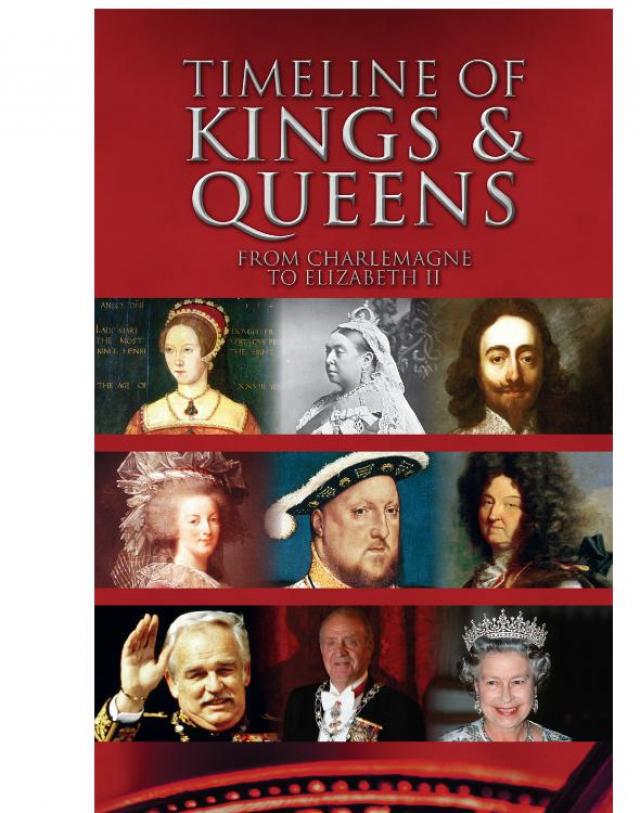
Timeline of Kings and Queens, page 5


1080
England William I writes to the pope to remind him that the king of England owes him no allegiance. Sweden Inge I becomes king, sharing the throne with his brother, Halsten. Denmark Canute IV becomes king.
1081
Wales Trahaearn ap Caradog, king of Gwynedd, is murdered by one of Gruffydd ap Cynan’s men; Gruffydd becomes king of north Wales, but spends the first 12 years of his reign imprisoned in England by William the Conqueror; his successors are styled ‘princes’, not ‘kings’. Sweden Blot Sven, brother-in-law of King Inge, overthrows him on a resurgence of pagan feeling against Christianity. Serbia Constantin Bodin, Mihailo I’s seventh son, becomes king of Duklja; he has been Tsar Peter III of Bulgaria for a short time, in 1072; Byzantine Empire Emperor Nikephorus III is overthrown by Alexios I Comnenus, ending the Middle Byzantine period and beginning the Comnenan dynasty; he revives the empire’s military, financial and territorial fortunes.
1082
Holy Roman Empire Henry IV, Holy Roman Emperor, besieges Rome and gains entry; a synod is agreed upon by the Romans, to rule on the dispute between Henry and Pope Gregory VII.
1083
Sweden Inge I kills Blot Sven around this time, and returns to the throne. Bosnia is conquered by Duklja. Hungary King Stephen is canonized and becomes patron saint of his country.
“I want there to be no peasant in my kingdom so poor that he cannot have a chicken in his pot every Sunday.”
Henry IV
1084
Venice Doge Domenico Selvo is heavily defeated at Corfu by Robert Guiscard’s Normans; a popular revolt peacefully deposes Selvo; Venetian nobleman Vitale Faliero Dodoni is elected doge. Holy Roman Empire Henry IV, king of Germany, is crowned Holy Roman Emperor.
1086
Rome Desiderius, the great abbot of Monte Cassino, is elected pope as Victor III. Denmark King Canute IV is assassinated in the church of St Alban at Odense; he is made a saint and becomes the patron saint of Denmark; his brother, Oluf I, becomes king.
1087
England William the Conqueror dies from injuries received falling from his horse, while besieging Mantes in France; William II Rufus, duke of Normandy, becomes king; Normans in England revolt in favour of his older brother, Robert, but they are suppressed; William is a ruthless and unpopular king. Germany Conrad II is elected king and crowned in Aachen. Hungary Former King Solomon I is killed in battle near Hadrianopolis, fighting with the Pecheneg tribe against his former kingdom.
1088
Rome Urban II is elected pope; he will launch the First Crusade, in 1095, and bring Sicily and Campagna under Catholic control.
1090
Ireland Domhnall MacLochlainn becomes high king, following an interregnum. Spain García II, former king of Galicia, dies in the monastery to which he was consigned by his brothers, in 1072.
1093
Scotland After a reign lasting 35 years, Malcolm III is killed at the Battle of Alnwick, while invading Northumberland; his son, Edward, is also killed; Donald III Bane, second son of Duncan I, becomes king; he expels the English from the Scottish court. Portugal Henry of Burgundy, who has fought in the Reconquista against the Moors in the Iberian Peninsula and helped King Alfonso VI of Castile and León conquer part of northern Portugal, is rewarded by marriage to Alfonso’s daughter, Theresa, countess of Portugal; he receives the County of Portugal as a dowry. Norway Haakon Magnusson, son of King Magnus, becomes king; Magnus Barefoot, son of Olaf III the Peaceful, declares a rival claim to the throne. Germany Conrad II betrays his father, Holy Roman Emperor Henry IV, by supporting the reforming Pope Gregory VII in their quarrel about Henry’s right to appoint bishops; the pope promises Conrad the imperial crown. Italy Conrad II of Germany is crowned king. Kievan Rus’ Sviatopolk II, illegitimate son of Izyaslav I, becomes prince of Kiev; his reign is characterized by incessant fighting with his cousin, Vladimir Monmakh, son of Vsevolod I.
1094
Scotland Donald III Bane is deposed; Duncan II, son of Malcolm III, who has spent his life at the English court under Norman influence, succeeds him; shortly after his accession, he is killed in a revolt against the Norman influence in Scotland; Donald III Bane is restored to the throne. Aragón and Navarre Pedro I becomes king following the death of his father, Sancho I, at the Siege of Huesca. Norway Haakon Magnusson dies; Magnus Barefoot becomes king; he conquers the Orkney Islands, the Isle of Man, the Hebrides and Dublin.
1095
Denmark Eric I, son of Sweyn Edrison, becomes king. Hungary Ladislaus I dies preparing to join the First Crusade; he has been one of Hungary’s greatest kings, conquering Croatia and enlarging his kingdom; he is canonized; Coloman, son of Géza I by a Greek concubine, becomes king.
1096
Venice Vital I Michele is elected the 32nd doge.
1097
Scotland Edgar, son of Malcolm III and half-brother of the murdered Duncan II, succeeds Donald III Bane as king.
1098
Germany Henry IV deposes his son, Conrad II, replacing him as king with his younger son, Henry V.
1099
Germany Henry V becomes the last king of the Salian dynasty. Rome Pope Urban II dies 14 days after the capture of Jerusalem by the Crusaders, but before news reaches Italy; the monk, Ranierius, is elected pope as Paschal II; he excommunicates Holy Roman Emperor Henry IV. Sweden Halsten dies, leaving his brother Inge as sole ruler.
1100
England William II Rufus is killed by an arrow while hunting – was it an accident or was it murder? Henry I becomes king.
1101
England Robert Curthose gives up his claim to the Anglo-Norman throne, therefore confirming Henry I as king of England. Serbia Constantin Bodin, king of Duklja, dies, setting off a dynastic struggle; his sons, Mihailo II Vojislav and Dobroslav II, rule jointly. Belarus Boris I becomes prince of Polotsk.
1102
Venice Ordelafo Faliero, son of previous doge, Vitale Faliero, succeeds him; he wars against Hungary from 1105 to 1115, recapturing Zara and Sebenico, and captures a part of Acre, in Syria. Poland Zbigniew and Bolesław III Wrymouth, sons of Władysław I Herman, rule the country jointly on the death of their father. Serbia Dobroslav III becomes ruler of Duklja; he is captured, castrated and blinded; Kočapar Branislavljević is brought to power by Grand Prince Vukan of another Serbian state, Rascia.
1103
Norway Olaf Magnusson becomes king, aged 4; his older brothers act as regents. Serbia Vladimir, oldest brother of King Constantin Bodin, becomes king of Duklja; he brings peace by marrying a daughter of Vukan of Rascia.
1104
Aragón and Navarre Alfonso I the Warrior, second son of Sancho Ramírez, becomes king; he reconquers substantial areas held by the Moors. Denmark Niels becomes the fifth son of Sweyn Edridson to become king. Holy Roman Empire Encouraged by supporters of the pope, Henry V declares that he cannot hold allegiance to an excommunicated emperor, his father, Henry IV; Henry IV is forced to abdicate and is imprisoned.
1106
England Henry I defeats his older brother, Robert Curthose, duke of Normandy, at the Battle of Tinchebrai. Germany Henry IV escapes from prison, and defeats his son in Lorraine, but dies shortly after. Belarus David becomes prince of Polotsk.
1107
Scotland On the death of the unmarried King Edgar, his brother, Alexander I, becomes king on condition that he gives his brother, David, an appanage – a title – in southern Scotland, possibly Strathclyde or Cumbria. Poland Bolesław III puts his half-brother, Zbigniew, to flight, and becomes sole ruler; Zbigniew joins forces with the Holy Roman Empire against Poland, but is defeated, and Bolesław later captures and blinds him.
1108
Scotland Around this time, Alexander I marries Sybilla, illegitimate daughter of Henry I of England. France Louis VI the Fat becomes king.
1109
León-Castile-Galicia After her only brother is killed in the Battle of Ucles, in 1108, Urraca, Alfonso IV’s daughter, becomes queen of Castile, León and Galicia, on her father’s death; she marries Alfonso I of Aragón.
1110
Holy Roman Empire Henry V invades Italy.
1111
Holy Roman Empire Henry V of Germany is crowned emperor after giving up his right to invest bishops; his decision is rejected by German bishops and princes; Henry takes the pope prisoner, forcing him to concede investiture rights; the pope later withdraws his concession and excommunicates Henry.
1112
Portugal On the death of his father Henry, 3-year-old Alfonso I Henriques becomes count of Portugal; his mother, Teresa, possibly aged only 18, rules as regent, but styles herself queen of Portugal; she fights to gain a larger share of the Leónese inheritance from her sister, Queen Urraca of Castile, León and Galicia. Sweden Philip Halstensson becomes king, he has to share the throne with Inge II.
1113
Scotland David, brother of King Alexander I, demands further titles and land; he is known as ‘Prince of the Cumbrians’. Hungary Coloman imprisons and blinds his brother Almos, legitimate son of Géza I, and his son Béla. Serbia Vladimir of Duklja is poisoned under the orders of Queen Jakvinta, King Constantin Bodin’s widow; she appoints her son George to the throne. Kievan Rus’ Vladimir II Monomakh, son of Vsevolod I, becomes prince of Kiev by popular acclaim.
1114
León-Castile-Galicia The marriage of Queen Urraca and Alfonso I of Aragón is annulled, due to consanguinity. Holy Roman Empire Matilda, daughter of Henry I of England, marries Holy Roman Emperor Henry V.
1115
Norway Olaf Magnusson dies; his brothers, Øystein and Sigurd I the Crusader, share the throne.
1116
Hungary Coloman dies, having retaken Croatia; Stephen II becomes king of Hungary and Croatia.
1117
Venice Doge Ordelafo Faliero is killed in battle against the Hungarians; Domenico Michele is elected doge; he fights successfully in the Holy Land and defeats the Greeks.
1118
Normandy A rebellion against Henry I breaks out in Normandy. Ireland Tairrdelbach Ua Conchobair becomes high king of Ireland. Rome Giovanni Coniulo is elected pope as Gelasius II; Holy Roman Emperor Henry V drives Gelasius from Rome and installs Burdinus, archbishop of Braga, as antipope Gregory VIII; with Norman support, Gelasius returns to the papal throne; he is driven out, once again, and goes to France where he dies. Sweden Philip Halstensson dies; Inge II becomes sole ruler. Serbia King George’s cousin, Prince Grubeša Branislavljević, deposes him as king of Duklja, following his defeat by the Byzantine Empire. Byzantine Empire John I Comnenos becomes emperor; during his reign, he attempts to reconquer all of the important Byzantine territory lost to the Arabs, Turks and Christian Crusaders.
1119
Rome Guy de Vienne, the son of William I, count of Burgundy and archbishop of Vienne, is elected pope as Calixtus II.
1120
Thomas Becket was born, the son of a prosperous London merchant.
England The White Ship sinks in the English Channel; King Henry II’s only son, the heir to the throne, William the Aetheling, is tragically drowned.
1122
Holy Roman Empire In the Concordat of Worms, Henry V renounces the right of investiture of bishops; Henry’s excommunication is lifted.
1123
Rome Pope Calixtus II returns to Rome and ousts antipope Gregory VIII, who is imprisoned. Norway On the death of Øystein, Sigurd I becomes sole ruler.
1124
Scotland Prince of the Cumbrians, David I, younger brother of Alexander I, becomes king, with the support of Henry I of England. Rome Lamberto Scannabecchi, cardinal of Ostia, is elected pope as Honorius II.
1125
Germany Lothair, duke of Saxony, is elected king on the death of Henry V, without issue. Serbia Former Duklja king, George, defeats and probably kills his usurper, King Grubeša, in Antivari, with Rascian help; George returns to the throne. Kievan Rus’ Vladimir II dies, following what is regarded as the golden age of the city of Kiev; Mstislav I, son of Vladimir II by his wife Gytha of Wessex, becomes prince of Kiev; his grandfather is Harold II of England.
1126
León-Castile-Galicia Queen Urraca dies in childbirth; Alfonso VII, the emperor, whose father is Raymond of Burgundy, is crowned king of Castile, Galicia and León, the first king in Spain from the House of Burgundy.
1127
Belarus Boris I becomes prince of Polotsk for a second time.
1128
Portugal effectively becomes independent when 19-year-old Alfonso I Henriques, count of Portugal, defeats his mother Teresa, ‘Queen of Portugal’, at the Battle of São Mamede, winning control of the County of Portugal; he also defeats Alfonso VII of Castile and León, freeing the county from its political dependence on Castile and León; his subjects declare him ‘Duke of Portugal’. Belarus Sviatopolk of Kiev becomes prince of Polotsk.
1129
Portugal Count Afonso Henriques is declared prince of Portugal.
1130
Sweden Sverker I the Elder, Blot Sven’s grandson, becomes king; he is the first king of the House of Sverker and Eric. Norway On the death of Sigurd I, civil war breaks out (until 1217) between two claimants to the throne, Magnus Sigurdsson and Harald IV Gille, son of Magnus Barefoot. Venice Pietro Polani is elected doge; there are protests because he is married to the daughter of his predecessor, Domenico Michele, and Venetians fear public positions being passed on through inheritance. Rome Cardinal Gregorio Papareschi is elected pope, as Innocent II; a group of cardinals elects antipope Anacletus II; Innocent II flees Rome. Sicily Norman nobleman Roger II, count of Sicily, receives royal investiture from Antipope Anacletus II; he becomes King Roger II of Sicily, which comprises Sicily and the southern third of the Italian peninsula.
1131
Hungary and Croatia Stephen II dies; Béla II the Blind, son of Almos, blinded by King Coloman in 1113, becomes king. Serbia King George dies, imprisoned by the Byzantine Empire, following defeat in the second Duklja–Byzantine war; Gradihna Branislavljević, brother of King Grubeša, becomes a Byzantine puppet king of Duklja. Belarus Vasil becomes prince of Polotsk.
1132
Kievan Rus’ Yaropolk II, another son of Vladimir II Monomakh and Gytha of Wessex, becomes prince of Kiev.
1133
Holy Roman Empire Lothair III, elected king of Germany, is crowned Holy Roman Emperor.
1134
Aragón and Navarre Alfonso I of Aragón leaves his kingdom to the Knights Templar; the Aragónese ignore his wishes, and Ramiro II the Monk, yet another son of Sancho Ramírez, becomes king; Ramiro is given special dispensation by the pope to temporarily renounce his monastic vows to secure the succession to the Aragónese throne; Navarre becomes independent once more, after 58 years, under García Ramírez, half-brother of Sancho IV, restoring the House of Jiménez. Denmark King Niels dies in battle in Schleswig; Eric II, son of Eric I, becomes king. Norway Magnus IV Sigurdsson defeats Harald IV at the battle at Färlev.
1135
England Henry I dies from food poisoning, after famously eating ‘a surfeit of lampreys’; Henry has stipulated that his daughter Matilda should become queen on his death, but her gender, and the fact that she has married into the House of Anjou, sworn enemies of the Normans, turns the barons against her; Henry’s nephew, Stephen of Blois, comes to England and claims the crown, signalling a period of unrest known as ‘the Anarchy’; Stephen will be the last Norman king of England. León-Castile-Galicia Alfonso VII of Castile is crowned ‘Emperor of all the Spains’. Norway Harald IV captures Magnus IV, blinds him and imprisons him.
1136
Wales Owain Gwynedd of Wales defeats the Normans at Crug Mawr. Norway Sigurd Slembedjakn, illegitimate son of Magnus Barefoot, murders Harald IV; Sigurd II Munn, son of Harald IV, becomes co-ruler with his brothers, Inge and Øystein; Harald’s killer, Sigurd Slembedjakn, makes a rival claim for the throne.
1137
France Louis VII the Young becomes king of France; his first wife is Eleanor of Aquitaine, who later marries Henry II of England. Aragón Ramiro the Monk abdicates and returns to his monastery; his daughter Peronilla becomes queen. Germany Lothair III dies while campaigning in Italy. Denmark Eric III, nephew of Eric II, becomes king. Sicily Naples is captured and integrated into the Kingdom of Sicily.
1138
England and Scotland The English defeat David I of Scotland in the Battle of the Standard. Germany Conrad III, grandson of Henry IV and previously a rival king to Lothair III, is elected king; civil war breaks out when he deprives rival Henry the Proud of his lands, the first manifestation of the struggle between the Guelphs and the Ghibellines, rival factions supporting the papacy and the Holy Roman Empire respectively. Rome Antipope Anacletus II dies, ending his rivalry with Pope Innocent II. Poland Bolesław III divides the country between his five sons, with the most important part being given to the oldest; this will cause fighting and disorder in Poland for 200 years; Władysław II the Exile becomes high duke of Poland.
1139
Portugal Following the Battle of Ourique, in which he defeats the Almoravids army, led by Ali ibn Yusuf and four other Emirs, Prince Alonso is declared King Alfonso I of an independent Portugal; he is crowned king in Bragança, the first Portuguese king of the House of Burgundy. Norway Pretender to the throne Sigurd Slembedjakn is imprisoned and executed by supporters of Inge I. Sicily Pope Innocent II recognizes the Kingdom of Sicily. Kievan Rus’ Vsevolod II becomes ruler, styling himself grand prince of Kiev.
1141
Hungary and Croatia Béla II dies of an over-indulgence in alcohol; Géza II is crowned king, aged 11.
1143
Portugal After years of bitter conflict, King Alfonso VII of Castile recognizes Portugal as an independent kingdom by the Treaty of Zamora. Rome Guido di Castello is elected pope as Celestine II; during his reign, the Roman people establish a republic to curb the power of the pope. Byzantine Empire John II Comnenus dies in a hunting accident, having recovered substantial territories for the empire; Manuel I Comnenus becomes emperor.