Poison in the Colony, page 21


A word about music and dance: Jamestown was the site of the first mixing of musical traditions from Europe, Africa, and North America. Music and dance are languages that all can speak. The combining of rhythms, instruments, and dance steps from these three distinct areas of the world has resulted in some of the forms we now know as traditional American music and dance. For example, the banjo was born of West African stringed instruments and the fiddle has a long tradition in Europe. These two instruments come together in American old-time string band music. Traditional dance from Ndongo, Algonquian traditional dance, and Irish step dancing were first introduced to each other during the music jams in Jamestown. Many dance historians believe that African, Native American, and British traditions later combined to create the quiet upper body, toe- and heel-tapping, high-stepping moves of Appalachian clogging. As both a musician and a dancer, it was fascinating to write about these jam sessions in early Jamestown and imagine that first coming-together of this melting pot of music and dance. Try this: watch clips of each of these types of dance and see if you can discern which elements of each became incorporated into traditional Appalachian clogging!
There are several ways to continue to experience what it was like in the Virginia colony during the early 1600s. Jamestown Settlement is where you will find the ships, cottages, muskets, an Indian village, reenactors, and even chickens all working together to bring those early years of the settlement to life. To see the archeological dig, artifacts, and parts of the original Jamestown church, visit Historic Jamestowne. There are also descendants of the Powhatan empire still living in Virginia. There are tribal museums to explore and powwow celebrations that are open to the public, with drumming, singing, dancing, and other traditional arts.
For more information about visiting Jamestown or to find out more about its history online, go to historyisfun.org/jamestown-settlement, historicjamestowne.org, and virginia.org/virginiaindians. Your time travel experience awaits!
Acknowledgments
I WOULD LIKE to thank the many fourth and fifth graders who wrote me letters to tell me how much they wanted a sequel to Blood on the River: James Town 1607. This book is for you!
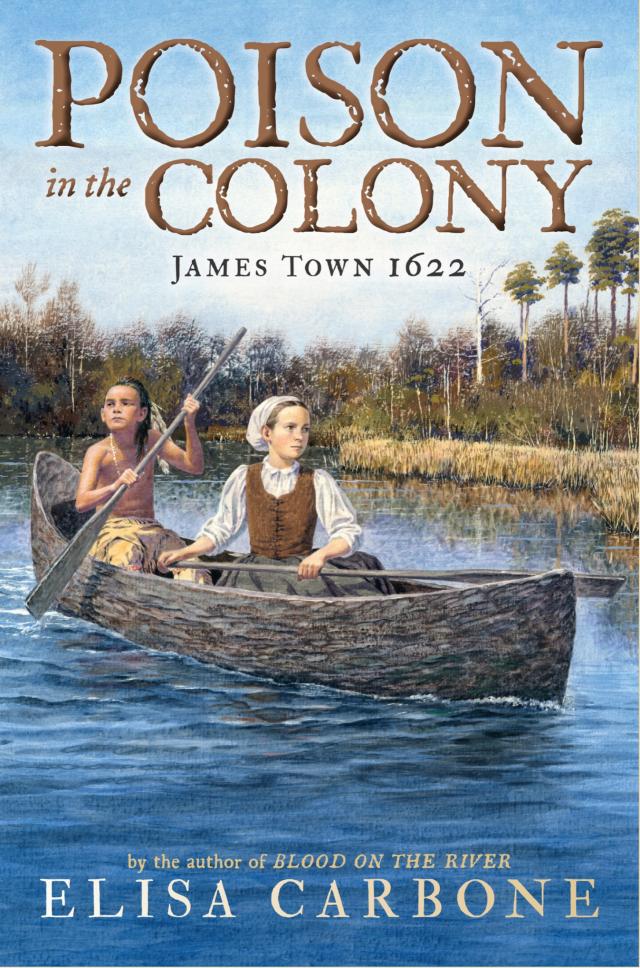
I would also like to thank my editor, Tracy Gates, for her belief in me and in this book, and for always knowing what my stories need to make them better. Many thanks to Nancy Brennan for designing the book so beautifully, to Bagram Ibatoulline for the gorgeous cover, and to the careful copy editors who do so much to help keep details accurate: Janet Pascal, Abigail Powers, Krista Ahlberg, Marinda Valenti, Laura Stiers, and Kaitlin Severini.
For my research I depended heavily upon some of the same sources I used in Blood on the River. I pored over the first person accounts written by the colonists themselves. I went back to my notes from interviews with historians at Historic Jamestowne and from powwows held by several Virginia Indian tribes.
Then there were the new things I needed to learn about, such as what it feels like to shoot one’s first deer, what it’s like to be highly intuitive, what you would do with a live fish in a canoe. These days, the internet can answer many questions, but I still find interviews to be an invaluable source. And so I would like to thank my willing interviewees: Nancy Doran of the Maryland Department of Natural Resources; Cynthia Sexton; Brigid Hopkins; Laurie Little; Shannon Warren; and the many reenactors at the Jamestown Settlement and Powhatan Indian Village.
While this is a work of fiction, I have strived to make this book as accurate and true to life as possible. Any inaccuracies it still contains are entirely my own.
About the Author
In addition to being a writer and historical researcher, Elisa Carbone is an accomplished rock climber, wind surfer, white water kayaker, and cross-country skiier. She has masters degrees in Communication and Education, and has taught on the college level. She now divides her time between Silver Spring, Maryland, and Hendricks, West Virginia. Visit her at elisacarbone.com.
What’s next on
your reading list?
Discover your next
great read!
Get personalized book picks and up-to-date news about this author.
Sign up now.
Elisa Carbone, Poison in the Colony