Chalice of Darkness, page 7


‘He is indeed. We’ll certainly have two tickets,’ said Jack, and Mrs Gurning beamed.
‘Only one and sixpence each they are. Proceeds go to the church – for Poor Relief and St Botolph’s – part workhouse, part orphanage, that is, and everyone’s always pleased to donate, and Chauntry’s very keen on helping the orphans. But I’ll find out when Ned might be available to take you out and about. Probably tomorrow, it’d be. Oh, and another letter came for you while you were out. Late morning post. I kept it behind the bar until you came in.’ She brought the letter over to their table, holding it up and examining it from all angles.
‘Thank you,’ said Jack, taking the envelope, which bore Byron’s distinctive scrawl.
‘And these are the tickets for the Chauntry concert. I’ll put the three shillings on your bill, shall I? Now, some folks go along in their own traps, but Ned will be bringing his cart to the market square at seven o’clock, and the school sends down its own wagonette as well – big lumbering thing it is, but it takes upwards of a dozen people. They make two or three journeys if they have to.’
‘That all sounds excellent. Thank you.’
As Mrs Gurning took herself off, Jack said, ‘Let’s have lunch, then go up to my room to read Byron’s letter. We’ll decide whether to see if we can walk out to Bastle House after that. I don’t know about you, Gus, but after coping with Meazles and Vallows I’m ravenous.’
‘I’m hoping to catch the ten o’clock post with this,’ wrote Byron, after Jack had unfolded the letter, and perched on the window ledge to read it to Gus. ‘I’m scribbling at a frantic rate, so I hope it will be readable. But I must say, Jack, that over these last two or three days I’ve become so absorbed in delving into the past that I’m beginning to find the present slightly disconcerting. I’m assuming you’ve read H G Wells’ The Time Machine? I’m starting to wonder if I might have stepped inside a similar contraption without realizing it.
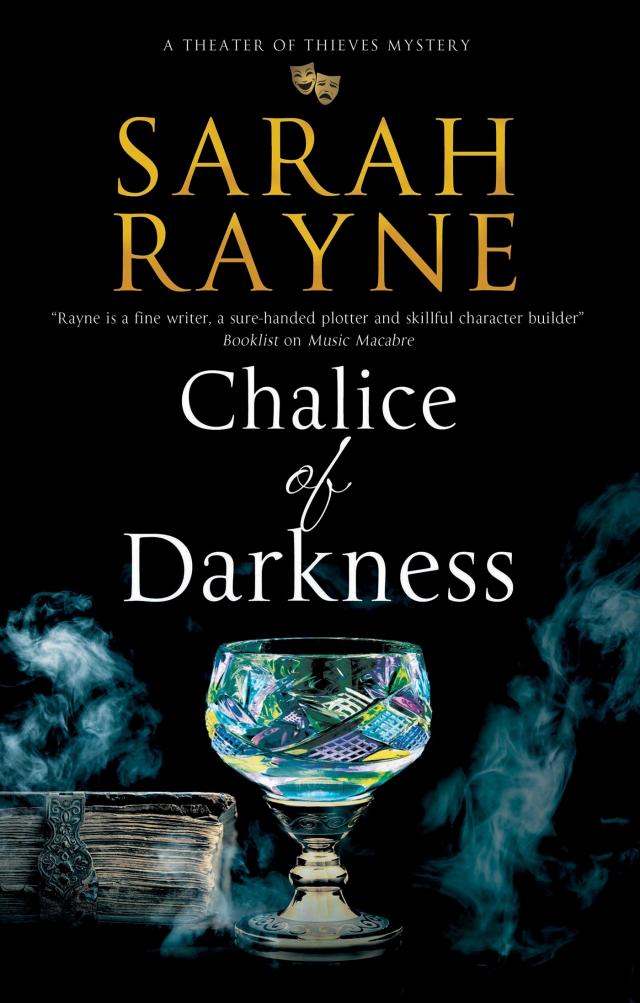
‘What I’ve discovered is that after Richard II’s death, his possessions – such as they were by that time – were scattered far and wide, so there’s no knowing what became of most of them. However – and it’s a fairly important “however” – in a very dull book about him there’s a reference to some of his things being taken to Ludlow Castle in Shropshire. I suppose whatever had been retrieved might have been regarded as Plantagenet relics or even heirlooms, so they’d be gathered up and kept. There’s the remains of an inventory – it doesn’t seem to mention the chalice as such, but it does say that a certain item “would better have been left in the dungeon, rather than carried forth to Ludlow Castle, there to spread its dragging darkness”. So I think we could make a reasonable assumption that the chalice did go to Ludlow.
‘But what I didn’t know is that some years later two young boys were brought to that castle. One was eleven or twelve years old, and his brother was slightly younger – around nine.
‘They lived and studied there, and it sounds as if some kind of librarian or under-chaplain acted as tutor, so I shall do my best to trace him. He isn’t named anywhere – at least not anywhere I’ve found yet – which is annoying of him, but he’s described as “a scholarly gentleman, much given to recording his work”.
‘But if I can’t name him, I can name those two boys. They were the never-to-be-crowned Edward V of England and his younger brother, Richard, Duke of York. The boys who were to go down in history as the Princes in the Tower.’
Jack was staring at the letter. ‘The Princes in the Tower,’ he said, half to himself. ‘The sons of Edward IV who vanished. My God, I hadn’t expected that.’
‘Nor had I. But even I’ve heard of the Princes in the Tower,’ said Gus.
‘In 1483,’ Byron went on, ‘those boys were taken to the Tower of London – in the belief that it was in preparation for young Edward’s coronation. No one has ever known what became of them after that, but to this day it’s believed they were murdered – with the murderer generally believed to have been Richard III, probably the most famous Wicked Uncle of all time. A good many people have questioned Richard’s guilt, though, and the truth has never really been known. Probably it never will be.
‘It’s impossible to connect the chalice to the princes – even to know if they would have been aware of its presence in Ludlow Castle. I’ve looked the place up, and it’s a vast sprawling Norman fortification, so it was probably possible to live there for years without going into every part of it.
‘But I shall continue to pursue all possible lines of research, and I’ll send everything I find to you with the speed of a winged Mercury – and that’s a very appropriate emblem, since as well as being able to dart between underworlds and overworlds and find ways around the boundaries of life and death, Mercury is also supposed to be the protector of travellers, thieves, merchants and orators. I should think the Fitzglen clan en masse would fall into any or all of those categories.
‘Good luck with The Quest.
‘Byron.’
SIX
After the astonishing night with the young man called Eddy, as December wore on Vallow Hall seemed to Maude to be even bleaker than ever. She took to wearing her warmest gowns and making sure to put a wool shawl around her shoulders before going downstairs for the day, and tried not to count how many weeks there were until the warmer weather came.
It was particularly cold on the day the morning post brought two letters, one addressed to Saul, the other to Maude. Saul read his over breakfast, frowning, and then looking complacent.
‘An unexpected meeting in Alnwick,’ he said. ‘All the JPs in the county are invited. It’s on Friday, which is only two days’ notice, but I think I should attend.’
He would attend, of course. He liked being a Justice of the Peace and regarded with respect and treated with deference, although he usually set off for Alnwick complaining about having to be away from Vallow for an entire day, and grumbling about the inconvenient train times. When he returned, it was always with an air of satisfaction, because he was pleased at having been able to exert authority and consign people to prison or levy fines which they would not be able to pay.
‘The meeting is at ten o’clock, though – very thoughtless of them. They know I have a journey of at least three quarters of an hour from Vallow,’ he said. ‘I shall have a word to say about that, although I don’t know who I’ll be speaking to, because I can’t make out the signature on the letter. Still, they’ve had the courtesy to send train tickets and they’re offering luncheon as well, which they’ve never done before. There may be a new treasurer or secretary. But the return train ticket is for a three o’clock train, which means I shan’t be back until after four.’
‘You could get an earlier train if the luncheon ends in time,’ suggested Maude.
‘No I could not, not when tickets have been bought and paid for by somebody.’ His mouth formed into a thin mean shape. ‘And what is your letter about, my dear?’
Maude wondered if there were households and marriages where ladies were allowed to have letters without their contents being questioned. But she seldom received a letter, so it was worthy of notice. It was not anything private, anyway.
She said, ‘It’s a note from Chauntry. I must have mentioned finding some Schubert songs, and they’ve asked if I could take one or two along for the pupils to practise for their end-of-term concert. It’s to be on the day before Christmas Eve, so they’d like the music before the weekend. As a matter of fact they say Friday would be a particularly convenient day, so I could go along while you’re in Alnwick.’
Almost from the beginning he had not liked her going anywhere or meeting local people more than necessary, but Maude did not think he would object to this. She suspected he wanted to remain in favour with Chauntry School in case there was ever a vacancy on their board of governors.
And after a moment, he said, ‘I suppose that would be all right, although I should have thought they would send someone to collect the music, rather than expect you to take it to them.’
‘I don’t mind. It’s a nice walk anyway, and it isn’t very far.’
‘It won’t be too much for you, will it? The walk?’
‘Oh, no. I’ve walked there a number of times, and they’re sure to ask me in. They usually offer a cup of coffee, too.’
‘You look pale,’ he said. ‘And you haven’t eaten any breakfast, I notice.’
‘I’m not very hungry. I had a cup of tea in bed.’
He was not really interested in whether she ate breakfast or not, and he had only said it because Agnes was in the room, waiting by the sideboard in case any more kedgeree or scrambled eggs needed to be spooned out for the master. He liked the servants to see him as a thoughtful and considerate husband. Maude sometimes imagined little scenes in which she had a furious row with Saul in front of them, shouting that he was mean and selfish and boring, and describing the horrible proddings and red-faced gropings in bed and how he only ever had a soft floppiness between his thighs, while other men—
But this was a thought that could not be allowed to take substance. In any case, Maude would never dare to speak like that to Saul, not in front of the servants and not in private, either. She could never let anyone know that after that night at Hymbre House she was now aware of what was supposed to happen in a bed and what was supposed to happen physically to a man. At the time she had been startled and nearly panic-stricken, but it was starting to feel like a good memory – something she would cherish. And Eddy had been kind afterwards – gentle and concerned about the blood between her thighs, and also tactful, suggesting she should tell the Hymbre House servants that it was – how had he put it? That it was the week for her head to ache. It had been a very delicate way of putting it.
When Maude came to think about it, she had not had a week when her head had ached since that night. It did not matter, though, and it was rather a relief not to have to bother with it.
After Saul set off for Vallow Halt and his journey to Alnwick early on Friday, Maude asked Agnes to unlock the music room.
‘I need to collect some music scores for the school. There’s no need to lock it again, because I might need to return some of the music. So leave it open until I get back.’
She found the Schubert songs easily enough, and fortunately they were in a small cupboard, so she did not have to ask Agnes to drag out the tapestry-lidded box that stood under the piano. There were four she could take. Lieder, they were called, of course: poetry set to music. She must remember to use the term when she saw the precentor at Chauntry later on. People said he had founded the music department when he was a young man, and had built up the school’s reputation over the years. Maude did not know him very well, but she had been to the school three or four times, and they often exchanged a few words after church on Sundays, which would be when the Schubert songs must have been mentioned.
She wrapped her thickest cloak around her and set off. It was very cold, but that would probably help to clear her head. She felt quite muzzy in the mornings these days – even to the point of feeling a bit sick sometimes. This was not something to mention to anyone, however. Aunt Hilda had always been very strict about not discussing bodily ailments, which was indelicate and could embarrass people. So Maude had not mentioned the vague sick feeling to anyone, and had got into the way of moving slowly when she got out of bed until the sensation passed, which it generally did by the middle of the morning. She managed to avoid actually eating any breakfast, which also helped. It was a pity she could not avoid Saul’s fortnightly fumblings in her bed too, because if anything was likely to make a person sick it was that.
The young man at Hymbre House had not made her feel sick, and he certainly had not fumbled. Walking along the damp gardens, with moisture dripping from the branches of the trees, she smiled. She would probably never see him again, but the memory was still a good one. And what they had done – what he had done to her – was clearly the act of love about which poets waxed lyrical and over which lovers sighed and vowed to count the world well lost. It was nice to think she could now have her own dream. It was a very slight one, but it was better than not having any dream at all.
Chauntry School stood in its own grounds, and it was a nice old building, greystone with ivy covering parts of the walls. Behind it were the fields where the boys played cricket. Saul sometimes grumbled that from the morning room he could hear them shouting, but Maude had never heard them and even if she had she would not have minded.
Usually when she plied the old-fashioned door knocker the caretaker answered it. He was a sprightly old gentleman who had lived in Vallow all his life, and been at Chauntry ever since anyone could remember. It was said that after a few drinks in the taproom of the Mercian Arms he would relate all kinds of colourful tales about the various families of Vallow and the surrounding districts. Lily, Vallow Hall’s kitchen maid, had told Maude that no one really believed the stories, but everyone liked listening to them.
Today, though, a complete stranger opened the door, and said, making it a statement and almost an identification, ‘Maude Vallow. I’m so glad you’ve come. I hoped you’d manage it. Come along in.’
Before Maude could explain about bringing the music, and ask how the man knew who she was, he said, ‘I saw you at Hymbre House a few weeks ago. We were both guests of Lady Hymbre, although I was more in the nature of the entertainment after dinner and we didn’t actually speak. I’m Connor O’Kane.’
Connor O’Kane. Memory went back to Eddy saying if there should be any trouble after their encounter she could get a message to him by way of two gentlemen. One of those gentlemen had been called Aiden Fitzglen and he had been something to do with a London theatre, which had sounded a bit daunting. But the other name had been Connor O’Kane, and seeing him now Maude recognized him from that weekend. He had had a violinist accompanying him, and they had played for the guests, for about half an hour – Chopin it had been. She had enjoyed it very much.
‘So I think,’ the young man was saying, ‘that we could regard that as an introduction, and you can quite safely come into the library with me.’
He smiled, and led her into the library. Maude had been in here before, and she always thought it was a welcoming room. There was a comforting scent of old leather and the feeling that it was a place where people would relax and read and talk. A fire burned in the hearth, and Connor O’Kane gestured to her to sit near to it.
‘And now, Maude,’ he said, ‘I have a confession to make. I’ve got you here under false pretences. This isn’t because of music scores – although I’m sure the school will be pleased to have whatever you’ve brought. But it’s something quite different. I have something here for you that a mutual friend asked me to bring and to deliver into your hands.’
‘A mutual friend?’
‘Yes.’ Connor O’Kane paused, then said, ‘His Highness, Prince Albert Victor, Duke of Clarence and Avondale.’
For a moment the words made no sense, then, as Maude stared at him, he said, ‘He’s the eldest son of the Prince of Wales. You knew him just as Eddy.’
Maude felt as if she had fallen into a deep well. The warm room receded, and although she thought she tried to say something, no words came.
As if from a distance, she heard Mr O’Kane saying in a concerned voice, ‘I’m sorry, I assumed you knew who he was—’
‘No … I had no idea—’
‘Sit down. And stay here – I’ll get someone to bring you a cup of tea, or even a glass of brandy.’
Maude managed to say, ‘A cup of tea,’ because however restorative brandy might be, she could not go back to Vallow Hall smelling of it.
There was a murmur of voices from the hall, and Maude tried to get her mind into place again. She felt weak and trembly, and she had no idea what she should do. She wondered, vaguely, how she would manage to get back to Vallow Hall, because she did not think she could even stand up, never mind walk back along Candle Lane. But when Mr O’Kane returned it was almost as if he had sensed this concern, because he said, ‘In a little while – when we’ve had our talk – I’ll get one of the men here to take you back to the Hall. Your husband won’t miss you for a few hours – he’ll be in Alnwick by now. He won’t be back until lunchtime at the very earliest.’
‘How do you know he’s in Alnwick?’
‘Because I’m the one who sent him the letter summoning him to a meeting there,’ said Mr O’Kane, and the smile came again. ‘There’s no meeting, I’m afraid. I faked the whole thing. Shocking, isn’t it? I found out all the details about your husband beforehand, of course – his position as a JP and so on. Occasionally I – or someone else – has to do this kind of thing for His Highness.’
‘Why?’
‘Usually to help him out of a difficult situation if he gets himself into one. He’s …’ There was a slight pause as if he were trying to find the right words. ‘He isn’t perhaps the most discerning of men,’ he said, carefully. ‘He sometimes misjudges what would be sensible or advisable behaviour, or doesn’t realize that he might be going into a situation that could turn out to be awkward, or to give people a wrong impression. There’ve been a few rather discreditable stories about him recently – stories of how he’s visited slightly questionable places and made unwise friendships …’ He frowned, then said, ‘But I’d stake my life that he’s never done anything cruel or hurtful, and he’s often misunderstood. He has a very kind side and a great sense of responsibility. That’s his upbringing, of course.’
His upbringing. His upbringing to fit him for one day becoming King of England.
‘I’m here today on his behalf and with the best of motives on his side,’ said Mr O’Kane. ‘I do want you to know that. The prince wants you to know it, too.’
The prince … The room tilted again, and Maude had to grasp the arms of the chair to remain sitting upright. She could not fit that title, that grandeur, into the image she had of the young man called Eddy who had been kind and tactful. And even loving – she would believe he had been that for that brief time they had been together.