Orpheus on the Underground and Other Stories, page 2


He nodded slowly and I knew he was probably right, but it did not bear thinking about and I hoped desperately that some other explanation would occur to me. I gazed around at the forest and it seemed unreal, like a dream or the memory of a dream. The aerodrome was real, not the trees and our little camp. A long time had passed since the crash, certainly more than three days. The world had changed around us while we were stuck in a ghastly warp. A new war had begun and this forest had been levelled to build an aerodrome. I read somewhere that ghosts are unaware they are dead and our situation seemed to prove the truth of this. Last night I had somehow managed to break out of the closed loop and enter the real world and converse with a living man. How amused he must have been to hear me call him the ghost! Everything around us, including the debris of our aeroplane, was a sort of solidified echo.
‘I can’t accept it,’ I responded petulantly.
He shrugged his shoulders. ‘What would it take to convince you?’
‘Some kind of test? Listen, there’s a village a couple of miles to the east. Just a few houses and a post office. We flew very low over it after our engines malfunctioned, in fact I thought we were going to dive straight into the middle of it, but I managed to lift the nose at the last second and crash in the forest instead. Anyway, here’s my suggestion. How about if we walk out of here and stroll into the village? If nobody can see us and we can’t make ourselves heard, that will prove we are really ghosts.’
‘But if we are not ghosts, there will be hell to pay if we leave the wreck unguarded.’
‘One of us will remain behind and the other will go. If you or I just turn up and start talking to people at random, they may think we are mad, so we’ll have to invent a reason. What if I write down our experiences as a story and mail it to one of the magazines that specialise in ghost tales? That will be a good excuse for entering the post office. If I can’t get served, we’ll know your theory is correct.’
He agreed and we searched our pockets for scraps of paper. I had a few sheets folded up inside my wallet and Cunningham had a blank envelope which he had kept for writing a letter to his sister. My pocket also yielded the stub of a pencil and I used this to write down the story you are reading at this very moment. I sealed the papers in the envelope and addressed it to the editor of the magazine. Then I ate a handful of berries, took a long drink of water and set off on my short journey. As I picked my way through the forest I kept expecting to come up against a barrier, some force that refused to let me stray beyond a small distance from the point of the crash. I suppose I believed that ghosts are condemned to exist in the vicinity of the place where they died. Nothing blocked my progress and I took this as an encouraging sign.
I soon stumbled onto a rough track that became wider and less muddy as I followed it towards civilisation. Within an hour I entered the tiny village. With a deep breath, I proceeded towards the post office, my heart racing. When I crossed the threshold I felt incredibly weak, but my spirits revived when the postmistress looked up and adjusted her glasses, bidding me a polite good morning. It was all I could do not to shake her hand vigorously or kiss her on the cheek!
‘I have a manuscript to send,’ I declared.
I gave her the envelope and she weighed it and quoted a price for the appropriate stamp. I paid the trifling sum and before I left I looked at her and said, ‘Soon be 1930.’
‘Next year,’ she replied mildly.
I was elated. ‘It has been a good year, 1929, hasn’t it? A good year to be alive.’
‘They all are, sir,’ she muttered.
‘Oh yes. And no hint of another war on the way—a second war with Germany. That’s fortunate, don’t you agree? No hint at all!’
She adjusted her glasses again. ‘Are you saying that you expect another European conflict?’
‘Yes, but not now. Because of the year! What year is it?’
‘1929, sir.’
She rolled her eyes in exasperation and I realised I had not handled the encounter well. But I had received the reassurance I hoped for. I hurried out and walked briskly back down the path and through the forest. Cunningham was sitting on a fireside stone, licking his lips. I was about to put him out of his misery and tell him the good news, but something in his expression made the words jam in my throat. He was so very pale that I wondered if he was a ghost, even if I was not. Perhaps just he had died in the crash? A sudden surge of courage unblocked my throat.
‘Put your mind at ease,’ I said. ‘The woman in the post office spoke to me.’
To my astonishment this news did not cheer Cunningham. He grew even paler. Then he began shivering and crying out broken phrases. Tears streamed down his face.
‘Ghosts, that’s what we are . . . Dead, all of us . . . We have passed beyond life and are cursed to haunt this spot . . . But I am doubly cursed . . .’
I laughed uncertainly. ‘She spoke to me and she knew the year. That aerodrome is a mirage from the future. We are not ghosts.’
‘Yes we are—and I am a murderer!’
‘Be sensible, Cunningham,’ I shouted.
He fell silent and his shoulders stopped shaking. Then he recovered the remainder of his composure and stared at me with a grim smile.
‘Your trip to the village has proved that we are ghosts because the postmistress spoke to you. We must be ghosts because she is a ghost. Let me make a confession. It wasn’t your flying skills that prevented us from crashing into the village. I lightened our load. While you were fighting to lift the nose, I released the bombs. They were fully armed.’
I shook him roughly. ‘Is this true?’
‘Yes. I scored a direct hit—on the post office!’
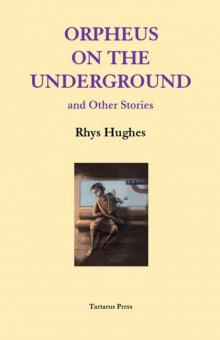
ORPHEUS ON THE UNDERGROUND
L o n d o n B r i d g e
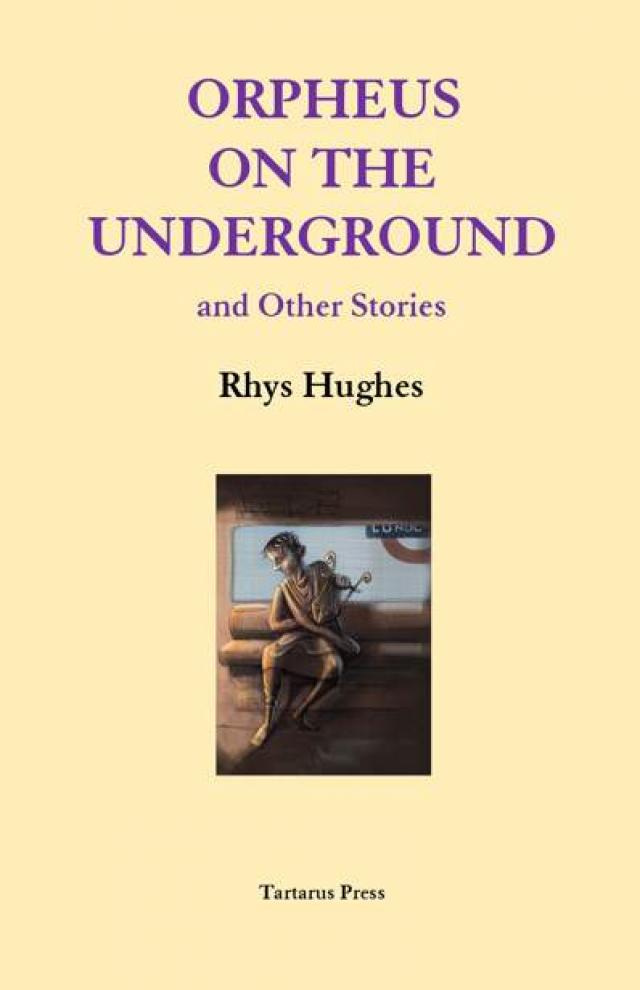
ORPHEUS HAS descended into the pit. He carries his broken lyre under his arm, as useless as the pennies he collected in his hat an hour earlier. They jangle in his pocket now, ready to make new music, a neurotic rhythm more compelling than his own obscure desires. He boards a train heading north and settles back in one of the torn seats. Life is dark and bleak as the stations slide by. The names of these are as exotic as anything to be found in Macedonia or Crete. He chants them to himself, as if together they can form a mantra of escape. Tooting Broadway, Balham, Stockwell, Kennington, Elephant and Castle. This last in particular amuses him. He is reminded of Pyrrhus of Epirus, who defeated the Romans at Heraclea with such beasts. He frowns at the memory. Music sustained him then and music will sustain him now. What else is there?
M o o r g a t e
A woman climbs on his train and takes the seat next to him. He is both alarmed and pleased at the prospect of striking up a conversation with her. She is young and smooth as marble; but her wry smile is old and wise. Her hair is as wine-dark as Homer’s eyes when he gazed at the sea. She wears a long dress with bells stitched to the hem. As he glances at her, she grants him the odd sideways look. He cannot fathom whether she is disturbed or excited by his attentions and believes he would rather not know. Better to preserve the illusion for at least a little while longer. Yet he senses a power in her lithe limbs. A power equal to his own or even greater. At last he can bear the suspense no longer and turns to her. She meets his gaze fully this time and her eyebrows arch in gentle mockery. ‘What is it that you seek?’ she demands. And he cannot snatch words, notes or a binding rhythm to answer her.
O l d S t r e e t
Suddenly art students swamp them; longhaired, paisley-bright, with eyes that are thumb smudges of pastels. The air is thick with their exhalations, a combination of cheap wine and expensive cigarettes, murky with their opinions. They hang onto the straps provided though there are seats free. They are like pendulums, he decides; pendulums of a clock gone awry, changing with the times but unable to keep time itself. Once I yearned to be like them, he ponders; once long ago. So long ago that it was in another world. A world where society had need of those things it now considers detritus. Still next to him, the girl disengages her soul from his, abandons him for a magazine. No, it is not a magazine. He glances at the cover, the title. It is no less than what he would have expected from such as her. He feels mistrustful, almost afraid of this stranger, and reaches into his bag, removes pen and paper and answers her earlier question by writing a single word. He folds the paper, passes it to her, cheeks yellow and sunken in the harsh electric light.
A n g e l
‘Your head?’ she whispers, crumpling up the paper and hurling it down the aisle of the carriage. He nods assent. ‘I have lost it.’ There is nothing more that needs to be said. He relaxes back into his seat and resumes his earlier introspection. Memories, always memories. But the girl is staring at him with renewed interest, so he adds details. ‘Down the River Mesta it floated; to the Lesbos of Sappho, Aesop and Arion, where it flirted with prophecy. Eventually its fame eclipsed the Oracle at Delphi and itinerant priests took to the road in its name. I wish to be reunited with it.’ He does not expect belief; nor does he desire sympathy. Shifting his lyre from one knee to the other, a lame note climbs along his thigh. He knows what she is thinking. ‘No, I’m not wearing the original. I took this one for the sake of appearance. A drunken tourist, a pool of dead water. I struck him, broke the spine of my instrument. Now animals and minerals no longer dance for me. But I have a skull, a nose, and a moving tongue. It is a poor substitute; I seek my own.’ He runs his fingers over his face, reaching into the hollows of his eyes like a climber searching for handholds. There is a long rattling pause. ‘I haven’t seen it,’ she says. There is bitterness in her tone like the taste of old garlic.
K i n g ’ s C r o s s
They wait in the tunnel between stations for a few minutes. He feels the pressure of her leg against his hip as she adjusts her position. His hips are bony, but hers are a lyre; surely. The train moves again, with a jolt, and passengers resume talking, as if the human voice is a machine powered from the same source as the wheels. He pushes his borrowed face, his stolen features, against the grimy window, squints beyond the reflective tendencies of the glass. Nothing but unadorned tunnel walls out there. Dirty but unbroken. He recalls the metro system in Madrid, the disused stations that no train stopped at, gone in a blink; the other passengers oblivious or uncaring. He says, ‘Do you care about mysteries?’ And she answers without hesitation, almost as if she has been waiting for this question. ‘Do I care about myself, is that what you mean?’
C a m d e n T o w n
All over the world he has roamed in search of his real head. The quests of men and gods are diverse and amusing, but he is only exhausted by the sad truth of endless search. ‘I still miss her, my wife, poor Eurydice; and even forty centuries falling like veils between her death and my life have failed to muffle the longing. Maybe I’m not really searching for my head or anything else. Conceivably, I’m merely killing time while I wait for time to kill me. There is an imperfect, and therefore pleasing, symmetry about that.’ But she has lost interest; he senses he will never impress her with portentous or sentimental statements. ‘Don’t you sometimes wonder if you ever really left Hades?’ she asks. He pouts at her and she adds, ‘I know you went there to get her back. And failed. As for myself, I’ve long suspected that I died ages ago, drowned in a storm, that this is the place where shadows walk. But everyone else calls it London.’ He laughs with authentic appreciation and nods vigorously. But no, the conceit is easily disproved. These are all flesh men and women around them; he has seen them cry and bleed. They hunger like him. ‘I busk for my living now,’ he admits, ‘and shadows have no coins to give.’
K e n t i s h T o w n
Her bells tinkle softly. She has crossed her long legs. ‘Dying is a tunnel journey also, so I’ve been told,’ she whispers, and he is unsure whether to respond. Finally he says, ‘Yes.’ Just that, for it will be more effective to reply with a visual example, when one presents itself. Then he frowns and asks her, ‘Why a storm?’ In her eyes he swims happily, his image like the distortion of a reversed spoon. Under the waves, everything is calm; this belief still consoles him when he contemplates the clash and foam. But he is wrong. ‘There is violence down there too,’ she replies. ‘No protection in diving deep, not always. Caught in a whirlpool, dancing with an octopus, torn apart by currents as vicious as the grip of the disappointed audience that ripped you to shreds, dislodging your head, when you refused to play an encore. Your murderers were all female, weren’t they?’ He nods a more careful nod than the one he might have made in his youth; such are the manners of those who steal heads. ‘Yes, the women of Thrace. For I had rejected their blandishments. Eurydice was fresh in my mind. Does that astonish you? I see that it doesn’t. Look out there.’
T u f n e l l P a r k
A large white form, ragged at the edges but coherent, like a scratched amoeba magnified tremendously. Drifting, accelerating, passing them, a howl frozen in its amorphous face, of joy converted to alarm. Then it is gone. Nobody else has noticed. To see, she had to lean across him; her breasts press against his chest. It is fine, curiously fine, to absorb even this tiny sexual affection and warmth. A token; but even one coin under the tongue is enough to pay the ferryman for passage across the river. I don’t disparage the minor pleasures of life, he tells himself. For intense moments she remains where she is. Then she straightens, frowns; her magazine slips to the floor. Not a magazine, he reminds himself. Music will sustain him whatever happens. She hisses, ‘What was it exactly? Clearly something we weren’t meant to see.’
A r c h w a y
That is not quite true. It has something to do with correct tuning, he tells her. ‘Our souls are finely tuned; that’s why we were aware of it. These people,’ he adds, with a gesture of rather limp generality, ‘are too blunt for the vision to penetrate.’ He reclines, closes his eyes, satisfied. ‘But that doesn’t answer my question,’ she objects. Without opening his lids, he explains his hypothesis with tact and gravitas. ‘People who die find themselves in a tunnel, drifting down it; they feel joy and concentrate on reaching the destination, whatever that may be. If they paid attention to the surroundings, they might observe the platforms of stations crowded with waiting commuters. All tunnels to the afterlife are no more than the conduits of an underground train system in some higher, or possibly lower, dimension. No more than that, but no less too. The entity we saw died just minutes ago; and its soul was passing to its own version of the afterlife down a metaphysical tunnel, this one.’ He finally opens his eyes and sighs. ‘A multitude of dimensions, all interconnected in a spiritual metro, where delays are welcomed, not resented.’
H i g h g a t e
The art students disembark here, some destined for the cemetery before the span of their years is done. They will picnic among the tombstones, believing the atmosphere to be romantic. The inside of the train is much quieter for their departure. The girl speaks to him again and for the first time he wonders why they don’t use their own language, the tongue they spoke back in the groves, on the shores. She says, ‘Have you declined since the days of the Argo? Sweeter and louder than the songs of my own daughters, you plucked and sang then. They wept when the ship passed safely. And the tears of mermaids are pure and fresh, of course. Was that your finest moment?’ He considers this question seriously and makes a provisional gesture of assent. ‘Perhaps. I have played festivals in many countries. Once I connected my lyre to an amplifier and a crowd of thousands swayed and listened. But they were drunk and high and might have been inclined to adore anything. Never was I offered a recording contract by a major label. But new fame isn’t what I crave. I still have the old, all of it; and nothing can remove that from me.’
F i n c h l e y C e n t r a l
He adjusts the tension of a string until it vibrates soundlessly to the pulse of his heart. Because she does not seem inclined to ask the question, he asks it on her behalf. ‘Why don’t I fix my lyre? It doesn’t look too badly damaged, merely a slight warping, but injured perfection is worse than healthy imperfection.’ Granting him a favour, an indulgence, she reaches out to stroke the curve of the instrument. He continues, ‘Every evening I attempt to fix it, with love and craft, but it breaks again the following day. A divine punishment for my actions, my failings.’ She blinks at this and he is pleased and relieved, for he feared derision. ‘I have often toyed with the idea of switching to the guitar, updating my act. But the laurel wreath doesn’t look right worn by a guitarist. People look at my lyre and don’t know what it is. They think it’s something only just invented.’ He smiles at the ignorance of the moderns, equal to the ignorance of the ancients, but focussed on different perspectives.
W e s t F i n c h l e y
Something in her manner changes. She stiffens. He wonders if he has offended her, but there is no obvious reason why that should be the case. She closes the magazine that isn’t one, rolls it into a tight cylinder. He says quickly, ‘A music score. The manuscript of a new piece?’ Before she has an opportunity to reply, he stammers, ‘Why don’t we form a band, you and me? Play together, I mean. A Duet.’ Her sharp tongue is protruding, tasting her options. But there is only the savour of disillusion on the tip. She answers, ‘I’m sorry. I don’t have a vacancy for a lyre. That’s the honest truth.’ Was that a deliberate pun? He can’t tell. ‘I have formed a small chamber group,’ she adds. ‘We are booked up for more than a year in advance. This new work . . .’ He understands. It wouldn’t be suitable for him. He is a busker; she is a concert professional.
W o o d s i d e P a r k
‘This is my stop,’ she says hurriedly. ‘It was nice to meet you again. I hope you find what you’re looking for.’ And to destroy the blandness of her comment he cries, ‘My head, you mean?’ She smiles. ‘Yes, that.’ She stands and straightens her skirt and strides for the automatic sliding doors; but on the verge of stepping onto the platform, she turns and smiles at him again, a proper smile this time, with her eyes. ‘Where did you get your legs?’ he asks. She answers without shame, ‘I took them for the sake of appearance. A drunken tourist, a pool of dead water. I saw no harm in the theft. Now dolphins and fish no longer swim for me. But I have thighs, knees and feet. They are a poor substitute for fins and a tail; but necessary.’ He lowers his gaze. ‘Goodbye, Terpsichore, mother of the Sirens.’ The doors slide shut, the train glides on.