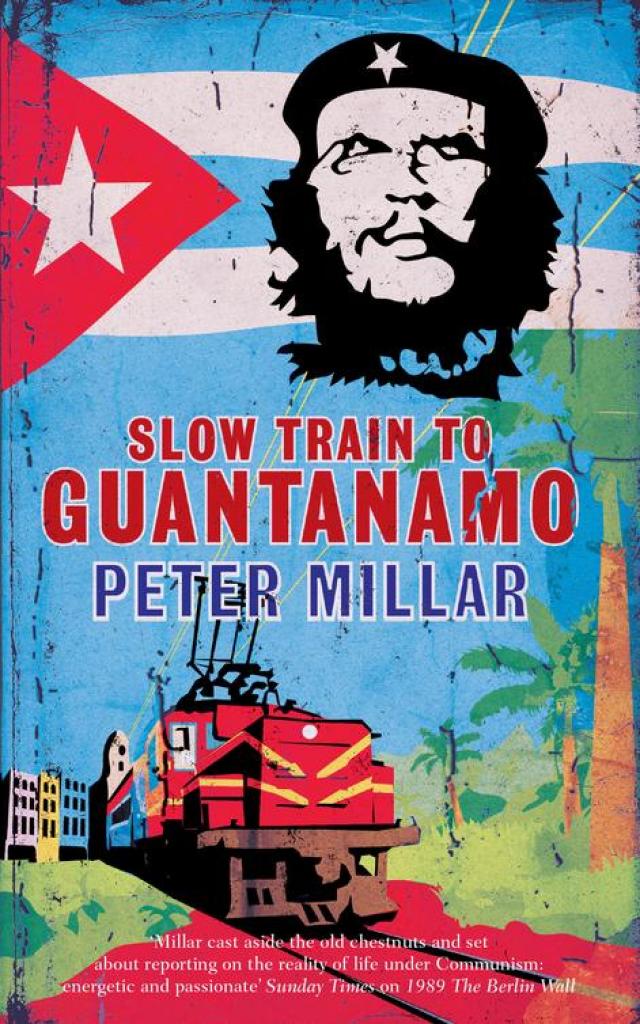
Slow Train to Guantanamo, page 26


The United States may have long shunned Havana and nurtured the dreams of exiles in Miami of going back, seizing property confiscated from them and ‘restoring’ the old ways. Of course, most of the younger generation hankers after rapid change, but even they – as I noticed sitting in Matanzas where Cubans were watching adverts during US baseball games for horrendously expensive health insurance policies – are proud of certain aspects of their way of life.
It could be a mistake to assume, as many people do, especially in the United States, that when the Castros go, the system will collapse and rampant capitalism will return, bringing with it wealth and democracy. There are other options, other arguments. The lack of US influence has undoubtedly aided the Chinese to become vastly more influential in Cuba, providing buses and locomotives, and of course there has always been a small ethnic Chinese element in Havana since the late nineteenth century, adding just one more trace element to the exotic Cuban racial mix.
China still claims to be communist in name and operates a rigid one-party system but it has delivered economic development and relative riches. It is possible that the current leadership in Havana is already thinking along the lines of similar economic relaxation without necessarily allowing the sort of free-for-all that US involvement would likely witness. There is also the fact that – even at the cost of individual freedoms – it is only since 1959 that Cubans have genuinely felt free as a nation, other than a colony or a puppet state. Even during the days of their dependency on Soviet support, the USSR was a long way away; the United States is uncomfortably close and for now at least still the only military and economic global superpower. Of course, the Chinese may have something to say about that too.
How political change will come is uncertain. Raúl has admitted that his generation made a serious mistake in not bringing up a wave of successors. Of the fifteen members of the politburo at the time of writing, six were born in the 1930s, and four in the 1940s. This is essentially a government of pensioners born in the first half of the twentieth century trying to legislate for the twenty-first. But then the situation in the Soviet Union in 1985 was very similar when a group of out-of-touch old men elected the relative youngster Mikhail Gorbachev, then fifty-four. The rest is history.
And even if that history may not have turned out the way many Russians would like with the Putin–Medvedev dynasty hardly an exemplar of democracy in action, still that system too has provided a better economic and social lifestyle for the great majority of its citizens. In 1985 it was unimaginable that impoverished Russians might ever travel in numbers abroad, now it is impossible to imagine the cities and beaches without rich Russians in their thousands.
There is a thirst for greater debate in Cuba, particularly in intellectual circles, but amongst the broad mass of the population the real thirst, it may seem a shame to say, is just for a better lifestyle: food, drink and material goods. In eastern Germany today I still know many who, although they would in no way wish the Berlin Wall back, still hanker for the simpler, older world when the state had all the answers and life did not involve dealing with a complex, competitive world of bankers, lawyers, mortgages, insurance companies. They tell me that even as they flick their fingers across their iPads checking out the price of holidays in Turkey.
Nobody today can visit Cuba and not wish this beautiful island and its people well. But the more they are allowed to sort out their future themselves, the more interesting it will be. In one way or another. Cu’a e’ Cu’a, after all.
About the Author
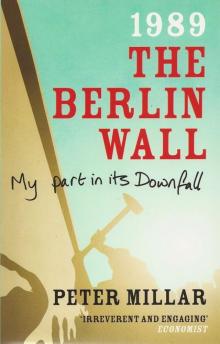
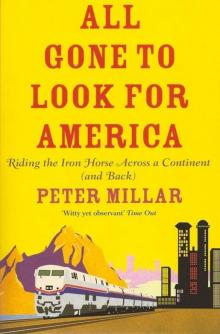
Peter Millar was born in Northern Ireland and educated at Magdalen College, Oxford. He has lived in Paris, Brussels, East Berlin and Moscow, and has worked for Reuters, the Sunday Telegraph and Sunday Times, with a brief intermission as deputy editor of Robert Maxwell’s European. He was named Foreign Correspondent of the Year in 1989, for his coverage of the latter days of the Cold War and Fall of the Berlin Wall. He is the author of four novels and four works of non-fiction, including 1989 The Berlin Wall (My Part in its Downfall) and All Gone To Look for America (Riding the Iron Horse Across a Continent and Back). Peter has also translated Corinne Hofmann’s hugely successful White Masai trilogy (The White Masai, Return from Africa and Reunion in Barsaloi) from German to English. He speaks French, German, Russian and Spanish and is married with two grown-up children. He splits his time between Oxfordshire and London, blogging on beer and sitting in the North Stand at The Valley with his fingers crossed watching Charlton Athletic.
Copyright
Arcadia Books Ltd
139 Highlever Road
London W10 6PH
www.arcadiabooks.co.uk
First published in the UK by Arcadia Books 2013
Copyright © Peter Millar 2013
Peter Millar has asserted his moral right to be identified as the author of this work in accordance with the Copyright, Designs and Patents Act, 1988.
All Rights Reserved. No part of this publication may be reproduced in any form or by any means without the written permission of the publishers.
A catalogue record for this book is available from the British Library.
ISBN 978–1–909807–08–2
This ebook edition published by Arcadia Books in 2013
Arcadia Books supports English PEN www.englishpen.org and The Book Trade Charity http://booktradecharity.wordpress.com
Arcadia Books distributors are as follows:
in the UK and elsewhere in Europe:
Macmillan Distribution Ltd
Brunel Road
Houndmills
Basingstoke
Hants RG21 6XS
in the USA and Canada:
Dufour Editions
PO Box 7
Chester Springs
PA 19425
in Australia/New Zealand:
NewSouth Books
University of New South Wales
Sydney NSW 2052
in South Africa:
Jacana Media (Pty) Ltd
PO Box 291784
Melville 2109
Johannesburg
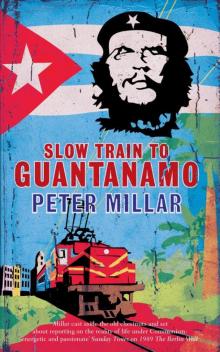
Peter Millar, Slow Train to Guantanamo