Lawyer for the Cat, page 2


This morning in the Probate Court I feel like a neophyte lawyer all over again. I don’t even know which way to turn when I get off the elevator. It’s reassuring, then, when the woman behind the sliding glass window says, “Ms. Baynard, Judge Clarkson’s expecting you. He’s in his chambers. First door on the left.”
The judge rises slowly from behind his desk, which is almost completely covered by stacks of files. “Old cases,” he says, “going to storage. Time to retire them, like me.” We shake hands. “Baynard,” he says, as if he’s taste-testing the name. He has a bulbous nose, outsized ears, a shiny bald head. “You married John Baynard’s son. From upstate, aren’t you?”
“Yes, sir. Columbia.” No need to go into the divorce if he doesn’t remember.
“This cat case … Have a seat.… Thought I’d seen it all until this one. Heard you like animals.”
“I like them, sir, but I’m not sure that qualifies me—”
“Oh, don’t sell yourself short.”
“I don’t do probate work, Your Honor.”
“I know that. You stay over there in the Family Court most of the time, don’t you?” He breathes heavily, as if talking is too much exertion.
“These days, yes sir.”
“Well, that’s perfect. Then you know how to handle yourself in a cat fight!” He laughs hard, pats his plentiful belly as if to congratulate himself on being so clever. “Seriously, I hear you don’t let anyone push you around.”
“Not if I can help it.”
“Heard about that dog case. You managed that one pretty well, I’m told.”
“It sort of settled itself.”
“Anyway, this cat case … very unusual. Ever heard of a pet trust?”
“Like Leona Helmsley?”
“Exactly. She set one up for her dog.… What was its name?”
“Trouble.”
“Right. Anyway,” the judge continues, “I’ve seen a few of these trusts since the law was passed here in South Carolina. They’re usually pretty straightforward, but this one’s got trouble written all over it!” Again he laughs, pats his belly. “But mind you, I’m not asking you to do this pro bono. There’s plenty of money in it for the trust enforcer.”
“The what?”
His chair squeaks as he swivels around to the bookcase behind him, pulls a volume out, opens the book to a page he’s marked. “Here. Section 62-7-408: Trust for care of animal. ‘A trust authorized by this section may be enforced by a person appointed in the terms of the trust or, if no person is so appointed, by a person appointed by the court.’ That’s where you come in. The settlor—that’s the deceased, Lila Mackay—didn’t appoint an enforcer, so I’m going to do that.” He slams the book shut. “You want my set of the Code? Can’t even give it away.”
“No, sir, but thank you.”
“I know, all you young’uns do your research on the computer, right?”
“I can’t really call myself a ‘young’un’ anymore, but yes, I do my research on the computer.”
“Not the same, though,” he says, “as with the books.”
“It’s faster.”
“Maybe, but you don’t feel the heft.”
“Sir?”
“These books, they’ve got the weight of history in them. Sometimes you need to feel it. Anyway, as I was saying, since Mrs. Mackay didn’t appoint a trust enforcer, I’m going to do that, considering the amount of money involved and the, uh, rather elaborate terms of the trust. Here, I’ve made a copy for you. Read on down to paragraph 5, and you’ll see what our problem is. Burney should have advised her against that, if you ask me.”
“Burney?”
“Her lawyer. Burney Haynes. Had his office out there on Edisto Island, near Lila. Honest fellow, but had no business handling an estate of this size. Never did understand the first rule of practicing law: Don’t mess around with what you don’t know. Dead now, so he can’t do any more harm. Take a look at paragraph 5 and you’ll see what I mean.”
I read out loud: “‘I hereby appoint one of the following as caregiver for my cat, Beatrice, to be chosen by the Probate Judge at the time of my death or at such time as I may become unable to care for Beatrice myself: Gail Sims, my groundskeeper; Katherine Harleston, Assistant Librarian, Charleston County Library; Dr. Philip Freeman, my nephew; or any other suitable person.’”
“Now,” he says, “does anything strike you as strange about all this?”
“This phrase ‘or any other suitable person.’ It’s almost like she wanted to make it complicated,” I say.
The judge nods. “Like I said, it’s unusual. Keep reading.”
“‘I direct that the chosen caregiver shall reside with Beatrice, during Beatrice’s lifetime, at my home, Oak Bluff Plantation, on Edisto Island, South Carolina, and shall endeavor to provide Beatrice with the same lifestyle, routine, and emotional environment as she has become accustomed to in my care.’”
“You see what I mean,” says the judge. “What the hell is a cat’s ‘emotional environment’? You can bet old Burney didn’t come up with that poppycock—it’s got Lila written all over it—but he should have advised her against it.”
“I guess ‘emotional environment’ means she wanted the caregiver to love the cat as much as she did.”
“Look at Paragraph 8.… You think fifty thousand dollars a year is enough for loving a cat?”
“Wow. And what’s this about some notebooks?”
“She left a box of stuff—I didn’t go through it, but it looks like she kept notes on the cat—and those go to the caregiver.” He points to two cardboard boxes on the floor. “I’ll have it all delivered to your office.”
“It’s an interesting case, but I don’t know what you need me for. There’s a trustee, right?”
“South State Bank, but their role is solely to manage the money. I need someone to choose the caretaker and make sure the cat’s properly cared for.”
“But this says … you’re to choose the caregiver.”
“Like I told you, old Burney should have advised her against that. I’m retiring.”
“I hadn’t heard that.”
“January first.”
“But couldn’t you—”
“I’m old, I’m tired, and my wife is ill. The new associate judge, Ann Wilson … I don’t want to burden her with something like this when she’s just starting out. You know Ann?”
“Not personally. She’s a good bit younger than I am.”
“You women are taking over,” he says. “Anyway, you’ll need to interview the people Lila named, then make a decision. Like I said, the statute gives me the authority to appoint a trust enforcer—that will be you—and the trust assets are quite sufficient to pay your fee.”
“What are the assets?”
“Three million, plus the plantation on Edisto—three hundred acres and the house.”
“Where did all that money come from?”
“Her husband, Verner Mackay, died a while back. A moneymaking machine if there ever was one. Kept up with the stock market minute by minute. Lila was the opposite. Never did care much about money, but when she met him she was about to lose her family place—Oak Bluff—and he was rich enough to keep it up.”
“You knew her well?”
“Distant cousin. She was always irrational about that old place. Should have sold it a long time ago.”
“What happens when the cat dies?”
“The money goes to the ASPCA, the plantation property goes to her son Randall. Which reminds me—steer clear of him.”
“He’s been calling me,” I say, “but I thought I ought to talk to you first, before I call him back.”
“He’s mad as hell because he won’t get his hands on the real estate until the cat dies.”
“I guess I can’t blame him.”
“But Lila was plenty generous to him when he was young, set him up in a string of businesses. All of them failed. He’s a spoiled brat, with a bad temper.”
“He’s dangerous?”
“Oh, I think he’s mostly talk, but he came up here the other day on a rampage, demanded to see me, went on and on about how his mother was incompetent when she arranged the trust. You go right ahead, I told him. You go hire yourself a hotshot lawyer if you want to, but I warned him that if he tries to set the trust aside on the grounds of lack of capacity, and he fails, he stands to lose the remainder—what he’s entitled to after the cat dies. Burney Haynes wasn’t the sharpest tack in the box but at least he remembered to include the standard penalty clause for contesting.”
Now I’m feeling like the neophyte lawyer again. “I don’t understand.”
“If he contests the validity of the trust and loses, and the court finds that there’s no probable cause for his challenge, he forfeits what she left for him. Lila was eccentric, but that’s not enough to set a trust aside.”
“How did he … the son … how did he even know I was involved?”
“Because I took the liberty of informing him that I’m appointing you as trust enforcer,” he says.
“But, sir, I haven’t even agreed—”
“Like I said, I’d steer clear of him. Randall’s always had a screw loose. Now, you better get to work.… Lila, bless her soul, would have approved of you. She was always a women’s libber.” He stands, shakes my hand. “You’ll want to get going on this right away,” he says.
“There’s a rush?”
“Well, I guess there really isn’t, as long as you don’t mind keeping the cat for a while. She’s out there with my secretary. You can take her now, or I’ll have her delivered to your office this afternoon.”
“I can’t take the cat!”
He smiles. “I’ve done my homework on you. You’re tough as nails. You were damn good in criminal court and you’re downright ferocious in divorce court, so don’t tell me you can’t handle a little old cat!”
* * *
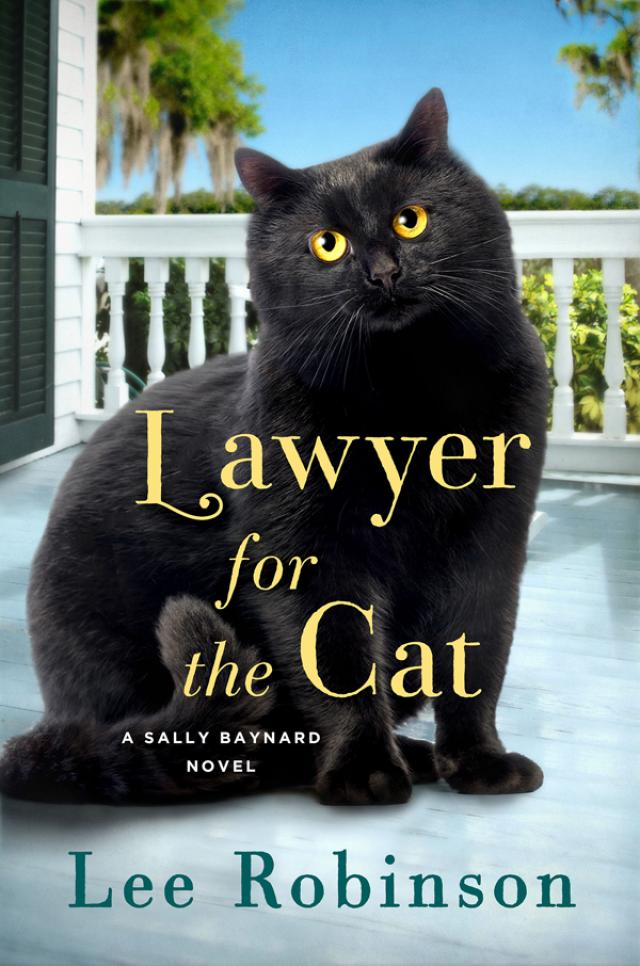
The two blocks back to my office are torture: How can a cat be so heavy? I hold the carrier by its metal handle until my fingers go numb, then pull it up to my chest and wrap my arms around it. The cat lurches backward, yowls. She’s all black, except for the eyes: huge, yellow, afraid.
He Doesn’t Get a Veto
Natalie Carter, my afternoon client, is waiting in the reception area when I walk in with the cat, who starts up again with her yowling. I can’t wait to put the carrier down—my back is killing me—and I drop it maybe a little too hard onto the floor.
“Jeez,” says Gina, my secretary. “She’s really upset.” She stoops down, peers inside. “Calm down, honey. We’re not going to hurt you.”
“I’m allergic to cats,” says Mrs. Carter. Natalie’s allergic to everything: peanuts, dairy products, her husband.
“I’ll watch her. I’m good with animals,” Gina says. “See, she’s already settling down, just being here. Isn’t that right, gorgeous? I knew you’d be fine once you got used to us.” It’s obvious the cat’s appearance is no surprise to Gina. I give her a look that says, We’ll talk about this later.
Natalie follows me back to my office. “So,” Natalie says as she settles herself on the sofa, crossing her legs and smoothing her skirt, “Derwood’s being a real bastard, isn’t he?”
“I knew he wouldn’t be easy to deal with.” In the days I was a public defender I had the misfortune of appearing before Derwood Carter, a Circuit Court judge from Beaufort, when he was presiding in Charleston. He’s a sanctimonious snob who doles out maximum sentences for minor offenses, giving speeches about moral rectitude. Meanwhile it’s common knowledge that he’s been bonking his court reporter for years. Now, in his own divorce case, he’s insisting on representing himself.
“But he’s worse than you imagined, right?” Natalie says.
“It would make things a lot easier if he’d just hire an attorney, but I can’t force him to do that.”
“He thinks he’s smarter than everybody else,” she says. “Including every lawyer in South Carolina, and including me, of course. He thinks I’m dumb as a rock, and maybe I am, putting up with him for twenty-five years. You know why I married him? Not because he was a lawyer, although I admit that didn’t hurt. Not because he comes from a fancy family.” She reaches in her purse for a pack of cigarettes, takes one out, then sees my expression. “Don’t worry, I know I can’t smoke in here.… Anyway, I married him because he told me I had the most beautiful body he’d ever seen. Can you imagine?”
No, I can’t. I know Tony likes my body, but even if it were perfect, which it certainly isn’t, he would never say anything like that.
“And this offer he’s made,” she continues, “just goes to show how dumb he thinks I am. Twenty percent of our assets, and no alimony. It’s insulting.”
“Let’s talk about a response, and if we can’t make some progress toward a reasonable settlement in the next couple of weeks, we’ll just have to battle it out.”
“I don’t think I can take it … a trial, I mean.” She clings to the cigarette as if it’s her only friend.
“You have a strong case. From the fault standpoint, we have the detective’s report, which clearly establishes that every time he travels out of town to hold court, he spends the night with his court reporter. And you—”
“But he says he’s earned all our money, and all I’ve done is spend, spend, spend.”
“You’ve got a solid record of homemaker contributions, Natalie, and you were his secretary while he got his law practice going, right?”
“But when I talk to him—”
“Stop talking to him.” I told her that last time we met.
“I know, my therapist says that too. But he comes by the house to check on things—‘my property,’ he calls it, as if I don’t have any right to live there—and then he wants to talk about the boys. He says this divorce is breaking their hearts. That they’ll hate me for it.” Now she’s crying. I hand her the box of tissues. She blows her nose. “You must think I’m just a big stupid baby!”
“I know it’s hard, Natalie, but you’ll get through it. Why don’t you take a break, have a cigarette? And while you’re outside, think about what you’re going to do with your life after the divorce. When you come back, I want you to tell me what you see yourself doing in five years.”
“Derwood says—”
“No, not what Derwood says. What Natalie says, what Natalie thinks, what Natalie wants. I want you to have a vision for yourself. Okay?”
When she leaves I pick up the phone, call the vet’s office. His receptionist recognizes my voice, says he’s busy with an emergency. “Maureen, I need to bring a cat in this afternoon.”
“She’s been here before?”
“I’m just taking care of her temporarily.”
“Then we’ll have to get the owner’s consent,” she says.
“I’m her temporary guardian. I have a court order.”
“Ma’am?”
“I’ll explain it when I get there. This cat seems kind of ornery, or upset or something. Maybe she’s sick. I don’t know anything about cats, so—”
“Bring her out around five thirty, then.”
* * *
When Natalie Carter comes back she seems more relaxed. “So,” I start, “let’s talk about five years from now.”
She takes a deep breath. “You’ll think I’m dreaming.”
“I’m listening.”
“I want to take over my dad’s landscaping business. It’s that little place out on Highway 21, you might have seen it. He’s ready to retire, and he’s talked about selling it, but I’ve always liked working with plants. I’ve done some small projects for friends. If I could partner with a landscape architect we could do … There’s a big demand now for designs using native plants.”
“That’s a great idea.”
“For example,” she says, going over to the window, “that garden there, behind the stucco house … it needs some help. I’m not talking about a manicured, formal look, but something graceful, casual, with plantings that don’t need a lot of attention.” Her hands move as if she’s designing in the air. “But I’ll need some money. I can’t expect Dad to give me the business.”
“You’ll come out of this with money, Natalie. I just can’t predict how much until we’re a little further along.”
“So you don’t think I’m crazy? I mentioned it to Derwood once and he said—”
“Derwood doesn’t get a veto.”
She smiles. It’s the first time I’ve seen her smile like this. “I like that,” she says. “‘Derwood doesn’t get a veto.’”
“So let’s talk about our counteroffer.”
* * *
When Natalie leaves I buzz Gina. “We need to have a talk about the cat.”
“It’s not my fault,” she says.
“You won’t be convicted without a fair trial.”
“She’s kind of settling down, so if you’re going to yell—”
I’m not going to yell. I’d like to, but I won’t. I know how this is going to go: I’ll tell Gina, very calmly, that I understand she’s friends with Maria Lopez, clerk of Probate Court, and I know they talk all the time. That’s how Maria heard about the dog case. That’s why Judge Clarkson thought of me for the cat case. Fine, so far; I guess I’m flattered. But there’s a difference between a cat case and a cat. I didn’t know I’d end up with a cat. But Gina knew. Of course she did.
Gina will say something like, But it’s not really such a big deal, is it? To keep her for a little while? And then she’ll remind me that pets aren’t allowed in her apartment building, otherwise she’d take Beatrice herself.