Lawyer for the Cat, page 14
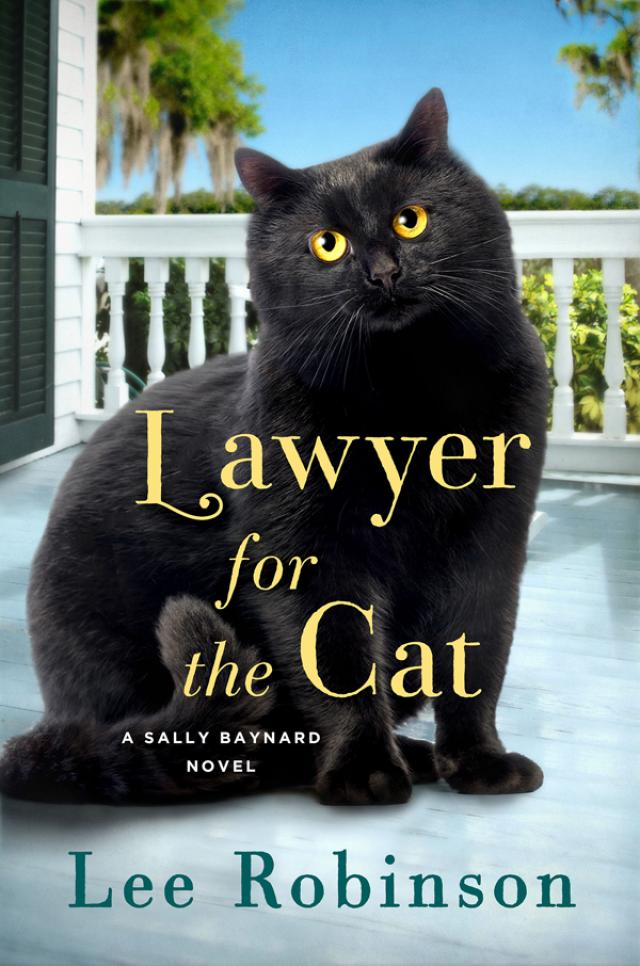


And there’s Beatrice. What’s left of love.
Those yellow eyes, so steady. Are they accusing me?
Abandoned trust.
* * *
The lobby of the hotel is white marble and mirrors, minimalist. A couple of chairs on one side, more like sculptures than furniture—nothing you would want to sit in—and the reception desk along the opposite wall, an expanse of gleaming marble. Too clean, I think, for commerce. A young woman stands behind it. She’s as exquisite as the white orchid in the vases behind her. I give her my credit card. She smiles a marble kind of smile. “Your room overlooks the park,” she says.
I can hear Gina: It’s just for one night, so you might as well live it up. And there’s great shopping right next door. I unpack, hang my things in the closet. I’ve brought too much, and in the elegant simplicity of this room all my clothes seem dowdy. Maybe I should go shopping. Gina again: Why don’t you treat yourself, just this once?
I set out with good intentions, but once inside the Time Warner Center I panic, rush past the ground-floor shops—Hugo Boss, Cole Haan; not in my league—and take the escalator to the second floor, where the offerings are less expensive but the stores more crowded. I try on a few things, reject all but one, buy it—more because I don’t want to admit defeat than because I like it. On the way back down, my new dress practically screams from the bag: What were you thinking? It’s cherry red, a slinky knit, too short for court, too loud for an interview with a poet.
Across the street, the park’s a refuge. It’s cold, but the sun has snapped the day alive with runners, babies in strollers, people walking their dogs, all the adults zipped up in practical black and gray, the babies and the fancy little dogs in fashionable outfits.
“Some people have too much money for their own good,” grumbles the old man at the other end of the bench.
I smile a noncommittal I don’t really feel like talking smile, but he’s determined: “There are children in this city who don’t have enough to eat, and look at that!” He points to a fluffy little dog sporting a plaid vest, prancing ahead of its owner. “What a country!” He takes equal offense at the cell phone ringing in my purse. “And those things! It’s an insult to the peace-loving populace!”
I get up, walk away, fish for the phone. “Gina?”
“What’s that noise?” she asks.
“I’m in Central Park.”
“I hate to bother you, but they want to do an interview.”
“Who wants to do an interview?”
“You remember that reporter from the Post and Courier who did the story about pet custody cases? She wrote a follow-up—about the cat case—in this morning’s paper. I guess you didn’t see it.”
“How does she know about the cat case?”
“They’re doing a profile of Judge Clarkson, I guess because he’s retiring, and he was talking about the unusual cases that come through the Probate Court, and he mentioned the cat case. So the reporter called here, and you were busy with a client, so I gave her a little background. She left a message for you, but I forgot to give it to you before you left and—”
“Slow down.”
“And now there’s this guy calling from CNN.”
“I’m not getting this.
“She—the reporter from the paper here—asked me if you were developing a specialty in animal law. And I must have said yes.”
This stops me in my tracks. “Oh, sorry, miss,” says the woman who runs into me with a stroller.
“I knew you’d be mad,” says Gina, “but I don’t see how this could hurt anything.”
“Send me the article. And what were you saying about CNN?”
“The guy who called is in Atlanta, but when I told him you were in New York, he said, great, he’d arrange the interview—”
“Absolutely not.”
“I gave him your number.”
“We’re going to have a talk about this when I get back.”
“What are you doing in the park, anyway? Dr. Freeman’s expecting you at five. Who goes to the Big Apple and hangs out in a park?”
“It’s nice here. Lots of trees.”
“You like the hotel?”
“It’s fine.”
“Pretty cool to have a TV in the bathroom, huh? You can take a bath and watch a movie.”
“I don’t take baths.”
* * *
But when I get back to the hotel that’s exactly what I do. On the bathroom counter there’s a collection of fancy soap, shampoo, and lotion. Lavender body wash, bath oil in little lavender-colored pods, a loofah, a miniature pumice stone. A coupon for 15 percent off on a $300 full-body massage.
I sink into the water, close my eyes, breathe the steam. The warmth takes me back to the apartment with Joe, such a long time ago, the second-floor apartment in the old house on Rutledge Avenue, the claw-footed tub in the dingy bathroom. We both preferred showers, but there was only a handheld sprayer, and the shower curtain wouldn’t close all the way, so we took turns sitting in the tub, one of us bathing while the other aimed the spray. And when I’d had an especially stressful day in court he’d run a hot bath with bubbles, settle me in it, bring me a glass of wine. That bathroom was so small the toilet was practically under the sink, but he made it seem like a palace.
Once, just before our divorce, when we were arguing all the time, he said, “Maybe you should take a hot bath.”
“If you could go back, do it over, would you?” Ellen asked me once a couple of months ago.
“I’d still be me, and he’d still be Joe.”
“Which wasn’t so terrible, was it?”
“Things would have gotten a lot worse if we’d stayed together,” I said.
“Maybe you’d have matured. You’re both decent people with lots of love to give.”
“He still wants what he always wanted. The house on Meeting Street, the Yacht Club, etc. I would have made him miserable.”
“And Susan makes him happy?” Ellen said.
“That has nothing to do with it.”
“I’m just saying—”
“What are you saying?”
“Just that, you know, relationships evolve,” she said. “And you know what I think? I think all your nonsense about not making him happy is … well, it’s just not honest. It’s a cop-out. What you really mean is, he wouldn’t have made you happy. You married him, and then you changed your mind.… Am I onto something?”
“Let’s drop it, okay?”
* * *
The hot bath has made me pleasantly woozy, so I stretch out on the bed, close my eyes. But the noise of the city won’t let me rest, the sirens, the horns, all of them setting off my mental alarm: Is Beatrice okay? And what about Mom? When my cell phone rings, the familiar sound is a relief.
It’s CNN, someone named Jillian who sounds very young, very nervous. It’s such a lucky coincidence, she says, that I happen to be in the city at the same time she’s working on “this in-depth, really fascinating piece about lawyers who advocate for animals,” and when I stop her, explain that my experience in this area is really quite limited, she doesn’t seem at all disappointed, she prattles on and on—“We just want a human face behind the story”—until before I know it I’ve agreed to “a very quick video session that won’t take more than ten minutes,” tomorrow morning. Do I mind coming to the studio? It’s not far from the hotel. I want to say, No, I’m sorry, I don’t have time, but her voice is so plaintive—she wants this so much, she needs it, this young woman at the beginning of her career—that I agree.
Just before I hang up she says, “Oh, and when you come to the reception desk, ask for Brian Hancock. He’ll be doing the interview. I’m just an intern.”
The Human Parade
The doorman nods. “Fifth floor, then it’s down the hall on your left, last apartment on that end. If he’s listening to his music he won’t hear the doorbell. Just keep ringing. He’s there.” And indeed, as I stand outside Apt 5L, I can hear a Brandenburg Concerto. I press the button, press it again.
“Coming! Coming!” Dr. Freeman yells, flinging the door open. He’s in his bathrobe, his long gray hair matted on one side, standing out like a fan on the other. “I was just … Won’t be a minute. Don’t try to make friends with the Sphinx,” he points to the gray cat on the sofa. “He doesn’t tolerate intrusions.”
I’m glad to have this time to look around. The furniture’s drab, stuff that might have been fashionable in the fifties but now looks bleak and worn. There’s a half-dead ficus in one corner. The kitchen’s tiny, dingy but uncluttered: not much cooking goes on there. Except for an old upright piano—the bench piled high with what must be several months’ worth of The New York Times—all the available wall space is taken up with bookshelves. This is his obsession: poetry, hundreds of volumes in alphabetical order. When I reach up for one of the books, the cat lets out an unfriendly “Yee-ow,” as if to say Keep your hands to yourself!
“You’re welcome to borrow that if you like,” Dr. Freeman says behind me. “But please sign for it and return it.” He points to a notebook at one end of the dining room table. He’s dressed now, in corduroy slacks and a tweed jacket, his hair combed back away from his face but still unruly, like smoke after an explosion.
“No, thank you, I won’t have time to do any reading while I’m here.”
“Oh, my dear,” he says, “one should always take time for poetry. Would you like something to drink? I’m afraid my offerings are rather limited: tea or scotch. Or water, if you’d prefer.” I opt for water. He pours himself a generous dose of single malt. “But you’ve come on a mission, so let’s get our business done and then we’ll go across the street for some nice Italian. She would like that.”
“Excuse me?”
“My aunt, the one who brings us together! Lila was always worried I might turn into a hermit. I had to remind her that being alone is different from being lonely. Who could be lonely, with all these friends?” He gestures toward the books. “Sure you wouldn’t like some scotch? Our reservation isn’t until six.”
I take the scotch, and though Dr. Freeman insists that I should interrupt him if I have any questions, he tells me more in his rambling monologue than I would ever learn from the list of questions I’ve prepared. He talks and talks, refilling his glass as he goes, sometimes rising and walking around the room, glass in hand, once accidentally splashing a little toward the cat, who’s lying on one end of the sofa. Now and then he laughs at his own story, throwing his head back with a high-pitched howl, and even then the cat remains unperturbed, as if he’s heard this before.
“Lila was like a mother to me,” he says. “My own mother—her sister—did her best to change me. She called me her ‘sissy boy,’ sent me to a therapist. Lila was appalled. She was quite open-minded about such matters, for her time. That’s how I came to spend so much time in South Carolina, mostly in the summertime. But I didn’t get along with Randall, who teased me mercilessly.… But I’ll come back to Randall.
“Lila encouraged my writing,” he continues. “Offered to pay my tuition at Columbia, but I got a scholarship. And later, after I’d gotten the job at NYU, she helped me with the down payment on this apartment. She sent me a generous check every Christmas. I had my salary, but her contributions allowed me to spend my summers traveling, writing. She was my patron, not just financially, but emotionally. So different from my parents, who wanted me to go into the law, or medicine.” He fills our glasses again. “Both honorable professions, to be sure, but not what I wanted. Lila understood that. I owe her my life, really. She gave me my independence. ‘Follow your heart,’ she said when I told her about Jeremy. We were together for twenty years. But that is the irony, you see. The same woman who encouraged me to live my life as I pleased, this woman now wants to control me. From the grave.”
“I don’t understand.”
He’s agitated now, sweating. The cat yawns. “She knew how much I love this city. My life is here. How could she ask me to give it up? I’m retired, but—”
“Maybe she thought she’d be doing you a favor, letting you live in the house where you spent so many happy summers.” Why do I feel the need to defend her, this woman I never knew? “And besides, she named two other people, so maybe she didn’t want you to feel pressured.”
“Indeed.” He smiles. “But don’t you see? It’s almost like a game. She sets up this trust, all this money and property tied up for a cat.”
“But you like cats, obviously.”
“I like cats, yes. However, should I predecease the Sphinx here, I’ve arranged for him to live with one of my former students. The Sphinx, as mysterious as he may seem, is a creature with simple needs. He doesn’t require an apartment on West Sixtieth with a doorman. My assets will go to charity.… No, as I was saying, Lila is playing a game with us. With you.”
“She didn’t even know me. She left the job of choosing Beatrice’s caregiver to the probate judge in Charleston, but he—”
“Yes, yes, you explained all that in your letter. But this is no accident, this conversation. If the good judge hadn’t shirked his responsibility, I’d be having it with him. And wherever she is—granted, I’m no believer, but she’s listening—Lila hears me say, ‘No, I’m sorry, I won’t do it.’ And she knows how guilty I feel.” He looks at his watch. “One more thing before we go to dinner—so that you don’t agonize over your decision too much—in her later years, my aunt always felt unappreciated.”
“I suppose that often happens to old people.”
“No, no … What I mean is, she wanted what we all want, what is at the heart of all our striving, all our loving … perhaps all our poetry.… She wanted to be understood.” He stands, takes my empty glass. “This isn’t about who’s best for the cat, it’s about Lila. She set up this legal instrument as a game, the object of which—remember?—is to find the caregiver who can provide the same ‘emotional environment’—those were her words, weren’t they?—as she provided for Beatrice. So all this is really about understanding Lila. How she lived, how she loved, what mattered to her. In short, who she was. When you understand her, then you’ll make the best choice.”
“But her son claims she was demented.”
Dr. Freeman laughs again. “Not in the slightest. She did all this on purpose. She was bound and determined that we’d pay attention to her, even in death!… Now, my dear, shall we dine?”
* * *
“This was Lila’s favorite restaurant,” he says as the maître d’ leads us to a table. “She insisted on sitting near the window, where she could watch the human parade. That’s what she called it, ‘the human parade.’ She was like a child sometimes, enormously curious. She could entertain herself just watching the passersby.… At the museum once—I think it was the Met; yes, we were in the American wing—she struck up a conversation with a total stranger, an art student, invited her to join us for dinner.”
“The usual, Dr. Freeman?” asks the waiter. “For you and Mademoiselle?”
“If she’ll trust my judgment,” he says, but doesn’t wait for my answer. “And a bottle of the sauvignon blanc, please.”
“I’m surprised,” I say. “I had the impression she was a loner.”
“In her last years, yes, because she insisted on staying in that house—rather remote, don’t you think? So many of her friends were too old and frail to visit. But in her younger days she was quite the hostess … always surrounded herself with the most interesting people. Writers and artists, as long as they weren’t pretentious—she couldn’t abide pretentious people—and even a lawyer or two every now and then.” He smiles. “She’d say, ‘I’m having one of my potluck parties. She’d invite six people, tell each to bring another guest or two and something for the table, she didn’t care who or what, as long as the people were interesting and the dish was edible. But they were almost never Verner’s kind of people.”
“Her husband?”
“Yes. Poor Verner. She overwhelmed him. He was a genius with money—commodities, I think—but socially, and in every other respect, quite unimaginative. He spent most of his time at their house in Charleston.”
“So it wasn’t a happy marriage?”
“She realized early on, I think, that she could maintain the arrangement as long as they didn’t spend too much time together. She had what she wanted. She had her place on Edisto and the money to keep it up. Her books and her parties. And Randall, though God knows that didn’t turn out well.”
I tell Dr. Freeman about my encounters with Randall. “He scares me.”
“I haven’t seen him in years. Have no desire to. He’s made it very clear that he despises me.… But he is, like all of us, the product of his upbringing. Lila chose her life at Oak Bluff over Randall.” He sips his wine. “But I don’t mean to sound so harsh. A toast to her! To Lila, who brought us together!”
I lift my glass. “Why did she have to choose between the plantation and her son?”
“By about age twelve he was already getting into trouble. Petty theft, minor vandalism. Verner realized Lila couldn’t manage him, put him in private school in Charleston. She would come into town on weekends, but most of the time she stayed on the island. She wouldn’t consider moving back to town. Who knows, perhaps if she had … Randall would be different.”
“You know he’s threatening to set the trust aside?”
“I’m not surprised. I’m sure he’s furious.”
“But it would be an uphill battle,” I say, “and if he loses, he forfeits his share.”
“You should be very wary of Randall. You know about the incident with her bank account?… No, how could you—she didn’t take any legal action against him. Some time ago … after Verner died, about fifteen years ago, I think, Randall offered to help her with her bookkeeping. It wasn’t that she was incapable, just that financial matters always bored her. She should have hired someone, but she didn’t want to spend the money. She was so generous toward others, but when it came to her own needs, she could be irrational.… In any event, Randall convinced her to add his name to her investment account, her checking account. He paid her bills. I suppose she was relieved to have someone handle things, and perhaps she was pleased that Randall was paying some attention to her, after all those years of emotional distance. But it was an extremely unwise decision. By the time she caught on, Randall had withdrawn almost a hundred thousand dollars. He had the gall to claim she’d agreed to pay him a salary!”