Lawyer for the Cat, page 19
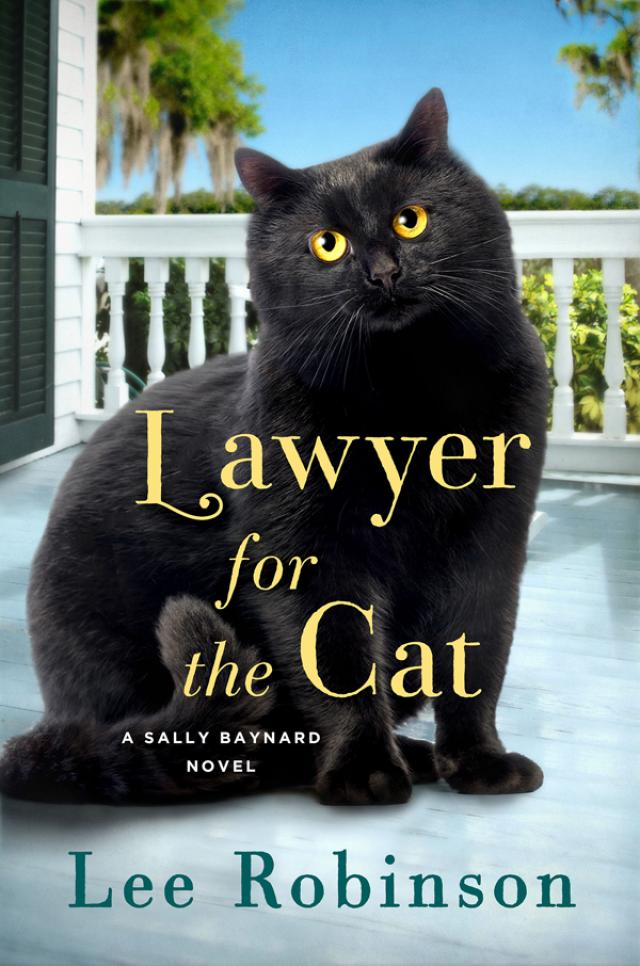


“You have a cat?”
“It’s left over from McCavity. You might remember him from the bookstore.”
“The big yellow one?”
“Old devil finally passed away. About a month ago.”
“I’m sorry.”
“He was the last of my bookstore cats. But when you’re as old as I am, you accustom yourself to losses.”
“When are you moving?”
“I must be out by January first. I’ll have a small room at the Franke Home, so most of these books are going to the county library for their fund-raising sale. You’re welcome to look through them before you go.”
He catches my expression as I survey the room. “Yes, I know, I haven’t made much progress.”
“Do you have some help with all this?”
“My niece wants me to hire a crew, but I can’t tolerate strangers handling my books. And there’s the expense.”
The whole place smells like old books and candle wax. There’s a menorah on a little table in the corner, and beside it a potted plant hung with Christmas ornaments. “That’s for my great-nephews,” he explains. “My niece married, as my mother would have said, out of the tribe. She brings her boys around on Christmas afternoon, so I do my best to be ecumenical. It’s just a small party, my family and a few others. But you came to talk about the cat, isn’t that right?”
“As I told you, my job is to choose a caregiver for her.”
“I haven’t met Beatrice,” he says. “But I understand she’s highly intelligent and rather temperamental, like her owner. I remember when Lila named her. I assumed some reference to Dante’s beloved, so I joked to Lila that if she ever felt lost in purgatory, the cat might lead her out. She took offense.” He smiles. “She could be quite thin-skinned.… Who’s keeping the cat now?”
“She’s staying with me until I’ve finished my investigation. Mrs. Mackay named three people as possible caregivers.”
“Yes, you told me.”
“Your name wasn’t on the list, yet she kept some of your letters, and I … I can’t help but think she did so for a reason, that maybe she intended you to shed some light on—”
“Or perhaps she was merely sentimental,” he says.
“I was told by her nephew Philip that you and Mrs. Mackay were very close at one time.”
“Philip—how is he these days?”
“He seems well.”
“What a talent! I do hope he’s still writing. I haven’t had a letter from him in a while, but then of course no one writes letters anymore, and I don’t do e-mail.”
“He shared some of your story with me … your relationship with Lila.”
“Philip was one of the few people she told about it, but even Philip didn’t know everything,” he says.
“If you wouldn’t mind, I’d like to hear it.”
“I suppose there’s no harm, now that she’s gone, though I doubt our story will shed any light on your task. A little more tea?”
Simon and Lila
My father was a fine tailor, much in demand. His parents had left Russia around the turn of the century, because of the pogroms. They were old-world Jews, very insular, and although he was born in Charleston, he seldom ventured outside the circle of his family. He worked very hard, paid for the building on King Street over a period of thirty years, and of course he expected me—his only son—to take over the business. But my mother was more imaginative, and her family was a little more sophisticated. She had a brother in New York who ran a bookstore on the Upper East Side. She sent me up there one summer to, as she said, “polish me up a little.” My uncle put me to work in his store. I adored it: the store, the neighborhood, the city. At the end of the summer I came home, not happily, for my senior year in high school. In the afternoons, after school I helped my father in his shop. I could see my future laid out before me—an eternity of measuring tapes and inseams.
But if it hadn’t been for that shop I would never have met Lila. We had closed for the day; my father had gone home and I was sweeping up. She ignored the “closed” sign, knocked on the door. I could see her through the glass, that imperious, exasperated expression: How dare we close the store! I let her in, found her father’s trousers, and took her money. She was pretty. Bright-eyed, intelligent, and though I knew better—she was one of those Ashley Hall girls, definitely out of my league—I was smitten.
She was headed up north for college. Vassar. The moment I heard this, I turned my back on the College of Charleston and devised a way to go back to New York. I got a scholarship to City College, roomed with my cousin and his wife. Lila would come down to the city on weekends and we … well, I had a classmate who had his own apartment on Houston Street, and he’d lend it to us for an hour or two at a time. Our times there were glorious. This went on for several years. I was so naive.
And then I received a letter from her announcing her engagement. She said she was sorry, but she’d known for a while it would never work out—we were just too “different.” She would always love me, she wrote, and she hoped we’d stay in touch. I didn’t write back. She moved back to Charleston and I stayed on in New York.
I didn’t see her for years. She sent some breezy letters, photos of Oak Bluff. She’d always felt a strong attachment to the place. Not just the house, which—oh, you’ve been there?—is nothing grand compared to some of the others on Edisto, but the land, the island. Her parents were planning to sell it—her father had had some financial reversals. But Verner Mackay saved it for her. He had plenty of money, thought it would be a nice place for hunting and picnics, that kind of thing. I don’t think he ever considered living there full-time. He had his office downtown, a big house on Tradd Street.
Then my father retired. My parents needed more attention, and I was the only child. The building on King Street seemed a perfect location for a bookstore, and I’d learned a great deal about the book business from my uncle. My father—though he thought I’d lost my mind to turn my back on the tailoring business—let me have the space for next to nothing. I borrowed money for inventory, and the Book Nook was born.
I’d been back in Charleston a couple of years, just getting the business going, when she walked in. I had expected it would happen eventually—she was mad about books, devoured them, mostly history and biography—but I wasn’t prepared for how I’d feel. She had Randall with her. He must have been nine or ten then. I remember being struck by—how shall I say it?—her coldness toward him, as if she felt inconvenienced by him. It was very strange. I took him by the hand and showed him the children’s section, introduced him to the cats, and he played with them while we talked.
She told me she was spending most of her time on Edisto. “You must come for a visit sometime,” she said, and I nodded, having no intention of ever doing so. I was still so hurt, and angry.
Over the next couple of years she’d stop by the store once or twice a month, sometimes with Randall, never with her husband. I’d seen a photo of Verner in the newspaper, but I’d never met him. Once or twice we had lunch together—she and I and the boy—and I began to feel more at ease around her. She wasn’t flirtatious, really, but tremendously vivacious, a lively conversationalist. She always made you feel that you were the most fascinating person she’d ever met. I’d been out with several women in New York, and a few after I returned to Charleston, but there was no real spark with any of them.
One day I received an invitation to Oak Bluff. “I’m having a small dinner party,” she wrote. “Interesting people, no snobs. Who knows, you might meet someone!” Against my better judgment, I accepted.
She’d invited about ten people: a painter and her husband from Beaufort, the rest from Charleston and Edisto. There was a retired botanist, and a female playwright who wore earrings made of peacock feathers. One fellow—in the shrimping business, I think—knew even more about the island’s history than Lila did. I found it odd that Lila’s husband wasn’t there, though she made some excuse about his being tied up with a business deal. We all drank too much—much more than I was accustomed to—and when the others left, she convinced me not to try the drive back to Charleston in the dark.
That was the beginning of the best and the worst year of my life. I’d go out there on Mondays—the bookshop was always closed on Mondays—spend the night, get up at the crack of dawn the next day to drive back to town. I lived for those times. The place—yes, you’ve seen it—was magical for me. I began to feel I belonged there. Lila’s husband almost never came out, and the boy was still young enough that we imagined he didn’t understand the nature of our relationship. She always referred to me as “our friend Simon.” And indeed, I was his friend.
But one afternoon—he would have been about eleven or twelve, I would guess—Randall came home early from school. Lila had enrolled him in Porter-Gaud, and she paid someone to take him back and forth to Charleston. Anyway, that day, the school nurse had sent him home early because he felt ill. We didn’t hear him come in the house. He caught us kissing. Of course, it could have been worse.
I shall never forget the look on that boy’s face. “So, are you going to be my daddy now?” he asked. “Go to your room!” she shouted. I was horrified—none of this was his fault. When Randall left the room, I told her I wouldn’t see her again unless she left Verner. For all intents and purposes, I argued, they were already separated. She promised she would, but of course she never did.
After that I would see her from time to time when she came into town, but always at the bookstore or in some public place, where there was no temptation. By that time Randall was in his early teens and he was beginning to get into trouble. Verner insisted that he move into Charleston, that he needed more discipline, and Lila—I sound very judgmental, but it’s true—virtually abandoned him. Randall craved what neither of his parents gave him: their time, their attention, their love.
Lila and I remained friends until the end, though in her last years she rarely got into town anymore and I had stuck by my decision not to go back to Edisto, even after Verner passed away. I withheld my affection at a time when it might have meant a great deal to her. I did it out of pride, something that seems very petty now.
And I’m ashamed of this, but it was out of a need to punish her that I kept a secret from her. After his father died, Randall began to visit the bookstore again. I didn’t recognize him. He was grown by then, but he would always gravitate toward the children’s section—odd, of course, for a grown man. One day, one of my young employees whispered in my ear, “That one never buys. He just comes in to look at the kids’ books and play with the cats.” So I went up to him, asked if I could help him find anything. He mentioned a book, The Adventures of Mr. Pipweasel, a children’s storybook, English, lovely illustrations, but long out of print. I said I’d try to locate a copy. He wrote his name and address on a slip of paper and said, “You might remember me.”
He came back to the store many times before I sold it. I’d been told about his troubles with the law, his marital misadventures, but toward me he was always polite—he was strange, yes, but never antagonistic. I felt sorry for him. As I said, I remained in contact with Lila—mostly through our correspondence and the occasional phone call—but I never mentioned my friendship with Randall.
He seemed crushed when he learned I’d sold the bookstore, so I asked him if he’d like to come to one of my little Christmas gatherings—just my sister and my nephews and occasionally a neighbor or two. I didn’t expect him to show up, but he came, brought a bottle of wine and some cookies. He’s come every year since.
We never speak of Lila. It’s the strangest thing, our connection. We have nothing in common except for our love for her, and our disappointment. And cats. He always loved cats.
I suppose you could say Randall is a lost soul—but then, aren’t we all?
Heart Trouble
On the way home I stop at Harris Teeter for milk and eggs. “Never go grocery shopping when you’re hungry,” my mother has always said. By the time I make it to the checkout line my basket holds a tin of ginger cookies, a box of chocolate-covered cherries, an assortment of cheeses from the deli, a dozen tangerines, a precooked ham (for Mom and Delores), and a couple of white poinsettias in pots. Mom’s always insisted that you can’t have Christmas without poinsettias—“But not the red ones, they’re so ordinary!”
When I get back to the condo parking garage and open my trunk I realize it’s going to take me more than one trip to haul my purchases upstairs. “Damn!” I say out loud.
“That bad?” says a voice nearby. It’s the doctor, the stethoscope draped around his neck. “I can help you with your groceries.”
“Thanks, but I can—”
“You’re the lawyer, right?” He lifts the poinsettias out of the trunk. “I’m on the floor below you. Next door to Mrs. Furley.” The harsh light in the elevator accentuates the lines around his eyes, the shadows under them.
“Sally Baynard.”
“Minh Basilier.” He says his name slowly, as if to let me savor it: Bah-SILL-ee-ay. He sees me studying the name on the plastic ID card clipped to his white jacket. “I’m a New Orleans mongrel: Vietnamese and Cajun.”
It seems rude not to invite him in. “Minh, this is my friend Delores. Delores, this is Minh Basilier.” I’m pleased with myself for pronouncing it correctly.
“Nice to meet you,” she says, turning down the volume on the TV.
“And this is Beatrice,” I say, pointing to the cat, who’s beside her on the sofa. “She’s just here temporarily.”
“Sure made herself right at home, though,” says Delores. “Lucky for her I didn’t do her in, just so I could get her magic bone!”
“What?”
She laughs. “It’s a voodoo thing. If you carry the bone of a black cat, it gives you special powers. Like it can make you invisible, or help you bring back your lost lover.”
“Where’s Mom?” I ask.
“Back there with Mr. Shand and the dog, taking a nap.”
“In the bedroom?”
“Old as they are, nothing much else going to happen.”
I want to run back there, but now I have the doctor to deal with. “Would you like something to drink?” I ask him.
“Some other time,” he says on his way out. “Looks like you’ve got your hands full.”
When he’s gone I turn to Delores. “I thought I made it clear—”
“Before you get all mad, go see for yourself. I’ll put the groceries away.”
The door to my mother’s bedroom is open, the room dark except for the last of the daylight sifting through the curtains. Mom and Ed lie on their sides, fully clothed, his arm around her, his body spooning hers as if she were a child, her arm around Carmen, who hears my footsteps, looks up, then settles back on the pillow.
* * *
Delores’s vegetable soup is warming on the stove, corn bread in the oven. I toss a salad, set two places at the kitchen table. Ed Shand won’t get an invitation to dinner, and Delores has a date. I’m listening to NPR when Ed appears, amazingly unrumpled after his cuddle session. Ed is one of those never-a-stray-hair/always-good-posture men.
“That smells wonderful,” he says, as if he lives here.
“We need to talk, Ed.”
“It’s not what you think.”
“I’m not going to let you hurt her.”
“Hurt her?”
“She’s got Alzheimer’s, Ed. She can’t possibly understand your relationship, or whatever it is.”
“I’m the best friend your mother has, except for Delores.”
“Do you usually sleep with your best friends?”
“I haven’t done anything … inappropriate,” he says, turning red. “If you must know, I can’t do anything. And of course I realize how ill she is. For some reason—maybe it’s our … history together—I’m able to give her some comfort.”
I’d like to slap him. “Your ‘history’ together?”
“We were both unhappy in our marriages.”
“Did my father know about it?”
“I don’t think so. He never said anything. But your father wasn’t one to talk about his emotions.”
“That doesn’t mean he didn’t have any.”
“I know this is hard for you, but you must have known your parents’ marriage wasn’t a good one.”
“My mother had unreasonable expectations.”
“Is it unreasonable to expect a thoughtful Christmas present from your husband?” Ed asks.
“What are you talking about?”
“One year, shortly before your mother and I—before we fell in love—he gave her three handkerchiefs for Christmas. He’d picked them up at the dime store on his way home.”
“Daddy didn’t believe in expensive presents. We didn’t have the money.”
“But handkerchiefs? He didn’t even bother to wrap them.”
“So how long did the thing between you and Mom go on?”
“Two years, and then when he began to have the heart trouble, she ended it. But we remained friends.”
“Maybe you gave him heart trouble.”
He bristles. “That’s not fair.”
“It’s not just a coincidence that you ended up here in Charleston, is it? In the very same building where my mother lives?”
“As a matter of fact, it is a coincidence. Before my wife died, we spent a lot of time in Charleston. She loved the restaurants, the Spoleto Festival, the architecture. She convinced me to buy the condo here, but right after we’d signed the contract she became ill, so she never got to enjoy it. It was sitting empty for a couple of years. I almost sold it, but my daughters were urging me to sell the big house in Columbia, so I decided to move. The change has been good for me. And finding your mother here was a miracle.”