Lawyer for the Cat, page 18


I close my eyes, feel something rest against my thigh, a warm weight. It’s the beagle. I stroke her forehead. “Don’t worry,” I say, “everything will be okay.” She looks up at me as if she believes me.
* * *
“Randall Mackay is coming at two,” says Gina.
“Did he say anything about Beatrice?”
“He was pretty cagey. He said … Wait a minute, I wrote it down: ‘I’m glad your boss is finally coming to her senses.’ You think he’s crazy enough to hurt her?”
“He can’t use a dead cat as a bargaining chip.”
“If he killed her, it doesn’t seem right that he’d get the plantation.”
And then it comes to me, the memory from law school: the overheated classroom, the fat textbook open in front of me, the professor droning on and on. The course in Trusts and Estates, which I’d taken only because it was required for graduation. I’m sitting in the back row, trying to stay awake, when he surprises me with his question: And what if there are two beneficiaries, and one kills the other? Can the surviving beneficiary claim the deceased’s share? I snap awake: No, sir. My answer is a gut reaction, but of course he wants more, and I can’t remember the relevant case law. I stammer as he moves on to another student.
It wasn’t like me to be unprepared for class. My excuse wasn’t one I could share: I’d been up all night with one Joseph Henry Baynard, the fellow student sitting next to me. We’d started the evening with good intentions, determined to study, but we took a break for a beer and soon found ourselves less interested in Trusts and Estates than in each other.
“You’re right: If he kills the cat,” I explain to Gina, “he can’t profit from his wrongdoing. Wait a minute.…” I log on to the South Carolina Bar website, type the words “homicide beneficiary wills” into the search bar. “Here it is—they’ve codified the old case law, expanded on it. Section 62-2-803: Effect of homicide on intestate succession, wills, joint assets, life insurance, and beneficiary designations.”
“So,” says Gina,“the bottom line is that if he kills the cat, he can’t get what he wants—which is the plantation. You think he knows that?”
“I doubt it, but we’ll educate him.”
* * *
He smiles like a man who’s sure he’s already won, his tongue sweeping his bottom lip as if he’s tasting his victory. “Well, I’m glad you finally came to your senses,” he says. I’m two feet away, but I can smell the alcohol on his breath.
“I have indeed,” I say, opening the volume of the Code to the place I’ve marked. I seldom use these books anymore, but today I need what old Judge Clarkson would call their “heft.”
“You don’t need a law book to settle this thing.” He stands on the other side of my desk, a massive man, his chest and shoulders straining the seams of his sports coat. “And you don’t need a guard dog, either.” He glares at Carmen, who’s growling. “Shut up, you runt.”
“Please sit down,” I say.
“Okay, okay. Don’t want to make anybody nervous.”
“Are you intoxicated?”
“Nah.”
“Good, because I want you to understand what I’m about to say.”
“You’d better say I’m going to get what I’m entitled to.”
“Mr. Mackay, what you’re entitled to is what your mother left you, by way of a legal document that’s enforceable under South Carolina law.”
“Not if the old bitch was out of her mind.”
“Based on what I’ve learned about you, I think it’s amazing your mother left you anything at all. I’m not your lawyer, but if you hire one, she’ll explain that you can contest the trust if you choose to, but if you lose, you’ll forfeit your right to the remainder.”
“I’m not here for a lecture,” he says, still holding on to the desk.
“You need to return Beatrice to me by five P.M. this afternoon.”
“That’s what you made me come here for, just to tell me that?”
“You’re in a bind, Mr. Mackay. If anything happens to the cat, this law”—I pat the Code as if it’s my best buddy—“says that you don’t get a thing. I’ll be happy to make you a copy, but let me read it to you: ‘An individual who feloniously and intentionally kills the decedent is not entitled to any benefit under the decedent’s will or trust … and the estate of the decedent passes as if the killer had predeceased the decedent.’ Now, of course, the decedent is your mother, and you didn’t kill her, she died in the hospital.”
“Right, so you’re wasting your breath.”
“But the statute further provides … Let me read you the exact words: ‘A beneficiary whose interest is increased as a result of feloniously and intentionally killing shall be treated in accordance with the principles of this section.’ That means that if you kill Beatrice, you can’t get the property any earlier than you would have had she lived, and I will take the position that the statute precludes you from ever getting it.” I close the book. “As I said, I’ll be happy to make you a copy.”
“I never said I had the damn cat,” he growls. “If something’s happened to her, you can’t prove I had anything to do with it. Cats disappear all the time.”
“I’m not going to outline my case for you, Mr. Mackay, but suffice it to say that I have more than sufficient evidence to prove you took her. And the statute I just referred to helps me in that regard. You’re familiar with the standard of proof in criminal cases—‘beyond a reasonable doubt’?” He doesn’t answer, just glares. “That standard is a difficult one to satisfy, but in this case I won’t have to worry about it, because this statute gives me a break. It says that I only have to prove my case by a ‘preponderance of the evidence.’ That’s a lot easier.”
He stands up, “You tricked me into coming here. You don’t want to talk settlement.”
“I wouldn’t talk settlement with you unless I was worried about losing. But you’re the one who’s going to lose if Beatrice isn’t safely in my office by five P.M. this afternoon. And let me say one thing further: If someone else is holding her for you, you’re taking a big chance, because if anything happens to her, I’ll take the position that she died as a result of your recklessness. Do you understand that?”
He looks at his watch. “You’re not giving me much time.”
“It’s plenty of time for you to produce the cat, unless she’s dead.”
He turns to leave. “She was a terrible mother.” His voice is almost inaudible.
“Excuse me?”
“Lila Mackay was a terrible mother.”
“It’s not my job to defend your mother. My job is to protect the cat, to choose the best caregiver for her, to make sure, as best I can, that your mother’s wishes with regard to Beatrice are carried out.”
As he’s leaving he mutters, “Maybe you won’t believe it, but when I was little, I really loved her.”
* * *
Just before five o’clock, Ellen returns my call. “Sorry,” she says. “I was in trial. Horrible murder case. I feel like I need to stand under a shower for a couple of hours, just to wash the blood away. What’s up?”
“I needed a pep talk, but I think I’ve got it under control now.… I’ll know in another five minutes.”
“Want to get a drink? I could sure use one.”
“I have the new dog with me. And maybe the cat.”
“Tell you what, why don’t I grab a bottle of wine and something for dinner and come over to your place? Hank won’t be home till late. He’s meeting with some people about sharing office space.”
“I’ll have my mother, and maybe Delores. Sometimes she stays for dinner.”
“I’ll bring enough for everybody.”
* * *
Gina, Carmen, and I wait in the reception area. Gina and I watch the clock: 4:50, 4:51 … 4:57. Carmen lies on the floor, gnawing at a spot on her hip. “She’s going to rub that place raw,” says Gina. “You should get the vet to look at it.… How’s that going, anyway?”
Before I can say I don’t really want to talk about it, we hear the hum of the elevator as it rises to our floor, the thump as it jerks to a stop, and the door opening with its usual deep wheeze. We wait for the sound of footsteps in the hall, but nothing. The door closes, and Gina shakes her head.
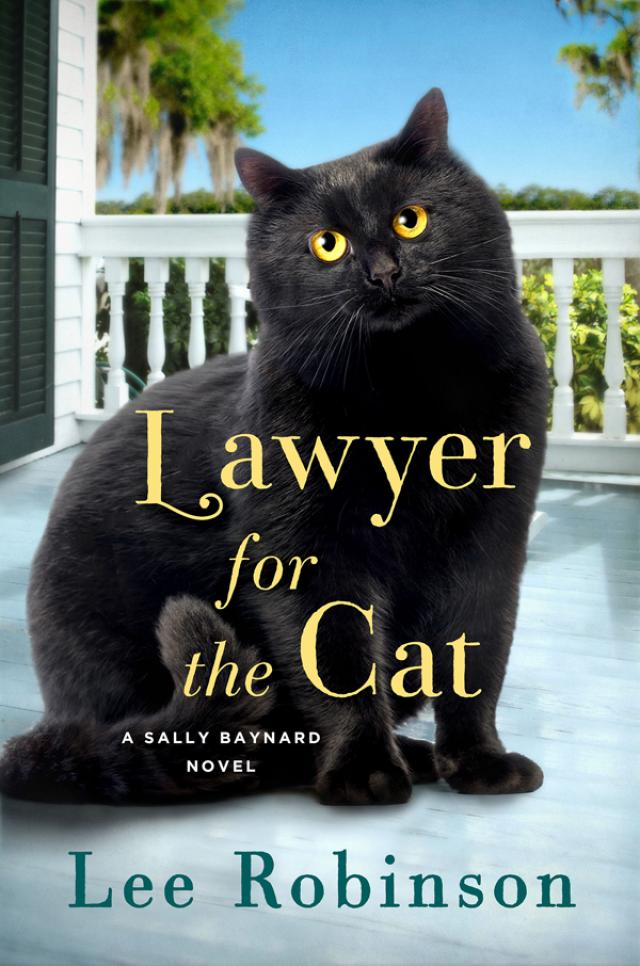
Then there’s a “meow,” and another—louder, insistent, as if Beatrice is saying, I’m right here. Are you going to leave me here all night? We rush into the hall. I lift her out of her carrier, stroke her. She seems fine, as fat as ever, but she’s not interested in me. She wants the new toy—a fake mouse that squeaks when she bats it around, a toy that Randall must have given her.
Who Am I Saving It For?
“She’s been real upset this afternoon,” says Delores when I get home. She frowns at the beagle and the cat, this time with more resignation than resistance. “I just got her settled down. She’s watching a Denzel movie.” My mother adores Denzel. He’s so intelligent, she said not long ago, such a credit to his people! I used to confront her about statements like this, but Delores convinced me to let them go. She is who she is. Don’t you worry, we get along fine.
“What got her upset?” I ask.
“She kept saying Mr. Shand had a heart attack. Wanted to go visit him in the hospital.”
“It was my dad who had the heart attack.”
“He was here this morning—Mr. Shand—said he had to go to the doctor, so maybe that’s what got her started.”
“I wish he’d leave her alone.”
“Nobody’s going to keep those two apart,” Delores says with finality, “Not unless you want to move to another building—maybe another country! There’s no harm in it. He behaves himself.” She turns toward the cat, who’s exploring some plastic containers on the kitchen counter. “You scat now, get out of my kitchen!”
“Ellen’s coming over, bringing some dinner. You’re welcome to stay.”
“I have choir practice.”
“You joined the choir?” Delores has a gorgeous voice, but I’ve heard it only when she’s singing to herself in the kitchen. “I thought you didn’t like to perform in public.”
“People tell me I got this gift, and I started thinking, Who am I saving it for? I used to sing for Charlie. He was always after me to join the choir, so … I just figured it was time. You got to take the gifts God gives you, make the most of them.”
“Charlie was a wise man.”
“Speaking of gifts, what about you and that vet?”
“It’s complicated.”
“Well, like I told you, anything to do with a man and a woman’s gonna be complicated, but—”
“You’re the one who wouldn’t move in with Charlie until he was dying!” I’m not in the mood for a lecture from Delores.
She gets her purse, pulls her coat over her shoulders. She won’t even look at me.
“I’m sorry. I shouldn’t have said that.”
“When you learn how to love a man like I loved Charlie, you let me know, okay?” She closes the door hard on her way out.
* * *
By the time Ellen comes with a bottle of wine and takeout from Tasty Thai, I’ve fed the animals, changed into jeans and a sweatshirt, given Mom a shower, and gotten her into a nightgown. “Not that!” she said when I handed her the flannel one Delores had left on the end of the bed. I was too tired for a battle, so I gave in. She chose the pink satiny one, which seems too nice to sleep in, more like an evening gown, and the matching bathrobe and slippers. And then she insisted on earrings and perfume.
“You want a glass of wine, Margaret?” asks Ellen. “It’s a nice Pinot Grigio.”
“She shouldn’t,” I say. “Not with her medication.”
“Half a glass won’t hurt anything, will it, Margaret?” says Ellen.
Mom smiles, and I give in. She’s already helping herself to the Pad Thai. “Let me get your bib, Mom,” I say. “You don’t want to ruin that robe. Wasn’t Ellen nice to bring all this?”
“Happy to do it,” says Ellen.
“It’s been crazy, these last couple of days.” I fill her in on the trip to Edisto with Joe, the meeting with Randall Mackay.
“At least you got the cat back,” she says. Beatrice is under the table, rubbing the back of my legs. “What are you going to do about him?… Joe, I mean.”
Mom perks up at the sound of his name, wipes a noodle off her chin with the sleeve of her robe. “Joe says I’m the most beautiful mother-in-law he ever had.”
“It’s true, Margaret,” says Ellen, “you are beautiful.”
“I have my hair done every Wednesday,” says Mom. Before my mother sank into her dementia, she gave me strict instructions for her funeral: Episcopal, of course, no open coffin, but a fresh hairdo by her regular hairdresser.
What does it matter what your hair looks like, I said, if you’re not going to have an open coffin?
She looked at me, did one of her quick inspections for defects, and said, If you took any pride in your appearance, you’d understand why it matters.
“Your hair always looks perfect,” Ellen says to Mom. And to me: “So, are you going to help him with the campaign?”
“I don’t know.” The beagle, who’s been hanging around the table, not exactly begging but vigilant in case something falls to the floor, settles herself on the mat below the sink. “I’d like to help him out, but Cynthia’s certainly qualified, and we worked together on the women’s shelter board.”
“Has she asked you to back her?”
“No, I didn’t know a thing about it until Joe mentioned her.”
“The easiest thing would be to just stay out of it,” she says.
“But what do I tell him?”
“Tell him the truth, that it’s just too uncomfortable for you.” She bites into a spring roll.
“I’m trying to be objective. He’s got loads of judicial experience, and except for the dog case, I don’t know of anything—”
“I’m going to be brutally frank,” says Ellen. “Whenever you talk about him, I feel like there’s still something—”
“I just don’t want to hurt him … with his campaign, I mean.”
“Think about it. You’ve never gotten involved in judicial politics, so why start now?”
“Because he’s asked for my support.”
“Did Susan know he was chauffeuring you to Edisto?”
“I think it was her idea. She’s more ambitious than he is!”
Ellen frowns. “I’m telling you, you’re asking for trouble if you get involved. Margaret, would you like some more?” My mother nods. Her appetite is still good.
“But enough about me,” I say. “How’s Mandy?”
And of course it’s her daughter she really wants to talk about: the girl who until a month ago was headed for Duke on full scholarship. “She says it’s all going to work out,” Ellen says with a sigh, “because she’s moving in with Gina, and Gina was a single parent herself, and Gina loves children. All I’ve heard out of her mouth for the past couple of days is Gina, Gina, Gina. If I didn’t like Gina, I’d want to kill her. This wasn’t your idea, was it?”
“Of course not. I’ve been pushing—gently—for adoption.”
My mother perks up: “You never know what you’re going to get with an adopted child. It’s potluck!”
“Hank wants her to stay with us at least until the baby’s born,” says Ellen, “but she’s determined to be on her own.”
“Well, you brought her up to be independent.”
“But she’s ruining her life.… Dammit, I didn’t come over here to cry.”
“Sometimes you just need to cry your heart out,” says my mother. “It helps to run a hot bath, darling, and then you can cry all you want to. You’ll feel better once you get it all out.” She’s never said anything this comforting to me. It was always: Stand up straight, put a smile on your face, quit feeling sorry for yourself.
“Maybe I’ll do that when I get home,” says Ellen.
We clean up, I put Mom to bed, make a pot of coffee, sit up with Ellen for a while longer. Beatrice is curled in my lap. “That cat looks right at home,” she says.
“She’s not staying, if that’s what you’re thinking.”
“So who are you going to give her to?”
“I’ve almost made up my mind. I have a couple of people I still want to talk to. You remember Mr. Witowski, who owned the bookstore on King Street?”
“I thought he was dead. How’d you come up with him?”
“Long story.”
“But he wasn’t on the list.”
“No, it’s more out of curiosity than anything else.”
“God, I miss that bookstore. Remember the cats?”
Old Books and Candle Wax
Simon Witowski’s apartment is on the second floor, reachable only by a set of outside stairs that run from the lower piazza to the one above. The railings are rickety, a couple of the balusters missing. The house—antebellum, once a single-family dwelling—badly needs painting. It stands out among the others on Gadsden Street, all of which have been redone in pastel colors approved by the Board of Architectural Review.
“I’m in the process of moving, so things are a little chaotic,” he’d said when I called to confirm the appointment. When I step inside I see what he means: There are piles of books on the floor, on the dining room table, on every available surface. He points to the cardboard boxes under the table. “Would you like a cup of tea?”
He’s thin, his gray wool jacket too big for him, the excess fabric of the trousers bunched into his belt, but despite an obvious limp there’s a surprising vitality about him. “I had a little accident a few years back, tripped—ankle’s never been quite the same.… Yes, I remember you from the bookstore. You were quite keen on short stories, weren’t you? Flannery O’Connor, Mary Gordon.”
“You introduced me to Lorrie Moore.”
“Ah, yes. Birds of America! Milk, sugar?”
“No, this is fine, thank you.”
“The new owners couldn’t keep up with the rent increases,” he says. “King Street’s gone very posh, you know. And even Gadsden Street now … This neighborhood used to be a melting pot, a little bit of this, a little bit of that—medical students, faculty from the college, young couples just starting out, the older ones like me—but everything’s changed. Some people from New Jersey just bought this one. Oh, watch your step there,” he says, pointing to a litter box. “I’ve been meaning to get rid of that.”