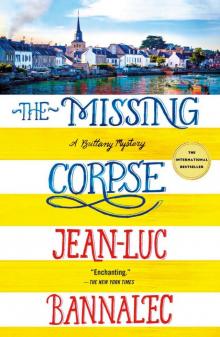
The Missing Corpse: A Brittany Mystery, page 29
part #4 of Commissaire Dupin Series



There were so many threads.
“I had a crazy theory,” said the young policewoman, hesitant now, “but it’s impossible, I’m afraid. What if Mackenzie isn’t dead at all? What if he only faked his death?”
“What makes you think that?”
“We don’t have a body. Nothing. He could have staged it. All of it. He killed his friend on the way here from the airport, accomplished what he wanted to accomplish in Port Belon, whatever it was, and then took off, deliberately going underground.”
All of a sudden, Melen’s idea sounded astonishingly convincing.
“Let’s just take the scene in the parking lot: Mackenzie wanted someone to see him dead, and then got rid of his car so that it fit with the murder theory and the dumped body. Someone other than Madame Bandol would have been believed straightaway! If a hiker had seen him, for instance. It would also explain why Madame Bandol maybe really did only see one car—his.” Melen stopped walking for a moment. “Unfortunately, there would then be no explanation for other important elements.” Then she calmly explained the counterargument to her own theory: “For example, why he would have gone to the trouble of staging a murder in the parking lot without creating more trace evidence. It would have been so simple for him to produce bloodstains on a piece of fabric that could have clearly identified him as the victim.”
They had entered the house by now and were at the stairs to the first floor. Two policemen were supervising everything with eagle eyes. They nodded to them.
“An interesting theory.”
“The only annoying thing is that it essentially leaves open the question that’s been bothering us so much: What was it that Mackenzie needed to do in Port Belon?”
This was true. And yet Dupin realized there was something about it that appealed to him.
“I’ll leave you to it now, Commissaire. I’m going back to the experts who are looking at Tordeux’s data.”
“Please do.”
Dupin climbed the stairs at an athletic pace.
He found himself in an imposing room on the first floor. A long room, clearly an office, with large windows at the front facing onto the garden. Everything looked expensive—wealth on display. Objects everywhere that didn’t suit the tastefully restored old house at all: a bright yellow leather sofa with a stainless steel frame, a dull stainless steel sideboard. At the end of the room was an aluminum desktop mounted lengthwise on the wall, with papers and files piled up on it and two large computer screens close together. Two men in civvies were sitting in front of the screens: the experts.
Kadeg and a tall young man Dupin didn’t know were standing next to a large leather armchair that was, and this must have been inexplicably deliberate, admittedly yellow but a different shade of yellow from the sofa. In the armchair sat a slight, short man who, if this was Delsard, looked completely different from how Dupin had pictured him. A gaunt face, he was on edge, almost frightened in fact; there was something sad, something wretched, about his overall appearance. There were two stylish men in suits next to him: the lawyers, no doubt.
The tall man and Kadeg walked toward Dupin, a dynamic team.
“Jason Riefolo, head of the task force.”
“One moment.” Dupin turned round and got his phone out of the pocket of his jeans.
The head of the task force’s face instantly turned crimson.
“You’re here, you’re not just going to…” He didn’t hide his aggression.
Dupin had already stopped listening to Riefolo. He was walking back to the stairs. The phone to his ear.
“Riwal?” Dupin spoke softly.
“Boss?”
The connection was crystal clear for the first time, Dupin noticed to his relief.
“Any more news from Harold?”
“Nothing else that’s relevant to us.”
“Stick with it, Riwal.”
Dupin hung up.
He went back and headed right past Kadeg and the head of the task force, going straight toward the slight man in the yellow leather armchair. Both of the lawyers, approximately in their late thirties, immediately moved a bit closer to the man, one on the right, the other on the left.
“Commissaire Georges Dupin, Commissariat de Police Concarneau. Monsieur Delsard, I presume? I’m investigating the murders from the last two days.”
The prefect must not hear about this.
“This highly dubious search,” the man to Delsard’s right said, “is completely unrelated to any murders, the police’s purpose is expressly different, you—”
“I don’t want to search anything. I just want to speak to Monsieur Delsard. He”—Dupin had to exaggerate slightly—“bought his way into the oyster industry via his front man, Matthieu Tordeux. And both the two recent murders and the attempted murder today are presumed to be related to incidents in the oyster industry. My inquiries are about suspicion of murder, not stolen sand.”
Kadeg and the leader of the task force had come over by now and had heard every word. Dupin couldn’t care less at this point.
“This is ridiculous.”
It was Delsard himself who had suddenly answered, his voice sounding a little shaky, but cold.
“Monsieur Delsard, you should stay silent and let us talk,” his lawyer on the right-hand side urged him. The one on the left nodded in agreement.
Dupin didn’t react at all; he was looking at Delsard as if he were alone with him.
“When did you get here today, Monsieur Delsard?”
“My client has been here in his house since late morning, around ten o’clock. He—”
“You weren’t here when the search operation began?”
“My client was out.”
“What does ‘around ten o’clock’ mean?”
“Around ten o’clock.”
“Where were you before that, Monsieur Delsard? Between quarter past nine and ten o’clock?”
“We see no reason to respond to that.”
Dupin couldn’t compel them to. Delsard didn’t have to say anything, and he knew it.
“You didn’t arrive home here until shortly after ten, Monsieur Delsard?”
“That’s what we said.”
Delsard was aloof, looking out of the large windows while his lawyers spoke on his behalf.
“And did you come here alone?”
“Yes. We met our client here.”
Thus one important thing was certain: Delsard had no alibi for the time of the crime.
“He came here alone?” Dupin turned to the lawyer directly for the first time.
“As I said, we met him here.” It was clear that the lawyer was uneasy. He was aware that he had said something of interest to the commissaire.
Dupin turned back to Delsard. “Where were you the day before yesterday, Tuesday, between four and five P.M., and also yesterday around six thirty P.M.?”
“We will not be saying anything on that either.”
The absurd game continued.
“Do you know a Ryan Mackenzie or a Seamus Smith?”
“There’s no reason to ask this question of Monsieur Delsard and hence no reason to answer it.”
Dupin dropped it.
He could save himself the trouble of asking more questions. Although he would have liked to have heard more, of course. About Delsard’s real relationship with Matthieu Tordeux, for instance. Which Delsard would never tell him. Besides, Cueff was due to arrive soon. But, he had learned something. That Delsard had no alibi for this morning.
“All right then, Monsieur Delsard. In the matter of the attempted murder of Matthieu Tordeux, I am going to apply for a separate arrest warrant against you. That will make two of them. Let’s see who gets you, monsieur. The seriousness of the crimes will be the deciding factor.”
The dynamic head of the task force burst out: “That’s my man! We will arrest him. On the grounds of particularly serious theft, particularly serious environmental offenses, and a whole series of other crimes. The prefect—”
“—is coming in person, I know.”
Surprisingly, Kadeg had stayed out of the conversation, which was not like him at all.
“No doubt it will be a magnificent event.”
Dupin turned round and went back to the stairs. He needed to get out of there.
Thirty seconds later, he had left the house.
* * *
The car bringing Cueff had been delayed by some traffic jams—heavy rain showers inland—Magalie Melen was expecting him in around twenty minutes. Dupin had decided to meet Cueff in La Coquille; it wouldn’t be too busy there yet.
Two text messages had come through while he had been speaking to Delsard. Claire. Call me. And, a few minutes later: Am in Lorient. Driving back at six. Dinner somewhere? Dupin had to admit that he had virtually forgotten Claire in the whirlwind that was today. He hadn’t been in touch again since their short phone call this morning. He needed to reply to her, turning her down—Afraid I can’t. Love you. G.
Dupin had stopped to type on the road to the quay, just a few paces away from Delsard’s house. To the left, along the border of the building contractor’s property and before the wall to Tordeux’s land, one of the paths branched off. It led into the wood and then to the hunters’ trail. If you were to walk directly through the wood, you would get straight to the Belon. Dupin thought it over briefly.
Then he entered the jungle-like thicket.
It was dark here too, like at the spot where he had stood with L’Helgoualc’h and Melen.
Just two minutes later he reached the narrow hunters’ trail that led to the road with the accident site. The commissaire walked straight on, slowly. He was trying to think, sort through the wealth of information. The treetops had grown close together overhead; you could smell and taste the wood on the air, the damp earth, the resin of the wood.
His conversation with Delsard had not been all that smart from a tactical point of view. His exhaustion returned, as severe as ever. No matter how hard Dupin tried, he couldn’t form a single coherent thought. And yet it would be so important to sort through everything in his mind.
Suddenly there was a blue glimmer visible between the tree trunks, faint at first, then brighter and brighter.
The Belon.
Dupin’s sense of direction had guided him correctly. A few more meters and he stepped out of the wood with one long stride. And stopped.
It was crazy. On the other side of Port Belon, where he had spent time over the last few days and which he knew so well from his walks, the Belon was mainly sea. Not only because you could see the estuary and the open Atlantic; no, the entire atmosphere over there was maritime. But here, on this side of the headland where the houses were, everything was different. A perfect lake scene lay before him, tranquil, quiet. From this spot, the Belon was a large blue-gray expanse, as smooth as glass, two or three kilometers long and perhaps half a kilometer wide. Utterly placid. It was still high tide, although it was gradually going out. Some of the oyster tables were visible at the edges. Including directly in front of him.
Dupin kept walking and didn’t stop until he was a few centimeters from the waterline.
He had seen something gleaming. There were a few colorful, shimmering oyster shells in the shallow water—European oysters—and next to them: a “giant.” An excessively large specimen. Riwal had explained it to him at the market in Concarneau once: a pied de cheval, a “horse’s foot.” One of the oysters that escapes from the parks and becomes enormous in the wild. Not as big as in his dream, but still. A forty-centimeter-large oyster was incredibly impressive. To his left, the thicket by the river thinned out and gave way to a meadow. A garden, as Dupin could tell when he looked closely. A magnificent garden. And behind three tall pine trees, in solitary splendor, stood a little castle made of pale gray granite. Enchanted, like in a fairy tale. It had to be Madame Bandol’s house.
Dupin walked a little way along the stony riverside path. Hesitantly at first but then with increasing determination. He walked right across the lawn, straight toward the little castle. He had pictured it being beautiful, of course—the Bandol sisters had bought it, after all—but this beat everything he had imagined.
He approached the door, which was at the top of an imposing stone staircase.
“Hello? Madame Bandol?”
It was absurd to call out to her—the house was massive and was bound to have dozens of rooms. He would ring the bell.
“Here I am. Here!”
Dupin turned around. There was a summerhouse twenty or thirty meters away, partially covered in blossoming camellia, right on a meandering branch of the Belon, as idyllic as it gets. There was a large wooden terrace in front of the summerhouse that ran along by the water, and on it were three comfortable-looking loungers in orange, greenish yellow, and turquoise. Armandine Bandol was lying on the turquoise lounger, the backrest propped up. She made no move to get up. Zizou lay at her feet and seemed to be fast asleep.
Dupin walked over to her.
“You’re very early,” she said sternly. “I wasn’t expecting you yet.”
Only now did he realize that he had in fact promised to come by “later.”
“But all right—you’re here now.”
She still made no move to stand up. There was a tall, narrow glass on the wooden floor next to the lounger. A champagne glass. A teapot and teacup next to it. There was a book there. A newspaper. A large, stylish red sun hat. And a little glass bell.
Dupin didn’t want to admit it was a coincidence that he was dropping in, especially as he really couldn’t stay long. “Everything has shifted timing-wise, Madame Bandol, the monsieur from Cancale is running late. I don’t have long, but I really wanted to call in and see you.”
Although there was no real logic to his words, they seemed to placate Madame Bandol.
“Come on, have a seat,” she said, and pointed to the orange lounger. “Here, next to me.”
Dupin hesitated, but just for a moment, then he sat down. The backrest was practically vertical.
“You ought to be silent for a moment and just let the landscape work its magic on you. I always find it tremendously helpful when I’m having a think.”
She closed her eyes.
After a brief hesitation, Dupin leaned back. And looked around. He was nervous. But the world looked like a heavenly garden here. Harmony. Gentleness. Mildness. It sounded odd, but nature seemed infinitely gracious here. It was quiet; the gentle wind was the only sound to be heard.
“I see a lot more with my eyes closed. This landscape,” Madame Bandol mused, “is the landscape of fairy tales, and the fairy tales take place inside us.” She paused, opened her eyes, looked Dupin in the eye, and then suddenly said briskly, “Right. So! Time for work, Monsieur le Commissaire. What is the situation?”
Dupin had actually been lost in thought for a moment. Oddly enough, he had been brooding over the giant oyster. Although he didn’t know why. Something had subconsciously been bothering him since then in general.
Madame Bandol’s exhortation had brought him back to earth and he looked at his watch in alarm. Then at his mobile. Neither of which escaped Madame Bandol’s notice.
“You can’t get reception here. Ever. I’m very pleased about that.”
Dupin considered what to do; he was already late. “Madame Bandol, do you think”—it was an unusual idea, but a pragmatic one at the same time—“do you think we could talk to Monsieur Cueff here at your house?”
Her expression didn’t in any way betray that she found the suggestion the slightest bit odd.
“In the summerhouse maybe?”
Dupin had actually been thinking of a room inside the house, but why not. He was aware that it would make a strange impression, but still, it would be the easiest thing. Besides, they were guaranteed to be alone there. Undisturbed. And, it was never a bad thing for a suspect to be confused.
“You are doing the police a great favor, Madame Bandol.”
Madame Bandol smiled, her expression revealing that she found making the summerhouse available as the scene of police work an enticing prospect.
“Of course. I mean, I am a part of the team.”
She picked up the little bell next to her lounger and rang it.
“May I use your phone?” Dupin had stood up. “I need to let Magalie Melen know.”
“Of course, of course.”
A young woman in a black dress with a white lace apron came tripping out of the house. A far from submissive look on her face.
“Madame rang?” she asked.
“Two things, Odette: show this monsieur here our phone, he has an urgent phone call to make. Also, we will be receiving a guest in a few minutes’ time, in the summerhouse. If you could prepare tea for us?”
“I think,” Dupin interrupted her gently, but firmly, “a carafe of water will be enough, Madame Bandol.”
“And at least a coffee for each of us!”
Dupin hesitated for a moment, then changed his mind:
“Madame Bandol, do you think Mademoiselle Odette would be so kind as to call Magalie Melen and tell her she is to come here with Monsieur Cueff, please?”
Madame Bandol turned to the girl: “We’ll do as Monsieur le Commissaire says. We have the number.”
“Of course, madame.”
Mademoiselle Odette disappeared.
“Who maintains all of this, Madame Bandol? The garden, the … estate?”
“I have a small army to look after everything. A gardener, a housekeeper and cook, and then Odette too. And if needs be, those three have assistants in turn. The estate requires quite a lot of attention.”
“Do you know Monsieur Delsard personally? The building contractor?”
There was confusion in her eyes.
“You’re not about to entertain the idea that our case has something to do with the sand theft crimes too, are you? I’m severely disappointed, Monsieur le Commissaire. Don’t lose your pride!” Whether her dismay was real or feigned, Dupin couldn’t tell. “You are a true investigator. True, you’re no Hercule Poirot, but you’re still a fairly decent one. You’re going to uncover the secret at the center of all this! And I’ll assist you.”