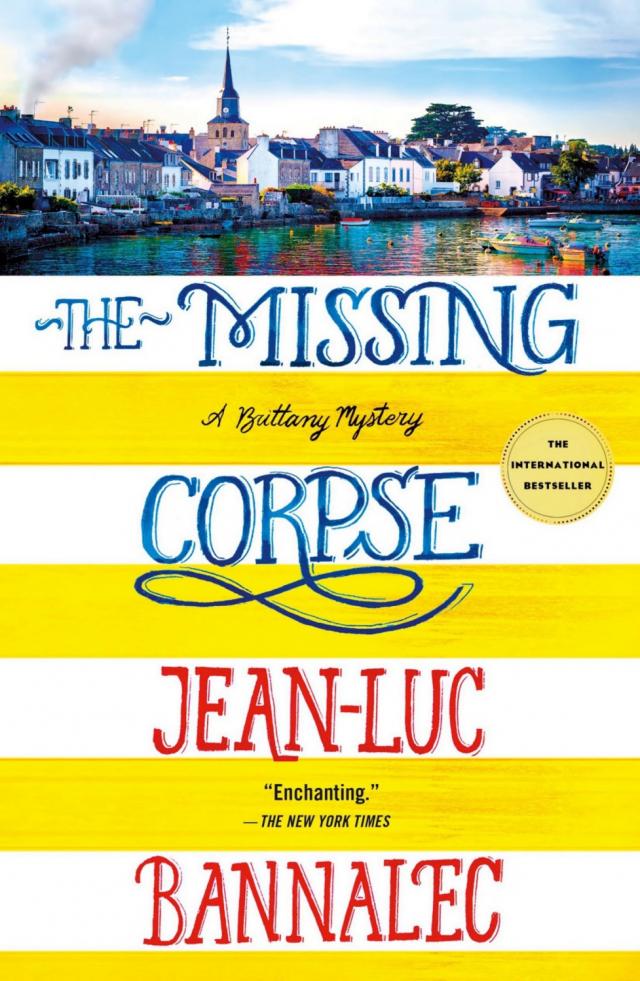
The Missing Corpse: A Brittany Mystery, page 11
part #4 of Commissaire Dupin Series


“Do internal affairs know about the sand yet?”
“No. But I’m going to tell them. I should have done it already.”
“I ordered you to do that too. To procure sand samples and to offer them—do you hear me, Kadeg? It happened on my orders!”
Dupin had no choice, he had to keep going down the road he’d chosen. Not knowing whether it led straight to disaster. For Kadeg—and for him.
“All right.” It had taken Kadeg a while to answer. He was audibly relieved.
“Any other illegal activity I should know about?”
“No. That … that’s all.”
“If you keep anything else secret from me, then it’s over.”
“Do you know what, boss?” Kadeg’s voice was suddenly firm again. “Do you know where one of the managing directors of Construction Traittot owns a house? In Port Belon! That’s really something, isn’t it?”
“What do you mean?” Dupin rolled his eyes.
“Construction Traittot! A large construction company angling to get a foothold in Brittany with knock-down prices. I’ve been keeping tabs on them for some time. We’ve made more progress than our colleagues in Lorient.”
“If you have any serious evidence, Kadeg—then out with it! Tell our colleagues! Tell them everything!”
“They receive deliveries of sand in Lorient on trucks that aren’t registered to any company.”
“You’ve seen this?” Dupin couldn’t believe he had got mixed up in this.
“Absolutely. Gracianne did too. And took photographs.”
Kadeg’s wife, the stout martial arts teacher, was in fact called Gracianne; Dupin always forgot.
“That’s not reliable at all.”
“We need to tackle their books, all their business records.”
“We have no chance of getting a look at their books without reliable suspicion. You know what a search warrant requires. Pass on everything to our colleagues from Lorient, Kadeg! And let them do it. We’re staying out of it—do you understand? We are staying out of it!”
“They’re just poking around so far, my instinct—”
“Kadeg, stop. What matters now is preventing a charge being brought against you, a suspension. And we’re in the middle of a double murder here!”
“I—”
Dupin was furious. “I’ll have to speak to the prefect again and somehow explain the sand on your land. Before he hears about it from the other side.”
“I—”
Dupin hung up.
Kadeg was driving him up the wall. This whole issue. Utterly pointless. This had to end.
* * *
It had—like all phone calls with the prefect—turned into a nerve-shredding conversation, ten infinitely long, wasted minutes of his life; but somewhat successful in the end. However, Dupin had foolishly put his neck on the line again.
At first he had given emphatic but undetailed updates on the first breakthroughs in the murder investigation—“A start at least, keep up the good work, mon Commissaire” was the prefect’s response—and then he had come to the sand theft issue. And he quickly appealed to the prefect’s boundless narcissism this time. This matter presented “potentially, a genuine coup for the prefecture,” Dupin had claimed. Especially, of course, if a criminal French firm was engaged in destroying Brittany for profit, in the macabre form of the theft of original Breton resources to boot. If this was all true, there would be extraordinary media interest and Locmariaquer would become—Dupin had described this in glowing terms—the celebrated green hero. The fact that Dupin thought the chances of this vanishingly small was an entirely separate matter. Eventually the prefect had said that the issue, in spite of the “completely unacceptable methods” of the commissariat in Concarneau, could probably be resolved amicably. “In the interests of Brittany!” which really meant “in my own interests.” It was disgusting, but it didn’t even matter.
This time Dupin hadn’t stopped at the cliffs, walking farther down the path instead and into the bay, as far as the water. When he hung up, he was standing on fine, dazzlingly white sand. A gorgeous little beach that he knew well. Tiny waves lapped on the bank, like at a lake. From here, so close to the water, everything seemed even bluer today. When he and Claire did the wonderful walk along the Belon, they often ended here, and always did in the summer. With a little dip. Then they had a picnic: baguette, brie de Meaux, boar sausage. Dupin was reminded of the mysterious plan to meet “around six o’clock”; he had no idea how he was going to manage to get away now that they found themselves on a real case. In any case, he would have to be there.
“Monsieur le Commissaire? Hello?” Riwal was standing above Dupin on the cliffs and was frantically scouring the surrounding area. If someone were watching from a distance, it would be an amusing sight—the way they had run around this landscape in the last half an hour, met, parted, met again.
“Down here.”
Riwal lowered his gaze to the sea. A moment later he took off running.
Out of breath, he soon came to a stop just in front of the commissaire, his cheeks reddened.
“What is it?” Dupin had walked toward him.
“A second man, there’s a second Scotsman—on the plane, the two of them came together, he … his name is Ryan Mackenzie … They flew from Glasgow to Brest. They left yesterday morning at seven forty-five, Glasgow, I mean”—Riwal took a deep breath—“they rented a car in Mackenzie’s name, a silver Citroën C4. Everything via a travel agent in Glasgow—booked and paid for by Mackenzie.”
Dupin was standing bolt upright, as if thunderstruck. A bull’s-eye. Two men. Smith had not been alone. The two of them had come together. That strengthened their hypotheses.
Erwann Braz had joined them by now too. Riwal must have had him in tow.
“What did he have on?” This was the all-important question now.
Riwal didn’t understand at first. Dupin repeated: “I mean this second Scotsman, what did he have on yesterday? What did he look like?”
“They weren’t able to tell me that. I’ve asked the airline to get in touch with the aircraft crew immediately and ask whether anyone remembers the two men from 15A and B. Our colleague Braz has—”
“I have,” Braz interrupted Riwal, his voice thin, barely audible, “just spoken to the car rental company on the phone.” He hemmed and hawed. “He was wearing a jacket. Dark green.”
“Dark green—a dark green jacket?”
That was it! Unbelievable.
There was no way that was a coincidence.
“And he had sneakers on, yes, dark sneakers, that’s what the man who gave them the car remembers.” Braz’s embarrassment was clear, and with good reason. “Jeans. Short hair. I … It appears as though Madame Bandol did in fact see this man.”
It was all true.
Madame Bandol had seen a man lying in the parking lot above them. And it was this very man. The second man. Ryan Mackenzie. Who had flown from Scotland to Brest with Smith. Dupin almost made a fist and shouted “Yes!”
Gentle, mystical chords rang out. Riwal’s mobile. Dupin had asked him to change this psychedelic ringtone countless times but to no avail.
“A Scottish number. I’d better answer it.” Riwal picked up. “Hello? Inspector Riwal, Commissariat de Concarneau.”
Riwal held the phone slightly away from his ear, but Dupin couldn’t make out anything anyway.
Away from the phone, Riwal whispered:
“A Scottish policeman. From Tobermory. Isle of Mull. I had requested information on the second man.”
“Yes,” Riwal said in English, speaking to his Scottish colleague again. And listened carefully for quite a while.
“Yes.” The Scottish policeman was obviously telling him an awful lot.
“Yes, thank you.”
Riwal hung up. Dupin knew he spoke very good English, although that hadn’t been clear from this conversation.
“So.” Riwal was trying to get his excitement under control, which he was only partially successful in doing. “A sixty-two-year-old small business owner from the Isle of Mull, married . . he … he has been missing since yesterday evening.”
“Well, that’s pretty obvious now,” Braz interrupted sulkily, but Riwal carried on unfazed:
“His business is in a secluded bay on the island, around fifteen kilometers from Tobermory, that’s where they live too.” Riwal’s intonation made it clear the climax of his report was coming. “It’s called Oyster Culture—they’re oyster farmers!” He paused briefly and then carried on in measured tones. “They also fish other species of bivalves, but they mainly farm and sell oysters.”
Maybe this was their link.
“The policeman is going to get in touch with more information soon.”
“We’ve got to speak to the wife immediately; after all, she ought to know what her husband was up to in Brittany. Why he made this trip—and why he came with Smith.”
Dupin noted down the most important points.
“We need to find out what Smith and Mackenzie’s relationship was like and how they knew each other. When exactly did they intend to fly back, Riwal? Do we have the return flight?”
“Yes. On the same day, yesterday evening at seven forty-five.”
This was odd too.
“They wanted to go straight back? On the same day? They flew to Brittany for just a few hours?”
“That’s right. The flight only takes an hour and a half. Whatever they were planning, judging by their itinerary, it would have been possible to get it done in a matter of hours.”
That explained why Smith hadn’t had to officially sign out of his hostel. He would have been back again that night. Nobody would ever have known anything about his trip. This sensational news raised a string of questions.
“Are there any leads on the location of the Citroën C4?” Dupin asked.
“No. We’ll put out a search for it immediately. It will probably have been somewhere near here yesterday afternoon.” Riwal craned his neck vaguely in the direction of the parking lot. “Mackenzie probably came to Port Belon from the Monts d’Arrée by car.”
“Mackenzie could also have been brought here by someone else—by his murderer, for instance. Perhaps he met his murderer in the Monts d’Arrée,” interjected Braz, who was trying to make up for lost ground.
“In any case, after renting the car, the two of them drove directly to the Monts d’Arrée—why? Why there?” Dupin was aware that neither Riwal nor Braz knew. “Braz, have you spoken to one of the gendarmes from Sizun?”
“Yes. They don’t know Smith and had no idea what a Scotsman might have been doing in the area either. They don’t know any Scottish people at all.”
“Call again and bring them up to speed. Perhaps something else will occur to them about it.”
It was unlikely, but still.
“There might at least be a completely banal explanation for why they drove through the Monts d’Arrée.” Braz wanted to score more points. “That’s the shortest route from Brest, although it’s actually quicker via the four-laner. Older GPS devices often just go by the distance in kilometers.”
It was a plausible idea.
“But why do the two of them fly here together, which suggests that they know each other—only for one of them to kill the other right after they land?” Riwal had articulated one of the key questions. “It would have been easier to do it in Scotland. It can’t have been planned, there must have been a spur-of-the-moment argument.”
“How far is it from Glasgow to Oban and to this island?” Dupin was still thinking about how they had wanted to travel there and back on the same day.
“I think it’s two hours to Oban by car, and another hour to the Isle of Mull.” Riwal was good at geography. Especially the geography of the sister nations. “That will have been the oyster farmer’s car; Smith won’t have owned one, I’d say.”
The speculation was pointless—they needed more solid information; they had to be patient. It was awful.
“Have a search put out for Mackenzie too. Find out whether someone saw him yesterday evening. I want to see his photograph in every newspaper, along with this Smith’s photo. Online, on the Breton television channels, everywhere.”
“Most importantly, we need his corpse,” interjected Riwal thoughtfully.
“Where’s Magalie Melen?”
“Creating the composite with Madame Bandol is proving, how should I put it, rather complicated,” Braz gloated. “She had to go and help the artist.”
“Well, it’s pointless now. Call your colleague, let her know! Tell her to arrange for the search for Mackenzie. She’ll work directly with Inspector Riwal.” Dupin paused. “The oyster farmer who’s friends with Madame Bandol,” he glanced at his notebook, “Monsieur Kolenc. His business is based in that manor house?”
“Yes.”
“All right. Then I’m going to find out whether anything occurs to an oyster farmer in Port Belon about a Scottish colleague’s trip to Brittany. Perhaps the Scotsmen knew someone here.” Dupin’s expression became grim. “And, I’ll pay a visit to this Monsieur”—he took another look at his list of people’s names—“Monsieur Tordeux, Matthieu Tordeux. And ask him what he was up to yesterday in the general vicinity of the presumed crime scene. I’m assuming you haven’t got round to it yet.”
Braz looked utterly shamefaced.
“Back to the Scotsmen: we obviously need, as quickly as possible, the call records from their phones. Landlines. Mobiles. And access to the email accounts.”
“Of course, boss.” Riwal’s nodding indicated that it had long since been on his radar.
“Right. Off you go then. We have no time to lose. Get in touch as soon as there is anything.”
Dupin turned away.
“And another thing. Melen is to bring Madame Bandol up to speed on the latest.”
They both stared at Dupin, Riwal even more astounded than Braz. The commissaire was notorious for preferring not to let anyone in, not even his inspectors, let alone “outsiders.”
“She is to share everything we know with her.”
Dupin couldn’t resist a grin.
* * *
“My father is in the oyster beds. Down in the river. You’ll find him there.”
Dupin guessed Kolenc’s daughter—she had introduced herself as Louann Kolenc—was in her mid-thirties, a short, slender woman with delicate, soft facial features, but undoubtedly a bundle of energy. You could see it in her sparkling blue eyes. Thick, shoulder-length black hair. Very friendly. A small smile.
“I’m happy to come with you.”
She was wearing dark blue jeans and a plain V-neck sweater in the same color, and mid-length rubber boots.
“I’ll find my way there, thanks.”
Dupin was standing in the inner courtyard of the old manor house. Everything around them was made of stone; centuries of atmosphere. A few camellia bushes in full bloom, deep pink with an intense smell. A tank about five meters wide and three meters deep containing green-and-blue boxes full of oysters. A half-open wooden sliding door that revealed a glimpse of the workroom.
The young woman was standing at a kind of wooden counter—clearly a workspace—with a few boxes on it. Next to them were round raffia baskets in various sizes. And two towering piles of brown algae. The stuff with the little round lumps that went “plop” if you stood on them. They were hollow, only containing water—Dupin had found them interesting even as a child, during holidays by the sea; they exploded like snowberries used to do on the way to school back home.
“If you go down this road, then left and past the garden of the château with the high stone wall. That’s where the oyster tables start. Lots of rows of them. The ones slightly farther back in the river, those are ours. That’s where he should be.”
“Do you work in the family business too?”
Louann Kolenc gave Dupin a piercing look. But she was still friendly. Then she pointedly took one of the raffia baskets and put it directly in front of her.
“My father and I think Madame Bandol really did see a dead body. We don’t think she’s crazy.”
“She did. We’re sure of it now.”
Dupin wondered whether Monsieur Kolenc had confided in his daughter about the truth of the Bandol sisters.
“Madame Bandol is passionate about oysters. She is tireless in doing her bit for the prosperity of Port Belon,” she said, and laughed.
Dupin understood. “I had that impression already.”
The young woman took a couple of oysters out of the blue box and tapped them against each other. She saw Dupin’s astonished face.
“Listening to the oysters, we call it: écouter l’huître. You can hear if they’re alive. If they’re good or not. These ones are alive.” She placed them in a raffia basket.
“I’m glad to hear it,” replied a perplexed Dupin.
“I’ve helped out since I was six years old. I’ve done it on a regular basis since the death of my mother. My whole life. This is a wonderful job, you—”
“Monsieur le Commissaire!” Riwal was standing at a narrow wooden gate that separated the inner courtyard from the street, breathing hard. He must have sprinted again. “New information. There’s news!”
“I’m coming.” Dupin was already moving. “Thank you, Mademoiselle Kolenc.”
“Good luck!” It sounded genuinely encouraging.
A few moments later, he and Riwal were through the gate.
“The wife. They’ve spoken to Mackenzie’s wife. Only on the phone for now. She’s probably quite far away from them. The wife says she doesn’t know anything.”
“What did they tell her about her husband?”
It was extremely difficult to convey. Both pieces of information. That he was dead was, strictly speaking, still an assumption (even though it was certain for Dupin). But on the other hand, it was very probable that he was a murderer—that he had taken a secret trip to Brittany during which he had committed a murder.
“For the time being they’ve just said what has been established beyond doubt. That her husband has gone missing in Brittany. That he was here and has now disappeared. They haven’t mentioned probable cause yet. Mackenzie’s wife is of course beside herself with worry.”