

Works of Ellen Wood, page 1331
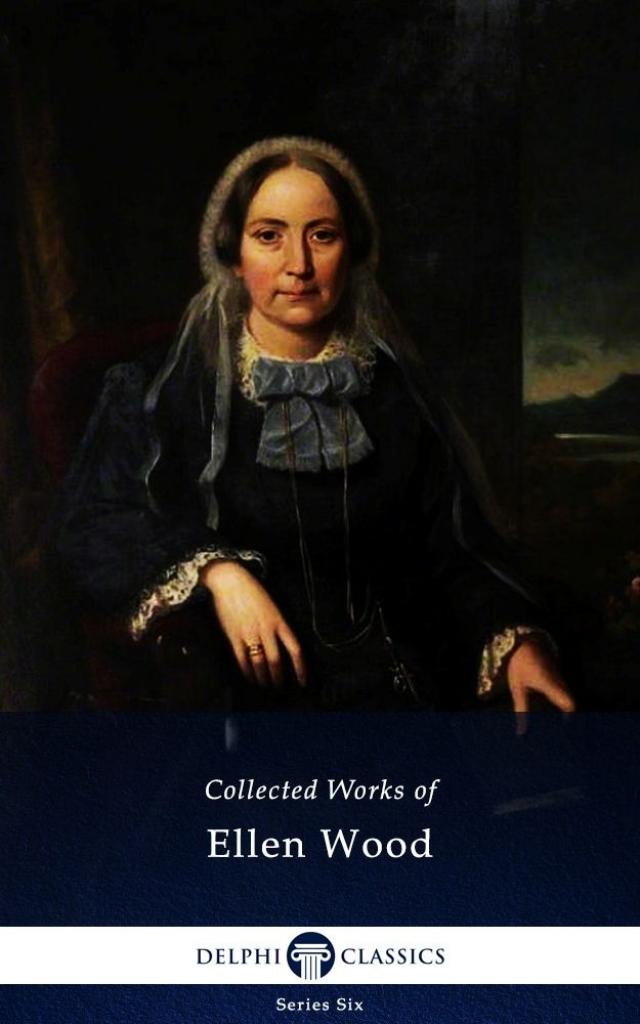


“In Lady Adelaide, for instance, we see all this; and the effects of the burden of a secret on the human heart, with no pretence of casuistry, is revealed. So too in The Red Court Farm, and The Master of Greylands, where evil traffic persisted in leaves effects not only on those innocently involved in its coils, but also on those who, having once committed themselves to an unworthy course of action, found to their cost that the ends they had purposed were defeated by the very means taken secretly to secure them.
“And yet, in the midst of all this, we have a group of persons as truly real as those we meet with every day.
“In The Master of Greylands we have the querulous, exacting mistress, the tomboy Flora, who sets the house by the ears, and Ethel Reeve, so sweet, patient, and confiding, and Mr. North whose courtship of Ethel is the most natural conceivable — not to mention the worthy pair, so well contrasted in temper and ways, Mr and Mrs. Bent, at the inn.
“Miss Castlemaine, too, who becomes head of the Grey Sisters, and at the last refuses the weak-kneed fellow who allowed her father to separate them and to choose a wife for him, and this though he had now become a baronet — Sir William Blake-Gordon, and a most tempting parti. But you feel that Mary Ursula is exactly the woman who, having once chosen such a work, would stick to it — having put her hand to the plough, would not turn back.
“Not seldom the very absence of all conscious artistic elaboration aids the effects of reality and truth, which it is the business of the novelist to secure; and the immense and lasting success of Mrs. Henry Wood’s novels demonstrates this in face of the superfine and captious criticism of which she has occasionally been the subject.
“In opposition to a very great deal of this, we have found, as a result of the elements we have hinted at, and in some of her novels in its very highest form — notably in Lord Oakburn’s Daughters, George Canterbury’s Will, The Red Court Farm, Mildred Arkell, and St. Martin’s Eve — one of the most rare and at the same time one of the most unmistakable evidences of true power in creative art; and that is the quality of inevitableness in the development of the characters.
“You can foresee in a general way how the thing will necessarily end, and this only whets the desire to know how it will end.
“Take Lord Oakburn’s Daughters. The characters of the four sisters are admirably contrasted and sustained. Lady Jane, so serious and self-respecting, so submissive to tradition and legitimate authority, so considerate of others and yet so ready to defy what she regarded as unjust or really inconsiderate towards herself, there is no likelihood that she should compromise herself, or act in any headstrong manner. Lady Laura is headstrong, vain — a flirt from the first moment that we see her — sure almost to fall into some pit dug for her by any one who is designing enough and cool enough to carry out the deception in a polished manner. As for that dead sister, it is evident that she was independent in character, and too self-reliant, without the check of insight and experience, and also rushed on her fate through other defects than her sprightlier and more foolhardy sister. The picture of Lady Jane, when her father, to her surprise, brought back the governess as his wife, is one in which mastery of situation and faithful character drawing are alike conspicuous. And then the youngest, we see in her precisely the influence we should expect from Lady Jane, sufficient to steady and to guide.
“We find the same power in George Canterbury’s Will.
“The leading characters are all life-like, real — what is more, their character is their fate. Caroline, who rejects the honest, frank and manly Thomas Kage, for the sake of George Canterbury’s money, and who, when the time comes, fancies she has only to throw herself at Thomas Kage to be accepted, we see her fate prefigured in the very capability for so acting. She rejected the gold for the tinsel when the gold was at her feet, and finds herself the slave and victim of the tinsel at the last, when, in reaction, she weds the designing, unscrupulous scoundrel, Captain Dawkes.
“‘A knave is nothing but a fool with a circumbendibus’ was hardly ever better illustrated.
“And Captain Dawkes, too, we see his fate prefigured in the very first glimpse we have of him. But Mrs. Wood manages to sustain the needful interest in the contemptible creature by the play of a fine humour. Some of the scenes in which he figures with his sister Keziah are very powerful; and the relations in which the two place themselves to the old, crusty, good-hearted, penetrating, half-deaf Mrs. Garston, with her stick and its significant rap-rap when she has anything emphatic to say, may take rank with the studies of the earlier masters for truth, realism, and incisive portraiture.
“And Mrs. Henry Wood has the genius to act on Charles Reade’s motto without affecting it.
“The characters unfold themselves by word, by action; she does not describe, or describes but little. For faithfulness of outline, for force of presentation, few studies in character of recent years have been better than old Mrs. Garston. Millicent Canterbury and Keziah (given up, with all a weak woman’s fondness, to the hopeless task of reforming a rake, or at least of catering for him when she can) are fine contrasts; as are Thomas Kage and Barnaby Dawkes. Nor do we forget Lady Kage and her peculiarities, nor poor Belle Annesley and her fate, which imparts a pathetic colour to the latter part of the story. Here, less than in some other of Mrs. Wood’s stories, there is no strain in the plot; the conception is simple, natural; and the characters in working out their destiny create, as it were, the action and the complexity of circumstances. The story has very great elements of interest.
“In Roland Yorke, too, you see the same tokens of power. The various characters forecast themselves; poor Hamish Channing, too sensitive, delicate, tremulous, with fine genius unrealised or undeveloped; Gerald Yorke, with his lacquer polish, pretension, low cunning, jealousy, and mean revenge; and Roland Yorke, incapable of finesse as incapable of suspicion, though his instincts about Gerald held him right. That scene where Roland is summoned to the bedside of his relative, the baronet, whom he is to succeed, and cannot be made to realise it as possible that he can be successor to the wealth and title, is in its own way excellent.
“Poor Roland — with his tons of frying-pans in Natal, a drug and a failure, which he could not help referring to, in his frank, boyish way, to the constant discomfort, even disgust, of some of his friends — was a true gentleman at heart; the unconventional, Nature’s gentleman; and as such Mrs. Wood meant him to be accepted, in contrast to the polish and veneer of that gentleman of the world Gerald Yorke. That there is no definite pointing of the contrast only makes the effect the more felt — the author leaves the contrasted pictures to point their own moral, just as in life itself.
“In Dene Hollow, too — though here a great deal more of the mysterious is introduced and used effectively for the author’s purposes — we have proof of the same power in the portraits of Tom Clanwaring and his cousin Geoffrey, in Maria Owen, and at least one other character.
“In Verner’s Pride t also, we note the presence of the same characteristics, associated with more of plot, mystery, and surprise, which Mrs. Wood, in her happier conceptions, knew so well how to combine with fresh, natural studies of life.
“Who that has read Venter’s Pride can forget the trials of that honest gentleman Mr. Lionel Verner, so resolved to do right, yet acting fatally under impulse in submitting himself to the wiles of a designing siren, and rejecting a faithful lover, who, however, proved herself to be one of the truest stamp, and in the end found her reward; or Jan, that genuine, but awkward medical practitioner, despised by his family, who were, indeed, half-ashamed of him, but who in a crisis could do the most self-denying things without any thought that they deserved any particular notice, and finally surprised them all by making such a marriage— ‘poor, despised, ill-dressed Jan’ — as brought honour to the house.
“That is a true study, — close, careful, loving, direct from life, surely; we cannot fancy that any novelist would or could invent such a character, and never have known, some time or other, just such a one, and understood and loved him as he deserved.
“It is long since we came to the conclusion that no effort of invention can produce a true character; that all the most excellent work of the novelist is, after all, as Goethe said, re-presentation; that, in its highest aspects, fiction is a mirror of life and character — no more, no less.
“What is merely spun out of the brain is like the cobweb spun out of the spider’s inside; it may shine and glimmer in the sun, but the slightest wind blows it away, and leaves no more record or impression than if it had not been.
“What an author has met, faithfully observed, and lovingly and patiently dwelt on, is that which pleases us — which holds us as with a sense of right. The fable may be and must be in so far invented; but that, with a true novelist, is only the string on which the jewels are strung. The art lies in preserving the sense of consistency in character and act, and making it minister to the fable or the movement.
“In her best moods Mrs. Henry Wood does this, as George Eliot and Mrs. Gaskell did it. She tells us what she has known and felt; and every now and then we are pulled up with a sense of surprise, remarking to ourselves: ‘That, at any rate, is a bit of autobiography, nothing less.’ In The Channings, and yet more expressly in Mrs. Halliburton’s Troubles, this is felt; and in Johnny Ludlow the peculiar way in which the author’s experiences are involved with those of the young lad forms one of the main attractions in the book. “The reader may not always realise this; it was not the intention of the author that he should realise it, and the triumph of her art is here — that what she has seen and known is so faithfully translated to us through the medium of a young and forming mind — a mature mind speaking through the medium of a young mind without any sense of egotism or contradiction.
“But all the time, while we believe in Johnny Ludlow, we know that Johnny Ludlow is himself a creation, in the sense of being indirectly represented, like any other character. The simpler the art in this kind — the less of consciously-created machinery used as a means to forward the author’s plan — the more of dramatic genius in the higher sense we have, for it is much easier to spin a fable than to portray a character consistently and continuously on the mere planes of ordinary life and incident.
“It was universally acknowledged, on the appearance of the first Johnny Ludlow papers, that they were masterpieces in their own line. The later ones, it may be, failed a little in the freshness, the clear outline, the natural atmosphere that marked the earlier. This was also unavoidable; but even they would have made a reputation if they had come first.
“The dramatic atmosphere is so well maintained. It is the young lad who speaks from first to last — there is no lapse in this respect. Even if he becomes a little loose and garrulous, and inclined to dwell on less important points, it is still Johnny Ludlow to whom we listen. The pathos is natural and never forced; the humour is never hackneyed; all the world of that gruff, bluff, kindly old Worcestershire squire is painted for us with the simplest realism, seen through the double medium of the squire’s experience and Johnny’s inexperience or half-experience.
“Mrs. Wood’s rare knowledge of boy-nature, and her insight into it, of which we had had many evidences in The Channings, Lady Grace, etc., come out here in a very definite and attractive manner.
“Johnny Ludlow was published with the utmost secrecy as to authorship at first; and yet, though the Argosy, Mrs. Wood’s own magazine, was the medium, the secret was kept for a long time — in fact, the papers were issued in book form, and had been reviewed in all the leading critical journals, before the authorship was guessed at; and then it was divulged, not by a reviewer, as a result of insight, but by the author.
“Mrs. Wood apparently had a purpose in thus acting. It had become the habit of criticism to treat her as though she were merely a spinner of plot, — a dealer in murders, mysteries, surprises, and moving accidents of all kinds. She took the best means of disproving these allegations, and at the same time had the very best sort of victory over the reviewers that it is possible for an author to have. The self-same elements that were so highly praised in the first Johnny Ludlow volumes were the very qualities which had so long and persistently been denied her.
“And the victory of the author over the reviewers did not end here. For this reason: that a careful and acute critic, had he read with close attention and impartial eye the earlier novels of Mrs. Henry Wood, could scarcely have escaped finding that her treatment of boy-nature, from the beginning, was just such as to lead to expectation of such a work as Johnny Ludlow.
“We look in vain elsewhere for such renderings. Other authors, like Mrs. Hodgson Burnett, have made admirable little panel pictures, if we may call them so, with a single figure set forward marked by unmistakable grace and sentiment, as in Little Lord Fauntleroy; but there is a sense of exceptional and over-refined delicacy about this work as about others of its class; a remoteness from real boy-nature; a something so wistfully select and uncommon that it strictly belongs to a class by itself. It stands to Mrs. Wood’s Johnny Ludlow papers, and the sketches of boy-life in the earlier novels, precisely as a painting of the Watteau type does to the realistic delineations of the French peasant-painter, Millet. In Mrs. Henry Wood you have the English boy set before you precisely as he is, with all his frank honesty, with all his ingenuousness, with all his unconscious rudeness, his insouciance, his trickiness, and his queer mixture of unaffected affection and capacity for cruelty, in certain directions. No lady-writer, in this respect, has ever approached her.
“We recall here, as a feeble justification of what we have said, a little passage from Lady Grace — a novel that has some of the weakness as well as much of the strength of the author — in which two half-brothers are set before us — Cyrus and Charley Baumgarten; very fine boy-studies indeed. The two are at the College School in a Cathedral City, and there is a chronic feud between the boys of that school and the boys of a Charity School near by. One day Charley — the younger — gets set upon by a posse of these boys, and his big brother reaches him just in time to beat them off. He then leads Charley, whom, on his own account, he constantly bullies and sits upon, into the cloisters and soothes him; and the dialogue which follows stands almost alone, at once, for truth, humour, and pathetic touches.
“In A Life’s Secret we have some very remarkable work in the way of character-study — the more that we now know that Mrs. Wood had never come into any personal relation with the class she there so effectively paints.
“The life of the workmen at Hunter & Hunter’s, the contractors, in their very contrasted types, are exhibited with fidelity, force, and the finest sense of dramatic effect. All the life of Daffodils Delight, both in its brighter and shadier aspects, the low cunning and self-serving, fox-like pertinacity of some, the generous self-denial and unconscious heroism of others towards neighbours in misfortune or in sickness; the squalor, sly drunkenness, and vice on the part of some, and the patient well-doing and unpretending honesty and faithfulness of others — all is pictured with the clearness and decision which one could have fancied only possible to close familiarity and daily observation.
“The finest work, in this respect, is in the exhibition of what are the most unpleasant types in themselves — another proof of power.
“Sam Shuck in his own way is unique; the pattern of all the low, cunning strike-leaders that have been, or are to be, who, themselves inefficient and incompetent in work, or incurably lazy, would sacrifice the peace and happiness of neighbours for the sake of indulging, as long as they may, their love of fine clothes and good dinners, and posing as persons having influence and authority, whose ‘gift of the gab’ and low cunning are their capital.
“We wish we had space to give the picture of the first meeting of the workmen, with Sam Shuck’s irresistible speeches, or the episode of Sam Shuck’s defeat, when, disguised, he forms one of a party to maltreat the men who had gone back to work, and in which Austen Clay — a natural and consistent piece of portraiture from first to last — shows himself the better man.
“The whole thing is relieved by the sketches of the Quales, the Baxendales, and a few others; and the pathetic -touches associated with Mary Baxendale and her mother are made the more effective from their unexpectedness, and the force of contrast with what is around and prevailing. Mary Baxendale is indeed a fine character, sketched in a spirit of large sympathy; and that episode of self-denial in the pawning of her one little bit of ‘fine art’ is indeed touching. And Mrs. Dunn — the eager supporter of Shuck in his first efforts, and his unyielding enemy in the end — is also good. ‘Ain’t nine hours a day enough for the men to be at work?’ she urges. ‘ I can tell the Baxendales what — when we’ve got the nine hours all straight and sure, we shall next demand eight— ‘tain’t freeborn Englishers as is going to be put upon. It’ll be glorious times, girls, won’t it?’”
In praising Mrs. Henry Wood’s comprehension of a boy’s life and character, Dr. Japp does her no less than justice. She was brought up in such an atmosphere: was constantly surrounded by college boys, and, in her quiet way — too delicate and sensitive to be actively amongst them — must have closely observed their characters and dispositions, grasped and comprehended their very natures, many-sided as the nature of a school-boy is. Out of this element was evolved Johnny! Ludlow, with all his realism; a character so true as life. Her own brothers were college boys, and constantly brought their friends to the house. Cyrus and Charley Baumgarten, sons of the Church dignitary, were their schoolfellows and companions; they are not mere creations of the fancy, but actually lived, and were exactly as represented. The very incident to which the article refers was a true one, and if the conversation which ensues between the two boys did not actually take place, we can easily imagine that something of the sort did.


