

Works of Ellen Wood, page 1312
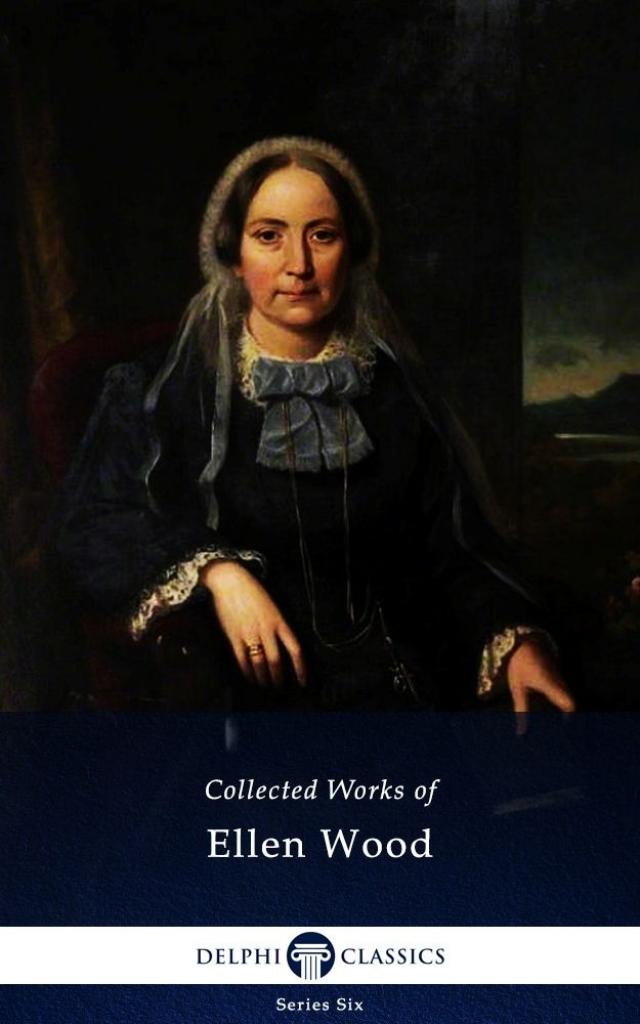


Though she had a keen sense of wit and humour, in quiet moments her eyes were rather distinguished by sadness, as though the mind were occupied with the momentous issues of life, and found there much cause for sorrow and thought. Her prevailing expression was one of absolute repose; no doubt partly the result of a life lived to a great extent in the retirement of her study. When writing became a serious occupation, her strength did not admit of anything else. Even after a quiet evening with friends she occasionally suffered from nervous exhaustion that almost felt like death itself. At such times she could only lie back in her chair, her eyes closed, a soft flush upon her face, until rest restored her. Fortunately she had a great reserve of vital power.
But her calmness and serenity in a great measure came from within. Her whole life, with its cares, responsibilities, and joys, was taken to a higher Refuge than any to be found on earth, and there rested in perfect trust. One of her favourite hymns was Cowper’s “God moves in a mysterious way,” especially the verse —
“Ye fearful saints, fresh courage take;
The clouds ye so much dread
Are big with mercy, and shall break
In blessings on your head.”
In her saddest hours she acted up to this, in the letter and in the spirit. Nay, it seemed the greater the trouble, the firmer her faith.
From the age of thirteen to seventeen most of her life was spent upon her reclining couch. No doubt this very much helped to bend her mind in the direction it was to take, just as Scott’s long illness about the same age developed his own powers of romance. It also largely gave her that matured habit of thought and judgment which afterwards distinguished her.
At the age of seventeen the curvature became confirmed and settled; she was pronounced cured; that is, she ceased to suffer. Nothing more could be done; it was no longer necessary to be always reclining; but the defect was there. In earlier life it was not very apparent; the curvature was inward, not outward — less conspicuous but more fatal.
At first very little seemed wrong with the figure, saving that she remained small and short, her height never exceeding five feet. But, the spine excepted, she was so perfectly formed that her movements were graceful and dignified, and caused her to look taller than she really was. Her constitution was remarkably sound, but henceforth the body was to be frail, delicate, without muscular power. She could never raise the most ordinary weight, or carry anything heavier than a small book or a parasol.
But who shall measure the pain to the sensitive spirit, when, growing into womanhood, she realised that she was never to be quite as others: with all her love of beauty and perfection, she herself in form was never to be perfect? It was more or less a lifelong sorrow. To these highly-strung temperaments, shrinking in acute self-consciousness from the slightest pity, the knowledge of a personal defect brings suffering none can realise who are not similarly constituted. Of Lord Byron it was said that his deformity changed the whole course of his life, affecting all his mental and moral disposition; and probably it was so. With Ellen Price it certainly added greatly to her sensitiveness, and caused her to be painfully conscious of remark. She felt that, disguise it as she would, she must pass through life with a defect which must be ever more or less apparent. Her refinement and imagination only exaggerated the evil. It really was no evil whatever; was never in the least degree unsightly, never took from her gracefulness; but she did not think so, and could not be made to think so, and the defect assumed undue proportions. She never spoke of it — probably never could have spoken of it; but we know how she felt it, and in one of her characters one gathers what it was to herself. Lucy Cheveley, in Mildred Arkell, might almost have been the counterpart of Mrs. Henry Wood, as she is there described; and we may be sure that the sensitive pain attributed to Lucy Cheveley was written from the experience and emotions of the author.
The cause of this spinal failure was never quite known. It may have owed its foundation to Mrs. Tipton’s throwing the child over the hedge to save her from a still worse evil. Or it may have been inborn, only waiting time for development. The strength and activity of the brain may have proved too much for the weaker physical powers. Many writers have suffered in the same way. It was said by one who had been intimate with all three, that if you followed Miss Mitford, Mrs. Barrett Browning, and Mrs. Henry Wood, the ladies walking side by side, you could scarcely have told one from the other, so much alike were their figures.
We can speak of a fourth from experience — Julia Kavanagh. She once told us that in early life she suffered exactly as Mrs. Wood had suffered; but she was even smaller and shorter, and the mischief in her case was more evident.
With her also it may have had something to do with her singular death. For long she had suffered from constant neuralgia, and leaving Paris, where she and her mother had lived for many years, they went to Nice and made it their home, hoping illness would yield to the softer climate. It only grew worse, though her health seemed otherwise perfect, and she continued to write. She was still only in middle-age.
One morning, about three o’clock, her mother heard a sound in her daughter’s room as of a fall. Hastening in, she found her lying upon the floor, but quite conscious.
“O mamma,” she laughed, speaking in French, their habitual language, “how foolish I am to have fallen. And the strange thing is that I do not know why I am out of bed or how I got here.”
“My dear,” said the alarmed mother, “do you feel ill?”
“I feel perfectly well,” returned Julia Kavanagh. “And I cannot imagine what brings me here.”
But at five o’clock that afternoon the gentle spirit passed away, apparently for no physical reason; the doctors could call it nothing but a crise nerveuse. Mrs. Kavanagh, herself aged and nearly blind, never recovered the blow. Though she lived on for many years, she scarcely ever smiled again; and her daughter’s image seemed never absent from her thoughts. The life of the mother had been unusually sad and unhappy, and her daughter was the one bright spot in her existence, her constant, close companion, with kindred intellectual tastes — for Mrs. Kavanagh also was a woman of great imagination and wrote charming fairy tales.
Julia Kavanagh’s deformity was very apparent, but she was one of the most delightful, gentle, and intellectual of women. The lower part of her face was uninteresting; the jaw massive and powerful; the upper part beautiful. “The intellectual faculties largely developed — and no doubt the moral also,” said Charlotte Bronte, looking steadfastly at her the first evening they ever met — at Thackeray’s house in London: a remark Julia Kavanagh thought somewhat singular. Nevertheless it was true. She too had large wonderful brown eyes, with a singular softness and sweetness about them, through which one saw shining a spirit of purity and earnest devotion: a certain sadness also, as if she knew that, not being as others, she was cut off from their fate and fortune, and the love dramas and earthly happiness she was so fond of describing could never be hers. To a casual observer her face remained plain, with its dark brown complexion; it was only when you came to talk to her that you saw its beauty — the fine eyes, the noble expression, the magnificent head crowned with massive coils of rich black hair.
Probably she also felt keenly her deformity, for it was very conspicuous. And as human nature always wishes for the impossible, and those joys seem brightest and best which are never to be ours, so Julia Kavanagh may have felt a longing for the closest of earthly companionship, for ever denied to her. In many a short poem, such as the following, she would express her thoughts and emotions: poems unknown to the world, but possessing sweetness and sadness; that, above all, are suggestive.
“I do not love, yet there are days
When, if I hear a footstep come,
My heart will beat;
When with bent ear and dreamy gaze,
For what I know not, nor for whom,
I sit and wait.
“I do not love, but there are nights
When my soul melts in thought so sweet
I cannot sleep;
When my heart throbs with vague delights,
That with vague sorrows blend and meet,
Until I weep.
“I do not love, but morns there are
That in my soul a sunshine make,
And seem to say,
‘Thy life will boast another star —
A loved and unknown voice shall wake
Thy heart to-day.’
“Alas! that blest mood may not last;
Though step should come I heed it not;
Cold grows my heart.
Love, dost thou come and go so fast,
And art thou, Love, as soon forgot,
As cold depart?”
The first three verses show longing and capacity for affection; the last and somewhat vague verse, the folly of hopeless desires. Had Julia Kavanagh cultivated the talent she might have taken rank as a poetess, for she possessed a true poetic touch; but writing was not only a labour of love with her, it was a necessity. By it she made a lifelong home both for her mother and herself; and perhaps the most beautiful trait in their lives was their utter devotion to each other. They both sleep in the cemetery at Nice, overlooking the blue waters of the Mediterranean, beneath a white canopy of marble — a magnificent monument which was raised by the mother to the memory of the daughter, and for which she denied herself all luxuries. It might truly be said of them as of Saul and Jonathan, that “lovely in their lives, in their deaths they were not divided.” For although Mrs. Kavanagh lived some years after her daughter, her spirit ever seemed anticipating the moment of reunion.
After Julia Kavanagh’s death her mother sent to the writer, as remembrances of a very close friendship, many of her MS. poems, which had never seen daylight; poems tender and true, full of passionate longing for the beautiful and the eternal. Equally charming were many water-colour sketches of lovely scenes taken by Julia Kavanagh during their residence in the Two Sicilies, proving how diversified was her talent; whilst a book of devotions sent with them was illuminated by her with a skill worthy of the monks of old. The possession of exceptional powers too often seems purchased at the expense of physical strength. Exertion becomes impossible. It was so with Julia Kavanagh and with Mrs. Henry Wood; we know that it was so with Mrs. Barrett Browning, and it may have been so with Miss Mitford. With Mrs. Wood the frailty of the body was so great that every word of East Lynne, and of many of her novels, was written in a reclining chair, her manuscript upon her knees.
CHAPTER V
“That loss is common would not make
My own less bitter, rather more:
Too common! Never morning wore
To evening, but some heart did break.”
WHEN Ellen Price was passing out of childhood into the sweet days of “maiden meditation,” trouble visited her home. Not the overwhelming trouble that has come to so many homes in the world, when they have had to be broken up, their members scattered abroad, and the places that knew them know them no more; nothing of this serious nature; yet trouble sufficient to make a marked change in the life of the sensitive girl, whose only care hitherto had been the spinal delicacy from which she had slowly and only partially recovered.
It was about this time that Huskisson with his ideas upon free trade opened the British ports for the introduction of foreign goods. The immediate effect upon English glove manufacturers was disastrous, and is too well known to need description here. Men of limited works and means were ruined and disappeared at once and for ever. Others, more wealthy, kept on, hoping against hope, only to disappear in their turn. Those who weathered the storm did so at immense sacrifices.
Amongst the last was Mr. Price. We have said that he was ever considerate towards those who had no resisting powers of their own. He was now to prove the reality of his sympathies by a severe test.
As soon as the ports were opened, Mr. Price, from a worldly point of view, would have done well to close his works and retire; his fortune was large. But nothing was further from his intention. To discharge his men in the present crisis was to consign them to the poverty now reigning in Worcester. It was also supposed that as soon as the evil was realised the ports would be closed again; but for years the manufacturers went on hoping against hope. In that crisis numberless weeks passed, and Mr. Price lost, week by week, a sum that in itself was a small fortune: preferring to do this rather than sacrifice his workpeople. Matters had grown more and more serious around them, and thousands of working men and women were starving. Huskisson saw his mistake when it was too late. Even then it was not at once rectified, and though it had been, ruined masters could not be restored to prosperity. Numberless operatives were scattered over the land, finding other occupations, or dying of despair and want. Mr. Price felt the blow keenly, but was not overwhelmed. Yet he paid a great price for this generous conduct, for when the crisis was over he thought it right to diminish his household and live in a simpler manner than of old. The wealth lost was never recovered. The home was still happy and abundant; it was a mere question of degree; in comparison with the ruin around there was every cause for gratitude. But it was a great sacrifice, and had the struggle continued very much longer, it is questionable how far it would have been justified. Mr. Price enjoyed that earthly blessing, an easy competency, to the last; but it was all very different from what had once been.
Probably few living remember the devastation and ruin that came at this time to many of the manufacturing towns of England. In Mrs. Halliburton’s Troubles Mrs. Henry Wood has given a detailed description of the industries, their ways and works; and in Mildred Arkell — more especially the chapter headed “A City’s Desolation” — she has described the hopelessness that fell upon so many when the ports were opened.
All this trouble only drew the father and daughter more closely together. She was of an age now to enter into his deeper thoughts and sympathise with his cares. Their readings took a higher flight, and she had gained a good deal of classical knowledge. The foundation of this had been laid in bygone evenings, when the father would have before him his young sons — some of the College boys Mrs. Henry Wood describes so vividly — and help them in their Latin and Greek difficulties. The daughter was always present on these occasions, and very soon knew more of the dead languages than her brothers. Nothing else was taught in the College School in those days; for English and accomplishments the boys had masters at home.
Father and daughter had many a long and anxious conversation upon the falling houses and crumbling fortunes around them, the suffering and privations of the working classes, an evil too great for private charity. That those times and evils sank deeply into the heart of Ellen Price is proved by the vivid pictures she drew of them more than thirty years after they had passed away. There was also her memory to trust to, which as we have said was remarkable. She never forgot a person once met or a story once heard. Many of those around her had marvellous and romantic histories, every detail of which was remembered without effort. It was the same with all whom she only knew by report. She could go through hundreds of histories in this manner, and years afterwards would remember names, places, and details of people with whom she had never come into contact. No doubt this was of great use to her in later life, and caused her to work fact and fiction together in that singular way which makes her novels dramas of real life, so that, as the Athenceum once said: “The power to draw minutely and carefully each character with characteristic individuality in word and action is Mrs. Henry Wood’s especial gift. This endows her pages with a vitality which carries the reader to the end, and leaves him with a feeling that the veil which in real life separates man from man has been raised, and that he has for once seen and known certain people as intimately as if he had been their guardian angel. This is a great fascination.”
But this sweet companionship was about to be interrupted for ever. Time was steadily flowing on, and bringing its inevitable changes. Ellen Price had grown to young womanhood, her earnest, thoughtful eyes occupied with the mysterious problems of life; herself conscious of all the issues of existence for good or ill; keenly alive to personal responsibility and influence. She had had two homes, and was soon to have a third.
There had been the first home with the gentle and refined grandmother, the grandfather who too soon had passed out of existence. This had lasted for seven years, and in after days Mrs. Henry Wood was wont to say that every seven years brought some important change in her life. It was so until seven times seven years had passed away; after which life to the end flowed on in an even current, still marked by many cares and sorrows, but no dramatic changes.
Next there had been the life in her own home; companionship with the beloved father: year after year growing dearer to him as mind and spirit developed. There had been the long, careful training of the intellect; years of quiet study with her governess, and frequent escape in the father’s sanctum; ending as the years went on in becoming his almost constant charge and companion. There had been the years of delicacy and enforced bodily inactivity, terminating as we have seen. There had come the sad crisis when the English ports were opened, and all her keen sympathies, all her capacities for sorrow and suffering were drawn out towards those in despair and desolation around her; the interior abundance of her own home only making the exterior misery more vividly realised.
All this life, this home life, this cathedral life, associated with her earliest recollections and affections, entwined about her heart-strings for all time, was to be interrupted and given up. The whole scene and current of her existence was to undergo a complete change. Other tongues were to sound in her ears, and faces never before seen, and manners and customs hitherto unfamiliar, were now to take the place of people and places which had made her earthly happiness.


