Another Love Discourse, page 18
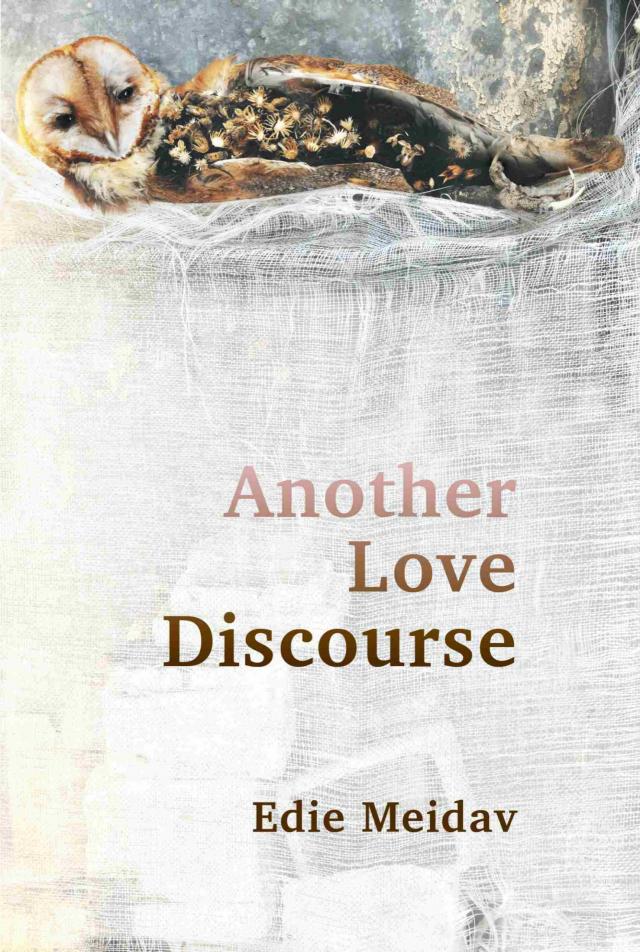


Here you walk the silence of the woods, rain softening the highest branches, shining leaves and bark. On return, cheerful in awe, you see the family’s chickens, the rooster who greets you at first with his odd descending Dorian call, but then saddens you with his return to action: the rooster is pecking away at the inside of a misbegotten eggshell.
Atopos
Do you learn most
about love through
absence?
My father traveled with the zeal of someone believing he was doing the right thing for the world. Kenya, Honduras, Tanzania, Nicaragua, Guatemala. Anywhere the boils inside the earth argued against the surface, like a reverse fireman he showed up, ready to bring out its fire, and so, as he believed, help those who walked its surface. Renewably. Amid fumes of sulfur.
Stay warm or cool, cook, turn on lights by which to read, but geothermal development can now seem the fantasia of a bookish idealist who believes the interior redeems and is endlessly renewable. Once, he sent a beautiful tufted bird to me, its wings the color of fire, something I received in a sad home before I was five, on a postcard all the way from Africa, and I stroked it, imagining him inside a faraway continent. This was to love in absence.
While he sought to be useful to the earth, the three of us ate eggs. Eggs for every meal, as cooked by an arbitrary friend who descended, Obi from the kibbutz. For a long time, every egg tasted horribly of absence: left with Obi and my brother and Uncle Rick roosting with us.
In every picture from
that period, I look
down and away.
If I am smiling,
it is to myself.
If I am looking
at the camera,
it is with distress,
modified into a sort
of half-lidded curiosity
for school pictures.
Roland would say the mechanical analogue, the denotation of a myth—the participating schoolchild—binds with a connotation of despair, an alien, second-order message, ungraspable, and that the photographic paradox can then be seen as the coexistence of these two messages. That essentially one must invent a code to make or read any photo purporting to express reality, seeing in such official representations that the urge to make something neutral or objective makes anyone—school photographer, fellow kids, me—aim to copy reality meticulously, ending in something impossible, simultaneously a high-wire act: both ostensibly natural and cultural, in this case, the dance of the partly mothered child claiming to fit in. The wise wallflower pretending to smile at all the codes. My half-lids to my adult self stay my own private punctum.
We cannot read a photo without living inside codes: it is as if we try to make our way through a giant hall, from one end to the other, toward one window, one sluice of light, but the hall itself is strung through with geometric wire, taut, as if in a child’s schoolyard game of cat’s cradle: we bend and duck in and around the wire because these codes rule our perception and action, while we cannot quite see the wholeness of the light shimmering down from the window, we see it sliced by the tensility of codes, the wirelines. What lives is light, the mechanical analogue, a myth we hold about the meaning and height of the window. We dimly understand such myth. And at the same time as you make your way through the great hall of yarn, you invent your own code to survive and get to the other side, your own ball of wire tight in your fist buried in your pocket.
In nursery school, to soothe my lack of parenthood in the presence of bullies, I often went to sleep with a wad of chewing gum in my mouth and once woke with a pink network all over my face, a (predictive)(past)(impossible) replica of iodine poured as punishment on mother’s legs as a child (of her, she in me, unnursed, we both sought comfort wherever it could be found). Solo toward the public, I embarked on the bus, my forever friends the window water beads and their hydrophilic dance of friction. And made the first mistake, believing stories could hide you. Lied to teachers, saying we had a cat and that the gum I slept with (that had ended up all over my face) was a kitten’s scratch. Bad in the lie, hiding what I believed was my badness. (And so ended up skidding into my first failed fiction.)
When approaching a new anniversary with someone who had taught me what trust could feel like, I lived a continent away from him. A new sensation: to wake and believe in the faraway beloved. Rise into idealism and the day can dissipate it. Go downstairs and your nonvegan habits emerge: he is far away, harming nothing. You are here in your parsonage home, craving eggs. Trick to making eggs near a vegan: make them quickly, make no smoke (of ritual sacrifice), as if brevity mitigates the guilt. What the vegan knows: the consumption of embodied ideals capable of changing the world.
When one daughter entered my body, I craved meat suddenly, and she ended up a true carnivore, at least for some period of her life. While wherever he goes—people and their feasts, burning carcasses—scent accosts him; no matter the weather, he must go outside to breathe.
When we first got together, in the temporary post-nest, pre-parsonage apartment with its high ceilings and leaky porch, I hid and ate a boiled egg, an uncomfortable borrowing from days of an eating disorder, when my parents’ different ways fought in my veins—the famished passion of my mother, the Germanic rectitude of my father—that era when death seemed preferable to continued struggle with the body-mind dialectic. So easy to replicate early solitude, to have it become the nomad’s knapsack you take with you wherever you go. So easy to hide in the lost world in which an egg was all you would eat. Make a different choice, you can tell yourself, be the one who savors strawberries.
Imagine you cannot justify eating animals. Imagine the older boss who used to startle me, rubbing my arms sans consent, up and down, every time I saw him in our work site, all of us devoted to a Roland journal that also rose and died; he happened to be a famous meditator in our region and also something of a romantic hypocrite, the two traits not always untwinned. Once, he took me out to dinner with his far younger wife. I honor the spirit of the animal when I eat it, he said, as the Tibetans do, chewing the gristle.
Let us imagine your health seems to improve whenever you stray from being vegetarian—at what cost a fellow animal’s life? Do you deserve to displace another? Imagine you drive older daughter to a gathering of people determined to survive apocalypse by learning to create their own tools. She will camp, and at some point in the weekend, a sheep will be slaughtered. Rams cause distress, they say, and your hypocrisy might also rear its head: how can they all hunker down nearby and watch the slaughter of an animal?
Consider what the newspapers report: abroad, as some slaughterhouse workers have gotten the glittervirus, 22,000 animals are being suffocated with horrid foam. That’s like what they did to the jews, one daughter says, ripping open the ancient fridge, Zyklon B.
You and vegan beau drive to the walk a friend—a colleague—told you about, a saving grace in her teetering marriage. On a rail trail, you had run into her and she was surprisingly open. This era turns people into tins: some pried open, others wiring themselves shut, Anne Frank in the attic making not a peep.
At the head of the trail, a sign proclaims this state forest to remain open to hunters at all times.
When I was stationed down in a small southern town to help X with a project, a stranger, a kind lawyer and hunter, no oxymoron down south, saw fit to give me his broad-desked office to finish an article on Roland. Just outright gave it to me, a stranger in town for a couple of months, his contradictions ordained by the Bible’s true Author-God, as he saw it: I have dominion over the fields and also that other line of yarn I must be kind to the stranger. By some grace he let a jew-stranger pass with privilege into a holy site, his office. What kind of animal is she who feels forever hunted, belonging nowhere on this earth yet seeking to string together moments that matter as if temporal beads can make a place?
We walk in the woods and the carnivore talks with the vegan. The vegan startles, running after the dog across a meadow, shouting, to keep her from hurting a chipmunk, coming to soothe the dog from his upset by rubbing her belly. After a stunned moment, the chipmunk hops away. The carnivore says: better the dog kill it now than that it be maimed. A moment of silence under the trees absorbs this idea about predator and prey, but the argument cannot be swallowed.
More egg
Maybe useful here to consider the following about Roland: using the military jargon of the sanatorium, occasionally he would go on leaves to visit his mother. Each visit home reminded him how much she had to struggle to keep roof overhead, table laden with eggs and oranges every month. These jaunts tired him out; the house of mother was no sanatorium. Yet in the sanatorium, when sick, he had to reckon with long spells of enforced leisure, lacking music, company, writing, forced to be prone. Some of his most ardent readers turn to him to understand what happens in a bed, yet his words as arrows sought the zone of elsewhere, finding pleasure in targets foreign to the quiver, bed being both his prison and also the imagined place of unreachable meaning and pleasure; he could never write lying down.
His only distraction in bed back at the sanatorium: reading. And when he felt better, able to move about, able to sit and write, the place offered the pressure of mortality: how much he, like many, loved to write toward a deadline (he confesses as if to me this moment). He felt himself equivalent to young Julien Sorel in The Red and the Black, making bets against himself, on a final tour of Switzerland to ask material favors of wealthy Swiss.
I have always wanted to argue with my own moods (Roland writes, moodily).
So many grievances with himself, the text of his being polyphonic and feisty: he loves the music of Chopin but argues that he hates it, as only virtuosos can play his music. (Bourgeois socialist, he wishes for an art all can reach.) Some of his friends lack a clue about his sexual preference, which he aims to keep a casual unannounced trait, not wholly closeted. It is the attempt at casualness which ultimately betrays; the wife of one ostensibly straight friend visits another wife of another ostensibly straight man and whispers about Roland (syntagmatic stereotype, the predator), making that wife fear for her poor husband.
A scholar ruled by passion, Roland aims to evangelize others into loving the lineage of those who have influenced him, an elitist claiming royal kinship and then offering it to the masses. (He loves those who ignore others’ boundaries.) His mother ignores his, forcing food on him as if he were a child (two hard-boiled eggs at eight every morning). He struggles with the betrayal of his body (wishing himself slim). After dinner parties, friends remark how he gobbles in an elemental, animal-like fashion. (One friend says he is like a lizard with a darting tongue.) Cold-blooded, sun-warmed, poikilotherm: alive, yet illness dogs him; some part of his rib is removed; he throws it away, wishing to be set free of it as if Adam throwing away the heterosexist binary, the mother-of-pearl inheritance.
To see the scraps of the world as part of a system of signs, a greater mystical mythology—his gift to us. Note the higher order in all that assails our days and choices and become then an informed consumer of signs: Roland believes in your ability to discern. Many have seen it, how much he still lives in our continued conversation, how we cannot tell where he begins and ends, given what cracked out of him.
Truth
Later how will we know this time? Will we call it the period when noise was sucked out of the universe as we joined together to heed the signal of existential dread and the requirement for celebration?
We celebrated eldest daughter’s eighteenth birthday like royal roustabouts, defying fear of the glittervirus: a visit to a huge hot tub of the east coast styled as if it floated somewhere between Japan and California. On return, we picked up a silver tray of sesame balls for her to share with a nighttime trio of friends awkward near the tiny park across from the police station. Offered her, each day for a week, small gifts: a loofah (self-care), a renewable battery charger (survival). Self-care and survival: the song of this time. With the promise that meaning will arrive once we figure out how we live this day.
Late in the second semester, she recorded a song finally for her previous semester and, when I heard it, the song resounded as if coding the bumps of my own marrow. Between liturgy and lullaby, as if we’d sung it together yet entirely hers. Amusingly, the angel-faced teacher who probably had his own lost dreams responded in a message, singing back the opening in his voice.
Why do we not sing to and at
each other? How much better
our communications would become.
For so many years I went to the news to see: will all be okay? Her password has to do with everything still being okay: my brood finds ways to keep its feathers smoothed.
And yet there lives this pile-on in my psyche, repeating bad patterns of the past. For instance: each week during this time, in the dismemberment of mother’s house, I must talk by phone with two other people and one of the fifteen selves of Uncle Rick. One of them is truly kind-hearted, wise, and compassionate, one a beleaguered kindergarten teacher, one
a manipulative charmfest, one an angry apologist, a self-righteous activist for the self, one a late-night comedian, one filled with cheerful infantilism, one a sentimental family loyalist, one again a performatively hurt unappreciated martyr, one a sobbing child, one a cold dictator, one a smarmy enlightened person, and they cycle with interesting periodicity. Fine: why should the cycling of these selves trigger me?
The sassy shaman leads a ritual in which she asks me to imagine myself strong with secret unnamable allies. All I see: a sweet-faced owl peering down from a giant sequoia bearing a small female goddess head at its top, all the stature which I would soon need.
Disreality
Can you, despite interruption,
reenter the syntagm,
get back to that nighttime
car with me? What I did
right, according to
eldest daughter’s aria—symbol and paradigm:
I drove her places. Listened.
Tried to provide.
I did not punish or criticize
for foolish things.
Like what?
(I asked, like my mother saying why?
after a compliment,
which really meant say more.)
Choice of friends, haircuts, habits;
allegedly, I showed up.
Did not neglect, the shadow
-fear of the writer-mother.
Do I take this in? No.
Because I rehearse dread: because my dispersed people trained my brain to skitter toward worry, from Yohanan the Sandalmaker in second-century Palestine all the way up through north Africa and western, eastern, central, northern Europe, the ancestral Maharal of Prague, Rashi, Baal Shem Tov, that odd line of Biblical commentators, shipworkers, salt-miners. The worriers fled and survived to send me their genes; those who stayed were killed. The earliest, made ghosts, never learned what let the later ones survive.
The inner message therefore becomes to question the text of orthodoxy, comment deeply and then find a way to flee magically: therein you find safety.
In these tendencies, of course a person could find kinship with semi-closeted Roland, who stayed cut off from wealthy grandmother’s family, sympathetic to mother’s plight, forever writing around Henrietta’s presence and sense of lack, so that she ends up one of the world’s most celebrated partially mothered daughters, a tribe for which I feel great affection. We readers attach unevenly to our authors for all sorts of reasons, just as a writer, Author-God or not, does in creating characters, and why would anyone wish to reduce the vastness of how a book is understood to the life that has been lived by its author? Roland’s work is so much greater than his background; this, among all his points, is one he cared about most. He prefers the love resting in how a reader’s understanding joins with that of their authors. And yet writers always twirl the spincraft of revelation, because they can’t help themselves. Gustave Flaubert, oddly mothered, fellow traveler but semi-closeted man also liking rough trade abroad, on the huge nonmaternal projection he invented: Madame Bovary, c’est moi.
The Roland of these pages stays semi-fictive, as I feel this morning on the island’s coast along which a hawk knows clear direction, flying over a cemetery of stone. My fingers turn an opaline blue like my father’s on the steering wheel, driving away from my mother’s tempest of feeling. Prone to Raynaud’s syndrome, as JFK and he had, as I am, my fingers sting, hoping to spin something of worth to you.
First heart of the matter
Those people in your past, you never pined for anyone, eldest daughter says in front of newish love as we drive home from the field. In high school or later. You never projected madly on any distant anyone, made up stories for months, you never had those people, you just ended up with people and tried to satiate your thirst for knowledge, adventure, travel. A moment of silence; we both eye newish love. I stutter: what about the platonic girlfriend I had before college? Warm concordance floods the car. Eldest daughter agrees: yes, the way you talk of your time of her. You are biromantic! says new love.
Some months before, a first beau sits in a borrowed room in a friend’s house across the country and with bare bulb behind him speaks of the phantom relation we have been having, apparently, since I was sixteen and he twenty-six, when at my behest my parents let him live in the home dismembered this year. Now I am more than twice the age he was at the time we started and yet those early heart compartments to which he introduced me bear his signature—silence, adventure, and intimacy mated within a couple. The fact of the ocean. The face of someone basking. The fate of dreaming with a being nearby.