A Song for Quiet, page 6


When Deacon realizes that, well, he does what he has to do: parceling out superficial memories, scraps that he can do without, summer days and the feel of a warm cup laced between his fingers. Bribing her to look the other way.
Deacon sings tremolo, shifting keys with every pass, going lower and slower. When Ana moves to follow, he calls out: Is this what you want?
No hope, comes the ciphered reply. No hope.
The song adjusts to his machinations, crescendos again toward parturition, birth pangs shuddering with flashes of apocalyptic imagery: the earth turned to flesh, the skies teethed and beaded with eyes. But twice more, Deacon disrupts the ligature, cultivating dissonance every which way he can, tempo and timing intentionally defied; he pulls them away, away.
And between the errors he creates, Deacon cries: Is this what you want?
No hope, Ana returns, a flickering light. No hope.
But Deacon hasn’t come this far to give up. She’d saved him, hadn’t she? Twice now, in fact. If her nihilism was so absolute, why had she gone to the trouble? Please, he begs, humming a solfège of curated recollections, every happiness he’d pried from this earth, however minute. Every smile, every hand offered in wantless charity. Every meal partaken at a table ringed by family, no matter if they were found or flesh.
Please.
“It’s too late, anyway.” Ana’s voice, scared and sad, cuts between the phrases, a needle jittering over the record of history. “I can’t. We can’t. This is over.”
He blinks through the blood curtaining his eyes, his head twitched up. Despite himself, Deacon smiles. Ana is still in there somewhere.
And he sings, although there’s no room to breathe, his lungs and ribs crushed flat to the soil. Shaking, he hums his intent into the pivot of a note: This is not over. This is never over. This can’t be over.
Yes, returns the song, twisting his words into a vision of his father, dying and dead, the flesh leached from his bones, shriveled up, parched. Yes, it’s over, it says through his father’s yellowed snarl. Gone, the song tells Deacon. No hope left.
But the bluesman won’t bend.
He gives it cuts from his heart, slivers of who he is, was, could be. The song, ravenous, consumes it all. A distraction, a sacrifice. As it—as she, he thinks, the terrible geometry of her alphabetized behind his eyes—gorges itself on the offering, Deacon, already on the platform waiting for Death’s train to come in, whispers:
Please.
In the firmament, something thrashes, slowly suffocating, like an old man drowning in his own lungs. And a plan congeals.
Please.
He swathes the undersong in everything he remembers, ornaments it with every bit of good he’s seen: a warm bed on a storm-strangled night; fresh bread; a mother’s compassion, a parade of donations pushed silently into trembling hands; a girl striding from the darkness, staring down the barrel of a nightmare, all to save one stranger’s soul.
Please.
* * *
“Are you sure?”
“Yes.” Like he’s been certain of nothing else before. A birth is a process, after all, a procedure with a beginning and an end. A child does not emerge complete. It must be coaxed and coerced through the womb, observed so it doesn’t choke. But what if it wasn’t? What if it was intentionally smothered in the canal?
“This is going to kill you.”
He hesitates. To his surprise, he discovers only a guilty relief. His song will change the world and isn’t that all any musician ever wants? A giddy, half-crazy laugh. “Yes.”
“Deacon—”
“Sing.”
* * *
Ana’s song is not an ending.
It isn’t a beginning, either.
Her song is the present. It is the sharp green smell of the bayou and ocean salt crystallizing on warm brown skin. It is the sound of the breeze murmuring secrets through autumn leaves. It is grit and loam and snowmelt. It is transient things and eternity. It is death and life and children gamboling in the schoolyard, shrieking. It is the lost saving the lost.
Mostly, though, it is clean.
Giddily, Ana barrels between movements, surging faster with every passage, every measure resplendent with another description of the world as-is. With a voice of crystal, she delineates the boundaries of creation, circumscribes what is and is not permitted in its glittering heart. Horizons jeweled with stars. People full of mistakes. Beauty and grotesquerie, all in the same breath. And the hope, the trust, that maybe, one day, it’ll get better someday.
But not this god-thing, no. There’s no place for this aberration.
Not this birth.
Not this vessel already dying in the sky, half-formed.
Each time Ana changes keys, Deacon’s there, his voice functioning in scordatura, always an octave lower, prepared to catch her. Each verse she hums, reality thickens, ossifies against the coming of the end.
And the thing in the firmament wails its fury, struggling to be.
It doesn’t go easy, aware now that it put faith in the wrong soil. Each time it screams, the world shakes and Deacon flings himself in the way, allows it to tear at him; his identity abraded, eroded. With what is left, the bluesman weaponizes his own faltering cavatina, rebuilding himself to capture Ana’s song and magnify it to a roar. Because you can’t change the world alone but oh, you can do it together. You can, you can, you can.
“Deacon—”
“Keep going.”
Something punctures Deacon’s chest, his lungs, the skin of his palms; it scrapes him for inspiration, for fuel to create something new, but there’s barely anything left. Deacon’s given it all up for her.
He convulses. He’s dying. But that’s okay. Above, reality is choking down the monster, and he can feel it withdrawing already, too small, too weak to do this on its own. Not dead, Deacon thinks with some regret. You can’t murder that which is eternal, that which will lie until death itself passes. But you can slow it, cripple it, hobble it. You can hurt your nightmares; it’s a two-way street.
“Deacon, please.”
His childhood memories, he kept them for last. He presses them into her palms as the last of him winks to stardust, a gift. His youth to make up for the one she’d lacked. His joy. His mother’s love. His father’s smile. Chestnuts roasted in brown sugar. Buttery cornbread coming apart on the tongue. Stars above in a black-ink sky, glittering like diamonds, like ice on a window festooned with Christmas lights. The certainty that the world will go on. One minute, one hour, one day, one week. You hold on, okay? No matter what.
He can feel her crying, grasping at him as he thins to nothing.
And the bluesman thinks to himself: Who knows if this is the right way to go?
But shit, Deacon decides with one final laugh, if this hasn’t been one hell of a show.
Chapter 8
On the morning after the world should have ended, John Persons finds a girl sat on a rocky outcropping overlooking the ocean. He strides up the scuffed-up dirt path, hands in his pockets, a new book wedged under his arm.
“Where is—” Dark eyes flick over a body covered by a woolen coat, the worn-down cloth dyed some shade of highway grit. The corpse’s arms have been folded beneath the thick fabric. There’s a hat on its chest.
“You knew this was going to happen,” says the girl, her back still turned. The wind tendrils through her hair and, for a moment, she looks like something else.
“Can I sit down?”
“Free country, they tell me.” Ana kicks her feet, her fingers spooled on her lap, tangled around the box of Deacon’s Chesterfields. “Sit wherever you want.”
Persons settles beside her, a knee pulled to his chest. He glances at the cigarettes, eyebrows raised. “You smoke?”
She shrugs. “I might as well.”
“I’d start with filtered. They’ve got a more consistent taste. Milder, too.”
“I was kidding. Also, who the hell do you think you are? You’re supposed to be warning me against smoking. In sixty-five years, that’s all they ever talk about. You know what I’m talking about.”
“Sure do.”
“So what is wrong with you?” Despite her blandishments, Ana taps a cigarette free from the pack and presses it between her teeth.
“Free country, toots.”
She doesn’t answer.
“Glad we’ve got that cleared. Anyway.” Persons ignites his own cigarette and tips the lighter toward Ana, who shrugs again, expression still indecipherable. “What now?”
“Don’t know.”
“You stopped her from coming through.”
“I guess I did.”
“What made you change your mind?”
She doesn’t answer.
Then: “What we did—it’s not permanent, is it? She’ll come back.”
“Yes. One day, this will all belong to them.” Persons exhales smoke. The sky is blue and raw and cold. “But not yet. What are you going to do now?”
“I don’t know. Go to school, maybe. See about finding family that isn’t tied up to this craziness. People who won’t want to sacrifice me to a god. Get married one day. Have babies.” She inhales, shuddering. “Or maybe, go south and see what I can do about finding a voice for the other women there. Deacon’s mom is there, you know? I think she’d like to know what happened to her son. Maybe. She might not. Either way, I’m going to go down and see how she’s doing. Deacon’s memories—shit.”
“Sounds like a plan.”
“Was this worth it?” Ana plucks the unlit cigarette from her lips and begins tearing at the wrapping, rubbing her fingers through the compressed tobacco. The detritus floats from her hands, carried by a breeze. “Him dying? Is any of what happened worth anything?”
“In the grand scheme of things? No. But it’s not not worth it”—Persons raps ash and embers from his own cigarette—“if you get what I’m saying? There will always be monsters. But there are always going to be people like you, too.”
Ana swallows. “Deacon. People like Deacon. I wanted the world to end. He stopped me.”
“Hate to be the bringer of bad news, but he wouldn’t have been able to do a damn thing if you hadn’t cooperated, toots,” Persons replies, not unkindly.
“I don’t want him to be forgotten.”
“I don’t think he minds.”
“He’s dead.”
“Yes. So, what possible reason could you have to care whether or not he’s remembered?”
“Because I want people to know what he did for me. Because I want everyone—every man, woman, and child—to know what he gave up.” Her cheeks flush. But she won’t cry, she won’t. Not in front of Persons. “No one is going to know, though. Not a soul. The world is going to just keep turning, and no one will ever know what Deacon did for me. He was kind to me. He—he—”
The two lapse into an edgeless, troubled quiet, interrupted only by a sound that could be construed as sobbing. And even if it is, neither says anything.
Then: “I don’t know what to do.”
“You’re peddling your fish in the wrong market.”
“Did you get what you wanted out of all this? I feel like I might have screwed up your plans.” Another shrug. “Ruined whatever you intended. Whatever you were trying to get out of, you know, whatever.”
“Yes. No. Some definition of maybe.” And to Ana’s surprise, Persons is smiling when she casts her eyes in his direction, a feral expression. “You dry-gulched the bird for me. You frightened her, I think. Or at least you pissed her off.” A haze of smoke drifts up, up. “More importantly, you gave me the chance to find what I was looking for. Anyway, there’re always other opportunities. I’ve got all the time in the world.”
“Yeah.”
Another count of silence. “You need help with the body?”
“No.” Ana rises with a wisp of fabric, dusting herself off, arms pebbled from the cold. “I can take care of us. Besides, and I say with all due respect, Mr. Persons, I don’t think Deacon would want you to be there when he’s put to his rest.”
“Fair enough.” Persons pushes onto his feet. “Just so you know: I’ll be hanging around at the bottom of the hill. Just for about half an hour or so. Just because. If for some reason you find yourself wanting to catch a ride going south, I might know a guy heading that way. If not, well, there’s a saxophone that needs a home. I’d appreciate you taking it off my hands.”
“Thank you.”
As Persons walks away, he hears a voice raise itself through the cold, a trembling soprano high and sweet. The song is an old one, a folk song, a bargain, the hymn of a dead man bartering with death. But soon it changes, timbre mellowed to a funerary richness, an improvisation told from beyond the grave. It becomes a grief and a graciousness, a bittersweet gratitude, a relief that the suffering is gone, gone, and oh finally, a good man can sleep.
About the Author
Photograph by Aaron Souppouris
CASSANDRA KHAW writes horror, press releases, video games, articles about video games, and tabletop RPGs. These are not necessarily unrelated items. Her work can be found in professional short story magazines such as Tor.com, Clarkesworld, Fireside Fiction, Uncanny, and the scientific journal Nature. Cassandra’s first original novella, Hammers on Bone, came out in October 2016. To her mild surprise, people seem to enjoy it. She can be found @casskhaw on Twitter.
You can sign up for email updates here.
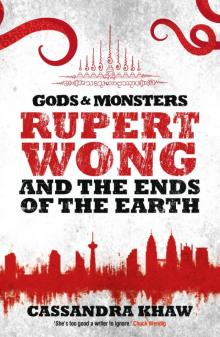
Also by Cassandra Khaw
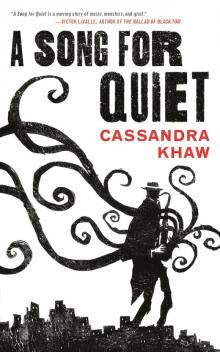
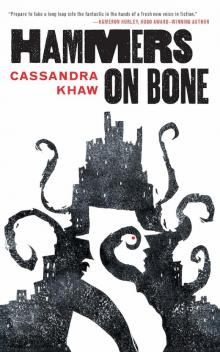
Hammers on Bone
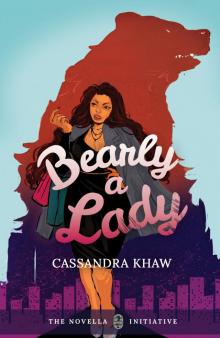
Bearly a Lady
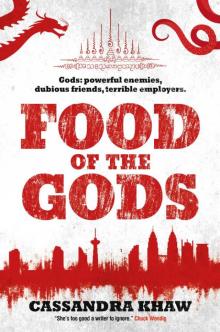
Food of the Gods
Praise for the Persons Non Grata Series
“Gritty, unflinching, and unexpected, A Song for Quiet has an infectious blues rhythm that’s impossible to ignore.”
—Angela Slatter, World Fantasy Award–winning author of The Bitterwood Bible and Other Recountings
“Prepare to take a long leap into the gory, the weird, and the fantastic in the hands of a fresh new voice in fiction.”
—Kameron Hurley, Hugo Award–winning author of The Mirror Empire, on Hammers on Bone
“Possibly the most promising horror debut of 2016, a suitable light in these dark times.”
—Charles Stross, Hugo Award–winning author of the Laundry Files series,on Hammers on Bone
“Sizzling prose over a steamy noir beat with horrific monstrosities throughout. A helluva read.”
—Daniel José Older, New York Times bestselling author of Shadowshaper and Midnight Taxi Tango,on Hammers on Bone
“Absolutely fantastic monsters-meet-gritty-noir story.”
—Mike Laidlaw, creative director for Dragon Age,on Hammers on Bone
“Atmospheric Lovecraftian noir with a really tremendous eye for detail.”
—Aliette de Bodard, Nebula Award–winning author of The House of Shattered Wings,on Hammers on Bone
“This is jolly good. You really ought to read this.”
—Jonathan L. Howard, author of the Johannes Cabal and Carter & Lovecraft series,on Hammers on Bone
“So hard-boiled you could crack demon heads with it.”
—Lavie Tidhar, World Fantasy Award–winning author of A Man Lies Dreaming and The Violent Century,on Hammers on Bone
“Cassandra Khaw blows the dust off Lovecraft’s prose to resurrect the Elder Gods in a white-hot, eyeball-popping adventure.”
—Ferrett Steinmetz, author of Flex,on Hammers on Bone
“Khaw is one of the most exciting writers I’ve seen emerge in the past two years.”
—Silvia Moreno-Garcia, author of Certain Dark Things
“One hell of a delicious, hard-bitten, unflinching experience.”
—Alyssa Wong, Nebula and World Fantasy Award–winning author of“Hungry Daughters of Starving Mothers”
“Khaw brilliantly combines the self-aware, on-point tone of her gumshoe narrator with the invasive rhythm of the language of pulsing terrors.”
—Publishers Weekly (starred review)on Hammers on Bone
“Khaw has a definite flair for the grotesque.”
—RT Book Reviews
“Hammers on Bone is a brilliant blend of two venerable genres as well as a deeply affecting tale on its own.”
—Shelf Awareness (starred review)
“Hammers on Bone is an easy read on a hard subject.”
—BleedingCool
“Khaw mixes noir tropes straight out of a Dashiell Hammett novel with lush, atmospheric horror, making for a vibrant, visceral read.”
—B&N Sci-Fi and Fantasy Blog on Hammers on Bone
“Hammers on Bone is a delectable surprise, a discomfiting nightmare in novella shape, its eyes looking back at you to ask: who are the real monsters, little reader?”
—Book Smugglers
“A timeless (and disturbing) parable about monsters.”
—Locus
Thank you for buying this Tor.com ebook.
To receive special offers, bonus content, and info on new releases and other great reads, sign up for our newsletters.
For email updates on the author, click here.
TOR•COM
Science fiction. Fantasy. The universe. And related subjects.
*
More than just a publisher's website, Tor.com is a venue for original fiction, comics, and discussion of the entire field of SF and fantasy, in all media and from all sources. Visit our site today—and join the conversation yourself.
Table of Contents
Title Page
Copyright Notice
Dedication
Chapter 1
Chapter 2
Chapter 3
Chapter 4
Chapter 5
Chapter 6
Chapter 7
Chapter 8
About the Author
Also by Cassandra Khaw
Praise for the Persons Non Grata Series
Copyright Page
This is a work of fiction. All of the characters, organizations, and events portrayed in this novella are either products of the author’s imagination or are used fictitiously.