Enduring Freedom, page 1
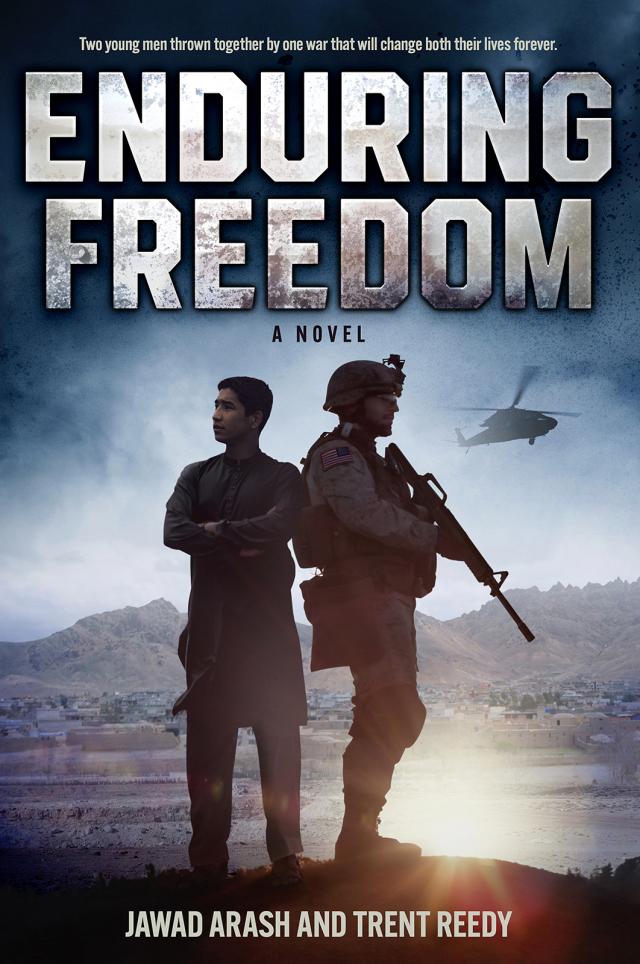


Enduring Freedom
Jawad Arash and Trent Reedy
Algonquin 2021
To the memory and honor of Haji Mohammad Munir Khan (1936–2020), beloved and respected grandfather,
Ayesha Siddiq (1960–2015), cherished aunt and caretaker,
and all those who served in Operation Enduring Freedom (2001–2014) in Afghanistan,
this book is respectfully dedicated.
Contents
Title Page
Dedication
Chapter 1
Chapter 2
Chapter 3
Chapter 4
Chapter 5
Chapter 6
Chapter 7
Chapter 8
Chapter 9
Chapter 10
Chapter 11
Chapter 12
Chapter 13
Chapter 14
Chapter 15
Chapter 16
Chapter 17
Chapter 18
Chapter 19
Chapter 20
Chapter 21
Chapter 22
Chapter 23
Notes from the Authors
Acknowledgments
Publisher Copyright
Kabul, Afghanistan
September 10, 2001
Nothing in the world was so comforting or wonderful as the Afghan family. Never was that clearer to Baheer than at mealtimes, especially on one of the last warm nights in September when the entire family could eat outside together. Well, they wouldn’t quite all eat together, as there was no dastarkhwānthat could be spread wide enough to fit all eighteen of them—twenty if you counted Uncle Kabir’s newborn twins—to gather around. The women and girls would sit on the floor of the concrete porch with their meal on the larger cloth, for the women and girls far outnumbered the men in this family. The men and boys would gather around the other dastarkhwān right next to them. Soon the sound of two conversations, the women talking about spices they used in the meal and what they were up to and the men discussing their business, would echo through the back courtyard off the high compound walls that provided them privacy and kept them safe from the outside world.
Baheer’s sister Maryam walked past with a big bowl full of salad made of tomatoes and onions. “You could help, you know.” She elbowed him. “Don’t just stand there smiling and doing nothing.” At seventeen, she was only a year older than Baheer, but she sometimes acted as if a decade were between them.
Baheer’s father, Uncle Kabir, and Uncle Feraidoon had returned from a hard day producing and selling woven rugs, and they waited over by the pomegranate bush, discussing the day.
Aunt Zarlashta, Baheer’s favorite aunt, smiled as she placed dishes of korma, a thick mutton curry, out for the family to eat. Baheer prepared the water pitcher and basin that would be passed around so everyone could wash their hands.
Eventually all the family gathered around plates covered in mountains of rice, salad, and korma. Everybody was ready except for the one person without whom the meal could never start, Baheer’s grandfather, Haji Mohammad Munir Khan.
“My dear,” Grandmother called into the house. “Will you please put that thing down and come eat?”
Baheer and some of the others looked toward the east wall of the compound nervously. Even though she had not mentioned a radio, everyone was very aware that a talib, a member of the Taliban, lived on the other side of that wall. If he had heard grandmother and somehow guessed what she was talking about, they could all be in a lot of trouble.
“I’ll go check on him, Grandmother,” Baheer offered, rising from his place and heading into the house. He found Baba Jan, as he often did in the evening, in the main room with the radio perched on his shoulder, the volume low. He nodded at Baheer, stroking his long white beard.
Baheer could barely hear BBC Pashto. “Da London dai, BBC raadio . . .”
Baba Jan turned the volume down further.
Baheer’s stomach rumbled. “Grandmother wants you to—”
Baba Jan held up a hand for silence. A moment later he shouted, “What!”
“What happened?” Baheer asked.
Grandpa turned the knob to click the radio off. In a daze, he put his hand on Baheer’s shoulder as he walked out to join the others.
“Is everything OK?” asked Baheer’s father.
“I heard you shout,” Grandmother said.
“The Taliban have killed Ahmad Shah Massoud,” Baba Jan said.
“The Lion of the Panjshir,” Baheer said quietly. That’s what many people called the last mujahideen commander holding out against the Taliban. Without him and his forces, the remaining free parts of Afghanistan in the northeast would fall to the Taliban.
The family washed their hands, prayed, and then finally began eating. Baheer picked up a mouthful of rice in his fingers, dropping a few grains as he hadn’t done since he was a toddler.
Uncle Feraidoon frowned as he chewed. He glanced at the east wall and spoke quietly, breaking the tense silence. “If the Taliban have finally succeeded in killing Massoud, they will be bolder than ever. We will all need to be more careful to follow their so-called precious rules.”
Uncle Kabir pointed at his brother with a piece of naan. “Speaking of Taliban rules, keep your turban on at all times when you go out. Your beard isn’t long enough, so you need to keep your head shaved.”
Uncle Feraidoon protested. “I don’t like shaving my head.”
“Oh, Zarlashta, you did such a wonderful job with this korma.” Grandmother’s smile seemed forced. “Don’t you all—”
“The Taliban have tried to kill the Lion for years,” Baba Jan said. “They couldn’t have succeeded without help. I’ve heard of their new allies. This Al-Qaeda. Dangerous men. Outsiders.”
Uncle Kabir shrugged, wiping a bit of sauce off his beard with the back of his hand. “Ever since I was a teenager there has been one terrible thing or another. The Soviet invasion. The civil war. The terrible—”
Uncle Feraidoon coughed loudly. “Careful.”
“The Taliban,” Uncle Kabir said quietly. “Fighting never stops, but we push on. More rugs to sell.”
Baheer fought the urge to check the east wall. His brother Rahim, sitting next to him, leaned over to bump his shoulder against Baheer, raising his eyebrows as if asking if Baheer could believe all this. Baheer and Rahim didn’t always need words to communicate.
“I think tomorrow we might have chicken,” Grandmother tried again. “I have an idea to try some new spices.”
“That sounds wonderful,” Baheer’s mother said nervously.
Baheer knew they would not succeed in changing the subject. Even if they did, he felt sure Maryam would ask Baba Jan a question to get them back on the topic of Ahmad Shah Massoud. She loved keeping up with Afghan and world events.
“This situation is different. I can feel it,” Baba Jan said.
Baba Jan was the bravest man Baheer had ever known. He had been chief of police many years ago. After the Soviet Union invaded, he was eventually arrested for continuing to follow the ways of Islam. He was sentenced to death, but his friend, a high-ranking military officer in the puppet Afghan government the Soviets had established, convinced the Russians to release him. Baba Jan was unstoppable, but now he tugged his beard, the lines in his face deepening somehow. Baheer hadn’t seen him this way in a long time.
“Allah will protect us,” Grandmother said.
Baba Jan stared toward the east wall and the talib’s compound. “Something very bad will happen soon. Allah have mercy.”
“You know Allah’s words from the Holy Quran. Trust him.” Grandmother sounded soothing.
“I know. Allah says in his book, in chapter 22, verse 65, ‘For God is Most Kind and Most Merciful to man.’ ”
His grandfather was also the wisest man Baheer knew. He read the Holy Quran every day, memorizing many passages. He read histories and poetry. He remembered and sometimes talked about better times in Afghanistan, when the country was so wonderful and peaceful that Westerners would visit on vacation. And he sometimes spoke of the terrible tragedy of the country’s wars. There were ruins of a stall in the bazaar a few blocks away that Baba said used to be a bookstore until it was burned down during the civil war among the Mujahideen. No one dared to open the bookstore now in the dark era of the Taliban. Baba Jan sometimes told Maryam, Rahim, Baheer, and his other grandchildren about how he had often stopped by the stall to talk to his friend, who owned the place, and to pick up a new treasure in the form of a book.
Baheer might have understood such enthusiasm for learning back at his school in Pakistan, where his teachers were kind and they cared about student success. Back where the Taliban didn’t control everything.
The Taliban had a special department called Promotion of Virtue and Prevention of Vice. Their job was to make sure men kept long beards, tied turbans on their heads, went to mosque at the five different prayer times, and did not sing or listen to music, have televisions, watch movies, dance, fly kites, own pet birds, possess pictures of people or animals, or own forbidden books. They were the Morality Police.
Baheer hated them. Baheer feared them. Whenever he left home—and now even at home, since the Taliban family had moved in on the other side of the wall—Baheer felt like he was a little
Just a few days ago the Taliban had turned up at school, policing turbans, making sure the boys hadn’t shaved, and checking to see that none had long hair. As they’d approached the school on their bikes, Baheer and Rahim checked each other over and nodded. Neither had shaved because their beards hadn’t begun to come in. Their grandfather made sure their hair was always cut very short, not because of the Taliban but because that was the way a man’s hair should be. With their turbans fixed, they were in good shape.
A few of the other boys hadn’t seemed so confident, trying to hide themselves behind other students. But there’d be no escaping the Taliban. All the boys stood in line, waiting to be examined by the talib leader.
“How are you, guy?” the talib said in a low voice. His black kohl-lined eyes gazed down at Baheer as a smile, such as one might display before a delicious meal, spread across his lips. He grabbed Baheer’s arm and pulled him closer, the rough fingers of the talib’s other hand caressing Baheer’s cheek.
“I’m fine.” Baheer breathed deeply through his nose and tried to pretend this wasn’t happening.
The talib leaned down so his face was right in front of Baheer’s. His breath reeked of sharp spices and blew hot across his cheek and neck. “You’ve been a good boy.” With a strange noise—half grunt and half laugh—the talib swatted Baheer’s bottom and sent him away, already reaching for Rahim.
When they had cleared the monster, they hurried to class. They never talked about the Taliban inspections afterward, the talib’s lustful looks and wandering hands. It wasn’t safe to discuss those things in public, and at home Baheer only wanted to forget it, to keep the dark cloud of the Taliban on the other side of the warm walls of his family compound.
When they’d lived in Pakistan, Baheer had loved talking to Baba Jan about everything he’d learned at school, and his grandfather would usually have some insight to add to the day’s lessons, either from the Holy Quran, classic Persian poetry, or from one of his many other books. Back then Baba Jan had often talked about the growing problem of a generation of young people raised on bullets instead of books, and as the post-Soviet civil war dragged on, followed by the Taliban era, he continued to say Afghanistan’s many problems grew from a lack of education. “Too many know nothing, and wouldn’t know how to think if they did know anything,” he’d say. In Pakistan, doing well in school, Baheer had dreamed of returning to Afghanistan, learning all he could, and eventually teaching other young Afghans so that his country could heal.
Then he’d discovered Afghan schools were a Taliban nightmare.
“Hey.” Rahim elbowed him. “What’s the matter with you? Where did you go?”
Pakistan, Baheer almost said.
“Yes.” Baba Jan nodded to Uncle Feraidoon. “If we make sure the windows are blacked out and the sound is very low. You have it?”
He must have been talking about a VHS tape. A very illegal VHS tape. Probably an Indian movie with plenty of dancing and singing.
“Wrapped in a rug in the house,” Uncle Feraidoon said quietly.
Maryam gave a little squeal and clapped her hands. She loved movie nights more than anyone else. Baheer couldn’t disagree. Uncle Feraidoon had a way of sneaking in the best films. That night, they would watch Koyla, a famous Indian movie. When the meal was cleaned up, the family, except for the little kids, crowded into the main room in Baba Jan’s house. As the opening music played, Baheer was sent outside. His job was to make sure no flickering light from the illegal television showed through the blackout curtains and to ensure nobody outside the house could hear any of the sound. He even walked the whole east wall that separated their home from the talib’s compound, to make sure they were safe.
Only then was he allowed to return. But before he could sit down, a hard pounding rattled the compound’s front door. The laughter among the adults froze. Uncle Feraidoon stopped the movie.
“I’ll see who it is,” Baheer asked. He didn’t want to answer the door. Who could be knocking at this time of night? But he didn’t want to seem like a baby, afraid of everything, and he was already up.
Uncle Kabir stopped him in the front courtyard. “Stay back. I’ll check.”
The pounding continued on the street door, until Uncle Kabir opened it a crack.
Two men stood in the street. A man with a black turban and a large belly pulled Uncle Kabir by his collar. “Do you live here?”
“Yes,” Uncle Kabir replied.
Baheer stepped back, heart pounding, a sharp cold tingling down through his body. Baba Jan was right. The death of Ahmad Shah Massoud must have emboldened the Taliban. Had they heard the television?
“Drag him,” the man in the black turban said to the other one.
The two men grabbed Uncle Kabir by the collar and yanked him toward the street, smashing his face against the steel door frame as they pulled him outside. Uncle Kabir tried to speak, but he was thrown down on the hard dusty street.
Baheer froze for a moment, shaking. Move! Do something!
Finally, it was as if he broke free from his chains and ran to the others. “Baba, they took Uncle Kabir!”
“Who took! Why? Where?” Baba Jan asked, getting to his feet. His grandfather quickly rewrapped his turban and put on his glasses while his father and Uncle Feraidoon hurried with their turbans as well.
Baba Jan breathed deeply, hard fury in his eyes, but his voice was calm and firm. Even in his old age, the man was still respected in the neighborhood for fairness and justice.
Baheer wished that he had even half of his grandfather’s strength, but his legs were shaking, his heart thundering.
“Let’s go,” he said to his two sons, breaking Baheer out of his panic.
“Baba Jan, I want to go with you,” Baheer said. He felt partially responsible. He was supposed to have been the one to check the door. He should have been able to help his uncle.
“Bachem, it’s not a big deal. Stay home and sleep. We’ll be back soon,” Baba Jan said.
“I’m going,” Baheer insisted. As if sleep would be possible with Uncle Kabir taken by the Taliban.
Baba Jan sighed. “OK. But you stay near your father.” To Baheer’s father, he added, “Sakhi, watch him.”
It was dark on the street. Most people in Kabul only had electricity for two or three hours a night, but the Taliban, or those with close connections to them, could sometimes have electricity twenty-four hours a day. Baba Jan led the way to the single light at their talib neighbor’s compound.
As they approached, they heard the talib shouting about Islamic law, heard Uncle Kabir calling out in pain. Baheer’s grandfather knocked firmly on the door.
A half-bowed man came out. “Who are you?”
“I am the father of the man you brought here,” Baba Jan said.
The little man pushed the door open, and Baba Jan led the way inside. Uncle Kabir lay in the dust, his collar torn, his beard a mess, and his hands tied behind his back.
Baba Jan stared at his son, breathing heavy through his nose, his shoulders heaving. “Why have you taken my son?”
One of the taliban stepped up to Baba Jan. “Your men watch our women during the day when I am not here.” He pointed to a window that faced their house.
The window was in Uncle Kabir’s room. Baheer and Rahim rarely went in there because of the twin baby girls. The window had been covered with a blanket since the girls were born, to prevent dust and cold air from coming in.
“That window!” Baba Jan said loudly, taking a step closer to the talib. “How would you even know whose window it is? Without thinking, you just grabbed the first man to come to our door? Anyway, it’s been blocked for months. Besides that, my son works from early in the morning until night in his shop. He has no boys. So no man was looking out that window!” He was shouting now, his voice booming throughout their compound. “Who told you our men were peeping into your home to look at your women?”