

Jackal, Jackal, page 5
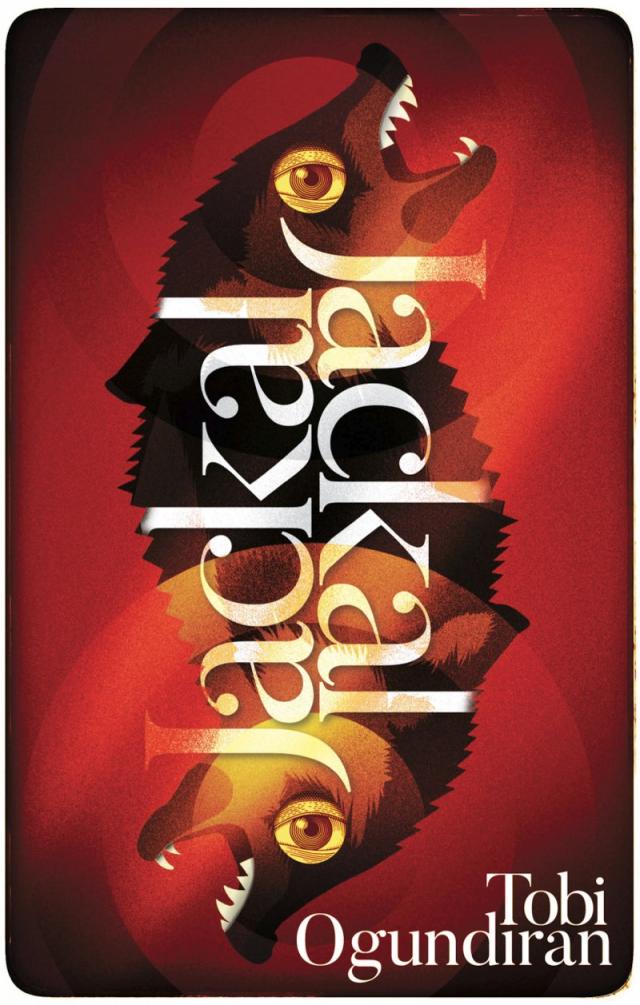


I am the jackal.
I am the Jackal.
THE EPIC OF QU SHITTU
Stealing onto the ship was easy. Too easy.
I swam under a shroud of darkness and mist, then, with the aid of the rusty anchor chains, scaled the sides of the massive ship. Once aboard, I stole belowdecks, slinked down the rickety stairs and into the dingy winehold to hide among dusty wine casks where, I reasoned, the deckhands wouldn’t find me until it was too late—until we were far from shore and they had no choice but to take me to Qu Shittu.
I stayed there in the dark winehold, cold and shivering and cursing myself for a fool, but this was a venture I was determined to see to the end. I don’t know how much time passed but eventually, I felt the ship move, groaning upon the waves as we departed the Xonga. I had expected to hear the sounds of ship life: the pounding of heavy footfalls on the deck, the coarse bellowing of deckhands as they went about their business. But I heard nothing and I wondered, not for the first time, if Qu Shittu had no deckhands, if he manned the ship by himself, or if he commanded the wind to his sails by some fell magick.
He could do it. He was Qu Shittu the Terrible, demon spawn of Iku, master of magicks and terror of kings. He could do it.
When I was fairly certain we were far from shore, I crept up the stairs in utter blackness and emerged, with the care of a tortoise coming out of its shell, onto the deck.
And saw them.
Corpses littered the deck. Rotting corpses in various stages of decay. There were dozens of them, standing as still as masts, oblivious to the swaying of the ship, the gust of wind. They stood as if rooted to the spot, empty sockets looking ahead at something I could not quite see. Men and women old and young. Many were nothing more than bones, yellowed skeletons swathed in tattered clothing. Many still had flaps of skin and tendrils of sinew hanging off their bones as if they had been half-gnawed by wild animals before they were summoned here.
I stood there gawking, a scream caught in my throat, until one of them turned and looked me dead in the eye.
A shadow fell over me and I whipped around to find myself face-to-face with the man of legend himself.
Qu Shittu presented an impressive figure: long, dirty locks framed a gaunt face out of which cruel, deep-set eyes appraised me. Dressed all in black, he blended with the tattered black sails of his formidable ship, so that for a moment he looked like he had sprouted impossibly large wings.
He looked younger than I’d imagined. But that was a deception; everyone knew he was old—how old exactly was a matter for debate in the bukkas. Qu Shittu had been old when my father was a boy, and that man was thirty years in his grave.
“I see you’ve met my deckhands,” said Qu Shittu, then wrapped a bony hand around my throat.
Qu Shittu’s cabin was a den of horrors.
Round, the walls lined with dark wood, it seemed to me like I was in the belly of some great beast; a feeling exacerbated by the horrific specimens of yellowed skeletons dangling from the walls, skulls wearing identical grins as if sharing some secret joke. Fraying astronomical maps littered the low table and, in the corner, behind the magnificent spread of Nahomian quilt, Qu Shittu was muttering quietly as he traced glyphs onto a brass collar.
But that was not what turned my blood to ice. Lounging on one of the chairs around the table was a blue-skinned woman. Wickedly beautiful, with hair the deep blue of the Frozen Sea, she watched me with sharp, hawk-like eyes. Deep tribal carvings lined her face and crawled down her neck, and I could have sworn on my father’s bones that they glowed ever so slightly, as though she were lit from within by a faint blue light.
“Blood of my fathers,” I blurted. “A Canti.”
The Canti smiled at me, running an idle hand over the wooden boy in her lap. She stroked the statue as a mother would a son. It was a crude sculpture; almost as though it had been hastily carved out of a tree by an amateur. In fact, it did look like a gnarled tree branch—all except the face, which was smooth and full of hurt.
“Very astute, bard,” said Qu Shittu without turning. “Not many know of the Canti, much less recognize one.”
“How could I not?” I cried, heart palpitating. “The Canti are...are...”
Around the northern states people worshipped the Canti, who were believed to be a group of ancient astral beings who sang the world into existence. Key word here being “believed.” In my many travels I’d seen depictions of the gods on cave walls but did not put much stock in the pagan beliefs. Yet here was the truth before me.
Qu Shittu turned finally to look at me. “Mothers hide their daughters at the sight of my sails and fathers curse their sons at the whisper of my name. Kings shudder before me and will readily kill their heirs if it would keep me from their shores. Many would give an arm and a leg never to set eyes on my ship, and yet you steal aboard quite readily, like a woman to her lover.” He paused, cocking his head as he studied me. “Only fools tread where wise men fear to go. Tell me, bard, are you a fool?”
Perhaps I was. I swallowed. “No.”
“Then why have you stolen onto my ship?”
I felt a small man, staring up at Qu Shittu as the myths surrounding his person swirled in my head. Like every man and woman in the Xonga I grew up on tales of how Qu Shittu rode into Vallawa on the back of a Sayaad, the very vision of horror. How he bespelled the entire city so that they came out, powerless under his control as they began driving stakes into the ground. How they laboured for two days and nights pounding two hundred stakes into the hard earth, their self-will wrenched from them, faces slack and expressionless. And how on the night of the second day, two hundred residents of Vallawa threw themselves onto the spikes, impaling themselves.
And then there was the Doom of Nupe, and how according to legend Qu Shittu appeared unannounced at the Conclave of High Kings and made them watch as he filled their sons with sand, how he summoned the sands of the desert and poured it down the princes’ throats—all twelve of them—until they were quite literally bursting with the fine grains.
Qu Shittu had stopped tracing the glyphs and was watching me with those black, bottomless eyes. Next to him the Canti was as unmoving as a statue, but I could feel her eyes on me, as sharp as pinpricks. They were waiting for me.
I took a deep breath. “I want to chronicle your story.”
“My story?”
“Yes.” Kanuka have mercy. “You are a mystery. An enigma. And people wonder why you do what you do; who you are and what it is you want. They have cooked up their tales, as I’m sure you may have heard, but wouldn’t it be better if you told your story?”
Qu Shittu’s lips pulled back in a sharp sneer. “You are sorely mistaken, bard, if you think I have anything to say.”
“But I think you do,” I countered. I was treading dangerous waters here. Qu Shittu’s eyes were slits and the Canti had shifted her position, poised like a serpent about to strike. But I was too far down this path now, and I would see it to the end. “I think you do not do these deeds—these seemingly evil deeds—without cause. What most people don’t know is that the citizens of Vallawa were slavers; they forced slave-children to mate with beasts just to see what would become of such a union. Everyone knows and agrees that the kings were largely evil people, more so the princes, who toyed with the lives of their subjects as though they were worth naught. I think...” I swallowed, eyes darting from Qu Shittu to the Canti. “I think you are the hand of justice.”
For a moment, the only sounds were the creaking of wood and the distant roar of the sea as it crashed against the ship’s hull.
Qu Shittu grinned a wolfish grin. “Hand of justice!” he barked, then the grin vanished from his face and it was as though it had never been there in the first place. “There is no justice in this world or any other world, and certainly not from me.” He paused, hard eyes boring into mine, perhaps contemplating the manner of my death, and not for the first time, I considered the folly of this venture. “You want to hear my story?” he said finally. “Here it is: I am a man, seeking vengeance. I am a man, seeking his home.” He looked at the Canti, at the thing in her lap, and there was a curious expression on his cruel face. “And I have found it.”
My heart leapt in my chest. Home? Where did someone like Qu Shittu even come from? Where did one like him call home? I tried and found it hard to imagine that he had been born of a woman like a normal man, that he had called a place home. But I knew one thing for sure. Wherever this place was, I wanted to see it.
“Let me come with you,” I said, excited.
Qu Shittu’s black eyes met mine. “From where I am going, there is no return.” He paused. “I do not intend to return.”
I burst onto the deck, my satchel of writing materials tucked underneath my arm. I had been writing, scribbling furiously in the little cabin I had been given, when the west wall exploded in a shower of splinters and a rush of frigid seawater.
We were in the middle of a storm.
Black, frothing waves rose and fell with a vengeance, smashing into the ship. I yelped as a particularly tall wave crashed onto the deck, dousing me in a salty spray of ice-cold water. I flailed as the wave swept me off my feet and threw me headlong into the mast. Brilliant lights exploded in my vision as I cracked my head against the groaning beam. Still I latched on to it like a starfish, holding on for dear life.
The sea was a monster. A growling, angry monster.
And it was hell-bent on devouring us.
I watched, alarmed, as the black tattered sails ripped off the masts one by one and were sucked away into the darkness of the tempest. Storm clouds churned in the sky, lit from within by flashes of lightning. The deckhands were nowhere to be found. Had they tipped over into the water? Had they been swallowed by the raging sea?
“There you are, bard!” called Qu Shittu. I craned my neck to see him standing at the prow of the ship. “Come, come. We are near to my home.”
I had a moment to marvel at the fact that although the deck was slick and lopsided, he was standing unaided on two sure feet. Next to him stood the Canti.
And she was glowing.
Where before I had to look closely to see the faint luminescence of her etchings, now they were ablaze with light as if she had swallowed the sun and contained it within the walls of her body. Blue. Impossibly, beautifully blue she glowed. She stretched out her arms, opened her mouth, and sang.
I can’t explain what that song sounded like. There is no word in the tongues of men that accurately describes it. It was at once harrowing and beautiful; it was terrible and magnificent. The voices of a thousand seraphs blending in harmony. A song as old as time itself. The Canti’s voice spread out about her in waves, pregnant with command. I could not only hear it but feel it.
The storm felt it, as did the sea; everything froze.
The bestial roar of the raging storm and thrashing sea fell away as if in a vacuum, so that the only sound left was the Canti’s eerie singing. She glowed so brightly that I had to shield my face or risk burning my eyes. Qu Shittu was a silhouette next to her. Even as I watched, a black hole opened up in the air in front of the ship, expanding slowly until it was large enough for three ships to sail abreast. A warp in the fabric of reality.
Then the ship moved upon the still waters, moved without wind or sail. It moved, buoyed somehow by the Canti’s singing, into the yawning maw of the void. The darkness swallowed us. It occurred to me to scream, but I was too stupefied to do so. The darkness was absolute. It felt like a tunnel, and I thought I could make out huge faces lit by the Canti’s unnatural glow, watching us as we sailed through that dark passageway.
And just as I was starting to regain my composure (pushing myself up from my huddle behind the mast) we burst into blinding daylight.
The ship crashed into the waters as if dropped from a height and I found myself holding on to the gunwale to keep from toppling overboard. It took me a moment to realize that the Canti had stopped singing, and the sound I was hearing was the cry of seagulls. If there were seagulls around, that meant we were close to land. Sure enough, as I pushed myself to my feet, I saw land in the distance, shimmering white beneath a brilliant morning sun.
“Home!” growled Qu Shittu. He gripped the edge of the prow so forcefully that the wood exploded in his fist.
He turned and raced from the prow and into his cabin, returning moments later with a bulging sack thrown over his shoulder. He seized me by the neck as he raced past so that I was forced to canter after him. “You wanted to see,” he said. “Look, bard! Look upon the great city of Inkuleti.”
Gazing at the shimmering island, I wondered, vaguely, of what material it was constructed to make even the buildings so blindingly white. Structures came into focus as we drew closer; tall, spiralling towers, long, twisting bridges. Lots and lots of spires jutting into the azure sky. As more details came into focus, I noticed something odd about the buildings: their surfaces were rough as if the bricks had been haphazardly stacked by inept masons—and did the walls have eyes and mouths?
“Are those”—no, it was impossible. It couldn’t be—“bones?”
Qu Shittu looked down at me. “Why, yes. The bones of my people.” He shook his head as if it should have been obvious to me. “Inkuleti means ‘City of Bones.’”
As we walked through the streets of Inkuleti, Qu Shittu’s mirth—if indeed it could be called that—vanished, and he donned his usual cruel mien. Now that I was actually in the city, it didn’t look quite as blindingly white as it had from a distance; the bones were more yellow than white, joined and fused to form thoroughfares and sweeping arches and buildings with massive crumbling columns.
“How do you get the bones to—”
“Bone-Welding,” Qu Shittu growled. “Some of us have learned to manipulate the bones of the dead.” He paused, lips twisting distastefully. “Sometimes those of the living.”
I thought back to the skeletons on the ship, rigging masts and tying knots, all of them under the control of Qu Shittu.
My flailing mind still struggled to comprehend the sheer number of bones in the city. There were femurs and tibias and carpals; pelvic bones and rib cages and skulls, skulls, skulls. How many people had lived in Inkuleti? How many people had died here, their bones added to the ever-expanding necropolis?
The streets were empty. But for the cawing birds flocking into the city there was not a single sign of life. Inkuleti had the aspect of one holding its breath and I couldn’t shake the feeling that we were being watched. Gooseflesh erupted on my skin at the sight of those sinister skulls, looking and grinning. Next to me, Qu Shittu was quiet and a dark cloud of despair had fallen over his face. This was not the homecoming he had expected. I wanted to talk to him, to ask him what had happened here, but at that precise moment, the sweet smell of rot hit me in a powerful wave, and as we turned the corner, I found out where the citizens of Inkuleti were.
“Great Kanuka,” I breathed.
Corpses. A mountain of corpses filled the city centre. Men and women old and young were stacked like discarded dolls, made all the more hideous by the bloat of death. The carrion eaters I had seen flocking into the city littered the area, beaks tearing into flesh as they gorged on the dead.
I turned and emptied the contents of my belly.
“What...happened here?” I asked Qu Shittu, wiping a sleeve across my mouth.
Qu Shittu dropped to his knees before that mountain of the dead, dropped like a puppet whose strings had been cut...and wept.
“I’m too late,” he wailed. “I’m too late—gah...”
Tears streamed down his face and he pounded his chest as if he sought to wrench the pain and hurt and loss out of his person. His heart-wrenching gasps filled the air, startling the carrion eaters and sending them flying. There comes a time when a child realizes that his parents—however stoic and infallible they appear, however knowledgeable of the world they may be—are in fact human, and subject to the failings of humanity, for better or worse. Here was Qu Shittu, the all-powerful, a man who had brought tears to many a mother and father (a man who had made deckhands of his dead victims!) reduced to a weeping mass himself, overwhelmed by such a simple yet raw human emotion as grief. I realized then that whatever else he was, Qu Shittu was human.
It was a harrowing sight and I looked away, at a loss for what to do. That was when I saw them. Figures in black encircling us, clutching weapons of bone and bronze and steel; vicious-looking crossbows and curved, serrated swords. Save for the hard, devilish glint of their eyes, their faces were hidden.
“Qu Shittu,” I whispered, edging closer to him. These were no doubt the people who had carried out the massacre. “Qu Shittu, there are—”
A musical twang cut off my words and I looked in alarm as a bolt shot straight for my head. Qu Shittu plucked the bolt from the air mere inches from my eyes.
“Hak’tha!” screamed Qu Shittu, and the figure who had been nocking another bolt froze, then faltered. A shift rippled through the black-clad figures, followed by the weighted silence of bated breath.
Then, a tentative voice to my right—“Papa?”
Qu Shittu, eyes bloodshot from bawling, looked sharply in the direction of the voice just as the figure threw back its hood and unmasked itself.
“Qa Imade?” croaked Qu Shittu. He looked on the verge of tears, his face a canvas of relief and hope.
“Papa!” The girl—Qa Imade—broke out of the ranks, running like the wind. She breezed past me and collided with Qu Shittu, who swept her up in a crushing hug, spinning and spinning on the spot as if to absorb the momentum of her collision. Qa Imade latched on to him, sobbing uncontrollably even as Qu Shittu stroked her hair, weeping into her shoulder, and gasping amid wracking sobs—“My light, my jewel, my fierce warrior.” They dropped to their knees, father and daughter, and when Qu Shittu finally managed to pry her away from him, he cupped her face in his hands and smothered her with kisses.


