

Jackal, Jackal, page 3


“Close? But...” Wande looked about him; the general departure lounge which had been teeming with people half an hour ago was nearly empty. “I have nowhere to go.”
Her emotionless stare told him that it was not her problem.
V. Madness at the Ranch
Half an hour later, Wande found himself squashed in the back of a stinking farm truck, trundling down the dirt road to Eben Cattle Ranch. After inquiring extensively, he had learned that the nearest motel was thirty kilometres from the station, and would cost him more than half of what he had left, leaving him with little money to purchase a ticket. Also, it was too far and he did not want to miss the train in the morning. That was when Abdul, one of the young men whom he had been interrogating, told him he could stay the night on the ranch. No, he did not own the ranch, but was a simple cowhand. What was more, he made early morning rounds to town, dropping off fresh cow milk and if Wande liked, he could drop him off at the station with plenty of time to catch his train. All he had to pay was ten-thousand naira.
“Ten thousand naira?”
“Chicken change,” said Abdul, sucking on his blunt.
“But that is—” Too much? Yes, it was. But it was better than the fifty thousand he would pay at the motel. At least this way he would have just enough to buy a ticket in the morning. “Yes, fine. Thank you.”
“Dun worry, ma man,” Abdul grinned, allowing Wande a full view of his rotten dentition. “I do dis every time. I be good Samaritan.”
The sky was the deep blue of evening when they arrived at the Ranch. As Abdul brought his truck to a sputtering halt in front of a two-story building, Wande started, nearly shitting himself before realizing that this was not a certain other two-story building he had become frighteningly acquainted with; this was a quaint, if somewhat lopsided, log house.
“Home, sweet home!” barked Abdul.
Acres and acres of smooth, rolling fields spread out about Wande as far as his eyes could see. In the distance, the clouds came so low that they kissed the mountain-tops. Wande could not help but notice that the comforting noise of civilization was glaringly absent; there was instead the depressing mooing of lethargically grazing cows set against the ominous backdrop of cricking crickets.
Abdul led him cheerfully past a dingy living room (“scuze de mess, boss, wasn’t expecting visitors”) and up a set of groaning stairs to the even more cramped bedroom upstairs, which he hastily went about putting in order. When he was done, Wande paid him half upfront and promised the other half in the morning. Abdul grinned his rotten grin and closed the door.
Wande sank to the bed with the weight of his troubled thoughts. Now that he really thought about it, it was curious how Donatus had left abruptly, strange how the train had broken down, disturbing how he had been unable to get through to anyone, and outright alarming how he was now in a ranch house in the middle of nowhere.
Isolated and alone.
The distressed lowing of cows sliced through the night’s silence and sent cold hands clawing up Wande’s spine. She was here. The librarian had come for him. Slowly, with wobbly steps, Wande moved over to the window, peered out and saw
—the library with its peeling yellow paint and twisted roofs, standing in the field as though it had stood there for a hundred years, and will stand for another hundred—
A sharp rap on the door sent Wande spinning. He licked his dry lips and mopped the cold sweat from his brow. At this point it was too much to wish it was only Abdul on the other side of the door. The next trio of knocks was not so gentle. The door rattled in its frame, splinters flying off the edges, as if a particularly muscly man—or an enraged beast—was pounding on it. Then followed a series of incessant pounding. The door groaned. Splintered. The door jamb pumped (up down up down) faster and faster until the rusty aluminum squealed in protest. Faster and louder and harder came the bombardment of the door; the jamb squealing, the door rattling until—
Silence.
Wande found that he was breathing hard, and there was a dark stain around his crotch. He stood there, petrified, staring at the battered door. Spidery cracks ran around the lintel and the old walls.
A minute passed. Then two. Then three. And when Wande started to hope that the librarian was gone, she spoke.
“Mr. Badmus.” Her voice was pleasant, conversational. “I trust you know who this is? You have locked the door. Please open it.”
“No.”
“No?” she sounded surprised, even incredulous. Wande was surprised himself, but he would not open the door simply because she asked nicely. “Come, now, you want to act like a naughty boy? I gave you all the time in the world, Mr. Badmus, and you were duly forewarned what would happen if you failed to return the book to me. Open the door and take your punishment.”
“BUT I DON’T HAVE IT!” He screamed. “IT’S NOT MY FAULT I DIDN’T WANT TO TAKE THE STUPID BOOK ALL I WANTED—”
A shrill sound cut through the air and stopped Wande in the middle of his tirade. It took him a few moments to realize it was the sound of a phone ringing.
He stumbled over to the nightstand, plucked the receiver with a shaky hand, and croaked. “Hello?”
“Hey man!”
Donatus. The strength expired from Wande’s legs and he crumpled to his knees. He was so relieved at the sound of that voice that he did not stop to wonder at how Donatus knew to call this number, or the simple fact that the phone was not connected.
“Guess what I found, man? The book!”
“W—what?”
“I know!” laughed Donatus. “The kids were rummaging through my stuff, see. Cuz the toys I got them were in my luggage and the little rascals couldn’t wait till morning—anyway they found the book among my stuff! Hehe. I guess I must have accidentally packed it when I left Ibadan, eh...”
Wande saw red as rage filled him. Rage so consuming that it couldn’t be translated into words; he roared incomprehensible syllables into the receiver. Donatus tried several times to speak, his voice growing increasingly bewildered with each try, but there was no speaking over Wande and Donatus finally hung up.
Wande flung the phone with a roar and it shattered into pieces. That stupid fuck! How many times had he asked him to check his belongings? How many times? He wouldn’t be in such a fix if not for him. It was all his fault. The librarian can have him. Let her punish him.
He wheeled towards the door. “Donatus has the book! He just called me. He told me he has it—punish him instead!” Nothing but silence from the other side of the door. “Hello?”
With great trepidation, Wande unlocked the door and it swung noisily open to reveal an empty hallway. A draft stirred through, carrying with it the faint smell of something foul and rotten, not unlike the smell from the food flask on the train.
Wande stepped out of the room and right into the library.
It was as he remembered it: rows and rows of polished shelves bearing dusty books. The gas lanterns that lit the vast interior were few and spaced so far apart that there were huge pockets of darkness where their lights did not reach. A gas lantern spilled warm light onto the librarian’s desk, illuminating the blood-red rotary phone he had sold the old woman. The librarian was not at her desk.
Hurried footsteps.
Wande whipped around, eyes scanning the too-dark library.
Click. Clack. Click. Clack. The footsteps seemed to come from everywhere at once, echoing like the sound of a dozen pebbles hitting the bottom of a dry well.
“Hello?” he did not like how tiny and tremulous his voice sounded. “The book has been found! Donatus has it! You can...you can punish him instead...”
The footsteps had stopped as he spoke, and for a split-second, utter silence filled the library.
For a split-second.
Click. Clack. Click. Clack. Closer and closer came the footsteps. Hurried. Urgent. The footfalls of a predator closing in—
Wande decided he did not want to wait to see who or what was coming. He grabbed the lantern, and fled for the door...only it was not there.
“What—”
He flailed about. Perhaps he had missed it. Perhaps the door was a little further down.
The footfalls resumed. Fast. A confusion of sounds, like marbles skittering across tiles.
Wande bolted. He raced down the aisle, swinging the lantern before him, searching frantically for the door. Wall. Window. Wall. There was no door—THERE WAS NO DOOR! He was weeping now, blubbering, screaming that Donatus had the book, that he was innocent. His legs, his lungs, everything burned and he had a moment to wish he hadn’t spent so many years indulging in unhealthy gluttony.
He tripped, and went sprawling to the cold floor. The lantern flew from his grip and shattered, winking out, plunging him into total darkness. Pain flared through his body, but Wande struggled to his feet, his mind set on flight, intent on putting as much distance as he could between himself and those thousand hellish footfalls.
That was when he saw it. Up ahead, another lantern cast a pool of light, and there was something where light met shadow.
It looked like a pile of dirty old sheets, discarded between the two towering shelves. It wasn’t until Wande saw a face—squashed skin, unblinking eyes, blood-red lips and unmistakable unibrow—that he realized what he was looking at.
It was the librarian. Or rather the librarian’s skin.
Wande screamed. And howled. Gawking and yet unwilling to believe the hideous thing before him. It was as though her bones and meat had been scooped out, the empty skin crumpling to the floor without any visceral support. He could see a rip in her skin, where something—several things—had clawed their way out of her.
Click...Clack...Click...Clack.
They came out of the darkness, one after the other. The light cast colourful patterns on their hideous, scaly forms. Lizards. They dripped black ichor onto the floor, shiny black claws clicking and clacking as they arranged themselves into neat rows.
A moment passed in which Wande’s screaming died out, in which he stared at the creatures, in which he gasped one last, pitiful word: “Please.”
And then they came for him.
VI. The Lord of the Yellow-Painted Library
The librarian studied his reflection in the dusty mirror. He adjusted his tie and contemplated the paunch of his belly. When he was satisfied, he turned to his desk where a fresh piece of paper and a felt-tip pen was waiting for him.
He lowered himself into the chair and adjusted the red rotary phone until it was perfectly aligned at the edge of the desk. After thinking for a moment or two, he picked up the pen and began in flowing cursive:
Dear Mr. Donatus...
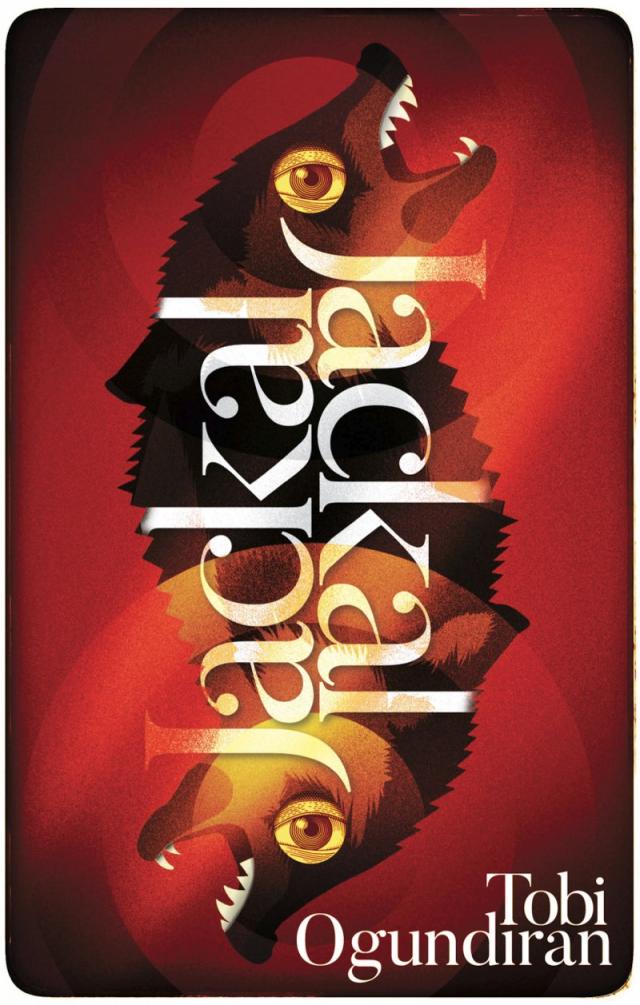
JACKAL, JACKAL
But it’s no use now, thought poor Alice, to pretend to be two people! Why, there’s hardly enough of me left to make one respectable person!
—Lewis Carroll, Alice in Wonderland.
The yellow cardboard box rests in my armpit as I shuffle up the stairs. It is heavy. I hadn’t expected it to be so heavy, its weight nearly toppling me off balance with every step I take. And I wonder, not for the first time, what lies within. Inside my apartment, I push aside the rotting towers of unwashed dishes and set the cardboard box down on the table. I lift the lid.
Inside is a dismembered head. A giant jackal head. My first thought is that this is a real jackal, but what a freakish beast would it have to be to be this large? It has to be manufactured, like those costumes worn to amuse children—Mickey Mouse or Barney and his dinosaur head.
Its fur feels real enough, not that I can tell the difference between real and faux. It watches me with black, beady eyes, and is it me or is its snout quivering? By some trick of perspective it looks like it is grinning. But animals cannot smile.
In my youth there had been a local museum at the end of the street, a small building owned by my friend Tolu’s grandpa. The old man had been a prize hunter and had made a showroom of his catch. I can’t forget all the great taxidermized beasts looking down from the walls or caught in various poses in the false veldt. An amateur taxidermist, Tolu’s grandpa had never managed to make the eyes lifelike, plugging the sockets with painted pebbles that gave the animals a haunted look. All this to say, I know taxidermy when I see it, know the smell of fixed skin; this...jackal looks—smells—very much taxidermized.
And freakishly alive.
I pluck the head from the box, start to turn it in my hands when I see the note, scrawled at the bottom of the box:
Wear it.
Is this some elaborate joke? Why would Mr. Lai ask me to wear a jackal head? How would it help me become...become free? I think back to his slippery smile and Idris’s dogged belief in him, his assurance that Mr. Lai was the real thing.
The jackal head is hollow—lined with what I hope to God is not dried sinew—and large enough to fit over my own head.
Taking a deep breath, I lift the jackal head and settle it over my shoulders.
“I want you to meet Mr. Lai,” said Idris.
“Who’s that?”
“The Messiah.”
“What?” I asked, slightly alarmed.
He brayed with laughter, yellow teeth clacking in his wide mouth, his head jerking up and down in the staccato movements of a marionette. I’ve always thought Idris looked a little weird, all long bones and elastic neck, as though he had been cobbled together by a hapless toymaker. I imagined some puppeteer’s fist rammed up his ass, making him laugh. Har. Har. Har.
“Nah, doc,” he said, once he’d stopped laughing. “His name is Mr. Lai, but around...certain circles he’s known as the Messiah, because he helps people.” He leaned in, eyes bright with a secret, “People like you and me.”
Idris and I had met in prison, on death row. He never once told me how he ended up there, but I knew never to ask. You simply did not ask such things. I remember spending the days staring at the grimy walls, wondering how many condemned souls had inhabited this space before me, wondering how many would come after me. There had been writings on the walls, frantic scribbles proclaiming innocence, dejected haikus asking for their mothers, and the more harrowing ones, asking God to save them in capital letters. It was while I contemplated these etchings that I first heard Idris, singing through the wall. I remember thinking only a mad man would have something to sing about on death row.
“And what does this Messiah do exactly?”
“He helps us become free.”
The night we broke out of prison I’d startled awake to a ruckus, my cell door open, people running about. As I raced for freedom I saw Idris, little more than skin and bones, watching me through eyes as large as copper coins, his door stuck. I could have run, left him to his own fate, but I stopped to help him. I still don’t know why. But I made a friend that day.
The Messiah was a short, stout man, with a paunch that strained against the buttons of his crocodile suit, giving him the overall visage of an overfed lizard. He smelled of too much perfume, like he was trying to hide an unpleasant smell. It reminded me of all the oils and fragrances in a funeral home, which could not quite mask the stink of death.
“Ah, yes, welcome. Welcome!” He pumped my fist in a sweaty hand. “You must be the doctor, Funsho.”
“And you’re the Messiah.”
He grinned, showing me a gold tooth. “What is in a name but just another face we present to the world? But we’re not here to talk about me.” He settled into his chair. “Idris tells me you’re having a little problem adjusting.”
I looked at Idris, wondering just how much he had told this man about me; he gave me a reassuring smile. “As much as any other fugitive.”
“Labels,” said Mr. Lai, wagging a finger. “How I hate them. You are who you are, good doctor, who you see yourself as, no more, no less. You see, we are all just mummers, acting out scripted roles. Roles we have not necessarily chosen for ourselves. Even the urchin on the street is trapped in his role. And so we are always performing. But when we find ourselves, and present our true faces to the world, only then are we free.”
This was going quick into lunatic territory. I cast a subtle glance at Idris, who gave me a nod of encouragement.
Mr. Lai clasped his hands and leaned on the table, which groaned beneath his weight. “Our philosophy is to shirk ourselves of all societal expectations, of all imposed roles, and just simply...be.”
“Really.”
“Yes.”
“I see...” I had shirked myself of all expectations once, and that had landed me in jail. What I wanted was my life back, my life, as it was before I drank it all away. What I wanted was for my wife to not hate me, for my son to not have to live with the knowledge that his father had killed a man because he was too blind drunk to even hold a scalpel. “Listen, I only came here as a courtesy to Idris, but I’m not really sure you can help me.”
“You doubt,” said Mr Lai. “Fair enough, they always doubt. I’ll give you a taste of what you want. And once you have it, you must report back. When your faith is sure, we will discuss, capisce?”
“I’ve not even told you what I want.”
“But I know already. The same thing everyone who ever sat before me in that chair wants: a fresh start.”
With that, he pushed out of his chair and stalked towards the large safe in the corner and opened it. There were rows and rows of cardboard boxes. I thought at first that they must be cakes, sweet things for him to nibble on between appointments (which would explain his paunch) but I quickly brushed the thought aside. Cakes would melt in the heat of the safe. Mr. Lai plucked a yellow cardboard box and settled it gingerly on the table. He placed a proprietary hand atop it, watching me, waiting.
“What is it?” I asked, finally.


