

Jackal, Jackal, page 27


What follows is a slow unraveling and discovery, as the world she knows is yanked from beneath her. This concept is one that has always fascinated me. We mostly live in little bubbles, and the bulk of what we know has largely been externally influenced, from the news to basic tenets of culture, passed down over the centuries. And for the most part we are told things and we take them as truth. But what if the truth you know is not actually truth? What if this has all been specially curated by unseen forces to keep you locked and docile, your independent thought clasped in chains or deliberately steered in a different direction so that you stumble, ignorant and frustrated through life?
DRUMMER BOY IN A WORLD OF WISE MEN
I’ve always wanted to write a story where music is the magical element, and what better instrument than the talking drum to best illustrate this point? Music, like scent, is one of the world’s most potent memory triggers, and Dele connecting with his father through their shared love of music presented the perfect opportunity for me to incorporate the music of the talking drum. If magic is power, then it must come at a price, and the price in this story is not only Papa’s disappearance, but the breakdown of Dele’s family as his mother is unable to show him affection because he reminds her too much of Papa.
DEEP IN THE GARDENER’S BARROW
I’ve always been fascinated by forests. The cancer of steel and concrete and asphalt has covered the face of the modern world, and most city dwellers have lost touch with nature. But if you’ve ever been deep in a forest or jungle, untouched by the Anthropocene and its human elements, you can’t help but feel in awe, overwhelmed, even as you contemplate your existence in the grand scheme of things. I once ventured so deep into the forest, that otherworldly place where the trees grow so closely together, leaves and limbs knitting into a canopy so dense that sunlight had not passed through for years. And there, in that moment, I could not help but think, the forest is alive. But of course, it was alive, in the sense that all organisms that respire and excrete are; but on the heels of that rumination came the disquieting thought, the forest is sentient. Thus, this tale was born. The astute reader might find traces of that old fairytale Hansel and Gretel here, but it is only the skeleton around which this one was built.
MIDNIGHT IN MOSCOW
I lived seven years in Russia while I completed my undergraduate degree, in a small city some 600 kilometres from Moscow. Everything you’ve heard about Russian winter is true: blistering cold, unnecessarily long as to cause this sun-soaked Nigerian to fall into seasonal depression. One winter I went camping with my friends, lodging in a cabin in the mountains where the world grew so quiet and white you truly felt that you were alone. In that cabin, with no internet or electricity, we exchanged folktales. I, serving up the best Nigerian folktales; my Russian friends delighting me with tales of Koschei and Medved and Baba Yaga. Of course, I thought nothing of it at the time. But years later it would come back to me, and I started to ponder the nature of stories and folktales and why they endure the world over; the promise of wonder, of magic, of delight that comes with the words once upon a time—or its variation across cultures. I wanted this story to have the timeless feel of folktales, with characters larger than life, who, perhaps already exist among us. We’re just not paying attention.
IN THE SMILE PLACE
Sometime in February 2022, I was mindlessly scrolling through Twitter when I came upon a picture of a door ajar, darkness spilling out, THE SMILE ROOM printed over the lintel. It was a terrifying image, one whose terror was granted even more potency by the fact that this, obviously, was meant to be a fun place for children, but instead, like clowns and dolls and other supposed childhood playtime accoutrement, carried an undercurrent of the unheimlich. (Excitement and terror are after all two sides of a coin). I found myself thinking: Why is it named so? What would it do to a kid to go in there? And lastly, perhaps most disturbingly, what lurks in the dark?
The gears turned; I confronted the blank page, and the rest, as they say, is history.
THE CLOCKMAKER AND HIS DAUGHTER
I came across a riveting piece of digital art, of what at first glance looked like a giant sitting in the middle of a city, cradling a car in the palm of his hand as he painted it. Staring at that picture, the city of Nyss unraveled in my mind, and the giant became the poor clockmaker who’s reconstructed for his ailing daughter their city—not the one now overrun by invading, greedy colonizers, the natives languishing under the boot of imperialism; but a city still ripe with hope and joy. I think, at the end of the day, this story is about hope, and what it means to grasp at its ethereal threads in the face of overwhelming bleakness.
THE GOATKEEPER’S HARVEST
When I was seven, I spent the summer on my aunt’s goat farm, and it was quite the experience. Anyone who’s dealt with goats—particularly West African dwarf goats—knows that they’re stubborn creatures. They get everywhere. They jump fences, knock down gates. And they look at you in a way that feels too human, like they know exactly what they’re doing. There’s also that way their jaws move when they masticate—side to side. It can feel disturbing—sinister, if you really pay attention to it. When sometime in 2020 I read about Shub-Niggurath, the Lovecraftian god who sometimes appears as a many-legged goat, I remembered my experience and thought, “of course goats aren’t really goats, it’s why they act like that!” and I knew I had a story. For the longest time I’d wanted to engage with the Lovecraftian mythos in a Nigerian setting. This presented the perfect opportunity. In drafting the story I wanted to stress one of the hallmarks of cosmic horror: that nothing is just and we are at the mercy of an indifferent universe. If reader reactions are any indication, I was successful.
AUTHOR’S NOTE
I came to short fiction by chance.
The goal was always to publish a novel, and I tried, naïve teenager that I was, pelting my first drafts at agents who very wisely did not bite (and in most cases did not deign to respond). In my hubris and certainty that I had written the best thing in the world, it did not occur to me that the work needed revision, or more work, and I found the general lack of enthusiasm...confusing.
Writing a novel takes time, and I thought I would have a better chance with a short fiction collection.
Ah, the folly of youth.
A good piece of short fiction is one that haunts you long after you’ve read it, imprinting an image, or a feeling. A good piece of short fiction, as opposed to a novel, shines a hyper focus on a singular pivotal moment in the life of a character. I learned this the hard way, but I welcomed the challenge. I came to short fiction by chance, but I fell swiftly in love with it. Having decided on a short story collection, I spent the summer of 2017 writing the first two stories (Maria’s Children and Isn’t Your Daughter Such a Doll) and as a test, I sent them out to magazines, and to my utter surprise Maria’s Children got accepted for publication! To this day I cannot explain the joy I felt at that first acceptance. Someone read my work, loved it enough to offer me money for it! I was, perhaps, really good at this! Fresh off that high I sent out the next story to that same editor who promptly rejected it.
I was not to be defeated. I had tasted victory, and like a parched marooner who’s glimpsed the suggestion of an oasis in the distance, I shouldered on. During lectures, while my long-suffering professors explained the pathophysiology of diseases, I would lose myself in the world of an abiku, or spend the day daydreaming of crafty wizards and forests that are not really forests; brainstorming plots and rushing home afterwards to scribble away.
And I fell in love with it.
I read voraciously. I imitated my favorite writers; studying the mechanics of a good story, pilfering liberally techniques I liked, until my voice emerged. The rejections were (and are still) endless, but here and there an acceptance broke the deluge, and that was enough to keep me writing the next story, and the next, and the next.
Barring some minor sentence-level edits, these stories are pretty much as they appeared in the initial magazine publications. They are, to me, Polaroids; snapshots of who I was craft-wise and as a person when I penned them. But most importantly, I love them. Not in the least bit because the money made from their sale helped put food on the table of this piss-poor med student. I am not the person/ writer I was when I wrote these stories, and in as much as I try to capture that person, I can’t. And that’s ok. There’s a certain peace in the knowledge that I am getting better (or I’ve been lied to and this is a particularly long and elaborate joke. If that’s the case, please carry on!)
I remain thoroughly befuddled and utterly humbled that some of these stories have gone on to be nominated for awards! All I’ve ever wanted was to tell stories, to tell them as I like to hear them, to guide a reader into a fantastic world through the sheer magic of my words. I hope to continue to do so as long as I have breath in me.
If you’ve read on to the end you are a rockstar. And I want to thank you for coming on this dark and fantastical journey with me.
Tobi Ogundiran
Oxford, MS
January 2023
PUBLICATION HISTORY
“Jackal, Jackal” is original to this collection.
“Midnight in Moscow” is original to this collection.
“The Tale of Jaja and Canti” originally appeared in Lightspeed Magazine #135, 2021.
“The Lady of the Yellow-Painted Library” originally appeared in slightly different form in Africa Risen: A New Era of Speculative Fiction (Sheree Renée Thomas, Oghenechovwe Donald Ekpeki, Zelda Knight, eds.) 2022.
“The Epic of Qu Shittu” originally appeared in The Magazine of Fantasy and Science Fiction #760, 2022.
“The Many Lives of an Abiku” originally appeared in Beneath Ceaseless Skies #309, 2020.
“Isn’t Your Daughter Such a Doll” originally appeared in Shoreline of Affinity #18, 2020.
“The Muse of Palm House” originally appeared in The Dark #55, 2019.
“Here Sits His Ignominy” originally appeared in Breathe FIYAH, (Brent Lambert & DaVaun Sanders, eds.) 2020.
“Lágbájá” originally appeared in Lore and Disorder, 2021.
“Maria’s Children” originally appeared in The Dark #40, 2018.
“Faêl” originally appeared in Beneath Ceaseless Skies #282, 2019.
“Guardian of the Gods” originally appeared in FIYAH #14, 2020.
“Drummer Boy in a World of Wise Men” originally appeared in Omenana #16, 2020.
“Deep in the Gardener’s Barrow” originally appeared in Beneath Ceaseless Skies #343, 2021.
“In the Smile Place” originally appeared in FIYAH #24, 2022.
“The Clockmaker and His Daughter” originally appeared in Lightspeed Magazine #147, 2022.
“The Goatkeeper’s Harvest” originally appeared in The Dark #64, 2020.
ACKNOWLEDGEMENTS
It takes a village, as they say. Many thanks to:
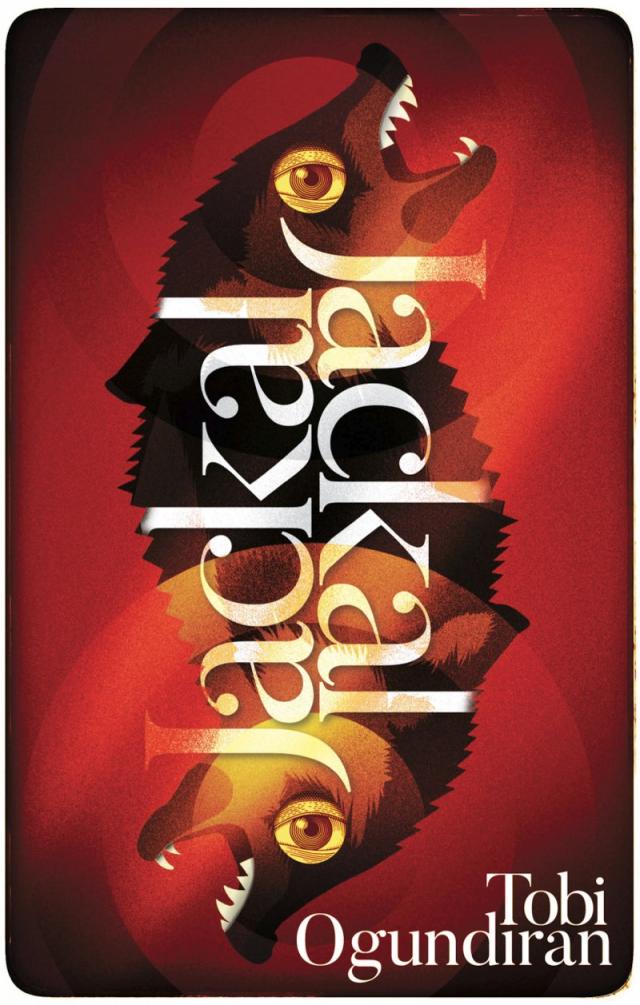
Michael Kelly, who did not send me scampering, when I asked, cap in hand, if he’d publish my book. Carolyn Macdonell-Kelly who proofread my words—all literary and grammatical blunders are my own; Vince Haig for an absolutely badass cover art. All the editors who first plucked these stories from the slush pile: John Joseph Adams, Wendy Wagner, Sheree Renée Thomas, Mazi Nwowu, Scott H. Andrews, DaVaun Sanders, Brent C. Lambert, Noel Chidwick, Tendai Huchu, Magda Knight, Rym Kechacha and Pippa Goldschmidt. I remain eternally grateful to Silvia Moreno-Garcia and Sean Wallace who published my first ever story and gave hope to this desperate young writer.
And of course, I cannot forget my lovely siblings Ope and Victor, who suffered through these stories in their nascent forms—particularly Ope, who worries what trauma from our shared childhood has drawn me to the dark. I assure you, I am fine.
ABOUT THE AUTHOR
Tobi Ogundiran is a Nigerian writer whose dark and fantastical tales have appeared in journals such as Lightspeed, The Magazine of Fantasy and Science Fiction, Beneath Ceaseless Skies; and in several Year’s Best anthologies, including The Year’s Best Fantasy, ed. by Paula Guran and the Year’s Best African Speculative Fiction, ed. Oghenechovwe Ekpeki Donald. His work has been shortlisted for the Nommos, British Science Fiction Association, Shirley Jackson, and Igynte Awards. When he’s not crafting wondrous tales, he works as a physician. Find him at tobiogundiran.com and @tobi_thedreamer on Twitter.
Tobi Ogundiran, Jackal, Jackal


