



Cynosura
Tito Perdue
Tito Perdue
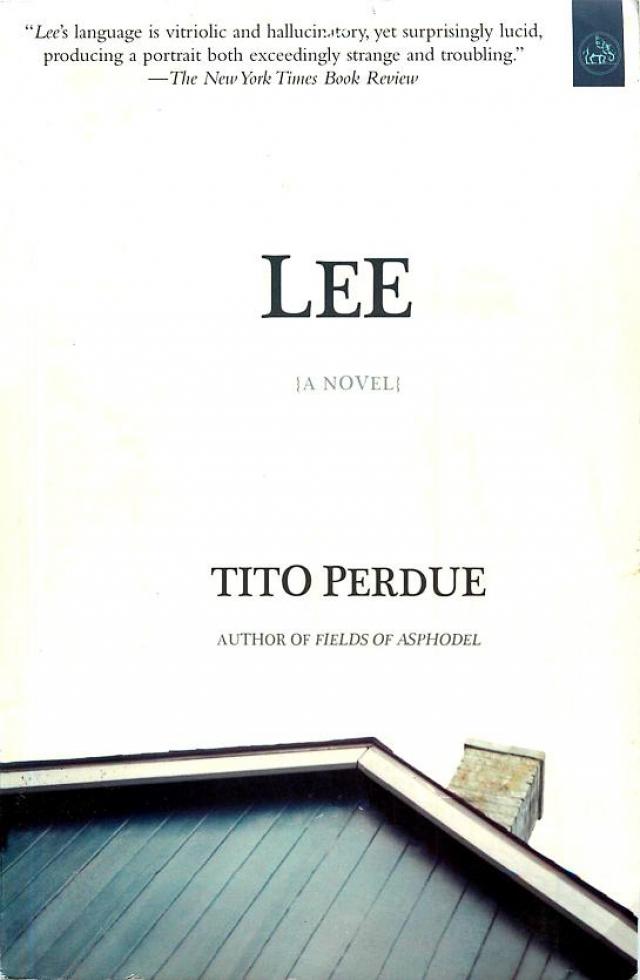
Arrogance and romance Cynosura is a feverish love story between a non-ordinary Tennessee farm girl of supernal physical beauty and an estranged youth possessed of exceptional intellectual ambition.The girl, a gifted and hard-working cellist, is a natural-born elitist, contemptuous, or anyway indifferent, to ordinary people. Her self-selected life’s mission is to identify the man to whom she will want to consecrate her life. She is sexual, intelligent, melancholy, efficient, and intuits that her life will be short.The boy, preternaturally brilliant, is not in love with life. He chooses solitude so as not to have to compromise with friends (he hasn’t any) or colleagues. Value, he believes, derives solely from the mind and imagination, though he is too young, of course, to have developed a full philosophy. He abhors capitalist practice and strives for self-sufficiency at the price of poverty.Their brief and explosive affair approaches transcendence.“Tito Perdue’s Cynosura returns to themes of his most light-hearted novel, The Sweet-Scented Manuscript. It is a love story, a first-love story, a swooning and delirious—but also intellectual and serious—love story about two talented and alienated young people who become one another’s world. But Cynosura returns to the themes of young love from the point of view of old age. It is a death-haunted tale. It forces the reader to raise the question: How does one love a woman who has no future? The answer is: With all the intensity one can muster. It is a lesson for us all, because given enough time, none of us has a future. Cynosura shows us that love becomes much sweeter when death takes a seat at the feast.” — Greg Johnson, author of You Asked for ItABOUT THE AUTHORTito Perdue was born in 1938 in Chile, the son of an electrical engineer from Alabama. The family returned to Alabama in 1941, where Tito graduated from the Indian Springs School, a private academy near Birmingham, in 1956. He then attended Antioch College in Ohio for a year, before being expelled for cohabitating with a female student, Judy Clark. In 1957, they were married, and remain so today. He graduated from the University of Texas in 1961, and spent some time working in New York City, an experience which garnered him his life-long hatred of urban life. After holding positions at various university libraries, Tito has devoted himself full-time to writing since 1983.His first novel, 1991’s Lee, received favorable reviews in The New York Times, The Los Angeles Reader, and The New England Review of Books. Since then, he has published eleven other novels—including The New Austerities (1994), Opportunities in Alabama Agriculture (1994), The Sweet-Scented Manuscript (2004), Fields of Asphodel (2007), The Node (2011), Morning Crafts (2013) Reuben (2014), and the William’s House quartet (2016)—which have been praised in Chronicles: A Magazine of American Culture, The Quarterly Review, The Occidental Observer, and at Counter-Currents/North American New Right.In 2015, he received the H. P. Lovecraft Prize for Literature.
Read online

Philip
Tito Perdue
Tito Perdue
A genius who has learned the hard way to hide his light under a bushel in postmodern New York City, Philip is a young protagonist with a soul from a bygone era. Slowly revealing himself in the stream-of-consciousness narrative to be a superb Classicist and a lover of his people despite themselves, Philip retains his public persona of ladies’ man and affably laid-back colleague for as long as he humanly can, no doubt as much out of old-fashioned courtesy and consideration as to keep the trauma of the Untergang des Abendlandes from messily breaking surface in his own inner dramaturgy.
Catalyzed, with a certain inevitability, by a contemporary corporate policy initiative with which a man of his caliber simply cannot pretend to make do, Philip takes leave of the last vestiges of materialism in his life, save his tailoring, and stoically and awkwardly strikes out into the discombobulating jungle of the space that was once America. Concentrating on an ever-narrowing circle of his own kind, among whom he seeks still to champion manful virtue and female honor in the understated ancestral manner, Philip simplifies and refines himself in mind until he reaches a singularity of sorts.
**Review“In this novel, Perdue, a metaphysical writer, implicitly presents a practical question: One wonders how many Philips there are in enemy-occupied White North America; meaning those who know what we know but show little or no outward indication of it.” — Guest writer, AltRight.comAbout the Author
Tito Perdue was born in 1938 in Chile, the son of an electrical engineer from Alabama who was working there at the time. The family returned to Alabama in 1941, where Tito graduated from the Indian Springs School, a private academy near Birmingham, in 1956. He then attended Antioch College in Ohio for a year, before being expelled for cohabitating with a female student, Judy Clark. In 1957, they were married, and remain so today. He graduated from the University of Texas in 1961, and spent some time working in New York City, an experience which garnered him his life-long hatred of urban life. After holding positions at various university libraries, Tito has devoted himself full-time to writing since 1983. His first novel, 1991's Lee, received favorable reviews in The New York Times, The Los Angeles Reader and The New England Review of Books. His other novels have been praised in Chronicles: A Magazine of American Culture, The Quarterly Review and The Occidental Observer. Arktos has published his novel Morning Crafts, the first in a series of his novels to be published by us, and William's House (vol. 1, 2, 3, 4).
Read online

The Philatelist
Tito Perdue
Tito Perdue
Tito Perdue’s The Philatelist is a novella about the joys of stamp collecting as a refuge from an unhappy life. The Philatelist is paired with the short story “Good Things in Tiny Places,” read on the occasion of the author receiving the 2015 H. P. Lovecraft Prize for Literature. “It happens more than just sometimes that overly refined persons like thee and me may opt to turn away from ordinary things and seek entry into a more perfect world than this one. I’m thinking about art galleries, concert halls, coin and stamp collections, ingenious mechanical devices or a well-played chess match. People like you spend too much time gazing at the stars while others, like my good friend who offers us a case study of the type, has traded away his life in a still-continuing struggle to assemble a non-representative array of the world’s most beautiful postage stamps. A little custodial ‘art gallery,’ he calls it, his own bespoken domain after three failed marriages and a deleterious son. All the elements, I’ve been told, can be found in a single drop of sea water. So, too, with a choice collection of the world’s postage brought together for aesthetic purposes. Thus my friend. One doesn’t need to be a good person, remember, to be extraordinarily interesting anyway.”—From the author Tito Perdue is the author of sixteen other novels, including Lee (1991), The New Austerities (1994), Opportunities in Alabama Agriculture (1994), The Sweet-Scented Manuscript (2004), Fields of Asphodel (2007), The Node (2011), Morning Crafts (2013) Reuben (2014), the William’s House quartet (2016), Cynosura (2017), Philip (2017), The Bent Pyramid (2018), and Though We Be Dead, Yet Our Day Shall Come (2018). In 2015, he received the H. P. Lovecraft Prize for Literature.
Read online