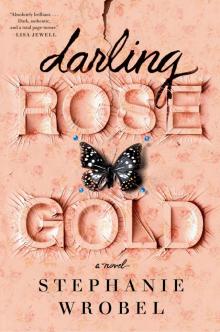
Darling Rose Gold, page 5


I shook my head. Alex would love the spotlight, but this was my story, not hers.
“Fair enough.”
Vinny and I talked about the trial. I told him what he would have already known from following the news: nobody from Deadwick would testify in defense of Mom. One of my old doctors came forward to say he suspected “something foul might be afoot.” But it was my testimony that sent her to prison.
The Deadwick Daily’s headline the next morning shouted JUDGE SAYS POISONOUS PATTY WATTS MUST PAY. Reporters said the jury’s deliberation was the quickest in the history of our county. Mom was found guilty of aggravated child abuse and sentenced to five years. She couldn’t contact me unless I said so. By now, she’d been in prison a few months. This was the longest we’d ever gone without talking.
I wanted to leave the café and get away from Vinny King. He was only interested in Rose Gold the Freak Show. Still, I answered the rest of his questions. Vinny was just the messenger. I needed him to get out my version of the truth. Without him, I had no money to fix my teeth. I could already see my blinding white smile. Strangers would return my grin instead of cringing.
My little trooper, she said.
“How do you think your ma got so—pardon my French—fucked up? Anything happen when she was a kid?” Vinny was enjoying himself now.
“Your guess is as good as mine,” I said.
I gazed out the coffee shop window. An icicle fell off the roof and shattered on the sidewalk.
Vinny watched me, his tongue making sucking noises against his teeth. I silently dared him to ask what I knew was coming next.
“Your ma sounds a little crazy. Do you ever feel kinda sorry for her?”
Every single day, I wanted to scream.
But people didn’t get excited by stories of forgiveness. They wanted bridges to burn. They wanted dramas that made their own lives feel normal. I was starting to get it.
I turned my head from the window to stare at Vinny. I imagined a falling icicle stabbing one of those baby blues. An ocular kebab.
“Not even a little bit,” I lied.
5
Patty
Rose Gold and I stand at the front door of my childhood home, my throat clutching a cry. I take Adam from her so she can search her purse for the house keys. Holding the baby—watching his little fingers and toes wiggle—calms me. I remember why I’m here.
Rose Gold sighs in frustration. She digs deeper into her purse. I sneak a peek around while I wait. To the right of the garage are the woods. When I was young, they went on for miles, but by the time I moved out, a strip mall had replaced half the trees.
Across the street is the Thompsons’ wretched house. When I was a kid, the two boys were always playing with scrap metal in the yard, their faces covered with dirt, even first thing in the morning. “Like barbarians,” my mother would cluck, watching them from our window.
The Thompsons intrigued me because they had a horse. I never saw the horse leave its pen. Until, one day, it was gone. The Thompsons too. No one knew where they went, but they didn’t take any of their junk with them. Now the yard is littered with knee-high weeds, spare tires, and fast-food wrappers. I guess this is still the hangout for Deadwick’s derelicts.
I can’t believe the Peabodys never hassled someone into cleaning up the place. What an eyesore out their front window.
Behind the garage is the pool deck David, my dad, and I built. I take a few steps toward the deck. The wood has splintered, the paint is chipped, and the giant hole in the middle of the deck is still empty. Dad had grand plans for an aboveground pool, but never got around to finishing the job.
Rose Gold finally pulls her keys from her bag, unlocks the front door and steps over the threshold, but not before taking Adam back from me.
“Hello, handsome.” She smiles, rocking the baby, touching his cheeks, and kissing his forehead. She has forgotten about her mother. He is all she cares about.
We’ll have to fix that.
I follow close behind and find myself face-to-face with my old living room. Dark wood paneling still covers the walls. The steel blue carpet is worn and needs to be replaced. The furniture is sparse: two brown BarcaLoungers, a coffee table, and an ancient television. The walls are bare—no family photos, no art, nothing. The place is somehow less welcoming now than it was when I was a child.
“How long have you lived here?” I ask. Rose Gold motions for me to follow her down the hallway to the bedrooms.
“A few months. I haven’t had time to decorate with the baby and all.”
We walk toward my parents’ bedroom. The door is closed. Rose Gold pushes it open.
The first thing I notice is the color, or lack thereof. Everything is white, from the walls to her bedspread to the dresser. Even the crib in the corner is made of white wood. I would’ve bet my left boob I’d find some combination of pink, purple, and sea green on her walls. Those used to be her favorite colors.
Her bed is tidy, although the pillow is deflated on one side, as if the stuffing has been torn out of it. There are no photos of Adam or me or anyone else. Every surface is clean, organized, characterless. The room reminds me of a psych ward crossed with a convent.
I realize Rose Gold is waiting for my reaction, so I bob my head. “It suits you.”
She keeps moving, entering my childhood bedroom. “I thought you could stay in this one.”
The walls are sponge-painted lilac. The one piece of furniture inside the room is a flimsy twin bed with a plain white sheet. I suppose it would be unreasonable to expect my daughter to give me the master bedroom. I’m in her home now, a guest—long-term if I play this right.
I follow her gaze upward. Painted on the ceiling are two giant lifelike eyes. I yelp and jump back. The eyes are blue and watery, like they’re upset with me.
Rose Gold chuckles. “Those Peabodys sure had a strange sense of humor.”
I have a hard time believing the Peabodys were responsible for commissioning this “art.” Even when they were young, their idea of a wild night was staying up until ten to play chess. They were the types to decorate their house with the kids’ school crafts. Someone with talent painted these eyes.
Scooting closer to the door doesn’t help. The eyes watch me wherever I am in the room. They’ll have to be painted over. Immediately.
“And this is, as you know, the third bedroom,” Rose Gold says from my older brother’s room, across the hallway. I close the door to mine, eager to put the eyes behind me. I glance inside David’s room, empty except for a handful of unopened boxes. I can still picture the desk covered with doodles, the leather journal shoved under the mattress, the Swiss Army knife on the nightstand, spear-point blade out. I rush past the room and stop in the bathroom all four of us shared.
Rose Gold follows me, clutching Adam. “Everything okay?”
I loosen my grip on the countertop and smile weakly at her in the mirror. “A lot of memories in this house.”
Rose Gold returns my smile. “I thought we could relive some of them. I’d like to learn more about my extended family.” Rose Gold never met her grandparents; my father’s been dead almost forty years, my mother for thirty.
My daughter leaves the bathroom, rocking Adam and walking down the hallway toward the kitchen. I stare at my pale complexion in the mirror, racking my brain. Why would Rose Gold buy my parents’ house? Maybe she’s still upset with me. Maybe she hates me enough to buy a house solely to taunt me. But if so, why agree to let me live with her in the first place? Why not move away—new state, clean start?
Of course, if she left, I would find her.
I rush out of the small bathroom, feeling claustrophobic. I make a quick pass through the kitchen—still the same dark wood cabinets and olive countertops—and head back to the living room, ready for my recliner.
“Wait,” Rose Gold says, opening the door to the basement. “You haven’t been downstairs yet.”
My upper body stiffens and my legs turn to jelly. When I was a kid, the basement was unfinished, walls and floor made of concrete. The idea was to create a second family room, but the space became Dad’s hideaway. He had a workstation with all his tools, plus a coffin-sized freezer, where he stored all the deer meat he hunted. I haven’t been down there since I was seven. I won’t even touch the doorknob. Every October 3 since 1961, try as I might to forget, I always remember.
“No need,” I say. “Has it been remodeled?”
“No, but I put a treadmill down there. Mr. Opal gave it to me. He bought a new one and had left this at the end of his driveway. I happened to drive by one day and saw it and knocked on Mr. Opal’s door and asked how much and he said, ‘For you, dear? You’ve been through so much. Take it for free.’”
Rose Gold grins, and I get a very unmotherly urge to knock the smirk off her face. (See? I’m honest about my shortcomings.) I don’t care if a full Thanksgiving feast is down there—I’m not going into the basement.
I lower myself into the recliner and settle in. “I’ll look at it later. I’ve had a long day.”
Rose Gold nods. “Of course. I didn’t mean to overwhelm you.”
My attention turns to the TV, and my heart rate spikes again. “You aren’t watching the news on this thing, are you? Those good-for-nothing reporters ruined our lives. You realize that, right?” My voice is shriller than I want it to be, but I can’t help myself. “If you believe any of their lies, I don’t know what I’d do.”
“Mom, calm down,” Rose Gold says patiently. “I don’t have cable or even an antenna for basic channels. I use the TV to watch movies and Netflix.”
I nod, unsure how all of this works or what I’ve missed while in prison. When Rose Gold was little, she was only allowed to watch a few Disney movies and Blue’s Clues. I didn’t want the boob tube to rot her brain. “I’m sorry. This is a lot to take in. I think I might take a nap.”
“Then I’ll go pump.” Rose Gold has not put Adam down since we entered the house. She heads down the hallway with the baby in her arms, singing “Pat-a-Cake, Pat-a-Cake, Baker’s Man” as she goes.
“I don’t mind if you want to do it out here,” I call after her.
“That’s okay,” she calls back. The door to my parents’ bedroom shuts, and then, ever so quietly, the lock clicks.
I find it hard not to be irritated by the locked door, but try to understand. Maybe pumping breast milk embarrasses her. Maybe she’s still getting used to motherhood. Maybe she wants privacy. Maybe, maybe, maybe.
I must have dozed off, because when I next open my eyes, Rose Gold is sitting in the other recliner, rocking Adam and watching me. I startle, reminded of the eyes on my bedroom ceiling. Rose Gold keeps staring, so I heave myself out of my chair. “Why don’t I start dinner?”
Rose Gold shrugs. “Sure. I have the ingredients for tortellini soup.”
I used to make tortellini soup when she was a child—for myself, of course. She would have gotten sick eating it.
In the kitchen, I pull the prepackaged tortellini, Italian sausage, and herb cream cheese from the refrigerator. I rummage around the pantry for tomato soup, diced tomatoes, and chicken broth. After a few minutes, the sausage is sizzling in the pan, and all the liquids have been added to my old stockpot. Of all the things I missed while imprisoned, cooking was not one of them. But it has its advantages: brainless grunt work requires just enough concentration so your mind can’t stray.
After an hour, I’ve melted the cream cheese in the broth and cooked the pasta and sausage. I ladle the soup into bowls, marveling at my first productive deed as a free citizen. I know I’m being silly, but I’m proud of myself. “Dinner’s ready!”
Rose Gold joins me at the dining table, and we sit across from each other. I push her bowl toward her, then pick up my spoon. I have been dreaming of my first meal for months. In my dreams, I savored each bite, relished each sip. In reality, I slurp the soup as fast as my hand can bring it to my mouth.
“Guess I’m hungry,” I say sheepishly, looking up from my soup. Rose Gold’s bowl is still filled to the brim. “What’s wrong? Do you not like the soup? Did I make it wrong?”
Rose Gold shakes her head. “I’m not hungry. I had a late lunch before I picked you up. Are you mad?” She sounds truly sorry, so I decide to forgive her.
“Of course not. We’ll have plenty of leftovers. You can have some tomorrow.”
I sit down with my second bowl. Rose Gold scoops and drops a spoonful of soup six times in as many minutes. A less patient mother would tell her not to play with her food. But I have always been a patient mother.
* * *
• • •
After we (I) finish dinner, Adam begins to cry in the bedroom. “You go get him,” I say. “I’ll clean up here.”
I load the dishwasher and clean the stockpot to the sounds of my daughter soothing my grandson. She coos and shushes, and the baby quiets down. I’m surprised by my daughter’s maternal instinct, but then I haven’t known her since she was a teenager. I have to keep reminding myself she’s a grown woman now. Still, there will be something she’s ill-equipped to do, and that’s when I’ll swoop in.
Rose Gold brings Adam to the kitchen, nuzzling her face against his. He smiles back at her, wrapping his tiny fingers around one of hers. I make goofy faces at him and wipe the table. He is still so tiny.
Once the kitchen is clean, we move to the living room, each taking a recliner. Rose Gold situates Adam in her lap, then grabs the remote and scrolls through a list of films. I notice she doesn’t seem to own any DVDs—all the movies are on her TV. When did that happen?
She stops scrolling, pausing on a film I’ve never heard of.
“What’s The Hunger Games?” I ask.
Rose Gold stares at me like I’m from another planet. “It’s a dystopian universe where a boy and a girl from each of twelve nations are recruited once a year to fight to the death in a televised competition.”
My hand flies to my mouth. “That sounds horrifying.”
She shrugs and keeps scrolling. I’m surprised when she chooses Titanic. The themes of the movie are awfully adult, but I keep quiet. I steal a glance at the other recliner.
“Why don’t I take Adam for a little while?” I offer. “You’re exhausted.”
Rose Gold gives the baby a once-over, hugs him close, then hands him to me.
I tuck him into my baby-cradling-sized arms. I hold a bright green rattle in front of him, and he bats at it with his hand, excited. He babbles at me when I tickle his feet. I stick my tongue out and wink at him. I do not say aloud I was born to be a mother.
I want to ask my daughter so many questions: how difficult labor was, how she’s handling the new baby, whether she’s happy at her job. I want to know everything Rose Gold is willing to tell me, but right now, she looks like Wile E. Coyote post–boulder crush. I keep quiet and focus on the bundle in my arms.
After a minute or two, I realize I’m counting his breaths. No, I’m counting the seconds between his breaths. Old habits die hard.
When I brought Rose Gold home that first night, I was captivated. Give me another kid to watch sleep, and I’ll tell you I’d rather watch a couple of geezers golf eighteen holes. But when it’s your own kid? Ask any mother. They know.
She was breathing until she wasn’t. Time loitered. Every second lasted four. My eyes bored a hole in her little skull. I gulped air, willing her to do the same. My hand shot out and grabbed the phone. I’d dialed “9” when the breath came. A quiet purr amplified to an ocean wave. It could have been thirty minutes, maybe an hour, when all I did was stare at her, frozen, listening to the bundled body produce roar after roar of inhalations.
I didn’t sleep that night. Instead I thought about our time at the hospital, when there was always someone who knew what to do, people who watched over my baby like she was their own.
I moved the rocking chair next to her crib and counted the seconds between breaths. One-Mississippi.
I forced myself to say the state slowly in my mind, to let all four syllables have their due. The brain is a tricky organ: it can condense words into a single sound, squish them like an accordion or a car crash. Two-Mississippi.
How many “Mississippis” before I’d call someone? Most of us didn’t have the Internet in those days. I dared not leave the room for my copy of What to Expect When You’re Expecting, a book with more pages dog-eared than not by then. Mom and Dad were dead. So were David and Grant. You’re alone, I reminded myself. You are ready. Three-Mississippi.
You’re never ready for your baby to stop breathing. I decided five was an appropriate number. Reasoning my Mississippis were coming out slower than a second each, I figured I could tell the doctor eight to ten seconds had passed between each breath. Four-Mississippi.
You don’t want to be that mom. The overreactor. The nonstop caller. The one who makes the nurses roll their eyes. Then again, Rose Gold’s immune system was barely functioning. She had a speck of a liver. Didn’t that require some dispensation? Five-Mississippi.
I picked up the phone.
The pediatrician told me Rose Gold had to cease breathing for twenty seconds for apnea to be considered. Anything shorter was “something to keep an eye on.” As if my eyes could go anywhere else while I counted the moments my daughter was not breathing. As if there were a way I could unload the dishwasher or do a load of laundry when I was obsessing over five seconds becoming twenty becoming a minute becoming death.
Over the next few days, I did nothing but count the “Mississippis” between Rose Gold’s breaths. The longest was fifteen. I put my hand on the phone after nine. I punched one digit to the doctor’s office per second from ten-Mississippi on. The phone would ring by the time I reached twenty.
A week after I’d brought her home, I got to eighteen and dialed anyway. “It’s been twenty seconds,” I said. “I want to bring her in for a checkup.” The next day I left the pediatrician armed with a CPAP, medication, and a plan. That was how it started.
“Fair enough.”
Vinny and I talked about the trial. I told him what he would have already known from following the news: nobody from Deadwick would testify in defense of Mom. One of my old doctors came forward to say he suspected “something foul might be afoot.” But it was my testimony that sent her to prison.
The Deadwick Daily’s headline the next morning shouted JUDGE SAYS POISONOUS PATTY WATTS MUST PAY. Reporters said the jury’s deliberation was the quickest in the history of our county. Mom was found guilty of aggravated child abuse and sentenced to five years. She couldn’t contact me unless I said so. By now, she’d been in prison a few months. This was the longest we’d ever gone without talking.
I wanted to leave the café and get away from Vinny King. He was only interested in Rose Gold the Freak Show. Still, I answered the rest of his questions. Vinny was just the messenger. I needed him to get out my version of the truth. Without him, I had no money to fix my teeth. I could already see my blinding white smile. Strangers would return my grin instead of cringing.
My little trooper, she said.
“How do you think your ma got so—pardon my French—fucked up? Anything happen when she was a kid?” Vinny was enjoying himself now.
“Your guess is as good as mine,” I said.
I gazed out the coffee shop window. An icicle fell off the roof and shattered on the sidewalk.
Vinny watched me, his tongue making sucking noises against his teeth. I silently dared him to ask what I knew was coming next.
“Your ma sounds a little crazy. Do you ever feel kinda sorry for her?”
Every single day, I wanted to scream.
But people didn’t get excited by stories of forgiveness. They wanted bridges to burn. They wanted dramas that made their own lives feel normal. I was starting to get it.
I turned my head from the window to stare at Vinny. I imagined a falling icicle stabbing one of those baby blues. An ocular kebab.
“Not even a little bit,” I lied.
5
Patty
Rose Gold and I stand at the front door of my childhood home, my throat clutching a cry. I take Adam from her so she can search her purse for the house keys. Holding the baby—watching his little fingers and toes wiggle—calms me. I remember why I’m here.
Rose Gold sighs in frustration. She digs deeper into her purse. I sneak a peek around while I wait. To the right of the garage are the woods. When I was young, they went on for miles, but by the time I moved out, a strip mall had replaced half the trees.
Across the street is the Thompsons’ wretched house. When I was a kid, the two boys were always playing with scrap metal in the yard, their faces covered with dirt, even first thing in the morning. “Like barbarians,” my mother would cluck, watching them from our window.
The Thompsons intrigued me because they had a horse. I never saw the horse leave its pen. Until, one day, it was gone. The Thompsons too. No one knew where they went, but they didn’t take any of their junk with them. Now the yard is littered with knee-high weeds, spare tires, and fast-food wrappers. I guess this is still the hangout for Deadwick’s derelicts.
I can’t believe the Peabodys never hassled someone into cleaning up the place. What an eyesore out their front window.
Behind the garage is the pool deck David, my dad, and I built. I take a few steps toward the deck. The wood has splintered, the paint is chipped, and the giant hole in the middle of the deck is still empty. Dad had grand plans for an aboveground pool, but never got around to finishing the job.
Rose Gold finally pulls her keys from her bag, unlocks the front door and steps over the threshold, but not before taking Adam back from me.
“Hello, handsome.” She smiles, rocking the baby, touching his cheeks, and kissing his forehead. She has forgotten about her mother. He is all she cares about.
We’ll have to fix that.
I follow close behind and find myself face-to-face with my old living room. Dark wood paneling still covers the walls. The steel blue carpet is worn and needs to be replaced. The furniture is sparse: two brown BarcaLoungers, a coffee table, and an ancient television. The walls are bare—no family photos, no art, nothing. The place is somehow less welcoming now than it was when I was a child.
“How long have you lived here?” I ask. Rose Gold motions for me to follow her down the hallway to the bedrooms.
“A few months. I haven’t had time to decorate with the baby and all.”
We walk toward my parents’ bedroom. The door is closed. Rose Gold pushes it open.
The first thing I notice is the color, or lack thereof. Everything is white, from the walls to her bedspread to the dresser. Even the crib in the corner is made of white wood. I would’ve bet my left boob I’d find some combination of pink, purple, and sea green on her walls. Those used to be her favorite colors.
Her bed is tidy, although the pillow is deflated on one side, as if the stuffing has been torn out of it. There are no photos of Adam or me or anyone else. Every surface is clean, organized, characterless. The room reminds me of a psych ward crossed with a convent.
I realize Rose Gold is waiting for my reaction, so I bob my head. “It suits you.”
She keeps moving, entering my childhood bedroom. “I thought you could stay in this one.”
The walls are sponge-painted lilac. The one piece of furniture inside the room is a flimsy twin bed with a plain white sheet. I suppose it would be unreasonable to expect my daughter to give me the master bedroom. I’m in her home now, a guest—long-term if I play this right.
I follow her gaze upward. Painted on the ceiling are two giant lifelike eyes. I yelp and jump back. The eyes are blue and watery, like they’re upset with me.
Rose Gold chuckles. “Those Peabodys sure had a strange sense of humor.”
I have a hard time believing the Peabodys were responsible for commissioning this “art.” Even when they were young, their idea of a wild night was staying up until ten to play chess. They were the types to decorate their house with the kids’ school crafts. Someone with talent painted these eyes.
Scooting closer to the door doesn’t help. The eyes watch me wherever I am in the room. They’ll have to be painted over. Immediately.
“And this is, as you know, the third bedroom,” Rose Gold says from my older brother’s room, across the hallway. I close the door to mine, eager to put the eyes behind me. I glance inside David’s room, empty except for a handful of unopened boxes. I can still picture the desk covered with doodles, the leather journal shoved under the mattress, the Swiss Army knife on the nightstand, spear-point blade out. I rush past the room and stop in the bathroom all four of us shared.
Rose Gold follows me, clutching Adam. “Everything okay?”
I loosen my grip on the countertop and smile weakly at her in the mirror. “A lot of memories in this house.”
Rose Gold returns my smile. “I thought we could relive some of them. I’d like to learn more about my extended family.” Rose Gold never met her grandparents; my father’s been dead almost forty years, my mother for thirty.
My daughter leaves the bathroom, rocking Adam and walking down the hallway toward the kitchen. I stare at my pale complexion in the mirror, racking my brain. Why would Rose Gold buy my parents’ house? Maybe she’s still upset with me. Maybe she hates me enough to buy a house solely to taunt me. But if so, why agree to let me live with her in the first place? Why not move away—new state, clean start?
Of course, if she left, I would find her.
I rush out of the small bathroom, feeling claustrophobic. I make a quick pass through the kitchen—still the same dark wood cabinets and olive countertops—and head back to the living room, ready for my recliner.
“Wait,” Rose Gold says, opening the door to the basement. “You haven’t been downstairs yet.”
My upper body stiffens and my legs turn to jelly. When I was a kid, the basement was unfinished, walls and floor made of concrete. The idea was to create a second family room, but the space became Dad’s hideaway. He had a workstation with all his tools, plus a coffin-sized freezer, where he stored all the deer meat he hunted. I haven’t been down there since I was seven. I won’t even touch the doorknob. Every October 3 since 1961, try as I might to forget, I always remember.
“No need,” I say. “Has it been remodeled?”
“No, but I put a treadmill down there. Mr. Opal gave it to me. He bought a new one and had left this at the end of his driveway. I happened to drive by one day and saw it and knocked on Mr. Opal’s door and asked how much and he said, ‘For you, dear? You’ve been through so much. Take it for free.’”
Rose Gold grins, and I get a very unmotherly urge to knock the smirk off her face. (See? I’m honest about my shortcomings.) I don’t care if a full Thanksgiving feast is down there—I’m not going into the basement.
I lower myself into the recliner and settle in. “I’ll look at it later. I’ve had a long day.”
Rose Gold nods. “Of course. I didn’t mean to overwhelm you.”
My attention turns to the TV, and my heart rate spikes again. “You aren’t watching the news on this thing, are you? Those good-for-nothing reporters ruined our lives. You realize that, right?” My voice is shriller than I want it to be, but I can’t help myself. “If you believe any of their lies, I don’t know what I’d do.”
“Mom, calm down,” Rose Gold says patiently. “I don’t have cable or even an antenna for basic channels. I use the TV to watch movies and Netflix.”
I nod, unsure how all of this works or what I’ve missed while in prison. When Rose Gold was little, she was only allowed to watch a few Disney movies and Blue’s Clues. I didn’t want the boob tube to rot her brain. “I’m sorry. This is a lot to take in. I think I might take a nap.”
“Then I’ll go pump.” Rose Gold has not put Adam down since we entered the house. She heads down the hallway with the baby in her arms, singing “Pat-a-Cake, Pat-a-Cake, Baker’s Man” as she goes.
“I don’t mind if you want to do it out here,” I call after her.
“That’s okay,” she calls back. The door to my parents’ bedroom shuts, and then, ever so quietly, the lock clicks.
I find it hard not to be irritated by the locked door, but try to understand. Maybe pumping breast milk embarrasses her. Maybe she’s still getting used to motherhood. Maybe she wants privacy. Maybe, maybe, maybe.
I must have dozed off, because when I next open my eyes, Rose Gold is sitting in the other recliner, rocking Adam and watching me. I startle, reminded of the eyes on my bedroom ceiling. Rose Gold keeps staring, so I heave myself out of my chair. “Why don’t I start dinner?”
Rose Gold shrugs. “Sure. I have the ingredients for tortellini soup.”
I used to make tortellini soup when she was a child—for myself, of course. She would have gotten sick eating it.
In the kitchen, I pull the prepackaged tortellini, Italian sausage, and herb cream cheese from the refrigerator. I rummage around the pantry for tomato soup, diced tomatoes, and chicken broth. After a few minutes, the sausage is sizzling in the pan, and all the liquids have been added to my old stockpot. Of all the things I missed while imprisoned, cooking was not one of them. But it has its advantages: brainless grunt work requires just enough concentration so your mind can’t stray.
After an hour, I’ve melted the cream cheese in the broth and cooked the pasta and sausage. I ladle the soup into bowls, marveling at my first productive deed as a free citizen. I know I’m being silly, but I’m proud of myself. “Dinner’s ready!”
Rose Gold joins me at the dining table, and we sit across from each other. I push her bowl toward her, then pick up my spoon. I have been dreaming of my first meal for months. In my dreams, I savored each bite, relished each sip. In reality, I slurp the soup as fast as my hand can bring it to my mouth.
“Guess I’m hungry,” I say sheepishly, looking up from my soup. Rose Gold’s bowl is still filled to the brim. “What’s wrong? Do you not like the soup? Did I make it wrong?”
Rose Gold shakes her head. “I’m not hungry. I had a late lunch before I picked you up. Are you mad?” She sounds truly sorry, so I decide to forgive her.
“Of course not. We’ll have plenty of leftovers. You can have some tomorrow.”
I sit down with my second bowl. Rose Gold scoops and drops a spoonful of soup six times in as many minutes. A less patient mother would tell her not to play with her food. But I have always been a patient mother.
* * *
• • •
After we (I) finish dinner, Adam begins to cry in the bedroom. “You go get him,” I say. “I’ll clean up here.”
I load the dishwasher and clean the stockpot to the sounds of my daughter soothing my grandson. She coos and shushes, and the baby quiets down. I’m surprised by my daughter’s maternal instinct, but then I haven’t known her since she was a teenager. I have to keep reminding myself she’s a grown woman now. Still, there will be something she’s ill-equipped to do, and that’s when I’ll swoop in.
Rose Gold brings Adam to the kitchen, nuzzling her face against his. He smiles back at her, wrapping his tiny fingers around one of hers. I make goofy faces at him and wipe the table. He is still so tiny.
Once the kitchen is clean, we move to the living room, each taking a recliner. Rose Gold situates Adam in her lap, then grabs the remote and scrolls through a list of films. I notice she doesn’t seem to own any DVDs—all the movies are on her TV. When did that happen?
She stops scrolling, pausing on a film I’ve never heard of.
“What’s The Hunger Games?” I ask.
Rose Gold stares at me like I’m from another planet. “It’s a dystopian universe where a boy and a girl from each of twelve nations are recruited once a year to fight to the death in a televised competition.”
My hand flies to my mouth. “That sounds horrifying.”
She shrugs and keeps scrolling. I’m surprised when she chooses Titanic. The themes of the movie are awfully adult, but I keep quiet. I steal a glance at the other recliner.
“Why don’t I take Adam for a little while?” I offer. “You’re exhausted.”
Rose Gold gives the baby a once-over, hugs him close, then hands him to me.
I tuck him into my baby-cradling-sized arms. I hold a bright green rattle in front of him, and he bats at it with his hand, excited. He babbles at me when I tickle his feet. I stick my tongue out and wink at him. I do not say aloud I was born to be a mother.
I want to ask my daughter so many questions: how difficult labor was, how she’s handling the new baby, whether she’s happy at her job. I want to know everything Rose Gold is willing to tell me, but right now, she looks like Wile E. Coyote post–boulder crush. I keep quiet and focus on the bundle in my arms.
After a minute or two, I realize I’m counting his breaths. No, I’m counting the seconds between his breaths. Old habits die hard.
When I brought Rose Gold home that first night, I was captivated. Give me another kid to watch sleep, and I’ll tell you I’d rather watch a couple of geezers golf eighteen holes. But when it’s your own kid? Ask any mother. They know.
She was breathing until she wasn’t. Time loitered. Every second lasted four. My eyes bored a hole in her little skull. I gulped air, willing her to do the same. My hand shot out and grabbed the phone. I’d dialed “9” when the breath came. A quiet purr amplified to an ocean wave. It could have been thirty minutes, maybe an hour, when all I did was stare at her, frozen, listening to the bundled body produce roar after roar of inhalations.
I didn’t sleep that night. Instead I thought about our time at the hospital, when there was always someone who knew what to do, people who watched over my baby like she was their own.
I moved the rocking chair next to her crib and counted the seconds between breaths. One-Mississippi.
I forced myself to say the state slowly in my mind, to let all four syllables have their due. The brain is a tricky organ: it can condense words into a single sound, squish them like an accordion or a car crash. Two-Mississippi.
How many “Mississippis” before I’d call someone? Most of us didn’t have the Internet in those days. I dared not leave the room for my copy of What to Expect When You’re Expecting, a book with more pages dog-eared than not by then. Mom and Dad were dead. So were David and Grant. You’re alone, I reminded myself. You are ready. Three-Mississippi.
You’re never ready for your baby to stop breathing. I decided five was an appropriate number. Reasoning my Mississippis were coming out slower than a second each, I figured I could tell the doctor eight to ten seconds had passed between each breath. Four-Mississippi.
You don’t want to be that mom. The overreactor. The nonstop caller. The one who makes the nurses roll their eyes. Then again, Rose Gold’s immune system was barely functioning. She had a speck of a liver. Didn’t that require some dispensation? Five-Mississippi.
I picked up the phone.
The pediatrician told me Rose Gold had to cease breathing for twenty seconds for apnea to be considered. Anything shorter was “something to keep an eye on.” As if my eyes could go anywhere else while I counted the moments my daughter was not breathing. As if there were a way I could unload the dishwasher or do a load of laundry when I was obsessing over five seconds becoming twenty becoming a minute becoming death.
Over the next few days, I did nothing but count the “Mississippis” between Rose Gold’s breaths. The longest was fifteen. I put my hand on the phone after nine. I punched one digit to the doctor’s office per second from ten-Mississippi on. The phone would ring by the time I reached twenty.
A week after I’d brought her home, I got to eighteen and dialed anyway. “It’s been twenty seconds,” I said. “I want to bring her in for a checkup.” The next day I left the pediatrician armed with a CPAP, medication, and a plan. That was how it started.