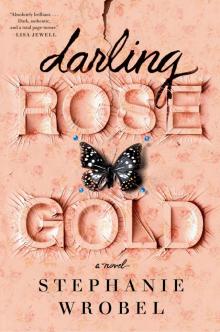
Darling Rose Gold, page 20


The parking lot is quiet for a moment. I could kiss Hal Brodey square on his weathered face. This is the moment I’ve been waiting for. I glance at Rose Gold. She looks livid.
“You know, Hal,” Jenny Wetherspoon—our wet noodle of a town librarian—speaks up, “the last thing I need right now is a lecture on my faith. Forgiveness has limitations.”
Jenny’s husband, Max, steps forward. “If Patty wants a second chance, she should try a new town. The people of Deadwick have long memories.”
Max spits out the side of his sneer. I wonder whether he still keeps a handgun tucked into the waistband of his pants.
“What was she expecting, a ‘welcome back’ party?” Max continues, watching me.
The PTA moms snicker.
Jenny pretends to consider this. “She always did love a handout. Had no trouble eating our food, ‘borrowing’ our money. How much did she take from us over the years, Max?”
Max clears his throat and walks toward me. “Somewhere north of seven hundred dollars, I’d reckon.” For a second, his tough-guy mask slips, and I see the pain in his eyes.
Jenny nods, avoiding my gaze. “Plus all those hospital bills. The library ran at least half a dozen fund-raisers to cover them.”
This isn’t about the money, though they’re pretending it is. I held Jenny and Max in my arms after every fertility clinic appointment, helped them research and brainstorm other options until there weren’t any. Rose Gold and I bought them Campbell’s chicken noodle soup and recorded silly home videos, whatever I could think of to cheer them up. Twenty years before they decided I was a monster, they’d called me their guardian angel.
I take a step back. “You leave my daughter and me alone,” I shout at all of them. “I’m sick of your lectures.”
Max sticks his hands in his pockets, pulling the jacket open wide. On the left side of his belt, metal flashes. “If you’re tired of the conversation, I’d be happy to show you how we all feel,” he says agreeably.
My blood runs cold. I glance at Hal, hoping he’ll speak up again. He chews the inside of his cheek, squinting at Max Wetherspoon, but doesn’t say anything.
“You aren’t welcome in Deadwick, Patty,” Jenny says. “We can’t force you to leave town, but don’t think we won’t try.”
Rose Gold rushes over, head ducked, and holds me by the elbow. “Let’s get out of here,” she murmurs. She’s not angry anymore. Back to gentle, subservient Rose Gold. I’d give myself whiplash trying to keep up with her personality changes.
I nod, dazed. She puts her arm around me, steering me toward the van. The blinking black eyes of the human hive stare at us. Hal Brodey shakes his head, the only one sad to see me go.
* * *
• • •
Back at the house, I pace the living room, still furious. Rose Gold returns from feeding Adam in her bedroom, singing “Twinkle, Twinkle, Little Star” as she walks down the hallway. When she reaches the living room, she lifts Adam to her face and kisses him four times: on the forehead, both cheeks, and his chin. He giggles.
“They have no right to treat me this way,” I say, watching my daughter. “Every single day I try to be nice to them. And every single day, all they do is bully me.”
“Why don’t you play with Adam for a bit?” Rose Gold suggests cheerfully, hugging the baby before handing him to me. “I’ll make us dinner.”
“They’ve gone too far this time,” I say, lowering my voice now that Adam is in my arms.
“I know, Mom,” Rose Gold says, trying to sound solemn. I catch a hint of a smile right before she turns away. “Tell you what. I’ll make your favorite.”
She disappears into the kitchen. Her good mood irks me, but I resist the urge to tell her off. I sit in my recliner and try to focus on Adam, rocking him back and forth. At least he would never remember the awful Christmaspalooza scene. Maybe at dinner, I’d broach the topic of raising him somewhere other than Deadwick. Rose Gold might be ready to start fresh if I could get her away from the influence of these spiteful people. They have nothing better to do than gossip and plot ways to hurt people. I have had it with this town.
Half an hour later, Rose Gold calls me to the kitchen table. She’s filled two plates with Polish sausage, kapusta, boiled potatoes, and a salad—my favorite meal. She sets one of the plates in front of me. In spite of the day’s earlier events, I smile. This is the first dinner she’s cooked us since I got out of prison. We settle Adam in his bassinet and sit at the table to eat.
“You’ll have to let me know how it is,” she says, gesturing to our plates. “I’ve never made this on my own before. I hope I didn’t mess anything up.”
“I’m sure it’s all perfect,” I say, cutting into a piece of sausage. I pop it into my mouth. “Really good.” I slice another piece.
Rose Gold beams and picks up her own fork and knife. She slices all of her sausage and potatoes, then begins to eat. I startle when I realize the significance of this simple act.
My daughter is eating. She doesn’t scoot the food around her plate or try to condense it into smaller piles. She chews and swallows, chews and swallows same as I am. Why the sudden appetite? Maybe she’s grown tired of her ruse. Maybe she’s sorry for me now that she’s seen the unrelenting wrath of Deadwick’s residents. Maybe she feels guilty for her role in their hatred. Maybe she’s ready to start acting like we’re a normal family.
I pull the serving dishes closer to me for second helpings. My stomach rumbles.
Odd.
I use the tongs to pick up another sausage and cut a slice. The sausage is halfway to my mouth when a wave of nausea hits me so hard, I drop my fork.
Rose Gold jumps in her chair. “What’s wrong?”
Another wave of nausea—this one more powerful than the first—washes over me. I’m going to be sick. My chair squeals against the floor when I scoot it back. I bolt toward the bathroom. Rose Gold calls, “Mom?” but all I can think about is the toilet.
No sooner is my head over the porcelain bowl than I begin to retch. I squeeze my eyes closed, not wanting to see the contents of my chewed-up dinner reappear. Gripping the toilet bowl’s base, I am dizzy and shaky and sweaty and chilly. The stench of throw-up fills the air. I keep heaving. I flush the toilet, desperate to get the smell away from my nose, but too scared to lift my face from the bowl. I am reminded of an article I read: when you flush a toilet, feces particles shoot fifteen feet into the air, covering the sink, toothbrush, and now my face. But I am too queasy to be disgusted. I will never stop retching.
A knock sounds on the door.
“Mom, are you okay?” Rose Gold calls.
I keep my face in the bowl. Only bile is coming out of me by now. “I think the lettuce was bad.”
“I feel fine,” she says, borderline chipper.
You want a medal? I want to yell.
“Can you get me a Seven Up?” I ask.
She pads down the hallway and returns a minute later with a glass and a can of 7 Up. She empties the soda into the glass, then taps the glass on the counter to get rid of all the bubbles—the same way I used to when she was sick.
“Put it on the counter,” I say, head still in the bowl, waiting for the next round of nausea.
“Oof,” Rose Gold groans. “Smells awful in here. I don’t know how you stood it all those years.”
I say nothing, willing her to shut up and get out.
“Let me know if you need anything else,” she says, skipping down the hall.
How is it possible that I, with my hardy stomach, got sick, but Rose Gold’s wimpy digestive system is fine?
When I haven’t puked in five minutes, I pull my head from the bowl and sink to the tile floor, too exhausted to reach for the glass of 7 Up or brush my teeth or even sit. I pray this nightmare is over. I lie as still as possible, not wanting to provoke any of my organs.
Rose Gold checks on me a few more times and offers little tips that irritate me. They’re the same things I told her when she was young: small sips of 7 Up, a cool washcloth on the forehead, deep breaths.
I don’t know how much time has passed, but eventually she pops her head in and says, “Adam and I are going to bed. Hope you feel better in the morning.”
The baby wriggles in her arms, making my daughter smile.
I say nothing.
She watches me on the floor, her voice flat now. “I don’t know how you did it all those years.”
Didn’t she already say that? I think with impatience. I lift a hand. “Night, honey.”
The master bedroom door closes. The lock clicks. The house is silent. I am left alone with my thoughts.
I pull myself to my feet and stagger to the living room. My recliner reaches for my body. I sink into it. My eyes close.
No, earlier she said, I don’t know how you stood it. Just now she said, I don’t know how you did it. My body, dehydrated and exhausted, says, So what? But something nags at my brain.
By “did it,” did she mean take care of her all those times she vomited? Or something more accusatory?
My eyes open.
Rose Gold made dinner. Rose Gold ate dinner. Rose Gold didn’t get sick.
But I did.
This line of thinking is preposterous—but is it? Did my own daughter poison my food?
Maybe Arnie or Mary or Tom got to her. Maybe she believes the media, the judge, and the jury. Maybe this is the lesson she wants to teach me, the reason she let me stay with her. She wants my attention. Well, sweet girl, you have it.
No one in this town wants me here, not even my own daughter. Scare tactics and bullying are one thing, but harming me is another. The treadmill accident, the yard fire, the poisoned food: some of the people in this town are deranged, and my daughter is one of them. Am I supposed to wait for them to burn me at the stake?
My mind reels, drawing conclusions and making decisions faster than I’m prepared for. How could I be so naive to think she took me in with honest intentions, out of the goodness of her heart? Forget trying to fix Rose Gold. Forget figuring out her plans. This has become more serious than a power struggle.
I can’t stay here. I have to leave. If my daughter is unstable, she could also be dangerous. Has proven she is dangerous, in fact. Meaning I can’t leave Adam here either.
He’s going to have to come with me.
18
Rose Gold
November 2015
I hadn’t seen my father in four months. He paced the sidelines of the soccer field, shouting encouragement to his team. Five little girls sat behind him on the bench, watching the match unfold.
On the field, Anna went to kick the ball, but missed. I noticed her hair was in a ponytail and beamed. A girl on the other team ran past Anna, taking the ball with her. She was halfway across the field before Anna realized the ball had gotten away from her.
Dad was trying very hard to look patient with his daughter. Maybe he assumed she would have Sophie’s athletic prowess or at least Billy Jr.’s adequate handling skills. Anna had neither—she was more Billy than Kim, more me than Sophie. Her unenthusiastic trudge down the field made me love her more.
Kim sat in the stands with the other parents, cheering for Anna’s team and laughing with her friends. She seemed years younger when she was grinning. She had never smiled at me like that.
Four months ago, Dad had asked me for space, and I gave it to him. But I thought “space” meant fewer texts and visits, not cutting off communication altogether. He’d texted me back, alarmed, when he saw my comments about Phil. But after I reassured him I was okay, he went quiet again. Since the Yellowstone trip, he’d responded to half of my messages, and the responses were one word or a sentence at most. He wouldn’t pick up when I called. We hadn’t seen each other since the morning the Gillespies had left for their trip. I’d tried to be patient. I focused on work and saving the money I needed for my teeth—I was halfway there—but I was still lonely. I was afraid if I stopped initiating contact, I might never hear from my father again.
The day Dad had walked into Gadget World, he acted like he wanted a real relationship with me. But now, after a year and a half, he was already throwing in the towel a second time? Who did he think he was? Apparently no one had told him a parent’s love was supposed to be unconditional. I wasn’t asking for much—just to be a part of the Gillespie family.
So I did what any good daughter or sister would: I kept tabs on the family via social media. When I discovered Anna had a soccer match this afternoon, I got into my van and drove five hours north to cheer her on. I hadn’t worked up the nerve to get out of the car yet, but I had a decent view of the field from the parking lot. The score was zero to zero. Not a riveting game, but I marveled at how easily this group of seven-year-olds ran up and down the field. They were boundless in their energy, legs strong and obedient. They would spend their childhoods running and rolling around in the grass, not hooked up to IVs or confined to hospital beds. They were luckier than they knew, and they took all of it for granted.
A whistle blew, signaling the end of the match. Each team lined up to shake one another’s hands. I stretched and opened the van door, hopping down to the concrete, stomach in knots. Watching Anna high-five the girls on the other team, I couldn’t help but grin and relax a little. I loved my sister—and I’d missed her all these months. I wanted nothing more than her stubby arms around me. When was the last time I had been hugged? The last time another human being had touched me at all?
I made a beeline for Anna, ignoring the stares of the parents in the bleachers, the refs walking off the field, and the girls on both teams. When Anna saw me, her eyes lit up.
“Rose,” she yelled. She sprinted toward me, much faster than she’d chased any soccer ball in the last couple hours.
When we reached each other in the middle of the field, she pounded her little body into me. I scooped her up and swung her in circles. Anna laughed with delight, squealing. I swung her faster and faster. I wanted to be good to her the way Phil had been good to me. I wanted to pay it forward.
“I’m gonna barf,” Anna said, but kept laughing, so I kept spinning. This reunion was exactly how I’d pictured it. “Look at my new earrings!”
I stopped twirling and set Anna down. The two of us swayed, waiting for the dizziness to pass. I oohed and ahhed over the tiny Minnie Mouse studs. I had the urge to lie down in the grass, to stop the afternoon right there.
“Rose, what are you doing here?” a voice behind me said. Kim.
“She came to see me play,” Anna said.
My gaze shifted from Anna to her mother. Sometimes I couldn’t believe they were related. I tried to adopt Anna’s carefree tone. “I missed you guys.”
Kim put her hand on Anna’s shoulder and tugged my sister toward her. “Go join the team huddle, honey,” she said, pointing to the circle of girls Dad was giving a postgame speech to. Anna trotted off.
Kim watched Anna go, then turned toward me. “You shouldn’t have come,” she said. “Billy told you he needed space.”
I frowned at Kim for a minute, debating the best way to approach this conversation. She crossed her arms.
“I’d rather talk about this with my dad,” I said. I had a better shot of getting through to him.
“Billy is busy,” Kim said. “What is there to talk about?”
I had never cussed anyone out before, but Kim would have made the perfect first candidate. I bit my tongue, watching Anna’s team stack their hands in the middle of the huddle and then yell, “Team!” on the count of three. Kim followed my gaze and moved over a few steps, trying to block my view of Dad and the girls.
Anna tugged on Dad’s sleeve and pointed at me. Dad followed her finger, squinted, and recognized me. He nudged her toward a couple of the other girls and came jogging in Kim’s and my direction, clipboard and backpack in hand.
When he reached us, he was out of breath. I opened my arms to hug him.
“Dad!” I said.
He hugged me back stiffly. I tried not to think about the looks or mouthed words he and Kim were exchanging behind my back.
Dad pulled out of the hug. “What are you doing here? We talked about this.”
I smiled in spite of the knot in my stomach. “I’ve been giving you space for four months now. How much space do you need?”
I’d tried to keep my tone light, but the question came off desperate. Worse, no one was answering. Dad scowled at me, cheeks reddening. Kim looked ready to explode—if her arms crossed any tighter, she’d turn into a pretzel.
The seconds felt like hours. I willed someone to say something, anything. Even Kim’s voice would have been preferable to silence at this point.
I wished too soon. “Billy,” Kim snapped, “if you don’t say it, I will.”
Dad turned on his wife. “Kim,” he said, voice deadly quiet, “go wait in the car.”
Kim pouted but slunk away.
He watched me with emotionless eyes. “We know, Rose.”
“Know what?” I asked, my heart rate quickening.
“Stop playing dumb,” he said flatly. “I know you lied.”
I tried to keep my face blank. “Lied about what?”
Parents had collected their daughters. The fathers had their arms around the little ones, congratulating them on a great game. The mothers packed up the coolers. The kids chattered and sipped their juice boxes. They all walked toward us, heading for their cars in the parking lot.
“About the cancer,” Dad hissed, struggling to keep quiet, aware of the parents nearby. I had never seen him this mad. “You lied about having cancer! What the hell is wrong with you?”
I flushed. My outrage had to match his to be believable. “Excuse me?”
The parents nearby stared, their interest piqued. I bet they’d never heard Billy Gillespie raise his voice.