The Murder Dance, page 2


‘I don’t remember any stories like that. And she didn’t really ramble.’
‘Well, the point is that what’s been done once, can be done again.’
‘You’re not going to make it into an hotel?’ said Zillah, after a moment.
‘I don’t think it would be big enough for that. But I’m going to revive the tradition. I’m going to open a restaurant,’ said Quentin, and sat back, clearly very pleased with himself and expecting Zillah to be wide-eyed and admiring of such enterprise. ‘An upmarket gourmet country-house restaurant,’ he said. ‘With the right staff and the right publicity, it could be very successful indeed. It’ll be following in the footsteps of my ancestors – well, your ancestors as well, of course,’ he said, as if in afterthought. ‘And I do know about food and cooking.’
This was an exaggeration. Quentin knew enough to concoct a good pasta dish or a plate of tarragon chicken; he also did a mean salmon en croûte, and he baked a really good fudge cake. That was about the extent of it.
Zillah said, carefully, ‘Where would you live?’
‘I’ve thought about that, as well. On that ground plan the solicitor sent – you saw it, didn’t you? Oh, I thought I’d shown it to you. Well, there seems to be a kind of semi-separate wing on one side of the building. That could make a really comfortable set of rooms for us.’
The courtyard rooms, thought Zillah. That’s what they were always called. Over what were once stables. A door opening off a first-floor balcony, and windows … The windows all had bars …
‘It looked quite substantial on the plan,’ Quentin said. ‘If we could turn it into private apartments – if it’s big enough – we could live there, you and I, and I’d be on the premises, managing the restaurant.’ He reached across the table again, and this time he did take her hand. ‘Don’t you think it’s a good idea, Zillah?’
Zillah tried to think of something to say, but could not, and after a moment Quentin withdrew his hand. ‘You’re very quiet,’ he said. ‘Are your grandmother’s stories about The Tabor’s past bothering you? Don’t let them. We could live there perfectly comfortably. I know some of her stories were a bit eerie, but nobody ever actually believed them.’
‘You never really listened to her stories, though, did you?’
‘They were all nonsense,’ said Quentin, dismissively. ‘But I know you listened to them. Some people in the family were a bit worried about you spending so much time with her and being fed all that rubbish. Stories about ancestors and old legends and all the rest of it. They were only tales, Zillah.’
‘Everyone thought The Tabor was only a tale, but now it seems it wasn’t.’
‘Well, that’s true. But as for there being anything eerie or macabre …’ He gave a small laugh at the absurdity of this, then said, ‘Have you finished eating? That was quite an acceptable meal, wasn’t it?’ He said this critically, clearly already taking what he thought was an expert’s view of restaurant food. ‘Shall we have some coffee in the bar – they serve it in there, I think. And there’s a log fire and an inglenook. You’ll like that.’
He was speaking to her as if she was a child, but Zillah nodded, and got up from the table.
‘Find us a couple of seats, and I’ll bring the coffee through,’ said Quentin. ‘Then I can tell you a bit more about my ideas for the restaurant, and how it can be run and financed.’
Zillah went into the bar, and sat down by the fire. She could hear Quentin talking to the receptionist, or maybe it was the waitress. It was annoying and actually a bit embarrassing that he had to make himself out to be so knowledgeable and important. He would tell her that he was Rivers of Reivers in a minute. He did tell her – Zillah heard him say it, making a joke of it, but loving the sound of it all the same.
Staring into the flames, she managed to tune Quentin out, and thought instead about The Tabor. Nothing eerie or macabre, Quentin had said, and she had wanted to shout at him that he was wrong – The Tabor was full of eeriness and macabre things.
As a child she had listened to her grandmother’s stories about The Tabor, utterly entranced by them. When her grandmother reached down to take her hand, to the small Zillah it had been as if she was being led into the past, to the time when her grandmother had been a young girl exploring the secrets and the mysteries of a strange old house.
‘There were secrets in there,’ she would say. ‘And once, Zillah, there was a night I never forgot. It was the night the local people performed the Reivers Dance.’
Her eyes were staring straight ahead, and Zillah thought her grandmother had forgotten she was there. Greatly daring, not wanting to break the spell but fascinated, she asked about the Reivers Dance.
‘They said that no one had seen it for – oh, for three hundred years,’ said the soft old voice. ‘Perhaps longer. But most people in Reivers knew about it, because it was handed down within families. People who live in Reivers stay there, you see. They don’t often move away, and memories are long. And on that particular night, Zillah, the children of Reivers were kept inside their houses. They were forbidden to venture out, in case they saw …’ The thin hand tightened its grip. ‘It was always called the Reivers Dance for outsiders,’ she said, very quietly, ‘but the local people whispered that it had always been known by a different name.’
‘What name? Grandma, tell me.’
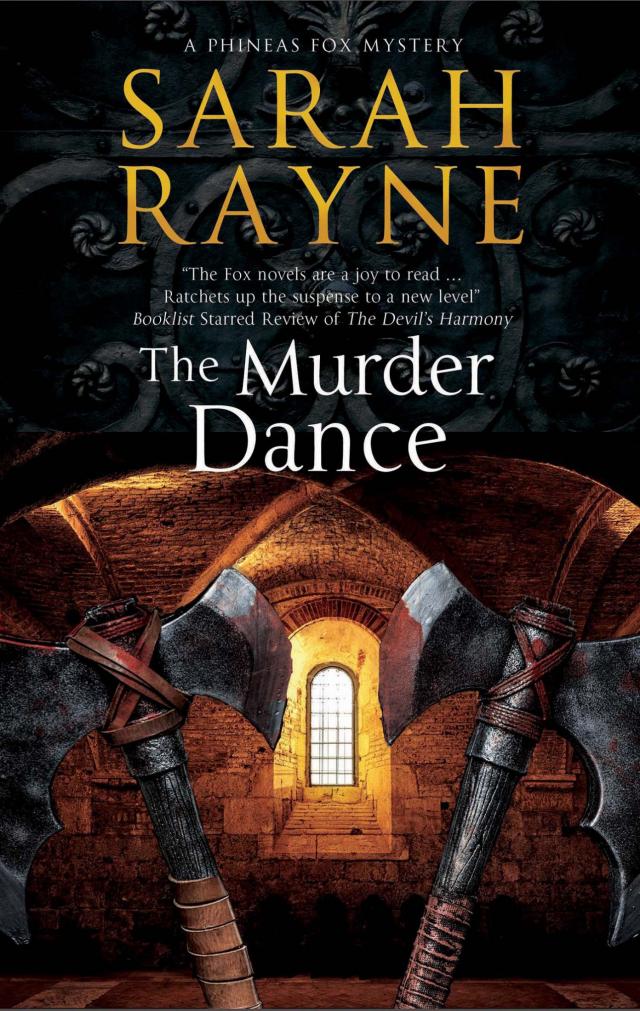
For a moment, something that was no longer dream-filled or reminiscent looked out of the blue eyes. ‘The Murder Dance,’ she said. ‘That was what people called it. And on that night I hid in a corner of the courtyard, and I saw it, Zillah.’
After a moment, Zillah said, ‘Why was it called the Murder Dance?’
Her grandmother was still staring back to that long-ago night. Then, very softly, she said, ‘Evelyn was part of it that night. There, at the centre of it. And Evelyn is still there, of course – I’ve always known that. Evelyn is still inside The Tabor.’
Evelyn … It was curious how the name lay on the air, leaving a cold trail. Zillah waited, but her grandmother made an impatient gesture with a hand, as if pushing something away. ‘Enough about the past, my dear. It doesn’t do to look back.’
Zillah shivered now, remembering those words, remembering Evelyn … But when Quentin set the coffee down on the low table, she smiled up at him, stretching out her legs to the fire. She had rather good legs, with slim ankles, and it was a pity not to display them. It would also tantalize Quentin, who would tighten his lips and look determinedly away. It always made Zillah laugh to herself to see him struggling like that.
She listened to his idea of creating a small company and what he called a community project to fund part of the renovations to fund his restaurant, and she put on her admiring face, and asked questions at suitable intervals.
‘There’ll have to be a bank loan of course,’ said Quentin. ‘The community project idea wouldn’t be enough for everything. But I’ll be able to get a loan, of course. I shall present a proper business plan – it isn’t as if I don’t know how these things are done. I’ve gathered statistics for a number of clients.’
Zillah nodded and listened, and put on the falsest of all her false faces, and smiled and said it all sounded marvellous.
And then Quentin said, ‘And, of course, I shall find out as much as I can about The Tabor’s past, so that it can be used for publicity.’
The Tabor’s past. Zillah felt as if the warm, comfortable old room had tilted and was spinning around her. Its past …
Whatever it took, Quentin must be stopped from finding out about The Tabor’s past.
TWO
The solicitor’s office was in a small town six or seven miles from Reivers, and the solicitor was called Mr Codling. Quentin thought he matched his voice on the phone, which people hardly ever did, but Mr Codling was sparse and dry-looking, exactly as his voice had been. He had pale eyes and hair like thin straw. Quentin introduced Zillah, and Mr Codling shook hands with her. She had dressed in quite a formal outfit for the meeting – a very smart grey jacket which Quentin had not seen before, over a black shirt of some silky stuff, although he would have to find a way of tactfully indicating to her that a button of her shirt had become unfastened. She would not want to be embarrassed.
Mr Codling did not waste time over preliminaries. He asked Quentin to sign several documents, which his clerk witnessed, and then he sat back, and said he would be straight about things: he was not inclined to approve of the plans for The Tabor that Mr Rivers had outlined on the phone.
‘A restaurant,’ he said, frowning slightly.
‘A gourmet restaurant. Very upmarket.’
‘Yes.’ A pause, then, ‘I have to say, Mr Rivers, that house in any guise is nothing more than a liability, and my advice to you is to sell it as soon as possible.’
‘I shan’t do that,’ said Quentin, annoyed. ‘I’m going to set up a Trust – an investment arrangement. I’ll be talking to investment banks and finance companies, but I want to involve local businesses as well, so it will be very much a community thing. And once the place is up and running, and dividends paid—’
‘Mr Rivers, a dozen investment banks and a hundred Trusts wouldn’t put The Tabor to rights, and it certainly wouldn’t end in it being a profitable restaurant. It’d need a millionaire to do that. But I imagine an organization like the National Trust or English Heritage would be interested,’ said Mr Codling. ‘I could probably make enquiries on your behalf. Developers might be approached, as well, because the house could be demolished and several properties built on the land.’
Zillah leaned forward at this. ‘But isn’t The Tabor – well, historic?’ she said, rather hesitantly. ‘Won’t there be … protection, or orders on it that will mean it can’t be demolished?’
This was a very intelligent point, and in fact Quentin had been about to make it himself.
‘It might be historic, but it’s so run-down it could well have gone beyond the point where it can be reclaimed, Miss Rivers,’ said Mr Codling, rather coldly. ‘And it isn’t protected in the sense I think you mean. I believe there’s something called Historic England, and a long-winded process involving the Secretary of State to get a building listed, but nobody’s ever applied to have The Tabor on the list. As far as I’m aware, you could do anything you want to it – including bulldozing it. It’s probably a considerable health-and-safety risk by this time, as well. In fact, Mr Rivers, you might find you’ll be hearing from one or two local council departments on that count. Now that Osbert Rivers is dead, they’ll most likely gather like vultures.’
‘Great-Uncle Osbert,’ said Quentin, half to himself.
‘I think he was more of a third cousin to you,’ said Mr Codling. ‘Miss Rivers, did you say something?’
‘No. Did you know him – Osbert? It would be really nice to hear about him from someone who had met him.’
Quentin thought, as he so often did, that Zillah charmed everyone she met. She was charming old Codling now, leaning forward eagerly as she asked about Osbert. It was a pity the unfastened button caused her blouse to gape a bit at the top.
‘I did meet him a couple of times,’ said Mr Codling, suddenly intent on shuffling some papers. ‘My father knew him better, though. Theirs was an old friendship.’
Zillah said, ‘It’s nice that you knew him, though, Mr Codling, even just a little. It makes a link to the past. He lived alone, didn’t he? Wasn’t he ever married?’
‘No.’
‘Wasn’t he lonely?’
‘I believe there had been one or two … companions at times,’ said Mr Codling. ‘But of course it would have been long before my association with the family, and I never pried into his private life. He never referred to any lady in particular.’
Quentin thought this was very correct of Mr Codling – you did not want solicitors delving into private family matters. However, Zillah was looking wistful, and clasping her hands together. ‘Perhaps he had a tragic love affair.’
‘I couldn’t say, Miss Rivers.’
‘I didn’t mean to be inquisitive,’ said Zillah, at once. ‘It’s only that we know so little about our family. You’re very knowledgeable, though, Mr Codling – about the family, and about The Tabor itself.’ She gave him one of her lovely smiles. It was remarkable how she could warm a room with her smiles, although Codling did not look especially warmed; in fact he looked distinctly disapproving. Probably he was a touch embarrassed, because when Zillah reached down for her handbag, which was on the floor, it was slightly unfortunate that the partly unbuttoned blouse opened a little more, revealing a corner of some black lace.
‘There’s also the question of your will, Mr Rivers,’ he was saying. ‘I suppose you already have one in place?’
‘Well, no. It never seemed important.’
‘Ah. I don’t know your present circumstances or financial affairs, of course, but once we’ve got probate, you’ll be very much what the Victorians called “A man of property”. I strongly advise you to make a will as soon as possible.
‘And now,’ he said, reaching into a drawer of his desk, ‘I must hand over the keys of The Tabor. I expect you’ll be keen to see the place.’
‘Oh yes,’ said Quentin. ‘We’re going straight out there now, in fact.’
His hands closed on the massive bunch of keys.
Zillah had thought they would go back to the pub first, but Quentin said they might as well make the most of the day – it was only half past ten, and they would go straight to The Tabor itself.
‘Shall we do that? I can’t wait to see the place.’
‘Yes, let’s.’ But Zillah had to force herself not to clench her fists. She took deep slow breaths to calm the racing of her heart and the nervous lurching of her stomach.
There was not very much traffic on the main road, and Quentin drove fairly slowly, looking for the turning.
‘It’s called Drum Lane, according to the sat-nav,’ he said. ‘It should be just along here.’
‘It’s there,’ said Zillah, pointing to a narrow turning on their right. ‘Just by that old beech tree and the white railings.’
‘How did you—? Oh, there’s a sign low down, isn’t there? Almost hidden by the hedge, but I can see it now. Drum Lane. Tabor means drum, did you know that?’
‘Oh, does it?’
As he turned into the lane, Zillah thought it was strange how it had felt so entirely ordinary to drive along the modern highway, with the twenty-first-century markings and signs, but how very different Drum Lane felt. It was narrow and not very well maintained, and there was almost the sense that it lay in some indefinable past. There were quite high hedges fringing the road, and there were hardly any buildings to be seen over them.
‘Fen country,’ said Quentin. ‘Probably too marshy for building on a large scale. I don’t think it’s much further, though.’
Not much further, said Zillah’s mind. Only another few yards. There’ll be a break in the hedge on the left—
‘I wonder if that’s it,’ said Quentin, slowing down and peering over the steering wheel. ‘That break in the hedge on the left up there. D’you see?’
‘Yes. That must be it.’
Quentin swung the car into the opening and in front of them were gates, waist-high, the iron scrollwork a bit battered, but still substantial and still firmly attached to the stone pillars on each side of them. On the left-hand pillar was a weather-beaten oblong with lettering – the letters worn and defaced by time and partly obscured by moss, so that they were only just readable. Zillah did not need to read the sign, though. She knew what it said. This was The Tabor. The apprehension returned, clenching at her stomach.
She got out to open the gates – they swung screechingly back, and Quentin drove through, frowning at the section of badly rutted ground just inside. If he was driving up to the Gates of Heaven, he would still be more concerned about his car’s suspension than what might be ahead.
There was a sharp curve around to the left, and the house came into view. It crouched amidst untidy gardens and overgrown shrubs, and even from here it looked as if it was hugging its secrets to itself, and eyeing their approach. The Tabor.
‘So that’s it,’ said Quentin, finally parking on a relatively flat bit of ground, and studying the house critically. ‘It’s an odd shape, isn’t it? Bits jut out here and there, as if people have just stuck pieces on at random over the centuries.’
‘I expect they’d have done it before planning permissions and things had to be got.’
‘Yes. Oh, and there’s the courtyard over there on the right. Through that archway – d’you see it? That’s where I thought we might have our own apartment.’
‘Yes.’
‘Everywhere looks secure,’ he said, as they walked towards the studded door at the house’s centre. ‘I was a bit worried about squatters, but it all looks all right.’
‘Yes.’ Zillah did not say that it also looked as if The Tabor would need a massive amount of money spending on it just to put it in order, never mind turning it into an upmarket restaurant. But it was still so beautiful. It would not take much to bring it out of its neglected state, and make it look …
Make it look how it had looked all those years ago. She pushed the thought away, and turned to Quentin, who was trying the keys, one at a time.
‘The locks seem to be resisting, a bit. It doesn’t look as if anyone’s been out here for weeks. Ah, it’s all right, I hadn’t been using the right key.’
The key turned, the door swung inwards, and they stepped inside The Tabor.
The scents of age and damp and dust gusted into Zillah’s face. Normally she would have shuddered and complained about the smell, but she followed Quentin inside without saying anything.
The door opened onto a big hall – it was not exactly a sunken hall, but three steps led down into it, so that there was the sense of going downwards into a dim old well. When night fell it would be very easy to miss your footing on these steps and fall. But a dusty sunlight came in from two tall latticed windows on one side of the hall, making it possible to see that the walls were partly panelled and partly covered with old-fashioned embossed paper, faded almost to grey in places. High-backed chairs had been pushed against the walls, and on the left was a staircase with an elaborately carved banister.