Edith, page 1
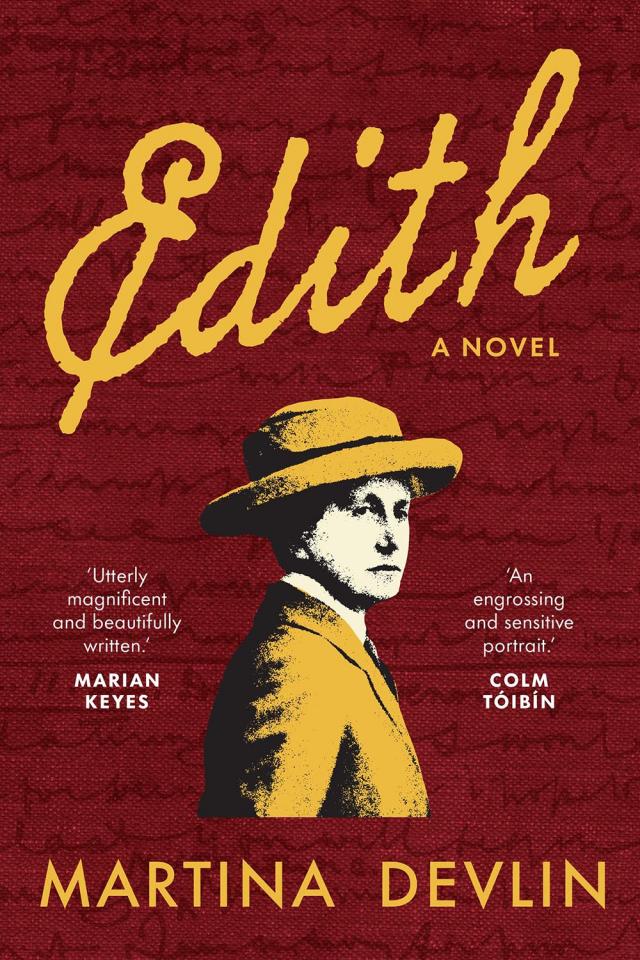


Edith
To Dr Carlo Gébler and Dr Paul Delaney
of Trinity College Dublin.With thanks.
MARTINA DEVLIN
THE LILLIPUT PRESS
DUBLIN
First published 2022 by
THE LILLIPUT PRESS
62–63 Sitric Road, Arbour Hill Dublin 7, Ireland
www.lilliputpress.ie
Copyright © 2022 Martina Devlin
The map of Castletownshend is based on a version from Somerville & Ross:The World of the Irish R.M. (Penguin, 1987) by Gifford Lewis.
This version © Niall McCormack.
Paperback ISBN 9781843518303
All rights reserved. No part of this publication may be reproduced in any form or by any means without the prior permission of the publisher.
A CIP record for this title is available from The British Library.
1 3 5 7 9 10 8 6 4 2
The Lilliput Press gratefully acknowledges the financial support of the Arts Council/An Chomhairle Ealaíon.
Set in 12.75pt on 16pt Perpetua by iota (www.iota-books.ie)
‘Only connect.’ – Howards End, E.M. Forster
Dramatis Personae
Edith Somerville (1858–1949) from Castletownshend in County Cork was one half of the bestselling Somerville and Ross writing partnership. In their day they were critically and commercially acclaimed, producing novels, short stories, travel books and journalism.Their three collections of Irish R.M. stories (beginning with Some Experiences of an Irish R.M. in 1899) became the duo’s most popular work. Edith was also a trained artist and illustrated their books.
Violet Martin (1862–1915) from Connemara in County Galway, who wrote under the pen name Martin Ross, was the other half of Somerville and Ross. She and Edith were second cousins, and closely attuned to one another. After Martin’s death, Edith continued to give her co-author status on new work, believing they were in regular contact through automatic writing and seances.
Ethel Smyth (1858–1944) was an English composer, a member of the women’s suffrage movement who was jailed for her activities, and the first woman to be made a dame for services to music. She and Edith were friends for a time following Martin’s death.
Flurry Knox, a roguish horse-lover memorably described as a ‘half-sir’, is a key character in Somerville and Ross’s Irish R.M. short stories.
Time
1921–22
A guerrilla war known at the time as the Anglo-Irish War, and later the War of Independence, has been fought for two-and-half years between the Irish Republican Army or IRA and the British administration in Ireland. A truce is called in July 1922. Now, leaders on both sides are engaged in negotiations. But the ceasefire hasn’t yet delivered peace. Parts of the country are lawless, with IRA flying columns treating it as an opportunity to re-arm and prepare for the resumption of warfare. A deal will soon be struck which delivers independence for most of Ireland – but, controversially, accepts partition. The north-east is reconfigured as Northern Ireland, while the remainder becomes the Irish Free State. And all around Ireland, people are forced to consider where their loyalty lies.
one
Edith Somerville proceeds along Skibbereen’s North Street, past the town hall with its broken clock face, her mind buzzing with errands. Family silver left in the Bank of Ireland safety deposit box. A birthday gift chosen for a godchild, despite the shops being light on stock because of the Troubles. Letters and packages posted, although no guarantee when they’ll arrive with IRA interruptions to the postal service. She’s earned herself some luncheon in the West Cork Hotel before setting off homewards. In high good humour amid the late September sunshine, she makes her way towards the riverfront.
‘Beggin’ your pardon, Miss Somerville,’ comes a voice from behind her. Apologetic. But undeniably an interruption.
Shirtsleeves rolled to the elbow, apron smeared, the butcher has darted out.
‘What is it, Mattie?’
His Adam’s apple works. ‘C-c-could you … could you spare me a minute, your honour-ma’am? Inside in the shop?’
‘Spit it out now, like a good fellow.’
He approaches, lowering his voice to a whisper. ‘The Drishane account. Four months, it is, since ’twas settled.’
‘Gracious me, Mattie, you shouldn’t leave it so long. Have your boy drop in the bill the next time he’s doing a delivery.’
‘Won’t you oblige me and step inside where we can talk in private, ma’am? It won’t take up much of your time.’
She glances at the yellow premises with its black and white sign over the doorway.
Dwyer
Father & Son
MasterVictuallers
In the window, trays of interleafed chops and sausage spirals are arranged, flies congregating around their moist pinkness. Sawdust leads from his boots back to the door, like a fairy-tale trail of crumbs through the forest. A stray mongrel materializes to sniff at it.
As abruptly as a hunter refusing an easy jump, her serenity is ruffled. Perhaps it’s his persistence. Or it might be a flash of foreboding. ‘It’s not convenient today, Mattie. Now do as I say and send in your bill.’
His voice is somewhat louder and a shade less humble. ‘We’ve handed it in at the kitchen door over and over, Miss Somerville. Mrs O’Shea says she’s passed it on to Mr Somerville and what more can she do? Two weeks ago, I took the bull by the horns and went up meself. Waited about for a word with Mr Somerville. He wrote me out a cheque there and then, so he did, and I lodged it the self-same day. But the bank wouldn’t honour it. Said the cheque was …’
A mumble.
Colour floods Edith’s face.That word she couldn’t quite catch sounded like worthless. Lately, Cameron has become evasive.When the post does manage to get through, she has noticed a shiftiness in her brother. Any- thing resembling a bill is jammed, unopened, in his pocket.
A rag-and-bone cart jangles by, churning up mud. A customer exits the shop and dawdles past, not troubling to hide her curiosity. One of the Finnegan girls, if she’s not mistaken. How much has the chit overheard?
Edith hooks Mattie Dwyer with her gaze.‘There must be some mis- understanding. Never mind, I’ll settle the account on the spot. If I may, I’ll take you up on that offer of a few moments in private on your premises.
’ ‘I wouldn’t put you to the trouble if the bill hadn’t shot up so high, ma’am. It’s an honour to have the Somerville account, like me father before me.’
She makes a chopping gesture. Stop discussing our business in public, says her gloved hand.
Almost bowing, he stands back, and she precedes him into the shop. Flitches of bacon dangle by their fat outer sides from hooks on the ceiling.
‘Keep an eye on things, Pat,’ he tells a youth in a striped apron behind the counter. ‘Mrs Nagle’s cook will be in shortly to place her order. She’ll want three pounds of rashers and half a dozen rings of black pudding, at least. Make a start, parcel them up.’
Dwyer parts a curtain and ushers Edith into a nondescript room overlooking the back yard. Beneath the window is a table. Dwyer dusts off one of two chairs beside it and holds it back, inviting her to sit. He does not presume to occupy the remaining one. Edith stares through a grimy net curtain at the butcher boy’s delivery bicycle. If Cameron was caught short, why didn’t he borrow from her? She’s lent him cash before. Granted, he owes her a sizeable sum already. But she’d advance him every last farthing rather than discover he’d handed over a duff cheque with a Somerville’s signature on it.
Behind her, at a sideboard covered in brown paper and balls of string, overspill from the shop, Dwyer rustles his accounts book. She hears him breathing through his mouth. And no wonder with those blocked nasal passages. An even more alarming possibility occurs to her. There may be overdue bills with other tradesmen. At the fishmonger’s and grocer’s.
Dwyer clears his throat. ‘Here it is. Colonel Somerville, Drishane House, Castletownshend.’ He hands the account to Edith.
Her eyes skim over the figures and snag on the total. An intake of breath, rapidly suppressed. How on earth did Cameron allow it to mount to such a level? A tower of pork chops as tall as the Fastnet lighthouse wobbles before her eyes. Sausages laid in a line, reaching all the way into Cork city. Who is eating all this meat? It’s an age since they had a dinner party.The only house guest they entertained was her friend Ethel Smyth a year ago, and she insisted on paying a share of the household expenses.
Edith thought when the Great War ended, money worries would ease. But it’s quite the reverse – things keep getting tighter. Hospitality stuttering to a halt is one among many economies they’ve had to practise. Not least because Ireland’s been in a state of ferment for close on two years. Nobody wants to risk driving after dark for the sake of some duck à l’orange and a couple of glasses of Merlot. Rents are difficult to prise out of the tenants. Drishane’s paddocks have never held so few horses – horse-coping has been a lucrative sideline for her but it’s no longer generating much income. The estate’s farm produce is unsaleable, with craters in the roads and blown-up bridges preventing goods from going to market. The IRA is bent on making roads impassable for the forces of law and order, but getting about is a nuisance for everyone else, too. As for the book business, once her cash cow – sales are modest. Her latest hasn’t set the literary world on fire.
If times turn any harder they’ll be reduced to vegetarianism, like that crank George Bernard Shaw. How her cousin Charlotte puts up with his peculiar eating habits, she’ll never understand.An amusing ma n. But unsound.
All at once, Edith recalls giving Cameron her share of the butcher’s bill.Whatever he spent her cash on, it certainly wasn’t to pay the butcher. No wonder he refused to take a run into Skib this morning when she sug- gested it at breakfast. He must have known the bill wouldn’t disappear into thin air.
Mattie Dwyer clears his throat. ‘I trust everything is in order, your honour-ma’am?’
‘Perfectly in order, Mattie. But it’s somewhat steeper than I antici- pated.’ She knows to the last shilling how much her purse contains.‘I find I don’t have enough cash on me at present and I’ve left my chequebook in Drishane. Let me make some inroads into it, at least.’ She produces three banknotes and an assortment of crowns, half-crowns and florins from her bag. ‘Count this up, please, and deduct it from the total. I’ll make arrangements to pay the remainder in due course.’
Except she does not know when that will be. Meanwhile, they must trust to the butcher’s good nature to continue meeting their orders. An ugly word occurs to her. The Somervilles must rely on his charity.
‘And may I check what’s on order with you for the weekend, Mattie?’ ‘A mutton joint, ma’am, and some liver and kidney.’
‘Cancel them.’
‘Ah, now, there’s no need for that, Miss Somerville. I wouldn’t see you go without, above in Drishane. That wouldn’t be right at all. I dare say you’ll let me have what’s owing as soon as you find it convenient.’
‘There is no question of us going hungry, Mattie.The cook has fallen into wasteful habits, ordering meat we don’t need with just my brother and me echoing about in the house.’
‘Whatever you say, ma’am.’ He licks the pencil stub and enters the sum paid in his ledger.
It represents three-quarters of what’s due.And now she is stony broke.
—
Edith waits while the stable boy from the West Cork Hotel fetches her dogcart. Does she have a coin in her pocket to tip him? Her right leg throbs. She uses a walking stick at home but won’t carry one into Skibbereen, in case the townspeople say she’s ageing. Which is nonsense. She’s a youthful sixty-three – plenty of vim and vigour in her yet.
The boy, one of the Connors clan judging by those curls, has harnessed Tara and leads her back. The chestnut horse huffs out a breath in recognition, and she strokes the mare’s forehead along the white flash. Quick to spook, Tara is wearing blinkers for this trip to town.
‘Any packages, Miss Somerville?’
‘Just myself, if you’ll lend me your arm.’ She allows him to hand her up the steps, although once she’d have sprung into the dogcart under her own steam.‘Are you a Connors?’
He tucks the tartan blanket over her knees, attentive as a lady’s maid. ‘Yes, ma’am.’
‘Roddy’s boy?’
‘No, ma’am. He’s me uncle. Philip was me da.’
She remembers Philip, he died in prison. Caught fever a year into his sentence. He was jailed for something political. A hothead, they tried him out in the Drishane stables, but he wouldn’t take orders.
Edith fumbles in a pocket and her gloved fingers close over a disc. A stray button? Too slender and even. Feels like a sixpence. She slides it into the boy’s palm.‘Thank you, young man.’
He tugs his cap brim.‘That’s a grand animal you have, Miss Somerville.’ ‘Tara’s from a good bloodline.’
‘I hear tell you’ve a stable full of fine beasts above in Drishane.’
She frowns.What business is it of his? Without answering, she clicks her tongue at Tara, who springs forward.The tub-shaped vehicle clatters over the cobblestones and onto the street. By the bridge near the hotel, she meets a neighbour’s son, and pulls on Tara’s reins.
‘Need a lift, Harry?’
Lieutenant Harry Beasley removes his uniform cap. ‘No, thank you, Miss Somerville. I’ve just arrived here. Haven’t had a chance to sample Skib’s delights yet.’
‘How are things across the water?’
‘I’ve been stationed in France. But from what I saw travelling through England last week, there are problems. Nothing that can’t be sorted, of course. But shortages, definitely. Too few jobs, too many mouths.’
‘Oh dear. Still, I’m sure your mama is delighted to have you home from your regiment. I expect the fatted calf was prepared.’
‘She didn’t know I was coming. Telegram wasn’t delivered.’
‘Ah, that’s because the telegraph wires have been cut by the flying columns. It’s to delay reinforcements when they engage the soldiers.’
He runs a palm over his sleek head.‘Things seem edgy in Skib.’ ‘Times are tense.’
‘The place has taken a bit of a battering. I see the courthouse is burned out, and the town hall looks pretty shot up. Mother hadn’t told me.’
‘I suppose she didn’t want to worry you. But Ireland’s had a rough time of it.’
‘Self-inflicted woes.’
‘Skibbereen has received a fair amount of attention from the Crown forces, Harry.’
‘What can people expect if they turn rebel? Anyhow, there’s a lot of bored uniforms confined to barracks now.’
‘Thank heavens for the ceasefire. Hopefully the two sides will knuckle down to peace talks soon. Once a deal is struck, the country will settle itself.’
‘The savages are running wild, truce or no truce. They need to be culled. Mother goes to bed every night expecting to wake to a house in flames.’
‘You know, the Black and Tans and Auxiliaries are just as bad as the Republicans. The people are being terrorized.’
‘I say, Miss Somerville!’
‘It’s true. Ask your mama. Some think the Tans’ behaviour might persuade America to join the fight.’
‘Impossible. America would never side with Ireland against Britain. We were allies in the war. Great Britain needs to take a firmer hand. Swamp the country with troops and crush resistance.That’s the only language rebels understand.’
‘Hmm. Well, I must be pushing along. Oh, Harry, if you happen to know anyone in the market for a horse, I have a couple of beauties I’m willing to part with. Hunters both. Stallions.’
‘I thought Mother said the hunt had been stopped.’
‘The IRA has forbidden it. Some nonsense about putting an end to the gentry’s days of riding roughshod over the Irish people’s land. Any damage was always paid for.’
‘I’m surprised at our sort, taking orders from those fellows.’
‘They left out poisoned bait for packs where the chase went ahead. Have you ever seen an animal die from a dose of strychnine? Agony for the poor hound. Anyhow, enjoy your leave, Harry.’
The Angelus bell begins tolling for noon. She waves, and guides Tara towards Main Street, with its honeysuckle- and fuchsia-coloured shop fronts. Chicken wire is pinned over windows facing the street. As they clop along, Edith remembers what Mike Hurley told her. The Sinn Féiners are doing American lecture tours. They have friends in high places there. No point in saying that to a young man in khaki, home on furlough.
A wagon delivering laundry to Mrs Nagle’s boarding house holds up the traffic. By rights, the driver ought to use the service entrance. Edith prepares to wait it out. A couple of idlers lean against a hardware shop, and she notices them taking an interest in Tara, whispering together.
‘Move that nag of yours. We’ve a train to catch.’ A head emerges from a yellow motor car in front. She didn’t know they came in such a colour. The head belongs to a chauffeur, judging by the peaked cap.
‘Sure what’s stopping you? You could sail an ocean liner down this road,’ shouts the laundryman.
From habit, Edith casts an eye over the dray horse between the shafts of his delivery cart. It looks half-starved – she can’t abide people mistreating animals. Urchins scamper over, pointing and jostling at the chugging motor car. Its passenger door flings open and a man steps out. He paces up and down the footpath, watch in hand. An American, by the looks of him. No Irish or Englishman would wear a coat woven from such violently checked cloth.
Enough is enough. She swings Tara around the blunt-nosed motor car, past the delivery cart, keeping a sharp eye out for pedestrians – the townspeople are demons for stepping onto the road without looking first.