Evil Psychopaths, page 9
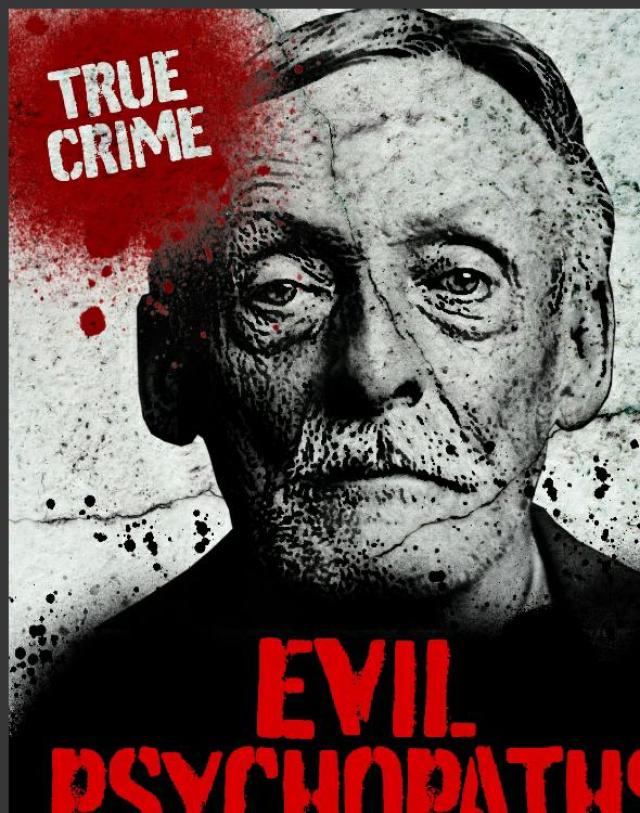


John George Haigh
The Acid-Bath Murderer
Was he really insane or was his bloodlust – the drinking of a glass of each of his victims’ blood – merely a story made up in order to make them think he was mad and allow him to get away with murder?
The court did not believe he was mad and he went to the gallows on 10 August 1949, sentenced to death for the murders of six people, although he, himself, claimed to have killed nine. Mostly, he killed for personal gain, making money from selling his victims’ possessions or houses, but one doctor described him as suffering from ‘the most rare and terrible paranoia of all the “egocentric” paranoias – the “ambitious” or “mystical’ paranoia, through which he saw himself as omnipotent and even guided by an outside force, possibly divine’. In this condition, he was uninterested in sex, the sexual urge being sublimated into self-worship. He believed himself to be untouchable.
In fact, John Haigh was absolutely certain that the law could not touch him for the murders he committed for the simple reason that the bodies no longer existed. He had dissolved them in baths of acid.
When Haigh was assessed medically, his upbringing came under a great deal of scrutiny and it undoubtedly had a great bearing on the man and the killer that he would become. He was born in 1909 and spent almost the first twenty-four years of his life in Outwood in Yorkshire. His parents were members of the strict religious sect, the Plymouth Brethren, and Haigh was, therefore, not allowed to participate in sport or entertainment when he was young and he was certainly not allowed to have any friends. So strict was his father in his beliefs that he built a ten feet-high fence around the garden to shield the family from the outside world. Like another murderer, John Reginald Christie, he developed a hatred for dirt.
John Haigh Sr had a bluish mark on his forehead that he described to his son as the Devil’s brand, telling him that he had been given it because he had sinned and that if John Jr sinned, he would be similarly marked. He told him that his mother remained unmarked because she was an angel and Haigh had something of a mother-fixation as a result. Throughout his childhood, however, he lived in terror of sinning and receiving the Devil’s brand, staying awake at night, praying that the mark would not appear on his face. Eventually, he realised that it was all a con to make him behave.
He was a solitary child but had a great love of music, joining the choir at Wakefield Cathedral. He began to move away from his parents’ religion but claims to have meditated on the bleeding Christ he saw in portraits at the cathedral and that his longing for blood began there.
In 1934, aged twenty-five, he married a woman he had only met a few months previously, but the marriage ended after just four months as he was arrested for fraud and sent to prison. Released from prison, he went into business, but when his partner died in an accident, he decided that his future lay in the south. He moved to London.
He found work as a secretary/chauffeur for an amusement park owned by William McSwan, rapidly becoming a close friend, meeting McSwan’s parents and sharing an interest in fast cars and flashy clothes with him. A year later, however, he moved on but it would not be the last the McSwans would see of him.
He set up a fake solicitor’s business and began to defraud people by creating phoney estates to be liquidated and company shares to be sold that he did not own. He was soon found out, however, and went to prison for four years. On his release, he went back in again for twenty-one months for theft. He vowed never to go back to prison and decided that the best way to make substantial sums of money instead of the piddling sums of which he had so far managed to defraud people, was to fleece rich old women. A method was developing in his head and he did some experiments while working in the prison’s tin shop. He worked with sulphuric acid to test its powers for dissolving things, trying it out successfully on mice and finding that they dissolved in thirty minutes.
Released again from prison, Haigh worked as an accountant and looked like marrying again, to Barbara Stephens, daughter of the owner of the company he was working for. Of course, he was still married to his first wife, but that was irrelevant.
Haigh always presented a car crash in which he was involved in 1944 as a turning point in his murderous career. He suffered a head injury and blood from it went into his mouth. He wrote later that it took him back to dreams he had about blood when he was a child. He wrote about ‘a forest of crucifixes’ that became trees with blood dripping from their branches. A man was going to each tree and catching the blood which he then gave to Haigh to drink. That year, he killed for the first time.
His victim would be his old friend, William McSwan, whom he bumped into again. Later writing that he had needed blood, Haigh hit McSwan on the head with a length of pipe at his workroom at 79 Gloucester Street on 9 September 1944. He then cut the unconscious man’s throat. Putting a cup against the wound, he filled it with blood and drank it.
But how to dispose of the body? He remembered that in his workroom he had a quantity of sulphuric acid. He obtained a forty-gallon oil-drum and squeezed McSwan’s body into it. He then poured the acid into it until the body was fully covered. He locked the room for the night and went home.
When he opened the drum a couple of days later, all that remained of his victim was a black, evil-smelling sludge that he disposed of down a drain, scooping out the congealed lumps that lay at the bottom, and then washing out the drum.
There was no body and, consequently, he reasoned, he could not be tried for murder.
He now began the process of getting his hands on McSwan’s money and possessions. He first persuaded the dead man’s parents that their son had run away to Scotland to avoid military service, faking postcards from William to them. Meanwhile, he also improved his method of killing, fashioning a mask to prevent his being affected by the acid fumes and a pump to get the acid into the drum more efficiently.
Two months later, he killed William McSwan’s parents, using the same length of pipe, drinking their blood and stuffing them into drums filled with acid. He told their landlady that they had gone to America and had their mail redirected to his address, including letters containing Mr. McSwan’s pension. He then sold their properties, using forged documentation. He made £6,000 from their murders and did it all so well that they were never reported missing and their deaths only became apparent when he confessed in 1949.
It was now 1945 and he was living in the Onslow Court Hotel in Kensington, an establishment much favoured by wealthy widows, just the type of prey that Haigh was looking for. In the meantime, he later claimed, he killed a young man by the name of Max but no one by that name was ever reported missing and it is not known if this claim was a self-aggrandising attempt by Haigh.
He had developed a serious gambling habit and by the end of 1947 had spent just about all the McSwan money. It was time to kill again.
He read an advert in the newspaper offering a house for sale. It had been placed by a well-off couple, fifty-two-year-old Dr Archibald Henderson and his forty-one-year-old wife Rose. He could not afford it, but befriended the couple anyway, playing piano for them and spending time in their company. Around this time, he began renting premises in Crawley from a company called Hustlea Products, moving his work materials there from Gloucester Street.
On 12 February 1948, he shot Dr Henderson in the head with his own gun, stolen by Haigh. Leaving the dead man in his storeroom in Crawley, he returned to Rose Henderson and told her that her husband had been taken ill. When she went into the storeroom, he shot her, too. He then claims he drank their blood before dissolving them in acid.
He was becoming careless, however, or perhaps he just felt invincible. Amongst the filthy sludge he dumped in the yard was Dr Henderson’s foot, still intact.
He paid the couple’s hotel bill next day and took possession of their dog. He also took possession of a property they owned and sold it. He sold his girlfriend some of Rose Henderson’s clothes and one of her handbags was purchased by a Mrs Olive Durand-Deacon, a wealthy widow who lived at the Onslow Court. He wrote to Mrs Henderson’s brother, Arnold Burlin, and told him that the couple had emigrated
to South Africa. Burlin had been tempted to report them missing, but Haigh concocted a story that the doctor had performed an illegal abortion and could be in trouble.
He claimed later that he next killed a girl called Mary from Eastbourne, but as with Max, his earlier claim, no evidence has ever been found that she ever existed.
He was tired of his car, a Lagonda, and reported it stolen. He had actually crashed it over a cliff. When an unidentified body was found a month later in the vicinity of the place where he had crashed it, no link with the car was made, even after his later confession. He bought a new Avis.
He had soon gambled away most of the money he had earned from the murder of the Hendersons and in the first few months of 1949, began a search for another victim.
Mrs Durand-Deacon, to whom he had sold Rose Henderson’s handbag, had approached him with a business idea involving false fingernails. To discuss the matter further, he invited her to Crawley where, as usual, he put a bullet in her head and bathed her in acid. Haigh told people that she had failed to arrive for the appointment. But one of her friends at the Onslow Court Hotel reported her disappearance to the police and a photograph and description of her was issued. Haigh was questioned, and when detectives learned of his unpaid bills at the hotel, they became suspicious. When they checked criminal records, they discovered that he had been in prison several times for fraud, forgery, obtaining money by false pretences, and theft. He was questioned again and it was noticed that he wore gloves at all times and was a compulsive hand-washer, due to his lifelong hatred for dirt. They checked the Crawley premises where, he told them, he performed what was known as ‘conversion work’ – an industrial practice in which industrial materials were broken down in acid. They found all of his equipment and, crucially, a briefcase bearing the initials ‘J.G.H.’ There were documents relating to Dr Henderson as well as the McSwans. They also found a .38 Enfield revolver that had been fired recently and a dry-cleaning receipt for a Persian lamb coat that had belonged to Mrs Durand-Deacon. They learned that Haigh had recently pawned items of the missing woman’s jewellery in Horsham.
As they searched the yard outside his workshop, they were puzzled by the sludge he had poured there. A doctor involved in the search noticed something about the size of a grape amongst it. It was a human gallstone. They found three more, as well as part of a human foot, eighteen pieces of human bone, dentures, the plastic handle of a red bag and a lipstick container.
Haigh was arrested but remained chillingly calm throughout. He was convinced he would be sent to Broadmoor, the hospital for the criminally insane – especially when he laid it on thick about the drinking of his victims’ blood – and would then be released in a few years. He told them everything, confessing in full to the murders he had committed and gilding the lily with a few others he probably did not commit. By his account, he killed nine people – the police charged him with killing six.
Haigh underwent a number of tests to decide whether or not he was insane but to his great disappointment, he was found to be fit to stand trial and, on 18 July 1949, he stood in the dock.
There was little doubt about the verdict and it took the jury only fifteen minutes to find him guilty of murder. On 6 August, he was executed at Wandsworth prison after donating his clothes to Madame Tussauds and allowing them to make a death mask of his face. He also gave them instructions that the wax model’s trousers should always be immaculately creased, the hair neatly parted and its shirt-cuffs showing just below the sleeve of his jacket. Given his fear of dirt, it has to be hoped that he also ordered them to dust it frequently.
Dennis Nilsen
In the police station, Dennis Nilsen calmly explained to the investigating officers, ‘The victim is the dirty platter after the feast and the washing up is an ordinary clinical task.’ He had performed that ‘ordinary clinical task’ no fewer than fifteen times, disposing of the bodies of the young men he had had brought home and from whom he could not bear to be parted.
It had all begun on 30 December 1978. He had befriended a young man at a local pub and taken him home with him to his flat at 195 Melrose Avenue in north London. Stephen Dean Holmes, it would later emerge, was only fourteen years old at the time and was on his way home from a concert when he met Nilsen. The two continued to drink at the flat and then climbed into bed together.
When Nilsen awoke towards dawn, he realised with an overwhelming sense of sadness that Holmes would be leaving when he woke up. Nilsen had spent Christmas entirely on his own and did not relish the thought of a solitary New Year. He picked up his tie from the piles of clothing they had thrown on the floor the night before and climbed on top of the boy, encircling his neck with the tie, pulling it tight. Holmes woke up immediately and they fell from the bed onto the floor as he struggled for his life. Nilsen pulled tighter and gradually, the life flowed out of Holmes and he went limp. He was only unconscious, however, and Nilsen went to the kitchen and filled a plastic bucket with water. He brought it back in and, placing Holmes on some chairs, dangled his head into the bucket, drowning him. Holmes did not struggle and within a few minutes, he was dead.
Nilsen was unnerved at having killed someone – especially someone whose name he could barely remember. He drank some coffee and thought about what to do. He carried the corpse into the bathroom where he washed its hair. He then returned it to the bedroom and put it to bed.
He later told how he thought that Holmes’s dead body was rather beautiful but, of course, he realised that he had to get rid of it somehow. He went out to buy an electric knife and a large cooking pot, but when he got back home, he could not bring himself to slice up his new friend. Instead, he dressed him in clean underwear and clothes, like a doll. He thought about having sex with the body, but was unable to. Then he laid it on the floor and went to bed for a while.
Later, when he got up again, he had some dinner and watched television, the body lying all the while on the floor. Suddenly, he had a brainwave. He prised loose some floorboards and tried to shove the body into the space beneath them. Unfortunately, rigor mortis had set in by this time and he could not manage it. He stood Holmes against the wall and decided to wait until the stiffness had worn off. Next day, he finally succeeded in squeezing him under the floorboards before nailing them back down.
A week passed and he wanted to have a look at the body again. He lifted the carpet and prised up the floorboards again. He was dismayed to see that the corpse was a bit dirty and so he took it out of the space and gave it a bath, before washing himself in the same water. All of this had aroused him and he masturbated over the body before inserting it in its grave under the floorboards again.
Remarkably, the body of Stephen Holmes would remain under those floorboards for more than seven months before Nilsen took it out into his garden and burned it, throwing pieces of rubber into the flames to disguise the stench of burning flesh.
A year later, a young Chinese student, Andrew Ho, escaped from Nilsen as they played bondage games in the flat. He actually went to the police and accused Nilsen of trying to strangle him, but the police decided not to charge him.
His second victim was Kenneth Ockendon, a Canadian whom Nilsen met at a pub, on 3 December 1979. Nilsen liked him a lot and was devastated to learn that his new friend was flying home to Canada the following day. As Ockendon listened to some music through headphones, Nilsen sneaked up on him and strangled him with their chord. He listened to some music with the body lying on the floor beside him and then dragged him into the bathroom to clean him up. He put him in his bed and climbed in beside him, remaining there for the night, stroking and caressing him. In the morning, he stuffed him into a cupboard and went to work.
The following day, he took the body out and photographed it in various positions before taking it to bed with him and having sex with it. Ockendon was then put under the floorboards but when Nilsen felt lonely, he would get the body out and sit beside it watching television. Nilsen would then clean the body again, dress it and put it back to bed under the floor, wishing him a gentle ‘goodnight’.
Five months later, in May 1980, he strangled Martyn Duffey, a sixteen-year-old homeless boy. Duffey had to be drowned before Nilsen took a bath with his body. He kissed him all over and then masturbated while seated on his stomach. It was then two weeks in the cupboard for him before he went under the floor.
Nilsen next killed a twenty-six-year-old Scottish male prostitute, Billy Sutherland, strangling him, it later emerged, with his bare hands. Nilsen did not remember killing Sutherland. He seemed to enter a trance of some kind when he was killing and his memories of many of his acts when he was in this state were wiped.
Many of his victims were itinerants or homeless and they were, consequently, never identified. The names of the next seven young men Nilsen killed have never been known. The first, his fifth murder, was again a male prostitute of oriental – possibly Thai – origin. His sixth was a young Irish labourer and the seventh was what he described as a ‘hippy type’ whom he encountered sleeping in a doorway in London’s Charing Cross area. Number eight remained under his floorboards for a year and numbers nine and ten were young Scottish men, picked up in the pubs of Soho. Number eleven was a young skinhead who had a tattoo around his neck – a dotted line saying ‘Cut Here’.
On 10 November, 1980, he picked up a Scottish barman who woke up back at the flat with Nilsen trying to strangle him. Douglas Stewart fought him off and ran out of the building. He went to the police but they refused to take action, putting it down to a homosexual domestic argument.